
Cleaning time in four cards
The chime rings, chairs go up on desks, and everyone grabs a tool. These four expressions describe what happens next in a typical classroom.
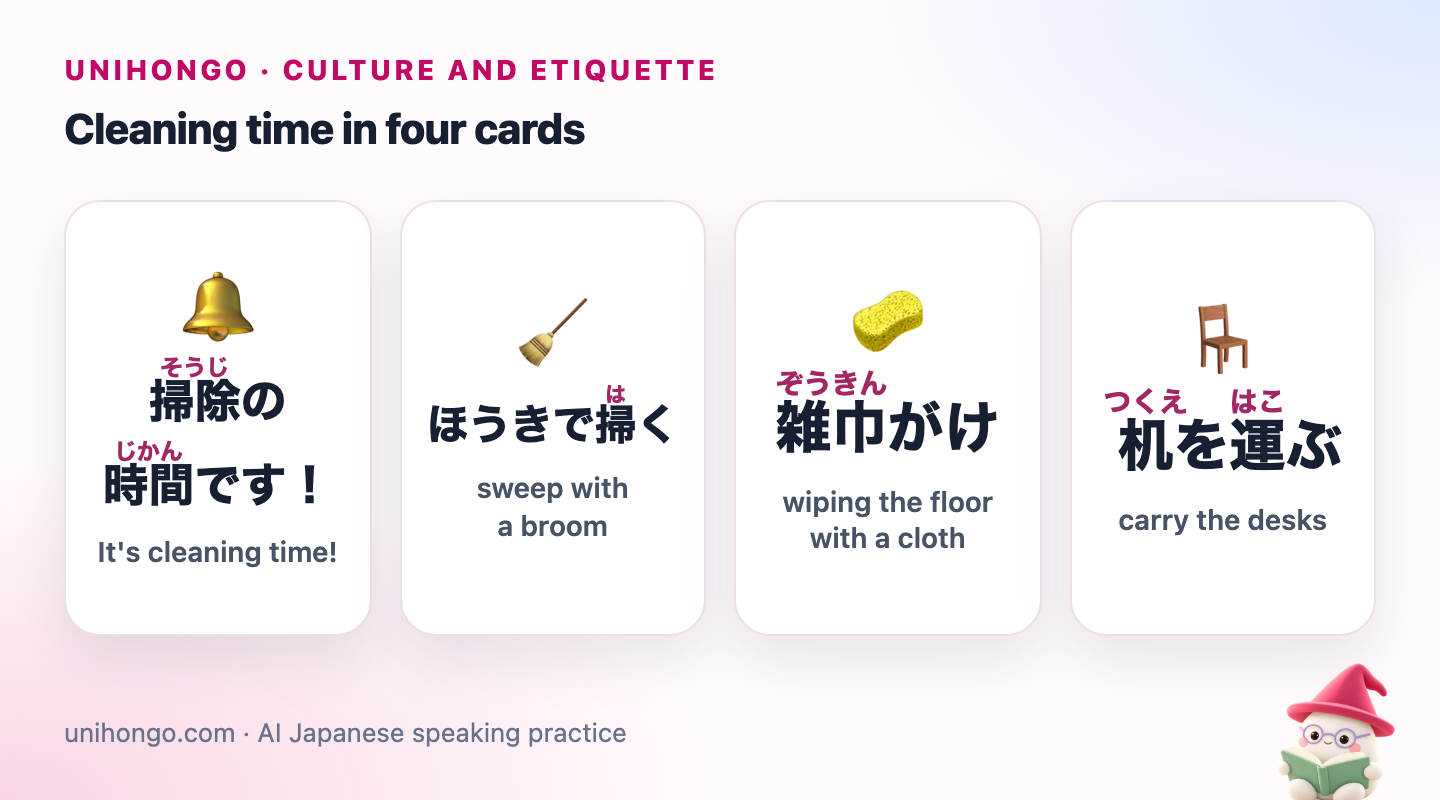
| Japanese | Romaji | Meaning |
|---|---|---|
| 掃除の時間です! | Sōji no jikan desu! | It's cleaning time! |
| ほうきで掃く | hōki de haku | sweep with a broom |
| 雑巾がけ | zōkingake | wiping the floor with a cloth |
| 机を運ぶ | tsukue o hakobu | carry the desks |
Zōkingake is the famous scene from Japanese school films: children bend forward with both hands on a folded cloth and run down the corridor, wiping as they go. Haku, to sweep, is written 掃く with the same kanji as sōji, cleaning.
Why schools treat cleaning as education
Ask Japanese teachers or parents why children clean, and the answers are fairly consistent, although every school explains it in its own words.
| Japanese | Romaji | Meaning |
|---|---|---|
| 自分たちの教室は自分たちできれいにする。 | Jibuntachi no kyōshitsu wa jibuntachi de kirei ni suru. | We clean our own classroom ourselves. |
| みんなで使う場所を大切にしよう。 | Minna de tsukau basho o taisetsu ni shiyō. | Let's take care of the places we all use. |
| 掃除は大事な勉強です。 | Sōji wa daiji na benkyō desu. | Cleaning is an important lesson. |
- Taking care of shared things. If you clean a room yourself, you are less likely to make it dirty.
- Responsibility. Each group has an area, and if they skip it, everyone notices.
- Teamwork. Sweeping, wiping and carrying desks only works if everyone does their part.
- Respect for the place. The classroom is where you spend your days, so you look after it.
- Life skills. Children learn to wring out a cloth, sort rubbish and use a broom properly.
Cleaning is part of what Japanese schools call special activities, tokubetsu katsudō, the non-academic side of school life that also includes class meetings, school events and duties. Some people connect the custom to Buddhist traditions, in which cleaning a temple is part of a monk's practice. That link is often mentioned, but for most families the reason is simply that this is how school works.
How cleaning time works
In a typical elementary school, a chime or a song signals cleaning time after lunch or at the end of the day. Pupils change into gym clothes or put on an apron and a headscarf, push the desks to the back of the room, sweep, wipe the floor, push the desks forward again and repeat on the other side. Other groups clean the corridor, the stairs, the shoe lockers at the entrance and, in many schools, the toilets.
The class is divided into groups, often called han, and a rota decides who cleans which area. Teachers usually supervise and often clean with the children. At the end, a group leader may check the area and report to the teacher. Details vary a lot: some schools clean in silence, mokumoku sōji, as a kind of concentration exercise, while others are noisy and cheerful.
| Japanese | Romaji | Meaning |
|---|---|---|
| 今週の掃除当番は誰? | Konshū no sōji tōban wa dare? | Who's on cleaning duty this week? (casual) |
| 一班は廊下です。 | Ippan wa rōka desu. | Group one does the corridor. |
| 黙って掃除しましょう。 | Damatte sōji shimashō. | Let's clean in silence. |
| Job | Japanese | Who usually does it |
|---|---|---|
| Sweeping the floor | Hōki de haku | Classroom group |
| Wiping the floor or corridor | Zōkingake | Classroom or corridor group |
| Cleaning the blackboard | Kokuban o kesu | One or two pupils |
| Wiping windows | Mado o fuku | Classroom group |
| Taking out rubbish | Gomisute | One pupil, often by rota |
| Cleaning toilets | Toire sōji | A separate group in many schools |
Tools and actions
The tools are simple and the words are useful far beyond school, at home, in a shared house or at a part-time job.
| Japanese | Romaji | Meaning |
|---|---|---|
| ほうき | hōki | broom |
| ちりとり | chiritori | dustpan |
| 雑巾 | zōkin | cleaning cloth, floor rag |
| バケツ | baketsu | bucket |
| 黒板消し | kokubankeshi | blackboard eraser |
| 雑巾を絞る | zōkin o shiboru | wring out the cloth |
| 窓を拭く | mado o fuku | wipe the windows |
| 机を後ろに下げる | tsukue o ushiro ni sageru | move the desks to the back |
Joining in as an assistant teacher or parent
If you work in a Japanese school as an assistant language teacher, joining cleaning time is one of the best ways to get to know the children. They will often be delighted to show you how to wring a cloth properly, and it is a natural moment for casual Japanese. Speak casually with the children and politely with the staff.
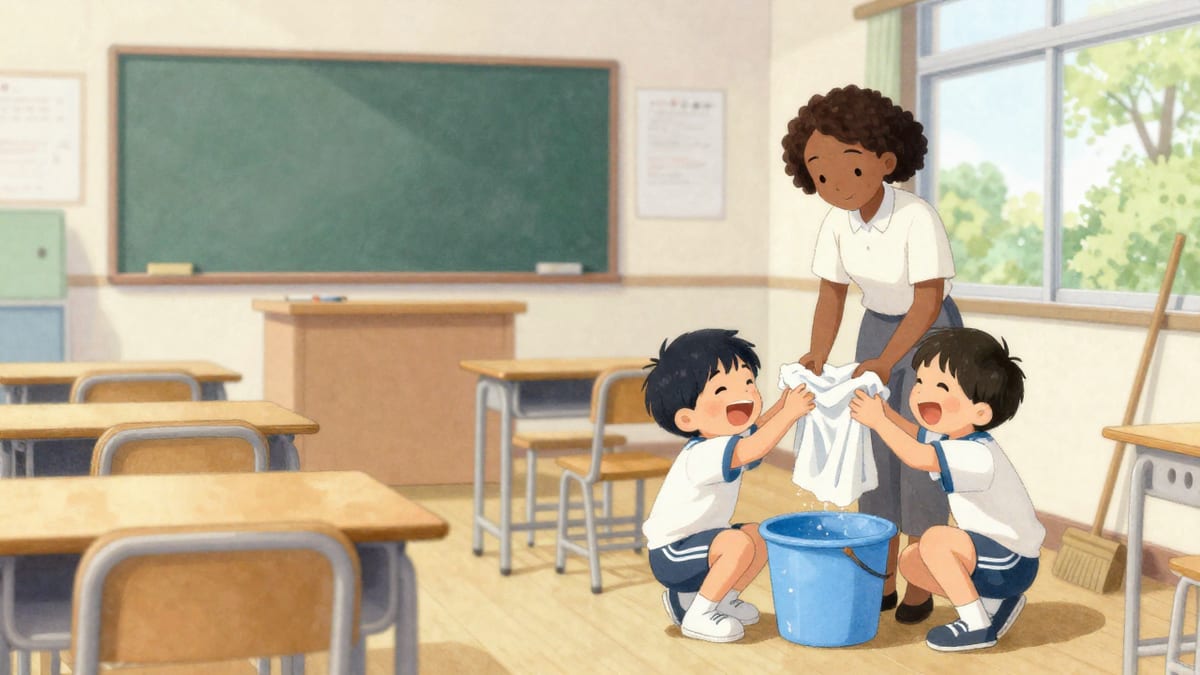
| Japanese | Romaji | Meaning |
|---|---|---|
| 私も一緒にやってもいいですか。 | Watashi mo issho ni yatte mo ii desu ka. | May I join in too? (to a teacher) |
| 先生、雑巾の絞り方、知ってる? | Sensei, zōkin no shiborikata, shitteru? | Pupil: Teacher, do you know how to wring a cloth? |
| 教えて! | Oshiete! | You: Show me! (casual) |
| こうやって、ぎゅっと絞るんだよ。 | Kō yatte, gyutto shiboru n da yo. | Pupil: Like this, you squeeze it hard. |
| 上手だね。ありがとう。 | Jōzu da ne. Arigatō. | You: You're good at this. Thanks. |
| きれいになったね! | Kirei ni natta ne! | You: It's sparkling now! |
Gyutto is an onomatopoeic word for squeezing tightly. Children use words like this constantly, and picking them up is a good way to sound natural with them.
The same habit outside school
Many people point out that the habit continues after school. Some companies start the day with a short cleaning session for everyone, and sports clubs clean their changing rooms and pitches after training. Japanese football fans have been widely reported picking up rubbish in stadiums after international matches, and many say they learned it at school.
Neighbourhoods often hold clean-up days, and shops sweep the pavement in front of their entrances in the morning. None of this is universal, and many adults admit they hated cleaning time as children, but the idea that you leave a place cleaner than you found it is widely shared.
| Japanese | Romaji | Meaning |
|---|---|---|
| 来た時よりも美しく | Kita toki yori mo utsukushiku | Leave it more beautiful than when you came. |
| 朝の掃除から一日が始まります。 | Asa no sōji kara ichinichi ga hajimarimasu. | Our day starts with morning cleaning. |
| 地域の清掃活動に参加しました。 | Chiiki no seisō katsudō ni sanka shimashita. | I joined a neighbourhood clean-up. |
Read about cleaning time with Mocchi
Try asking Mocchi with /read for a short passage at your level about a pupil's cleaning duty. Mocchi writes the passage, asks you a few questions about it, and explains any word you get stuck on, such as tōban or zōkingake. It keeps a note of those words, so they turn up again in your next quiz.
Then open Sentence Builder in the games and rebuild instructions like tsukue o ushiro ni sagete kudasai from scrambled chunks. Japanese word order in instructions is short and predictable, and building it by hand makes it automatic.
Common learner mistakes
- Saying sōji o suru for everything. For specific jobs, Japanese uses specific verbs: haku, fuku, shiboru, kesu.
- Using kudasai with children all the time. With pupils, casual forms like motte kite or sagete sound warmer.
- Assuming schools have no cleaning staff at all. Many have staff for some areas; pupils mainly clean their own spaces.
- Thinking every child enjoys it. Many do not, and joking about it with them is part of the fun.