
The fixed exchange
The opening, the confirmation and the closing are the same every time and are worth drilling to complete automaticity, because they happen with every passenger.
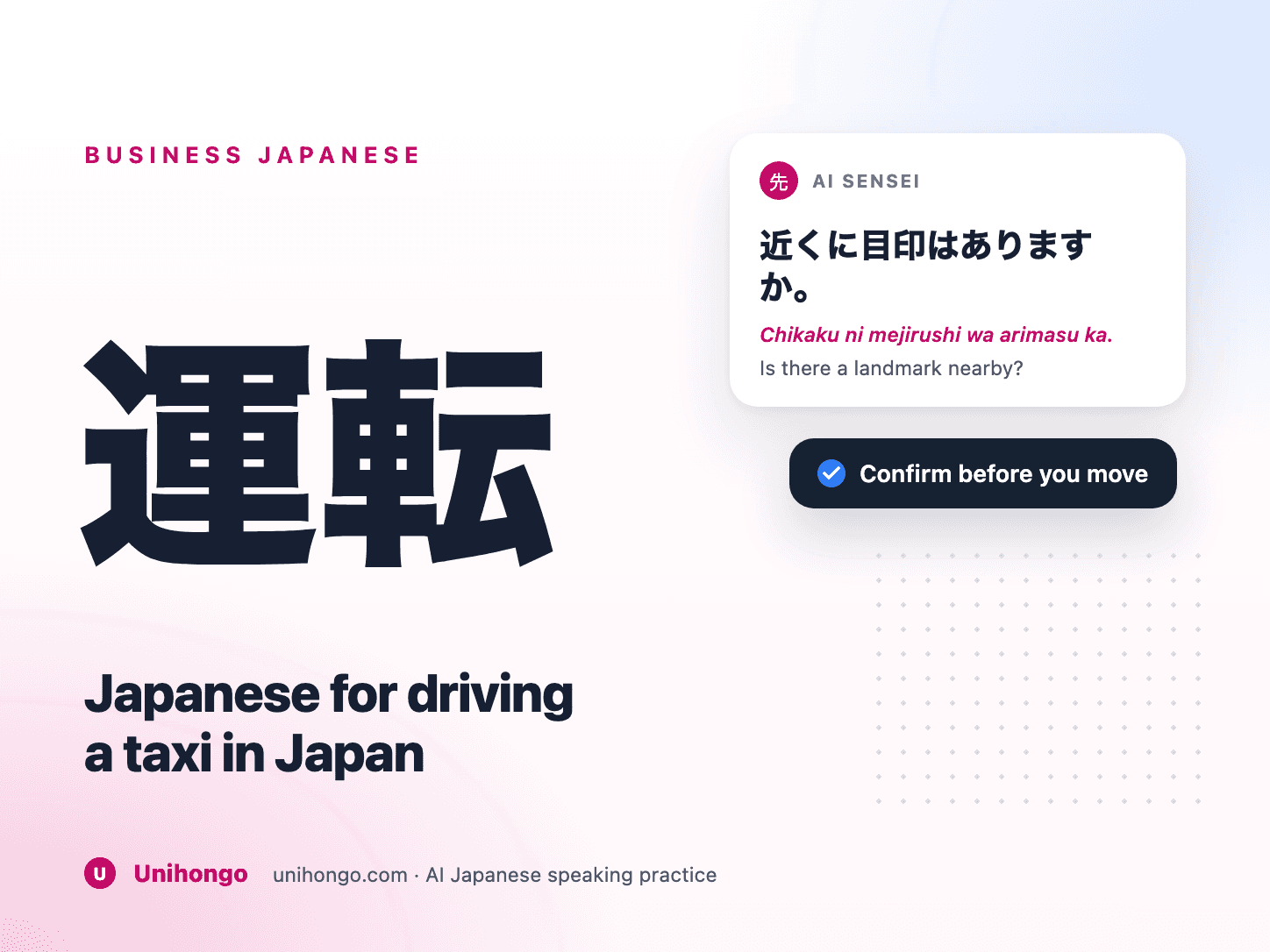
The confirmation is the one that matters. Repeating the destination back before moving costs three seconds and prevents the single most expensive error in the job.
| Japanese | Romaji | Meaning |
|---|---|---|
| どちらまでですか。 | Dochira made desu ka. | Where to? |
| 東京駅でよろしいですか。 | Tōkyō-eki de yoroshii desu ka. | Tokyo Station, is that right? |
| かしこまりました。 | Kashikomarimashita. | Certainly. |
| シートベルトをお願いします。 | Shītoberuto o onegai shimasu. | Please fasten your seatbelt. |
| まもなく到着いたします。 | Mamonaku tōchaku itashimasu. | We will arrive shortly. |
| ありがとうございました。 | Arigatō gozaimashita. | Thank you very much. |
When the address is unclear
Japanese addresses are numbered by block rather than sequentially along a street, and buildings are frequently unsigned. Passengers know this and often give a landmark, a nearby station or a crossroads instead of an address.
Asking for more is completely routine. Drivers do it constantly and it is faster than guessing.
| Japanese | Romaji | Meaning |
|---|---|---|
| 近くに目印はありますか。 | Chikaku ni mejirushi wa arimasu ka. | Is there a landmark nearby? |
| 最寄り駅はどちらですか。 | Moyori-eki wa dochira desu ka. | What is the nearest station? |
| 何丁目でしょうか。 | Nanchōme deshō ka. | Which block number? |
| お電話番号は分かりますか。 | Odenwa bangō wa wakarimasu ka. | Do you know the phone number there? |
| 地図を見せていただけますか。 | Chizu o misete itadakemasu ka. | Could you show me on a map? |
| この辺りでよろしいですか。 | Kono atari de yoroshii desu ka. | Is around here all right? |
Asking to see a map on the passenger's phone is the fastest solution and is not read as incompetence. Almost every driver does it.
The route conversation
Where there is a toll road or a meaningfully different route, offering the choice is expected. Taking a toll route without asking is the commonest cause of a fare dispute.
The conversation is short: name the options, name the difference, and let the passenger choose.
| Japanese | Romaji | Meaning |
|---|---|---|
| 高速を使いますか。 | Kōsoku o tsukaimasu ka. | Shall I use the expressway? |
| 高速ですと十分ほど早くなります。 | Kōsoku desu to juppun hodo hayaku narimasu. | The expressway is about ten minutes faster. |
| 下道でも参れます。 | Shitamichi demo mairemasu. | I can also take the ordinary roads. |
| 渋滞しておりますが、よろしいですか。 | Jūtai shite orimasu ga, yoroshii desu ka. | There is traffic; is that all right? |
| この道でよろしいでしょうか。 | Kono michi de yoroshii deshō ka. | Is this route all right? |
| 少し遠回りになります。 | Sukoshi tōmawari ni narimasu. | It will be slightly longer. |
The fare
The fare exchange is fixed and short. Payment methods vary widely now, so asking early avoids a fumble at the end of the journey.
Receipts are requested constantly, particularly by business passengers, and offering one is standard.
| Japanese | Romaji | Meaning |
|---|---|---|
| 二千百円になります。 | Nisen hyaku-en ni narimasu. | That will be 2,100 yen. |
| お支払い方法はいかがなさいますか。 | Oshiharai hōhō wa ikaga nasaimasu ka. | How would you like to pay? |
| カードもご利用いただけます。 | Kādo mo goriyō itadakemasu. | Cards are also accepted. |
| 領収書はご利用ですか。 | Ryōshūsho wa goriyō desu ka. | Would you like a receipt? |
| こちら、お釣りでございます。 | Kochira, otsuri de gozaimasu. | Here is your change. |
| お忘れ物はございませんか。 | Owasuremono wa gozaimasen ka. | Have you left anything behind? |
Asking about forgotten items as they leave is a small courtesy that prevents a great deal of trouble with lost property.
Foreign passengers
Tourists are a large part of the trade in the cities, and the exchange with them works best when it is short, visual and confirmed. Pointing resolves things faster than either language does.
Showing the meter, confirming the destination on their map, and using short sentences covers almost every ride.
| Japanese | Romaji | Meaning |
|---|---|---|
| こちらでよろしいですか。 | Kochira de yoroshii desu ka. | Is this the place? |
| メーターをご覧ください。 | Mētā o goran kudasai. | Please look at the meter. |
| 現金かカード、どちらですか。 | Genkin ka kādo, dochira desu ka. | Cash or card? |
| ドアは自動で開きます。 | Doa wa jidō de akimasu. | The door opens automatically. |
| 荷物をお預かりします。 | Nimotsu o oazukari shimasu. | I will take your luggage. |
| ゆっくり話します。 | Yukkuri hanashimasu. | I will speak slowly. |
The two things to drill
This job has a narrow language load and two items worth real practice: the destination confirmation and the numbers.
The confirmation is the error-prevention step and should be automatic enough that you never skip it when tired. Rehearsing it with an AI Sensei in Unihongo's immersive 3D classroom builds that reliability, and the roleplay can supply the unclear addresses that are the actual difficulty.
The numbers matter because you say fares all shift, often over road noise, to a passenger sitting behind you. The pronunciation lab is worth ten minutes on the digits, using nana and yon, which exist precisely because the alternatives are confusable.
Everything else in this job is learned on the road. The confirmation and the numbers are the two worth preparing before you start.