
The photo moment in four lines
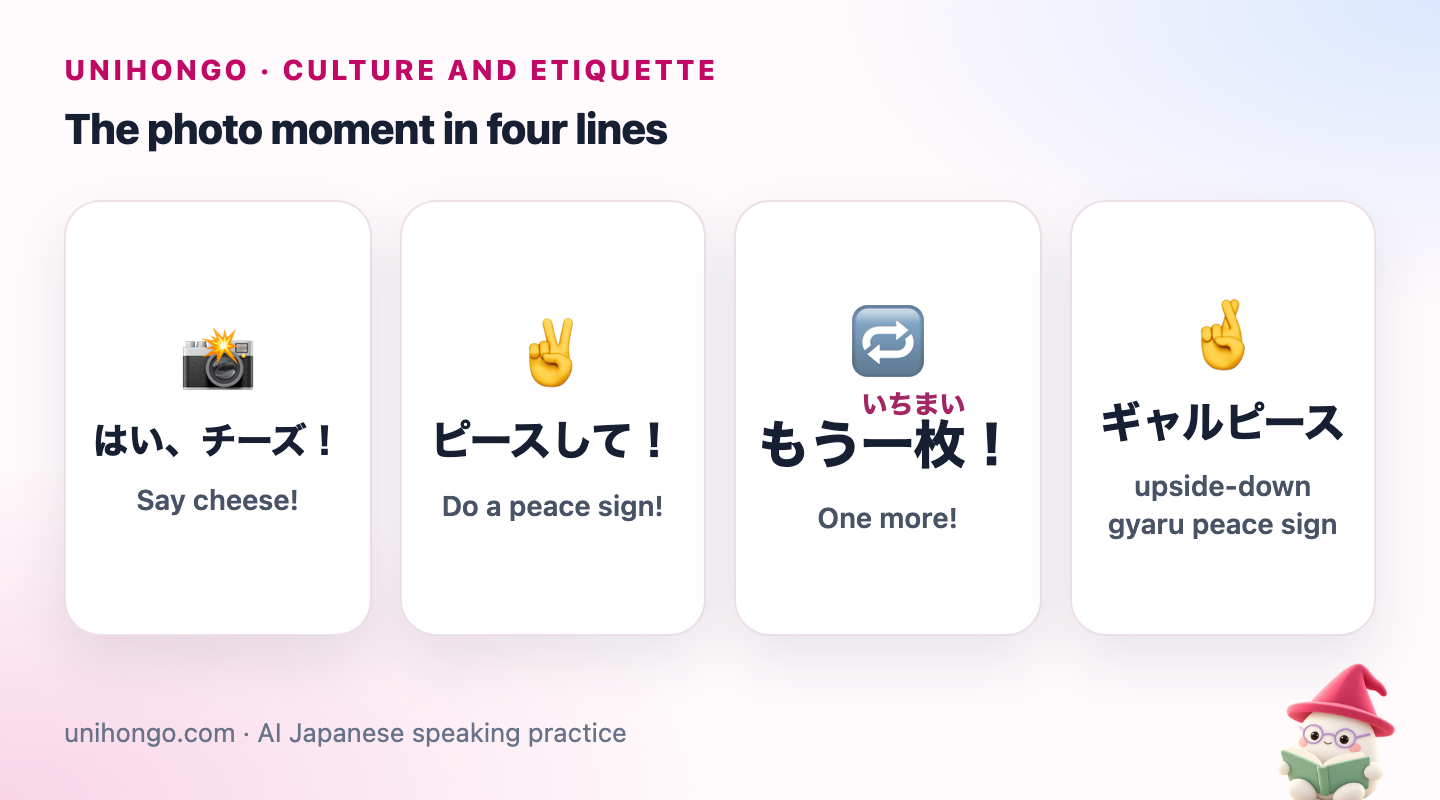
Every Japanese photo has a little script, and these four lines are its heart: the countdown, the pose, the request for one more, and the trendy variation teenagers love.
| Japanese | Romaji | Meaning |
|---|---|---|
| はい、チーズ! | Hai, chīzu! | Say cheese! |
| ピースして! | Pīsu shite! | Do a peace sign! |
| もう一枚! | Mō ichimai! | One more! |
| ギャルピース | gyaru pīsu | upside-down gyaru peace sign |
Pīsu comes from the English word peace, and in Japanese it simply names the V-shaped hand pose. Ichimai uses mai, the counter for flat things, because photos used to be prints; it is still used for digital photos today.
Where the V sign may have come from
The V sign has a long history abroad: victory during the Second World War, then peace in the anti-war movements of the 1960s. How it became a photo pose in Japan is less clear, and several stories circulate.
One popular story points to the 1972 Sapporo Winter Olympics, where an American figure skater who fell during her programme kept smiling and was later photographed making a V sign; she became very popular in Japan. Another story credits a camera TV advertisement from around the same time, in which a performer made the sign and it caught on as a playful gesture. Both stories are often told, and both may have played a part. What is certain is that the 1970s brought cheaper cameras, more snapshots, and a generation of children who copied what they saw on television.
| Japanese | Romaji | Meaning |
|---|---|---|
| ピースはいつから流行ったんですか。 | Pīsu wa itsu kara hayatta n desu ka. | When did the peace sign become popular? |
| 70年代からだと言われています。 | Nanajū nendai kara da to iwarete imasu. | It's said to date from the 1970s. |
| 諸説あります。 | Shosetsu arimasu. | There are various theories. |
Why the pose stayed popular
A habit that started as a fad has lasted for more than fifty years. Japanese people themselves give a few reasons when asked, and they tend to be practical rather than deep.
| Japanese | Romaji | Meaning |
|---|---|---|
| 手をどうしたらいいか分からない。 | Te o dō shitara ii ka wakaranai. | I don't know what to do with my hands. |
| とりあえずピースしとこう。 | Toriaezu pīsu shitokō. | Let's just do a peace sign. (casual) |
| 子どものころからの癖です。 | Kodomo no koro kara no kuse desu. | It's a habit from childhood. |
- It solves the what do I do with my hands problem, especially for people who feel shy in front of a camera.
- It looks cheerful and a little cute, which suits the friendly, playful mood of most snapshots.
- It is a group habit: when one person does it, others join in, and the photo looks united.
- Children learn it early, at kindergarten events and on school trips, so it feels natural for life.
Not everyone does it. Many adults prefer to smile without a pose, and some find the V sign childish. You will see it most at casual moments with friends and family, on trips and at events.
Variations: gyaru peace, double peace and finger hearts
The basic V has many cousins. Trends change quickly, especially among teenagers, so treat this as a snapshot rather than a rulebook.
| Japanese | Romaji | Meaning |
|---|---|---|
| ダブルピース | daburu pīsu | double peace sign |
| 指ハート | yubi hāto | finger heart |
| 最近はギャルピースが流行っています。 | Saikin wa gyaru pīsu ga hayatte imasu. | Gyaru peace is trendy these days. |
| Pose | Japanese name | Mood |
|---|---|---|
| V sign with one hand | Pīsu | Classic, works for all ages |
| V signs with both hands | Daburu pīsu | Extra cheerful, playful |
| Upside-down V near the chin | Gyaru pīsu | Trendy, youthful, a bit cheeky |
| Thumb and finger crossed into a heart | Yubi hāto | Cute; spread from Korean pop culture |
| Both hands forming a heart | Hāto | Sweet; couples and friends |
Taking photos together in Japanese
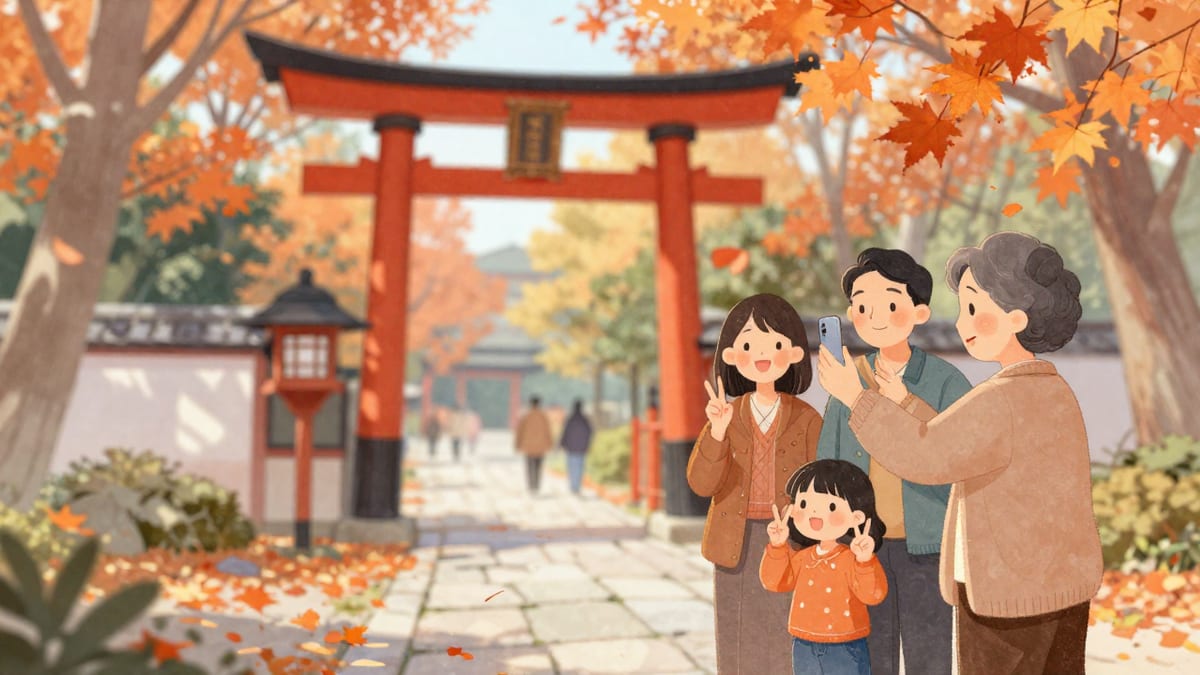
The best use of the peace sign is as an excuse to talk. Asking a stranger to take your photo, or offering to take theirs, is one of the friendliest small conversations you can have as a traveller. Use the polite forms with strangers and the casual ones with friends.
| Japanese | Romaji | Meaning |
|---|---|---|
| すみません、写真を撮っていただけませんか。 | Sumimasen, shashin o totte itadakemasen ka. | Excuse me, could you take our photo? (polite) |
| いいですよ。撮りますよ。 | Ii desu yo. Torimasu yo. | Stranger: Sure. Ready, I'm taking it. |
| はい、ピース! | Hai, pīsu! | Stranger: OK, peace! |
| もう一枚いきます。 | Mō ichimai ikimasu. | Stranger: One more. |
| ありがとうございました。 | Arigatō gozaimashita. | You: Thank you very much. |
| よかったら、撮りましょうか。 | Yokattara, torimashō ka. | Shall I take one for you, if you like? |
| 一緒に撮りませんか。 | Issho ni torimasen ka. | Would you like to take a photo together? |
Japanese photographers have their own countdown jokes. Besides hai, chīzu, some say ichi tasu ichi wa? one plus one is? so that everyone answers ni! two, with a smile-shaped mouth. Sēno, ready, set, is used when a group jumps or poses together.
When not to make a V
- Official photos: passports, residence cards, CV photos and company ID cards need a neutral face and no pose.
- Formal events: a funeral, a memorial service or a solemn ceremony is no place for poses.
- Some workplaces: business portraits and team photos for a company website are usually neutral.
- Photos with strangers' children: do not ask other people's children to pose; ask the parents before taking any photo.
- Sacred places where photos are not allowed: some temple halls and shrines forbid photography inside, so check first.
Common learner mistakes
None of these mistakes will offend anyone, but fixing them makes the moment smoother. Asking for a photo is often a traveller's first real conversation in Japanese, so it is worth getting the polite version ready before you need it.
| Japanese | Romaji | Meaning |
|---|---|---|
| ここを押すだけです。 | Koko o osu dake desu. | You just press here. |
| 縦でお願いできますか。 | Tate de onegai dekimasu ka. | Could you take it vertically, please? |
| 後ろのお寺も入れてください。 | Ushiro no otera mo irete kudasai. | Please get the temple behind us in too. |
- Saying pīsu sain. People understand it, but in everyday speech the pose is simply pīsu, and the request is pīsu shite.
- Using totte kureru? with a stranger. It is casual; with someone you do not know, totte itadakemasen ka or totte moraemasen ka is much better.
- Forgetting to say thank you after the photo. A quick arigatō gozaimashita and a small bow end the exchange warmly.
- Saying ichi, ni, san for the countdown. It works, but Japanese photographers more often say hai, chīzu or sēno.
- Handing your phone over without unlocking the camera. Open the camera first, so the stranger only has to press the button.
Practise the photo script with Mocchi
Ask Mocchi: give me five ways to ask someone to take my photo, from casual to very polite, then quiz me on them. Mocchi lays out the levels, from totte kureru? to totte itadakemasen ka, and remembers which form you keep reaching for at the wrong moment, so your next /review starts there.
When you are ready to say it out loud, open AI Sensei and ask Sakura-sensei to play a friendly local at a viewpoint. Ask her to take your photo, offer to take hers, and chat about where you are from; the session report will show which lines came out naturally.