
Saying you miss home
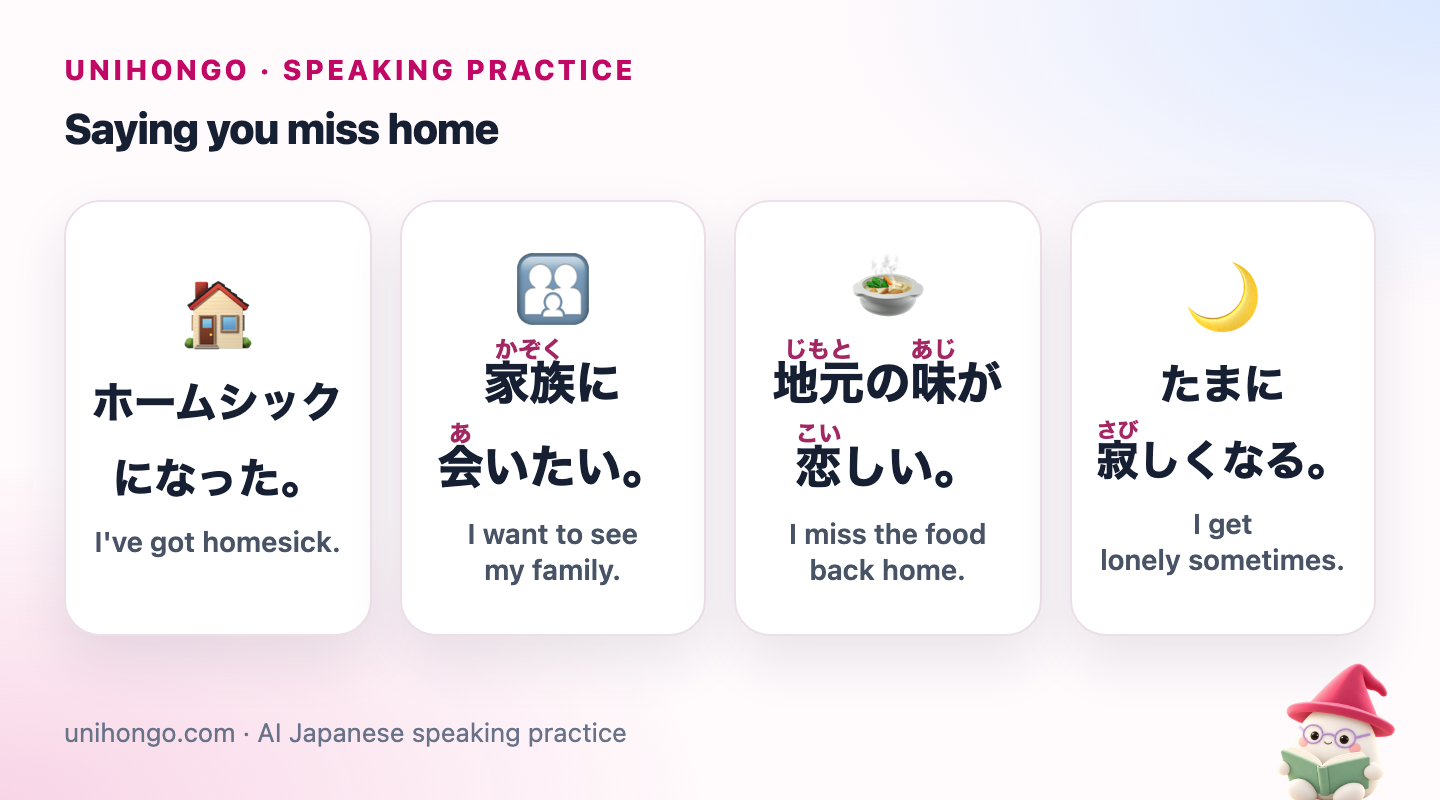
Homesickness in Japanese is usually expressed with a loanword plus a few specific phrases. Hōmushikku ni natta names the feeling. Kazoku ni aitai says who you miss. Jimoto no aji ga koishii says what you miss. Tama ni sabishiku naru, I get lonely sometimes, admits it lightly.
| Japanese | Romaji | Meaning |
|---|---|---|
| ホームシックになった。 | Hōmushikku ni natta. | I've got homesick. |
| 家族に会いたい。 | Kazoku ni aitai. | I want to see my family. |
| 地元の味が恋しい。 | Jimoto no aji ga koishii. | I miss the food back home. |
| たまに寂しくなる。 | Tama ni sabishiku naru. | I get lonely sometimes. |
Japanese people who move from the countryside to a big city for university or work talk about homesickness too, so the topic is familiar and sympathetic. A Japanese friend may well have a story of their own.
Hōmushikku: the word and its grammar
Hōmushikku comes from English homesick, but in Japanese it is a noun, so you fall into it with ni naru. Hōmushikku ni natta means I've got homesick; hōmushikku desu also works for a current state. Gimi, a touch of, softens it, and natchatta adds a gentle, rueful tone.
| Japanese | Romaji | Meaning |
|---|---|---|
| ちょっとホームシック気味です。 | Chotto hōmushikku gimi desu. | I'm a little homesick. |
| 最近ホームシックになっちゃって。 | Saikin hōmushikku ni natchatte. | I've been homesick lately. |
| 日本に来て初めてホームシックになりました。 | Nihon ni kite hajimete hōmushikku ni narimashita. | I got homesick for the first time since coming to Japan. |
Homesickness usually comes and goes. Mada hōmushikku, still homesick, and mō naotta, I'm over it now, describe how it changes, and both are easy to drop into a chat.
Koishii, aitai and kaeritai
Koishii means missed, longed for. It is warm and slightly poetic, and it works well for food, places, seasons and even the weather. Aitai, I want to meet, is how Japanese says you miss a person. Kaeritai, I want to go back, is direct; with na at the end, kaeritai na, it sounds like a wistful thought rather than a decision to leave.
| Japanese | Romaji | Meaning |
|---|---|---|
| 母の料理が恋しい。 | Haha no ryōri ga koishii. | I miss my mum's cooking. |
| 地元の海が恋しいな。 | Jimoto no umi ga koishii na. | I miss the sea back home. |
| 友だちに会いたい。 | Tomodachi ni aitai. | I want to see my friends. |
| 国に帰りたいな。 | Kuni ni kaeritai na. | I'd like to go home. |
| 母国語で話したい。 | Bokokugo de hanashitai. | I want to speak my own language. |
Big cities in Japan have import supermarkets and international food shops, so ingredients from home can sometimes be found. Asking a friend doko de kaeru ka na, I wonder where I can buy it, can start a fun search together.
Kuni, jimoto and jikka: three kinds of home
English home covers several ideas that Japanese separates. Choosing the right word makes your Japanese sound natural, and Japanese people use the same words about themselves: a colleague from Hokkaido going back for New Year will say jikka ni kaeru.
| Word | Meaning | Example |
|---|---|---|
| Kuni | Your home country | Kuni no kazoku, my family back home |
| Jimoto | Your home town or local area | Jimoto no aji, the taste of home |
| Jikka | Your parents' home, where you grew up | Jikka ni kaeru, to go home to my parents' |
| Kokyō / furusato | Home town, with emotion | Common in songs and speeches |
Kokyō and furusato sound sentimental and are more common in writing and songs than in chat. In conversation, kuni and jimoto are the everyday choices.
Keeping it light
Many people find it easier to mention homesickness with a softener than to make it a serious confession. Chotto, a little, tama ni, sometimes, and a smile let a friend respond warmly without feeling they must fix anything. Adding a positive end, such as demo daijōbu, but I'm OK, is common.
If homesickness becomes heavy, lasts for weeks or affects sleep and study, talk to someone you trust. Universities and many employers in Japan have counselling services, and saying sōdan shitai koto ga aru n desu, there's something I'd like to talk about, is a good first line.
| Japanese | Romaji | Meaning |
|---|---|---|
| でも、大丈夫だよ。 | Demo, daijōbu da yo. | But I'm OK. |
| 話したら、ちょっと元気出た。 | Hanashitara, chotto genki deta. | Talking about it cheered me up a bit. |
| 相談したいことがあるんです。 | Sōdan shitai koto ga aru n desu. | There's something I'd like to talk about. |
Video calls home, one familiar routine, and cooking your own food are things many people living abroad find helpful, and they all make easy, positive conversation topics.
A spoken exchange: a friend notices
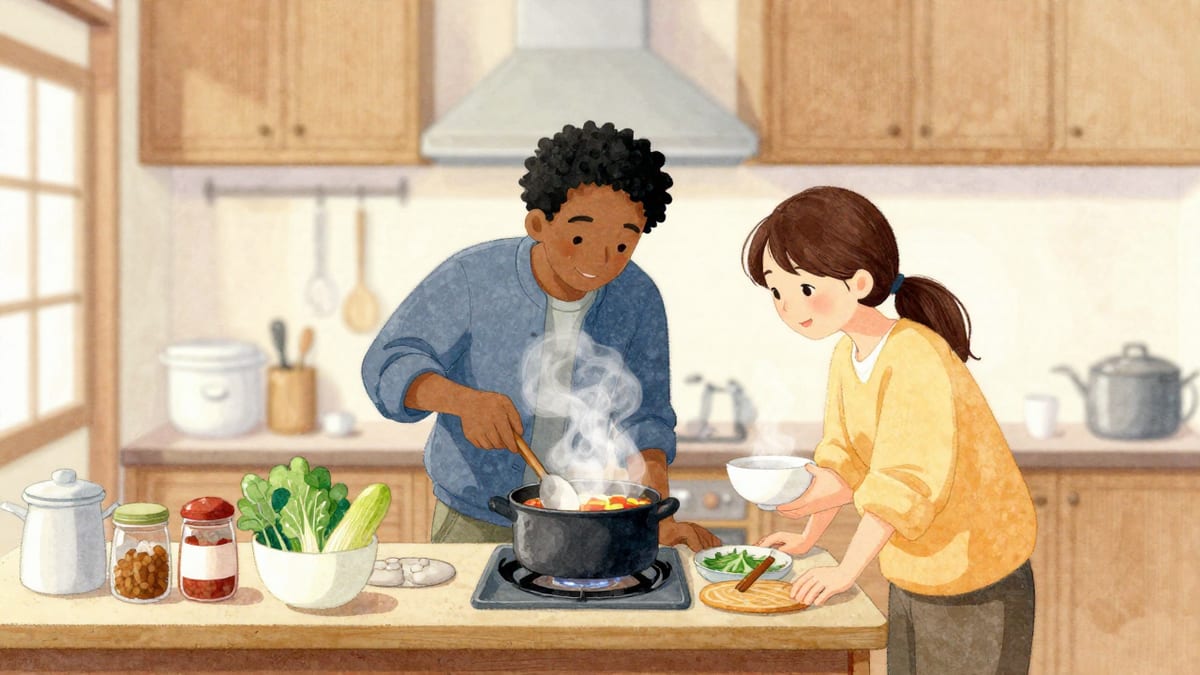
Your Japanese friend has noticed you have been quiet at lunch all week. You tell them, and they respond the way many Japanese friends would: with an invitation rather than advice.
| Japanese | Romaji | Meaning |
|---|---|---|
| 最近元気ないね。大丈夫? | Saikin genki nai ne. Daijōbu? | Friend: You've been quiet lately. Are you OK? |
| うん、ちょっとホームシックになっちゃって。 | Un, chotto hōmushikku ni natchatte. | You: Yeah, I'm just a bit homesick. |
| そっか。国の家族に会いたい? | Sokka. Kuni no kazoku ni aitai? | Friend: I see. Do you miss your family? |
| うん。母の料理が恋しいな。 | Un. Haha no ryōri ga koishii na. | You: Yeah. I miss my mum's cooking. |
| 今度、一緒に作ってみない? | Kondo, issho ni tsukutte minai? | Friend: Want to try making it together? |
| いいね!話したら、ちょっと元気出た。 | Ii ne! Hanashitara, chotto genki deta. | You: I'd love that! I feel better already. |
Sokka, I see, is a soft casual acknowledgement. It tells the speaker you are listening without judging, and it is the perfect bridge to a gentle question.
When a friend is the homesick one
If a friend misses home, the most helpful Japanese lines are simple: show you noticed, offer to listen, and suggest something together. Hanashi kiku yo, I'll listen, and issho ni gohan tabeyō, let's eat together, do more than advice. Asking about their home gives them a happy way to talk about it.
Avoid brushing it off with sugu nareru yo, you'll get used to it soon. It is meant kindly but can feel dismissive. Wakaru yo, I understand, works better, especially if you have lived away from home yourself. If you are the homesick one and a friend says these things to you, arigatō, ureshii, thank you, that means a lot, is the natural reply.
| Japanese | Romaji | Meaning |
|---|---|---|
| 話、聞くよ。 | Hanashi, kiku yo. | I'm here to listen. |
| 一緒にご飯食べよう。 | Issho ni gohan tabeyō. | Let's have a meal together. |
| 地元のおすすめの料理って何? | Jimoto no osusume no ryōri tte nani? | What's the best food back home? |
| わかるよ。私も一人暮らしの時そうだった。 | Wakaru yo. Watashi mo hitorigurashi no toki sō datta. | I get it. I felt that way when I first lived alone. |
Common mistakes
- Saying natsukashii for I miss it. Use koishii or aitai; natsukashii is for fond memories.
- Saying hōmushikku suru. It is a noun: hōmushikku ni naru.
- Using furusato in casual chat. It sounds like a song lyric; say jimoto or kuni.
- Saying kaeritai flatly to coworkers. Without na or a softener, it can sound like you plan to quit.
Homesickness is a normal part of living abroad, and talking about it in Japanese is real conversation practice. The words in this guide let you share it honestly and lightly.