

Finding the entrance: noren, shoes and the ゆ sign
A sentō is often easy to spot: a tall chimney behind the building, and a cloth curtain, noren, with the single hiragana ゆ, yu, meaning hot water. Older buildings may have a temple-style roof. Inside the door you will usually find a small area for taking off your shoes and a wall of shoe lockers, getabako, often with wooden keys you pull out and carry with you.
The curtains or doors are split by gender: otoko or 男 for men, onna or 女 for women. At some baths the sides swap on certain days, so read the curtain each time rather than relying on memory. Opening days and hours also vary; a sign reading teikyūbi tells you the regular closing day.
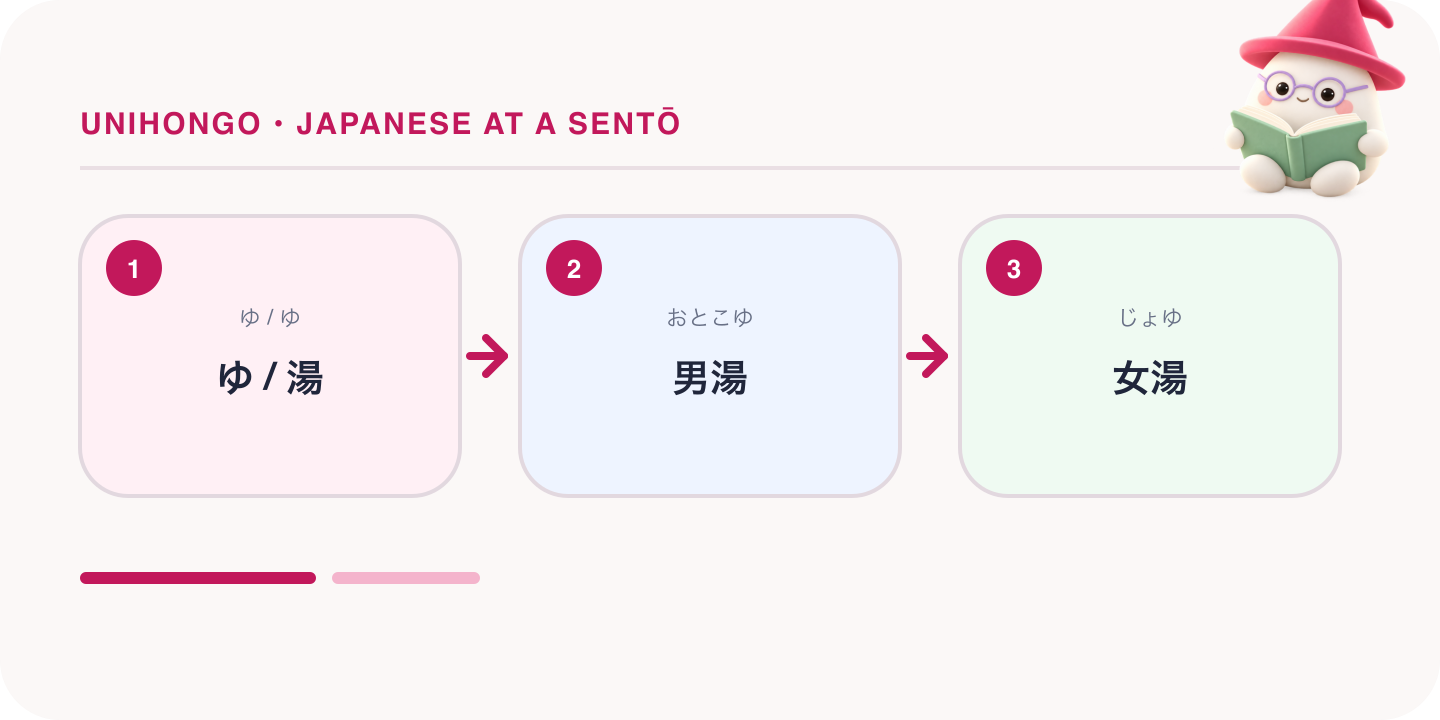
| Sign | Reading | Meaning |
|---|---|---|
| ゆ / 湯 | yu | Hot water, used to mark a bath |
| 男湯 | otoko-yu | Men's bath |
| 女湯 | onna-yu | Women's bath |
| 下足箱 | gesokubako | Shoe lockers |
| 営業時間 | eigyō jikan | Opening hours |
| 定休日 | teikyūbi | Regular closing day |
| 本日休業 | honjitsu kyūgyō | Closed today |
Paying at the bandai or the front desk
In a traditional sentō, you pay the attendant sitting on the bandai, a raised seat between the two changing rooms. In more modern buildings there is a front desk, furonto, in a shared lobby, and some baths use a ticket machine, kenbaiki, where you buy an entry ticket and hand it over.
This is also where you rent or buy anything you forgot. A small face towel, a bath towel, soap, shampoo and razors are commonly sold, and some baths offer a set, often called a tebura setto, meaning an empty-handed set. Saunas sometimes cost extra and may come with a wristband or a separate key. Prices differ between baths, so read the board by the entrance.
| Japanese | Romaji | Meaning |
|---|---|---|
| 大人一人お願いします。 | Otona hitori onegai shimasu. | One adult, please. |
| タオルは借りられますか。 | Taoru wa kariraremasu ka. | Can I rent a towel? |
| シャンプーと石鹸はありますか。 | Shanpū to sekken wa arimasu ka. | Do you have shampoo and soap? |
| サウナも利用します。 | Sauna mo riyō shimasu. | I'll use the sauna as well. |
| 何時まで開いていますか。 | Nanji made aite imasu ka. | What time are you open until? |
| 初めてなんですが、使い方を教えてもらえますか。 | Hajimete nan desu ga, tsukaikata o oshiete moraemasu ka. | It's my first time. Could you tell me how it works? |
The changing room: lockers and baskets
The changing room is the datsuijo. You will find lockers, rokkā, with a key on a wristband, or at some older baths simple baskets, kago, on shelves. Take everything off here; you enter the bathing area naked, carrying only a small towel and your toiletries.
Valuables are your own responsibility, and some baths have small valuables lockers, kichōhin rokkā, near the front. The changing room usually has a scale, hair dryers that may cost a coin, a fan and often a fridge selling drinks. Many regulars finish their visit with a bottle of milk or coffee milk here, a small ritual you will see at countless sentō.
| Japanese | Romaji | Meaning |
|---|---|---|
| 脱衣所 | datsuijo | Changing room |
| ロッカーの鍵 | rokkā no kagi | Locker key |
| 貴重品ロッカー | kichōhin rokkā | Valuables locker |
| ドライヤーは有料ですか。 | Doraiyā wa yūryō desu ka. | Do the hair dryers cost money? |
| このロッカー、使ってもいいですか。 | Kono rokkā, tsukatte mo ii desu ka. | Is it all right to use this locker? |
| 鍵が開かないんですが。 | Kagi ga akanai n desu ga. | My key won't open the locker. |
Washing before you soak
The most important rule at any sentō is that the bath is for soaking, not washing. Along the walls of the bathing area, the yokujō, there are washing stations, each with a low stool, a basin, a tap and usually a shower head. Sit down, wash your whole body and hair with soap, rinse off completely, and only then get into the bath.
Sit rather than stand while you shower so you do not spray the person next to you, and rinse the stool and basin when you finish. Before stepping into the bath, many people also pour a basin of bath water over themselves, kakeyu, to get used to the heat. Once in, keep your small towel out of the water; people fold it and put it on their head or on the edge of the bath. Tie up long hair so it does not touch the water.
- Wash and rinse thoroughly at the washing station first
- Stay seated while using the shower, and rinse your stool afterwards
- Pour a little hot water over yourself before entering the bath
- Keep your towel and hair out of the bath water
- Do not swim, splash or wash clothes in the bath
- Wipe yourself down with your small towel before returning to the changing room
Types of bath you will find
Even a small sentō often has several baths. The main bath is usually hot, and there may be a hotter one for regulars and a cooler one for everyone else. Water temperatures vary by bath, and many older sentō are known for running hot, so test the water before you commit.
Some baths are unusual for first-time visitors. The denki-buro, electric bath, passes a mild current through the water and gives a tingling sensation; if you have a pacemaker or heart condition, avoid it, and signs usually say so. Seasonal baths add citrus or leaves on certain days, such as yuzu around the winter solstice. And many sentō have a large painted mural on the wall, often of Mount Fuji, which has become a symbol of the sentō itself.
| Japanese | Reading | What it is |
|---|---|---|
| 主浴槽 | shuyokusō | Main bath |
| あつ湯 | atsuyu | Extra-hot bath |
| ぬる湯 | nuruyu | Lukewarm bath |
| ジェットバス | jetto basu | Jet bath |
| 電気風呂 | denki-buro | Electric bath with a mild current |
| 水風呂 | mizuburo | Cold plunge bath |
| サウナ | sauna | Sauna, sometimes an extra charge |
| 薬湯 | yakutō | Herbal or medicinal bath |
| 露天風呂 | rotenburo | Outdoor bath |
If you want to ask about a bath, point and say kore wa nan no ofuro desu ka, what kind of bath is this? The regulars are often happy to tell you, and sometimes to warn you about the electric one.
Tattoos: ask before you pay
Tattoos, irezumi or tatū, are the question many visitors worry about. There is no single rule. Many traditional neighbourhood sentō accept tattooed customers, while some super sentō, spa complexes and hotel baths refuse them outright, and others allow small tattoos if you cover them with a patch. Policies can also change, so an old blog post is not a reliable guide.
The simplest approach is to check the sign at the entrance or the facility's website, and if you are unsure, ask at the front before you pay. A polite, direct question is normal and nobody will be offended by it.
| Japanese | Romaji | Meaning |
|---|---|---|
| 入れ墨がありますが、大丈夫ですか。 | Irezumi ga arimasu ga, daijōbu desu ka. | I have a tattoo. Is that all right? |
| 小さいタトゥーなんですが、入れますか。 | Chiisai tatū nan desu ga, hairemasu ka. | It's a small tattoo. Can I go in? |
| シールで隠せば大丈夫ですか。 | Shīru de kakuseba daijōbu desu ka. | Is it OK if I cover it with a patch? |
| 入れ墨・タトゥーのある方の入浴はお断りします。 | Irezumi tatū no aru kata no nyūyoku wa okotowari shimasu. | Bathers with tattoos are not admitted. |
Super sentō and larger bath complexes
A sūpā sentō is a larger bathing facility, often on the edge of town with its own car park. They usually have many baths, several saunas, outdoor baths, a restaurant, relaxation rooms and sometimes massage. Prices are set by each facility rather than the local cap for ordinary sentō, and entry often includes towels.
The etiquette is the same, but the system is more mechanical. You often pay at a ticket machine or on exit, using a wristband key to charge food and extras to your account, which you settle at the front when you leave. Tattoo policies at these places tend to be stricter, so check first.
| Japanese | Romaji | Meaning |
|---|---|---|
| タオルは料金に含まれていますか。 | Taoru wa ryōkin ni fukumarete imasu ka. | Are towels included in the price? |
| お会計は帰る時ですか。 | Okaikei wa kaeru toki desu ka. | Do I pay when I leave? |
| リストバンドで精算してください。 | Risutobando de seisan shite kudasai. | Please settle your bill with the wristband. |
| 休憩室はどこですか。 | Kyūkeishitsu wa doko desu ka. | Where is the relaxation room? |
When something goes wrong
Most problems at a sentō are small: a lost key, a locker that will not open, feeling dizzy from the heat. For keys, go to the bandai or front desk wrapped in a towel or dressed, and explain. Staff have spare keys and deal with this all the time.
Feeling faint, nobose, from staying in hot water too long is common, especially after a sauna. Get out, sit down somewhere cool and drink water, and tell staff if it does not pass. If someone else looks unwell, say daijōbu desu ka and call the staff straight away.
| Japanese | Romaji | Meaning |
|---|---|---|
| 鍵をなくしてしまいました。 | Kagi o nakushite shimaimashita. | I've lost my key. |
| のぼせてしまいました。 | Nobosete shimaimashita. | I feel faint from the heat. |
| 少し休んでもいいですか。 | Sukoshi yasunde mo ii desu ka. | May I rest for a moment? |
| すみません、お湯が熱すぎます。 | Sumimasen, oyu ga atsusugimasu. | Excuse me, the water is too hot for me. |
| 水を足してもいいですか。 | Mizu o tashite mo ii desu ka. | May I add cold water? |
| 大丈夫ですか。スタッフを呼びます。 | Daijōbu desu ka. Sutaffu o yobimasu. | Are you all right? I'll call the staff. |