
Four words of a ski season
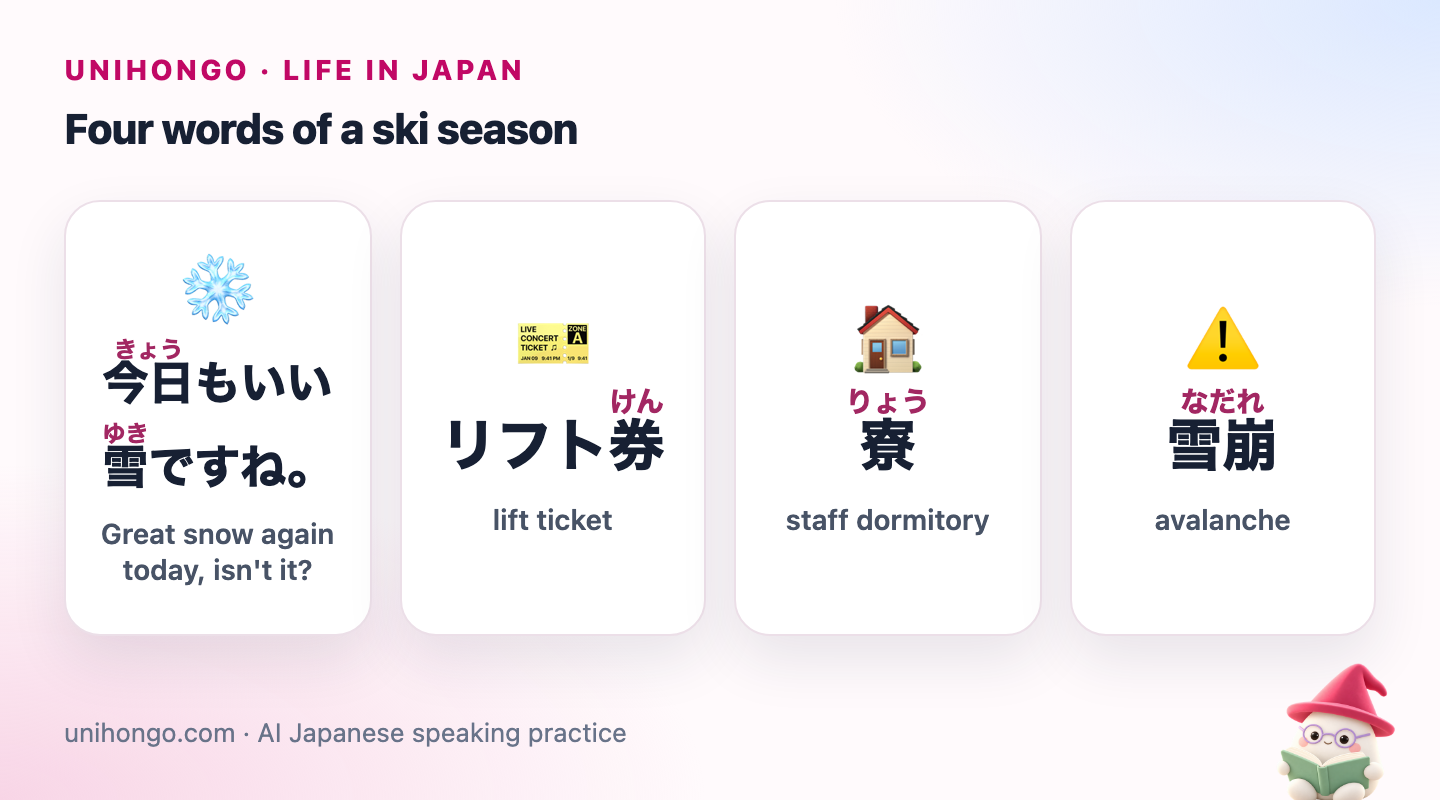
Kyō mo ii yuki desu ne, great snow again today, is the greeting of every resort morning and a safe opener with guests and coworkers alike. Rifutoken (リフト券) is the lift ticket you sell or check. Ryō (寮) is the staff dormitory where most live-in workers spend the season. Nadare (雪崩) is an avalanche, the word that must register without translation. Around them sit sukījō (スキー場), a ski resort, and sumikomi (住み込み), live-in work with accommodation provided.
| Japanese | Romaji | Meaning |
|---|---|---|
| 今日もいい雪ですね。 | Kyō mo ii yuki desu ne. | Great snow again today, isn't it? |
| リフト券 | rifutoken | lift ticket |
| 寮 | ryō | staff dormitory |
| 雪崩 | nadare | avalanche |
| スキー場 | sukījō | ski resort |
| 住み込み | sumikomi | live-in work |
Getting the job
Recruiting starts in autumn. Listings use the words tōki (冬季), winter season; shīzun sutaffu, seasonal staff; sumikomi; ryōhi (寮費), dorm rent, often deducted from pay; and shokuji tsuki (食事付き), meals included. Interviews are often by video and short. Say the dates you can work, your relevant experience, your visa type, and be honest about your Japanese; benkyōchū, still studying, with ganbarimasu, is better received than overclaiming. Jikyū (時給) is the hourly wage, and conditions vary a great deal between resorts and employers.
Before you sign, read the keiyakusho (契約書), the contract, for the exact dates, the hourly wage, how dorm rent and meals are deducted, whether travel to the resort is reimbursed, and what happens if the season is cut short by poor snow. Ask about days off, kyūjitsu (休日), and whether a staff lift pass is included; most resorts give one, and for many people it is the real reason to take the job. If anything in the contract is unclear, ask for it to be explained before you travel, not after you arrive.
| Japanese | Romaji | Meaning |
|---|---|---|
| 冬のシーズンスタッフに応募したいです。 | Fuyu no shīzun sutaffu ni ōbo shitai desu. | I'd like to apply for winter seasonal staff. |
| 12月から3月まで働けます。 | Jūnigatsu kara sangatsu made hatarakemasu. | I can work from December to March. |
| 寮と食事はありますか。 | Ryō to shokuji wa arimasu ka. | Is there a dorm and meals? |
| スノーボードの経験があります。 | Sunōbōdo no keiken ga arimasu. | I have snowboarding experience. |
| 日本語は勉強中ですが、頑張ります。 | Nihongo wa benkyōchū desu ga, ganbarimasu. | My Japanese is still a work in progress, but I'll do my best. |
| ビザの種類はワーキングホリデーです。 | Biza no shurui wa wākingu horidē desu. | My visa type is working holiday. |
| Job | Reading | Japanese you need most |
|---|---|---|
| リフト係 | rifuto gakari | Ticket checks, safety calls, weather words |
| レンタル | rentaru | Sizes, fitting, return times |
| インストラクター | insutorakutā | Instructions, encouragement, body parts |
| ホテル清掃 | hoteru seisō | Room words, coworker Japanese |
| レストラン | resutoran | Orders, allergies, queues |
| 送迎ドライバー | sōgei doraibā | Times, places, luggage |
Guest service at the lift and rental counter
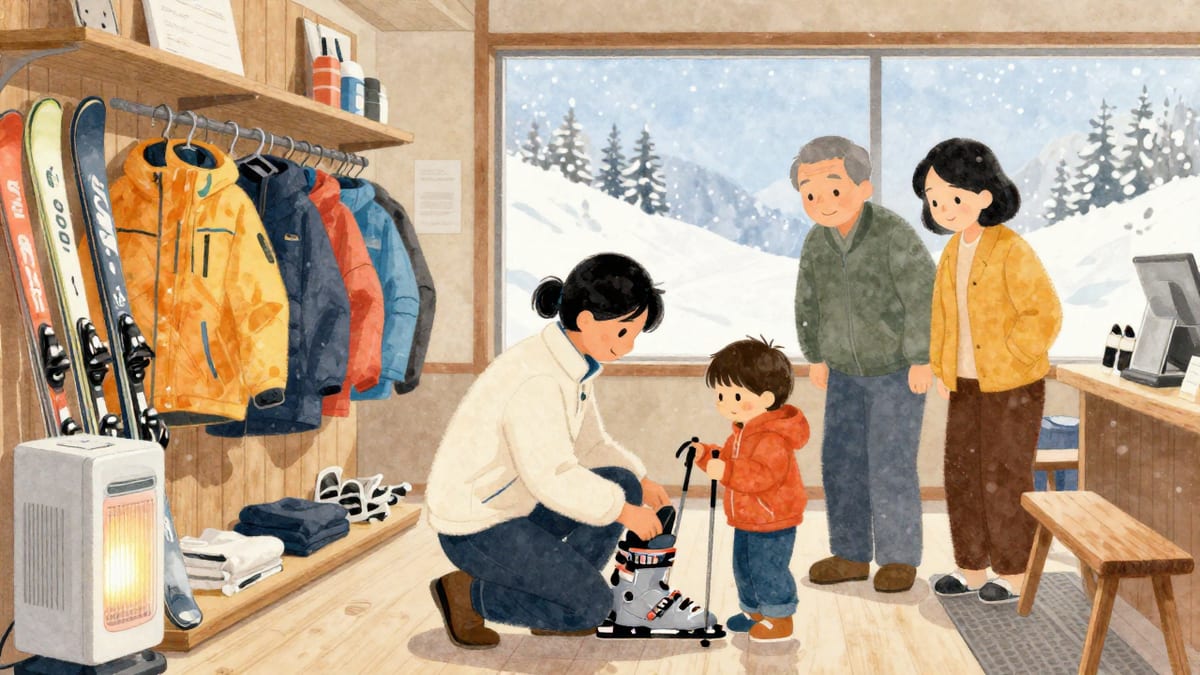
Guest lines are polite masu forms, short, and the same all day. Kochira desu, here it is, with a gesture, solves half of counter work. At rental, ask the shoe size, check the boots, and give the return time, henkyaku (返却). Point beginners to the shoshinsha kōsu (初心者コース). Send everyone off with ki o tsukete itterasshai, take care and off you go, which Japanese guests hear as warm rather than formal.
| Japanese | Romaji | Meaning |
|---|---|---|
| いらっしゃいませ。 | Irasshaimase. | Welcome. |
| リフト券はこちらです。 | Rifutoken wa kochira desu. | Here is your lift ticket. |
| 靴のサイズはいくつですか。 | Kutsu no saizu wa ikutsu desu ka. | What is your shoe size? |
| ブーツはきつくないですか。 | Būtsu wa kitsukunai desu ka. | Are the boots too tight? |
| 返却は5時までです。 | Henkyaku wa goji made desu. | Returns are by five o'clock. |
| 初心者コースはあちらです。 | Shoshinsha kōsu wa achira desu. | The beginner slope is over there. |
| 気をつけて行ってらっしゃい。 | Ki o tsukete itterasshai. | Take care, have a good run. |
Coworkers: the Japanese of a shift
Workplace Japanese is a handful of ritual phrases. Otsukaresama desu greets a colleague at any hour and thanks them for their effort; it is both hello and well done. Kyūkei ni hairimasu announces your break, and osaki ni shitsurei shimasu excuses you when you leave before others. Yukikaki (雪かき), snow clearing, is the early-morning job everyone shares, and offering to help with it buys goodwill for the whole season. When you miss an instruction, ask for it again immediately; a nod you did not mean causes problems later.
| Japanese | Romaji | Meaning |
|---|---|---|
| お疲れ様です。 | Otsukaresama desu. | Hello, and thanks for your work (to coworkers). |
| 今日のシフトは何時までですか。 | Kyō no shifuto wa nanji made desu ka. | Until what time is my shift today? |
| 休憩に入ります。 | Kyūkei ni hairimasu. | I'm going on break. |
| 雪かきを手伝います。 | Yukikaki o tetsudaimasu. | I'll help with snow clearing. |
| すみません、もう一度お願いします。 | Sumimasen, mō ichido onegai shimasu. | Sorry, once more please. |
| お先に失礼します。 | Osaki ni shitsurei shimasu. | I'm heading off before you. |
Dorm life
Staff dorms are shared, close and cold outside. The kyōdō kitchin (共同キッチン), shared kitchen, and the sentakuki (洗濯機), washing machine, are the two places where rules matter; ask before you use anything. Some dorms have a mongen (門限), a curfew, especially where staff are young. The reward is the social life: trips to the onsen, nabe hot pot evenings, and skiing with coworkers on days off, which is where your casual Japanese will grow.
| Japanese | Romaji | Meaning |
|---|---|---|
| 洗濯機を使ってもいいですか。 | Sentakuki o tsukatte mo ii desu ka. | May I use the washing machine? |
| 門限は何時ですか。 | Mongen wa nanji desu ka. | What time is curfew? |
| 夜は静かにしましょう。 | Yoru wa shizuka ni shimashō. | Let's keep it quiet at night. |
| 温泉に行きませんか。 | Onsen ni ikimasen ka. | Shall we go to the hot spring? |
| 休みの日に一緒に滑りましょう。 | Yasumi no hi ni issho ni suberimashō. | Let's ski together on our day off. |
| この鍋、一緒に食べませんか。 | Kono nabe, issho ni tabemasen ka. | Want to share this hot pot? |
Safety words you must understand
Resort safety runs on a short vocabulary, and here listening matters more than speaking. Fubuki (吹雪) is a blizzard and shikai (視界) is visibility; together they close lifts. Kōsu gai (コース外) is off-piste and tachiiri kinshi (立ち入り禁止) is no entry, both on signs and in patrol calls. Keganin (けが人) is an injured person, kyūkyūsha (救急車) is an ambulance, and kyūjo (救助) is rescue. Tōketsu (凍結) means frozen, and michi ga kōtte imasu, the road is icy, is a daily warning for shuttle drivers. If you hear nadare, stop and listen.
| Japanese | Romaji | Meaning |
|---|---|---|
| 吹雪で視界が悪いです。 | Fubuki de shikai ga warui desu. | Visibility is bad in the blizzard. |
| コース外は危険です。 | Kōsu gai wa kiken desu. | Off-piste is dangerous. |
| 立ち入り禁止です。 | Tachiiri kinshi desu. | Entry is prohibited. |
| けが人がいます。 | Keganin ga imasu. | Someone is injured. |
| 救急車を呼んでください。 | Kyūkyūsha o yonde kudasai. | Please call an ambulance. |
| 動かないでください。 | Ugokanaide kudasai. | Please don't move. |
| 道が凍っています。 | Michi ga kōtte imasu. | The road is icy. |
The emergency number for an ambulance in Japan is 119. Give the place first, then what happened, then how many people are hurt.
Snow talk for the lift queue
Every conversation at a resort returns to the snow. Shinsetsu (新雪) is fresh snow and paudā is powder; assetsu (圧雪) is groomed, packed snow. Snowfall is given in centimetres, and the morning report is the small talk of the day. Saikō, the best, is the universal verdict on a good run.
| Japanese | Romaji | Meaning |
|---|---|---|
| 今朝、30センチ降りました。 | Kesa, sanjussenchi furimashita. | Thirty centimetres fell this morning. |
| 新雪が最高でした。 | Shinsetsu ga saikō deshita. | The fresh snow was amazing. |
| 午後は圧雪になります。 | Gogo wa assetsu ni narimasu. | It'll be packed snow in the afternoon. |
| 明日は晴れそうです。 | Asu wa haresō desu. | Looks like it'll be clear tomorrow. |
Common mistakes
- Nodding through a briefing. Ask mō ichido onegai shimasu at once; a missed safety instruction is the one mistake that matters.
- Using casual Japanese with guests. Even at a relaxed resort, guests get masu forms; casual speech is for the dorm.
- Skipping otsukaresama desu. It is the glue of a Japanese workplace, and silence reads as coldness.
- Guessing sizes in a different system. Confirm centimetres before handing over boots.
- Treating the dorm like a hostel. Shared kitchens and quiet hours are taken seriously, and the people you annoy are your coworkers tomorrow.