
What ojamashimasu means
The core word is jama (邪魔): a hindrance, an obstacle, something in the way. In daily life you hear it in sentences like jama da yo, you're in the way. Add the polite prefix o- and the verb shimasu (I do), and you get ojama shimasu: I will be in your way. It is a humble apology in advance for taking up the host's time and space.
Japanese often frames a visit this way, from the guest's side, as a small burden on the host. That does not mean visiting is unwelcome. The phrase simply shows that you do not take the invitation for granted, and the host's warm reply settles it.
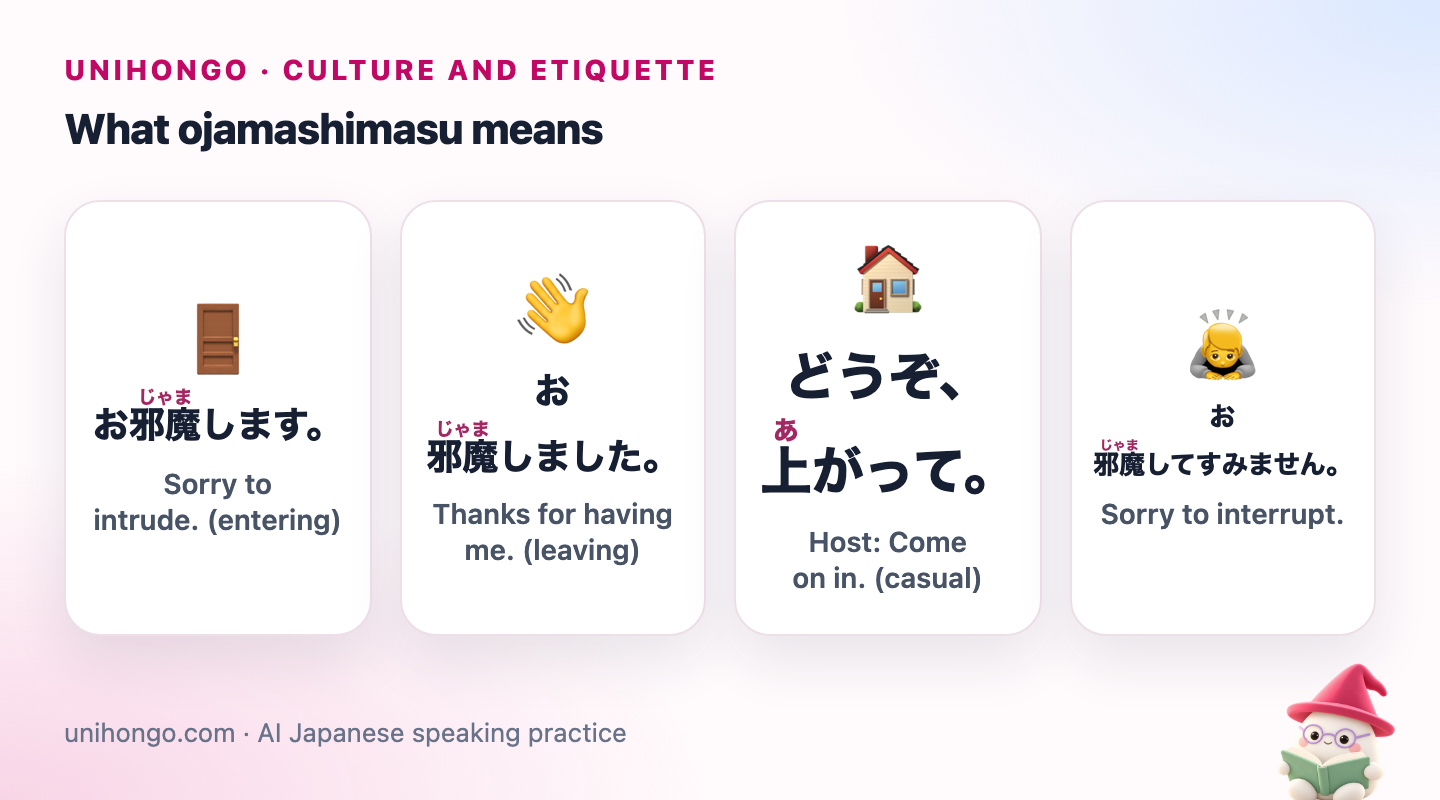
| Japanese | Romaji | Meaning |
|---|---|---|
| お邪魔します。 | Ojama shimasu. | Sorry to intrude. (entering) |
| お邪魔しました。 | Ojama shimashita. | Thanks for having me. (leaving) |
| どうぞ、上がって。 | Dōzo, agatte. | Host: Come on in. (casual) |
| お邪魔してすみません。 | Ojama shite sumimasen. | Sorry to interrupt. |
When you say it: a visit from door to goodbye
The phrase belongs to a specific moment. When the host opens the door, you greet them first with konnichiwa or a simple hello. Then, as you step over the threshold into the genkan, the entrance area where shoes come off, you say ojamashimasu. Some people say it again, more quietly, when they step up from the genkan into the house itself.
Next comes the gift, if you brought one. The traditional line tsumaranai mono desu ga (it is only a small thing) is still heard, though many people now prefer honno kimochi desu ga (just a small token of my feelings), which sounds less self-deprecating. Customs vary between families, and nobody expects a foreign guest to be perfect.
| Japanese | Romaji | Meaning |
|---|---|---|
| こんにちは。お邪魔します。 | Konnichiwa. Ojama shimasu. | Guest: Hello. Sorry to intrude. |
| いらっしゃい。どうぞ上がって。 | Irasshai. Dōzo agatte. | Host: Welcome. Come on up. (casual) |
| どうぞお上がりください。 | Dōzo oagari kudasai. | Host: Please come in. (polite) |
| 散らかってるけど、どうぞ。 | Chirakatteru kedo, dōzo. | Host: It's a bit messy, but come in. |
| これ、ほんの気持ちですが。 | Kore, honno kimochi desu ga. | Guest: This is just a small token. |
| お構いなく。 | Okamainaku. | Guest: Please don't go to any trouble. |
Okamainaku is useful when the host starts making tea or bringing snacks. It politely says don't trouble yourself, but you are still expected to accept what is served.
Leaving: ojamashimashita
When the visit ends, the verb moves into the past: ojamashimashita, I have been in your way. It closes the apology you opened at the door and doubles as thanks. You normally say it at the genkan once your shoes are back on, often with a bow, and add a word of thanks for the food or the time.
Hosts usually answer with an invitation to return. Between friends this can be quick and casual; with a friend's parents, it is worth using the full polite version.
| Japanese | Romaji | Meaning |
|---|---|---|
| そろそろ失礼します。 | Sorosoro shitsurei shimasu. | I should be going soon. |
| 今日はありがとうございました。 | Kyō wa arigatō gozaimashita. | Thank you for today. |
| ごちそうさまでした。 | Gochisōsama deshita. | Thank you for the meal. |
| お邪魔しました。 | Ojama shimashita. | Thank you for having me. |
| また来てね。 | Mata kite ne. | Host: Come again. (casual) |
| またいつでもいらしてください。 | Mata itsudemo irashite kudasai. | Host: Please come again any time. (polite) |
Other uses: offices, calls and interrupting
The idea of being in someone's way stretches to many places that are not homes. Wherever you are entering another person's space, or taking their attention, ojamashimasu can fit.
| Japanese | Romaji | Meaning |
|---|---|---|
| ちょっとお邪魔します。 | Chotto ojama shimasu. | Excuse me, just squeezing through. |
| お仕事中、お邪魔してすみません。 | Oshigotochū, ojama shite sumimasen. | Sorry to bother you while you're working. |
| 明日、お邪魔してもいいですか。 | Ashita, ojama shite mo ii desu ka. | May I come over tomorrow? |
| では、明日三時に伺います。 | Dewa, ashita sanji ni ukagaimasu. | Then I'll visit at three tomorrow. (humble, business) |
- Dropping by a friend's or partner's workplace, a club room or a teacher's office: ojamashimasu as you come in.
- Visiting another company: shitsurei shimasu is the standard line when entering a meeting room, but ojamashimasu is also heard when you are received into someone's office, and ojamashimashita on the way out.
- Joining an online call or a group chat that someone else set up: many people say or type ojamashimasu as they join.
- Squeezing past someone, or sitting down at a table where people are already talking: chotto ojamashimasu.
- Interrupting someone's work: oshigotochū ojama shite sumimasen, sorry to bother you while you're working.
- Asking to visit: ashita ojama shite mo ii desu ka, may I come over tomorrow? In business, ukagau is more humble.
Jama on its own: careful, it can be rude
Without the polite wrapping, jama is blunt. Jama da or jama! means you are in the way, and said to a stranger it is rude. Jama shinaide (don't disturb me) is fine to a sibling but sharp to anyone else. The noun also appears in the playful word ojamamushi (お邪魔虫), literally a bothersome bug, used for a third wheel on a couple's date.
| Japanese | Romaji | Meaning |
|---|---|---|
| 邪魔しないで。 | Jama shinaide. | Don't disturb me. (casual, sharp) |
| 邪魔だよ。 | Jama da yo. | You're in the way. (rude to strangers) |
| 私、お邪魔虫かな。 | Watashi, ojamamushi ka na. | Am I being a third wheel? (joking) |
| すみません、通してください。 | Sumimasen, tōshite kudasai. | Excuse me, please let me through. |
A visit to a friend's family
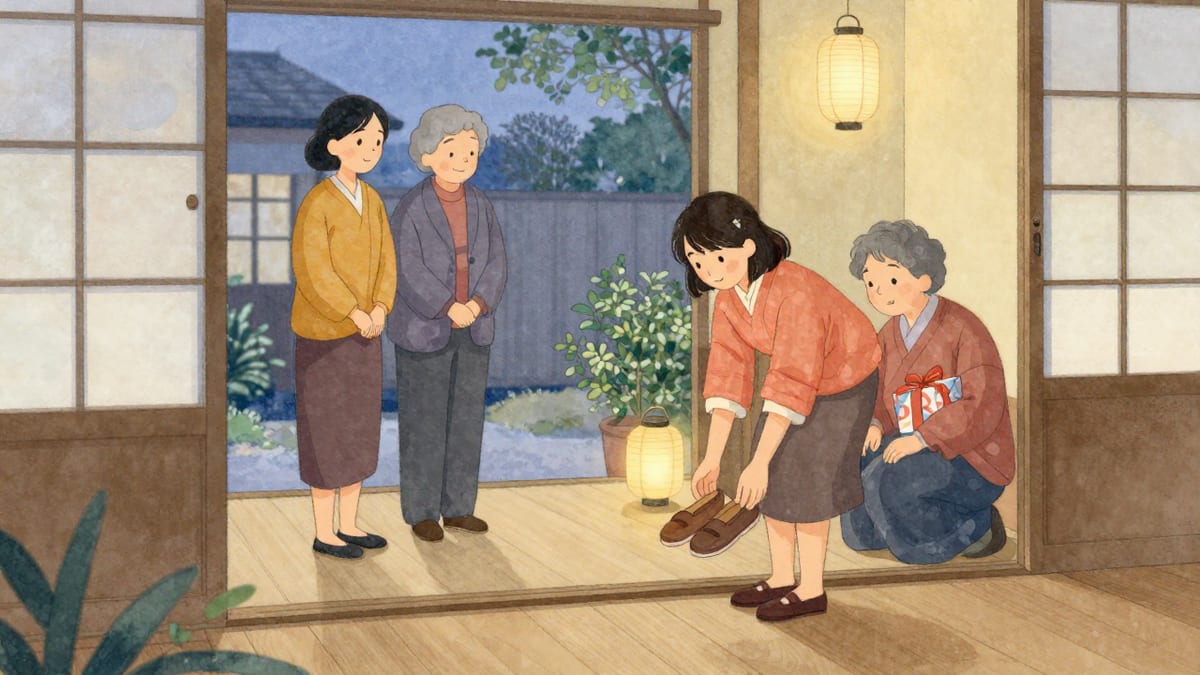
Here is the whole script in one short scene. A learner visits a Japanese friend's home for dinner and meets the friend's mother for the first time. The guest stays polite with the mother, and casual with the friend.
| Japanese | Romaji | Meaning |
|---|---|---|
| いらっしゃい。どうぞ上がって。 | Irasshai. Dōzo agatte. | Friend: Welcome! Come on in. |
| お邪魔します。 | Ojama shimasu. | Guest: Sorry to intrude. |
| はじめまして。マリアと申します。 | Hajimemashite. Maria to mōshimasu. | Guest: Nice to meet you. My name is Maria. |
| どうぞ、ゆっくりしていってね。 | Dōzo, yukkuri shite itte ne. | Mother: Please make yourself at home. |
| ありがとうございます。 | Arigatō gozaimasu. | Guest: Thank you very much. |
| 今日はありがとうございました。お邪魔しました。 | Kyō wa arigatō gozaimashita. Ojama shimashita. | Guest, leaving: Thank you for today. Thanks for having me. |
| また遊びに来てね。 | Mata asobi ni kite ne. | Mother: Come and visit again. |
Common mistakes
| Japanese | Romaji | Meaning |
|---|---|---|
| ただいま。 | Tadaima. | I'm home. (your own home) |
| おかえり。 | Okaeri. | Welcome back. (family's reply) |
| 失礼します。 | Shitsurei shimasu. | Excuse me. (entering an office or room) |
- Saying ojamashimasu when you walk into a shop or restaurant. Staff greet you; you can simply nod.
- Saying it when coming home. At your own home it is tadaima, and the family answers okaeri.
- Saying ojamashimasu again when you leave. Change it to ojamashimashita.
- Saying it before the door opens or from the street. Wait until you are stepping in.
- Using jama without o- and shimasu to someone you do not know well. It sounds like an accusation.