
What you are looking at when you walk in
Most coin laundries have a row of front-loading washers, a row of dryers above or beside them, and one or more combined machines that wash and dry without you moving anything. There is usually a payment point, either a slot on each machine or a shared reader for cards and phone apps, and a wall of notices about opening hours, what may not be washed, and a contact number. Layouts differ, so read the machine in front of you rather than following a sequence you memorised elsewhere.
The good news for a learner is that the language barely changes. The same handful of kanji compounds appear on almost every panel, and the buttons are labelled with either those kanji or katakana borrowed from English. Once you can pick out washing, drying, cycle, time, start and finished, you can work out the rest by elimination, and the pictures printed beside each option usually confirm your reading.
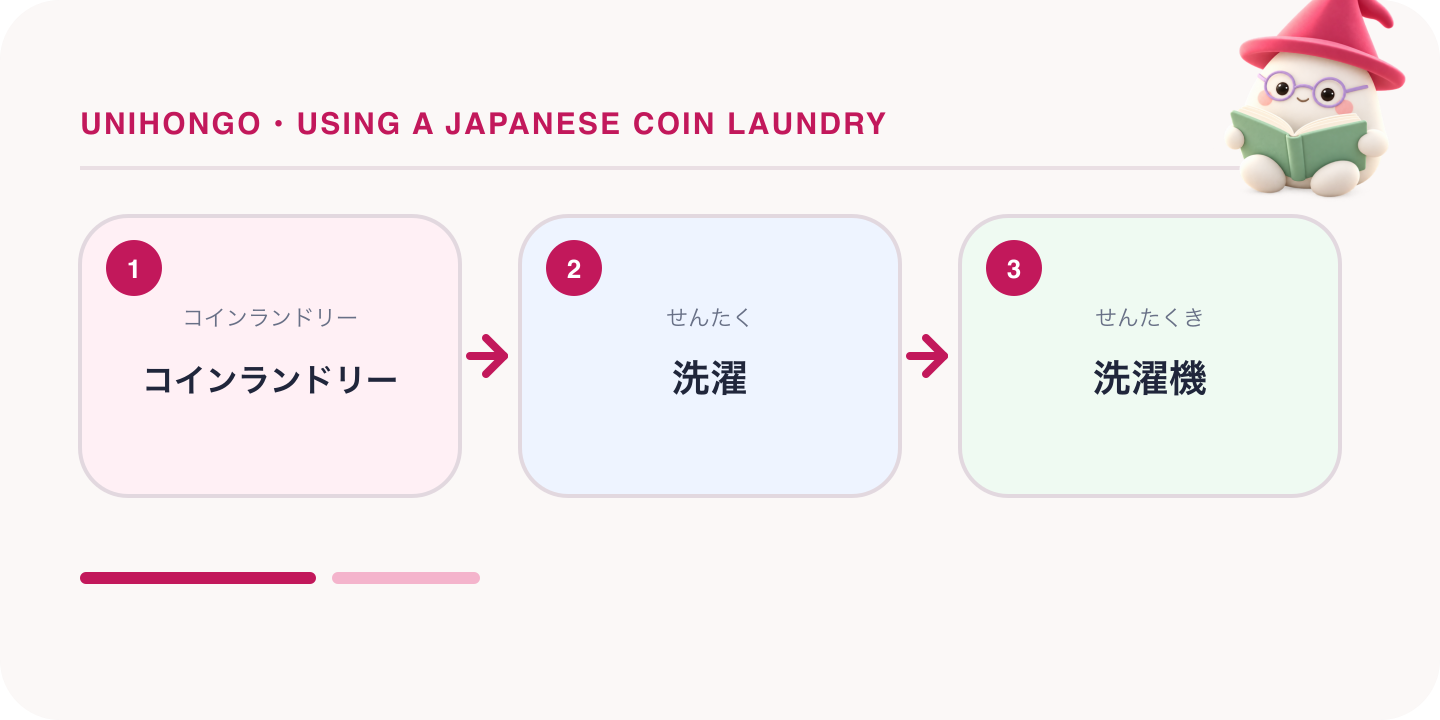
The words on the machines
| Japanese | Romaji | Meaning |
|---|---|---|
| コインランドリー | Koin randorī | Coin laundry |
| 洗濯 | Sentaku | Washing |
| 洗濯機 | Sentakuki | Washing machine |
| 乾燥 | Kansō | Drying |
| 乾燥機 | Kansōki | Dryer |
| 洗濯乾燥機 | Sentaku kansōki | Combined washer-dryer |
| 洗剤 | Senzai | Detergent |
| 柔軟剤 | Jūnanzai | Fabric softener |
| 自動投入 | Jidō tōnyū | Added automatically |
| 投入口 | Tōnyūguchi | Slot or opening you put something into |
| 両替機 | Ryōgaeki | Change machine |
| 電子マネー | Denshi manē | Electronic money, card or phone payment |
| コース | Kōsu | Cycle or programme |
| 標準 | Hyōjun | Standard |
| お急ぎ | O-isogi | Quick |
| 大物洗い | Ōmono arai | Bulky item wash |
| 毛布 | Mōfu | Blanket |
| 布団 | Futon | Futon bedding |
| 靴 | Kutsu | Shoes |
| 温度 | Ondo | Temperature |
| 高温 | Kōon | High heat |
| 中温 | Chūon | Medium heat |
| 低温 | Teion | Low heat |
| 時間 | Jikan | Time |
| 残り時間 | Nokori jikan | Time remaining |
| スタート | Sutāto | Start |
| 一時停止 | Ichiji teishi | Pause |
| 停止 | Teishi | Stop |
| 電源 | Dengen | Power |
| 運転中 | Unten-chū | Running |
| 使用中 | Shiyō-chū | In use |
| 空き | Aki | Free, available |
| 終了 | Shūryō | Finished |
| 扉 | Tobira | Door |
| ロック中 | Rokku-chū | Locked |
| 故障中 | Koshō-chū | Out of order |
| 注意 | Chūi | Caution |
| 使用方法 | Shiyō hōhō | Instructions for use |
One pair is worth flagging. 洗濯 sentaku, washing, and 選択 sentaku, selection, sound identical, and both appear in a laundry: the machine washes and you select a cycle. The kanji differ and the context always makes it clear, so do not let the coincidence unsettle you when a screen says コースを選択 kōsu o sentaku, select a cycle.
Choosing wash, dry, or both
Decide first which machine you need, because that choice changes everything after it. A washer alone leaves you carrying wet laundry to a dryer, which is normal and usually cheaper in time. The combined machine runs the whole thing unattended, which suits a long errand but ties up the machine for far longer. The labels below are what you look for on the door and on the sign above the row.
| Japanese | Romaji | Meaning |
|---|---|---|
| 洗濯だけしたいです。 | Sentaku dake shitai desu. | I only want to wash. |
| 乾燥だけできますか。 | Kansō dake dekimasu ka. | Can I just dry? |
| この機械は乾燥もできますか。 | Kono kikai wa kansō mo dekimasu ka. | Does this machine dry as well? |
| 洗濯乾燥機はどれですか。 | Sentaku kansōki wa dore desu ka. | Which one is the washer-dryer? |
| この洗濯機は空いていますか。 | Kono sentakuki wa aite imasu ka. | Is this washing machine free? |
| 使ってもいいですか。 | Tsukatte mo ii desu ka. | May I use it? |
| どうぞ、使ってください。 | Dōzo, tsukatte kudasai. | Go ahead, please use it. (another customer) |
Detergent and softener
Many washers add detergent and softener for you, and the panel says so with 自動投入 jidō tōnyū beside 洗剤 or 柔軟剤. When that label is present, adding your own can make too much foam, so leave it. Where the machine expects your own, there is a drawer or opening marked 投入口 tōnyūguchi, sometimes with separate compartments. Dryers never take detergent. If the notice is unclear, ask rather than guess, since the same shop may have both kinds of machine in one row.
| Japanese | Romaji | Meaning |
|---|---|---|
| 洗剤は自動で入りますか。 | Senzai wa jidō de hairimasu ka. | Is the detergent added automatically? |
| 洗剤は自分で入れますか。 | Senzai wa jibun de iremasu ka. | Do I add the detergent myself? |
| 柔軟剤も入りますか。 | Jūnanzai mo hairimasu ka. | Is softener added too? |
| 洗剤はどこに入れますか。 | Senzai wa doko ni iremasu ka. | Where do I put the detergent? |
| 洗剤自動投入と書いてあります。 | Senzai jidō tōnyū to kaite arimasu. | It says detergent is added automatically. |
| 洗剤を売っていますか。 | Senzai o utte imasu ka. | Do you sell detergent here? |
Paying: coins, cards and apps
Older machines take coins in a slot on the front, newer ones use a shared payment station or a card and phone reader, and some shops run an app that starts the machine and tells you when it has finished. Machines differ even within one shop, so look for the slot, the reader symbol, or a screen before you load your laundry. A change machine, 両替機 ryōgaeki, is common but not guaranteed, and it may only accept certain notes.
| Japanese | Romaji | Meaning |
|---|---|---|
| どこにお金を入れますか。 | Doko ni o-kane o iremasu ka. | Where do I put the money in? |
| 硬貨だけですか。 | Kōka dake desu ka. | Is it coins only? |
| お札は使えますか。 | O-satsu wa tsukaemasu ka. | Can I use notes? |
| 電子マネーで払えますか。 | Denshi manē de haraemasu ka. | Can I pay with electronic money? |
| 両替機はありますか。 | Ryōgaeki wa arimasu ka. | Is there a change machine? |
| アプリの登録が必要ですか。 | Apuri no tōroku ga hitsuyō desu ka. | Do I need to register on the app? |
| お金を入れましたが動きません。 | O-kane o iremashita ga ugokimasen. | I put the money in but it will not start. |
Cycle names and how long they take
Cycles are usually shown as a short list with a time beside each one: a standard wash, a quick wash, and something for bulky items such as blankets. Dryers are normally sold in blocks of time rather than programmes, and adding more time part way through is often possible. The displayed minutes are estimates, so treat 残り時間 nokori jikan, time remaining, as approximate and come back a little early.
| Japanese | Romaji | Meaning |
|---|---|---|
| コースを選んでください。 | Kōsu o erande kudasai. | Please select a cycle. (panel instruction) |
| 標準コースにします。 | Hyōjun kōsu ni shimasu. | I will use the standard cycle. |
| お急ぎコースは何分ですか。 | O-isogi kōsu wa nan-pun desu ka. | How many minutes is the quick cycle? |
| 何分くらいかかりますか。 | Nan-pun kurai kakarimasu ka. | About how long does it take? |
| あとどのくらいですか。 | Ato dono kurai desu ka. | How much longer is there? |
| 残り時間は十分です。 | Nokori jikan wa juppun desu. | Ten minutes remaining. (display) |
| 時間を追加できますか。 | Jikan o tsuika dekimasu ka. | Can I add more time? |
| 毛布も洗えますか。 | Mōfu mo araemasu ka. | Can I wash a blanket as well? |
Drying temperature and what not to put in
Dryers usually offer a choice of heat, labelled 高温 kōon, 中温 chūon and 低温 teion, and the low setting exists for clothes that shrink or melt. Shops post notices about items that must not go in, and shoes and futons are the two that come up most often, because some shops have dedicated machines for them and others forbid them entirely. Read the notice above the row; the rules belong to that shop, not to coin laundries in general.
| Japanese | Romaji | Meaning |
|---|---|---|
| 乾燥の温度を選べますか。 | Kansō no ondo o erabemasu ka. | Can I choose the drying temperature? |
| 低温にします。 | Teion ni shimasu. | I will set it to low heat. |
| 縮むかもしれません。 | Chijimu kamo shiremasen. | It might shrink. |
| 靴も洗えますか。 | Kutsu mo araemasu ka. | Can I wash shoes here too? |
| 靴専用の機械はありますか。 | Kutsu senyō no kikai wa arimasu ka. | Is there a machine just for shoes? |
| 布団は洗えますか。 | Futon wa araemasu ka. | Can futons be washed here? |
| この機械では洗えません。 | Kono kikai de wa araemasen. | They cannot be washed in this machine. (notice or staff) |
Start, lock and pause
Nothing happens until you press start, and on most machines the door locks the moment it does. That lock is a safety feature, not a fault, and it usually shows on the display as ロック中 rokku-chū. Some machines have a pause button that stops the drum and releases the door after a moment; many do not, especially once water is inside. Load everything you want washed before you start, because opening the door mid-cycle is often impossible.
| Japanese | Romaji | Meaning |
|---|---|---|
| スタートを押してください。 | Sutāto o oshite kudasai. | Press start. (panel instruction) |
| 扉を閉めてください。 | Tobira o shimete kudasai. | Please close the door. (panel instruction) |
| 扉が開きません。 | Tobira ga akimasen. | The door will not open. |
| ロック中と出ています。 | Rokku-chū to dete imasu. | It is showing locked. |
| 一時停止できますか。 | Ichiji teishi dekimasu ka. | Can I pause it? |
| 洗濯物を追加したいです。 | Sentakumono o tsuika shitai desu. | I want to add more laundry. |
| 終了しました。 | Shūryō shimashita. | The cycle has finished. (display) |
Reading a status or error message
Error displays vary by machine, so learn the shape of the message rather than a list of codes. Most say a state and then an instruction: something is running, something is out of order, or something should be checked. If you cannot read it, the safest response is not to force anything. Photograph the display, note which machine number it is, and use the contact number on the wall, since the person answering can look up that code.
| Japanese | Romaji | Meaning |
|---|---|---|
| エラーが出ています。 | Erā ga dete imasu. | An error is showing. |
| 表示が読めません。 | Hyōji ga yomemasen. | I cannot read the display. |
| 途中で止まってしまいました。 | Tochū de tomatte shimaimashita. | It stopped part way through. |
| 動きません。 | Ugokimasen. | It is not working. |
| 故障だと思います。 | Koshō da to omoimasu. | I think it is broken. |
| 何番の機械ですか。 | Nan-ban no kikai desu ka. | Which machine number is it? (staff) |
| 三番の洗濯機です。 | San-ban no sentakuki desu. | It is washing machine number three. |
| 写真を撮りました。 | Shashin o torimashita. | I took a photo of it. |
Asking an attendant or calling the number on the wall
Many coin laundries are unstaffed, and the wall carries a contact number for the management company. A phone call in Japanese is intimidating, so prepare three pieces of information before you dial: where you are, which machine, and what it is doing. Say them in that order and the rest of the call is mostly listening. If there is an attendant or a shop next door, the same three pieces work in person and you can point.
| Japanese | Romaji | Meaning |
|---|---|---|
| すみません、使い方を教えていただけますか。 | Sumimasen, tsukaikata o oshiete itadakemasu ka. | Excuse me, could you show me how to use this? |
| 日本語が少しだけできます。 | Nihongo ga sukoshi dake dekimasu. | I can only speak a little Japanese. |
| ゆっくり話していただけますか。 | Yukkuri hanashite itadakemasu ka. | Could you speak slowly, please? |
| 壁の番号に電話します。 | Kabe no bangō ni denwa shimasu. | I will call the number on the wall. |
| 今、駅前のコインランドリーにいます。 | Ima, ekimae no koin randorī ni imasu. | I am at the coin laundry in front of the station now. |
| 機械が止まって、扉が開きません。 | Kikai ga tomatte, tobira ga akimasen. | The machine has stopped and the door will not open. |
| どうすればいいですか。 | Dō sureba ii desu ka. | What should I do? |
| 少々お待ちください。 | Shōshō o-machi kudasai. | One moment, please. (staff) |
| 係の者が伺います。 | Kakari no mono ga ukagaimasu. | Someone will come out to you. (staff) |
Sharing the room politely
- Come back near the finish time rather than leaving clothes sitting in a free machine.
- If a machine has finished and the owner is absent, wait a little before touching it, and if you must move the laundry, put it in the basket provided rather than on a surface.
- Wipe up spilled detergent and take your empty containers with you.
- Keep phone calls short and quiet; the room is small and sound carries.
- Do not sit on the folding table, which people use for clean clothes.
- Check the drum before and after your cycle for a stray sock, since forgotten items rarely find their owner.
Two notices are worth learning by sight. 放置 hōchi covers leaving things unattended and appears in requests not to abandon laundry, while 忘れ物 wasuremono means forgotten items and often points to a box or shelf where strays are kept. Neither is a rule you will be fined for, but both signal what the regulars expect.
Before your first visit, spend five minutes rehearsing. Read the table words aloud once, then cover the English column and read them again. Chant the six panel words in order: sentaku, kōsu, jikan, sutāto, unten-chū, shūryō. Practise the three-part problem report, where you are, which machine, and what it is doing, and say yukkuri hanashite itadakemasu ka until it comes out without a pause. Then photograph your local shop's panel and read one new label from it each day.