
Four ways to talk about goals
New Year goal talk starts with a question and runs on three patterns. Each says something slightly different about how sure you are, and choosing the right one is what makes your Japanese sound natural rather than translated.
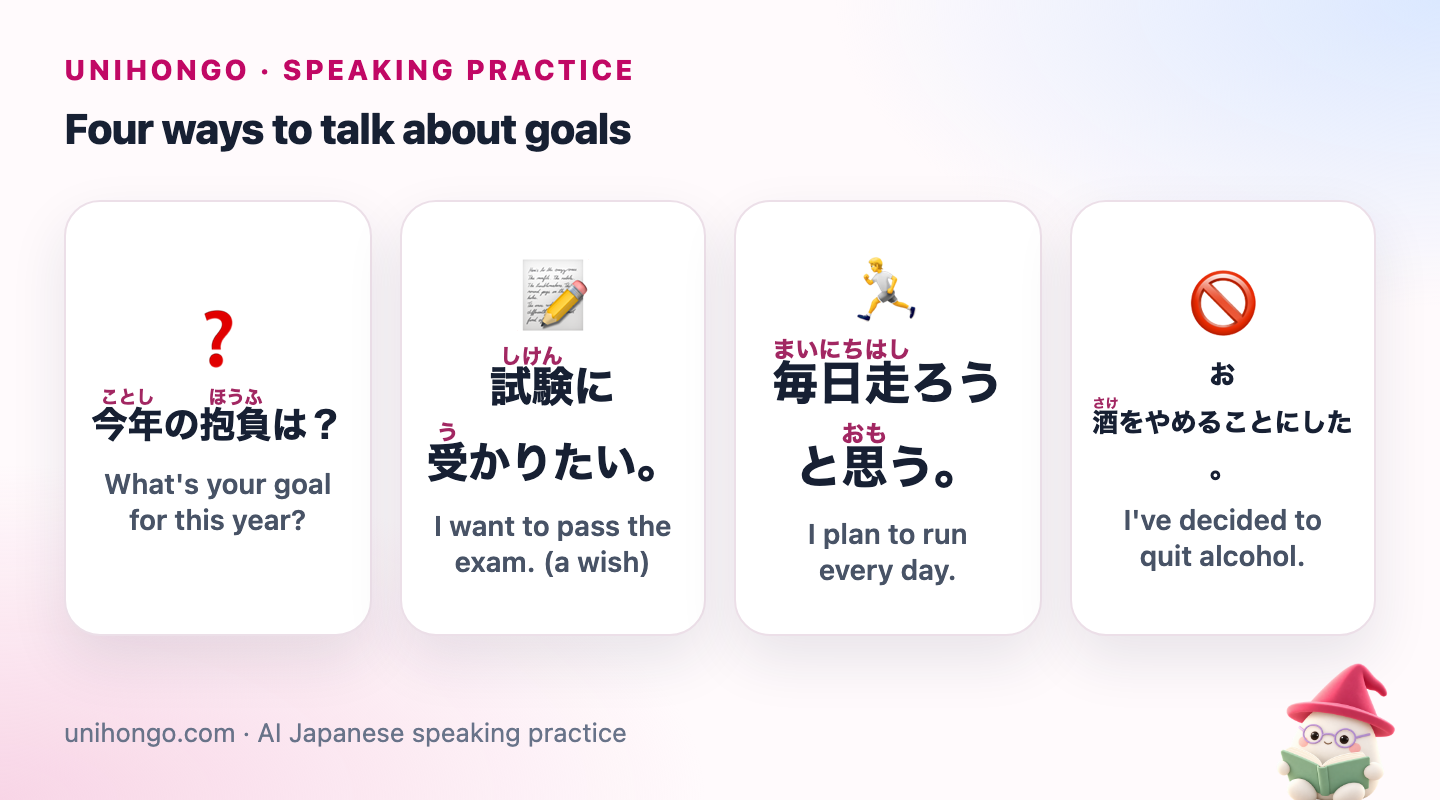
| Japanese | Romaji | Meaning |
|---|---|---|
| 今年の抱負は? | Kotoshi no hōfu wa? | What's your goal for this year? |
| 試験に受かりたい。 | Shiken ni ukaritai. | I want to pass the exam. (a wish) |
| 毎日走ろうと思う。 | Mainichi hashirō to omou. | I plan to run every day. |
| お酒をやめることにした。 | Osake o yameru koto ni shita. | I've decided to quit alcohol. |
Kakizome: the first writing of the year
Kakizome (書き初め) combines kaku, to write, and the suffix ~zome, the first time doing something in a new year. Traditionally it is done on 2 January. People grind or pour ink, sit straight, and write a word or short phrase with a brush on long paper. Many schools set kakizome as winter holiday homework and display the results in January, so if you have children in a Japanese school you will see it.
In some regions, kakizome sheets and New Year decorations are burned in a bonfire festival in mid-January, often called dondo-yaki or sagichō depending on the area. It is said that if your sheet flies high in the flames, your writing will improve. Customs vary, so ask locally.
| Japanese | Romaji | Meaning |
|---|---|---|
| 書き初めをしましたか。 | Kakizome o shimashita ka. | Did you do your first calligraphy of the year? |
| 「挑戦」と書きました。 | "Chōsen" to kakimashita. | I wrote challenge. |
| 字が下手で恥ずかしいです。 | Ji ga heta de hazukashii desu. | My handwriting is bad, so I'm embarrassed. |
| 力強い字ですね。 | Chikarazuyoi ji desu ne. | What powerful characters. |
Popular kakizome words
Kakizome words are short and positive. Here are some you will often see, and they double as useful vocabulary for talking about goals.
| Japanese | Romaji | Meaning |
|---|---|---|
| 夢 | yume | dream |
| 希望 | kibō | hope |
| 挑戦 | chōsen | challenge |
| 笑顔 | egao | smile |
| 努力 | doryoku | effort |
| 初心 | shoshin | a beginner's spirit |
| 一歩前へ | ippo mae e | one step forward |
Hōfu or mokuhyō?
Both words appear in New Year conversation, and learners often mix them up. Hōfu (抱負) is the bigger, softer word: an aspiration, a resolution, how you want to live this year. It is mostly used at the start of a year or a new role. Mokuhyō (目標) is a concrete target that you can check, and it is used all year round, at work and in study.
| Japanese | Romaji | Meaning |
|---|---|---|
| 今年の目標は三つあります。 | Kotoshi no mokuhyō wa mittsu arimasu. | I have three goals this year. |
| 新年の抱負を聞かせてください。 | Shinnen no hōfu o kikasete kudasai. | Tell me your New Year resolution. |
| 目標を立てました。 | Mokuhyō o tatemashita. | I've set a goal. |
| 目標を達成しました。 | Mokuhyō o tassei shimashita. | I achieved my goal. |
| Word | Feels like | Example use |
|---|---|---|
| 抱負 hōfu | Aspiration, resolution | New Year speeches, a new job or school year |
| 目標 mokuhyō | Concrete, checkable target | Pass N3, run 5 km, read 20 books |
| 夢 yume | A big dream | Living in Japan someday |
Three grammar patterns for goals
~ tai (~たい) is a plain wish: shitai, I want to do. It is fine with friends, but in polite speech a bare ~ tai desu can sound a little childish or direct, so people often add to omoimasu: ~ tai to omoimasu.
~ yō to omotte iru (~ようと思っている) uses the volitional form: I am thinking of doing, I intend to. It sounds considered and modest, and it is the most common choice for New Year goals in polite conversation.
~ koto ni shita (~ことにした) means I have decided to. The decision is made, which sounds committed. Compare ~ koto ni natta, it has been decided, for decisions made by others or by circumstances, such as a transfer at work.
| Japanese | Romaji | Meaning |
|---|---|---|
| 今年は日本語をもっと話したいと思います。 | Kotoshi wa nihongo o motto hanashitai to omoimasu. | This year I'd like to speak more Japanese. |
| 毎朝十分勉強しようと思っています。 | Maiasa juppun benkyō shiyō to omotte imasu. | I'm planning to study ten minutes every morning. |
| ジムに通うことにしました。 | Jimu ni kayou koto ni shimashita. | I've decided to go to the gym regularly. |
| 四月から大阪に行くことになりました。 | Shigatsu kara Ōsaka ni iku koto ni narimashita. | It's been decided that I'll go to Osaka from April. |
| 今年こそ痩せたい! | Kotoshi koso yasetai! | This year for sure, I want to lose weight! (casual) |
Kotoshi koso, this year for sure, is the classic way to admit you made the same resolution last year. It is self-deprecating and often gets a laugh.
To make a goal sound more concrete, add a reason with ~ kara and a first step with mazu, first: shigoto de tsukaitai kara, mazu mainichi kaiwa no renshū o shimasu, because I want to use it at work, first I will practise conversation every day.
Asking others and reacting
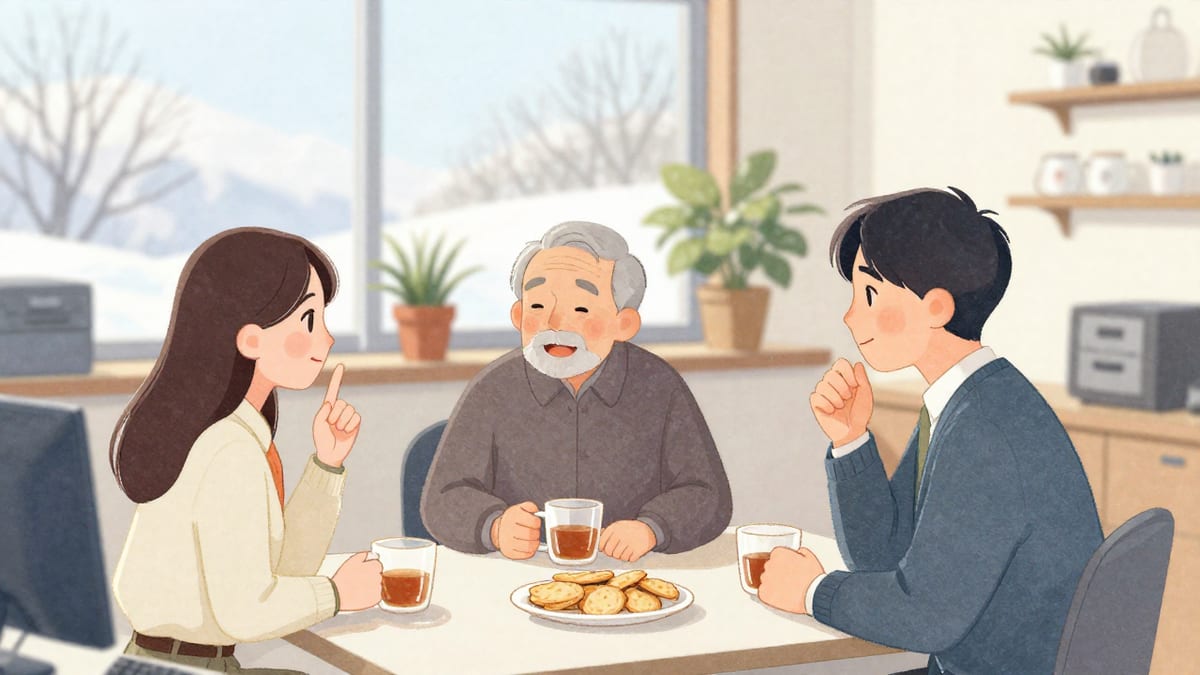
New Year goal talk is a two-way conversation. After you answer, ask back, and react warmly. Japanese people often present their goals modestly, with a little laugh or ichiō, at least for now, so do not tease. Encouragement is the expected response.
| Japanese | Romaji | Meaning |
|---|---|---|
| 今年の抱負は何ですか。 | Kotoshi no hōfu wa nan desu ka. | What is your resolution for this year? |
| いいですね。応援しています。 | Ii desu ne. Ōen shite imasu. | That's great. I'm rooting for you. |
| 一応、目標は五キロです。 | Ichiō, mokuhyō wa go kiro desu. | For now, my goal is five kilos. |
| お互いがんばりましょう。 | Otagai ganbarimashō. | Let's both do our best. |
Mini dialogue: the first day back at work
| Japanese | Romaji | Meaning |
|---|---|---|
| あけましておめでとうございます。今年の抱負は? | Akemashite omedetō gozaimasu. Kotoshi no hōfu wa? | Coworker: Happy New Year. What's your resolution? |
| 日本語能力試験を受けようと思っています。 | Nihongo nōryoku shiken o ukeyō to omotte imasu. | You: I'm planning to take the JLPT. |
| すごい!準備はもう始めましたか。 | Sugoi! Junbi wa mō hajimemashita ka. | Coworker: Great! Have you started preparing? |
| はい、毎日三十分勉強することにしました。 | Hai, mainichi sanjuppun benkyō suru koto ni shimashita. | You: Yes, I've decided to study thirty minutes every day. |
| 応援しています。私は今年こそ早起きしたいです。 | Ōen shite imasu. Watashi wa kotoshi koso hayaoki shitai desu. | Coworker: I'm rooting for you. This year I really want to get up early. |
Common learner mistakes
- Using only ~ tai desu in polite speech. Add to omoimasu, or use ~ yō to omotte imasu, to sound more natural.
- Saying hōfu for every small target. Hōfu is for the big picture; specific targets are mokuhyō.
- Mixing up koto ni shita and koto ni natta. Shita is your decision; natta is a decision made by others or by circumstances.
- Listing goals without a first step. Japanese listeners often ask nani kara hajimemasu ka, where will you start? Have an answer with mazu, first.
- Boasting. A modest frame such as dekireba, if I can, or ichiō, for now, sounds better than a big promise.