

The words for leave: yūkyū, kyūka and o-yasumi
Start with the nouns. Kyūka is leave in the formal, HR sense. Yūkyū kyūka, usually shortened to yūkyū, is paid leave, the allowance you accrue after six months. Yasumi is the everyday word for a day off or a break, and with the honorific o- it becomes the word you say to a manager: o-yasumi. So you talk about yūkyū when you discuss your allowance or fill in a form, and you say o-yasumi o itadaku when you ask.
A few relatives are worth knowing. Hankyū is a half day. Daikyū is a day in lieu for a holiday you worked. Kekkin is an unexcused absence, and byōketsu is absence through illness, which the guide on calling in sick covers. Nenkyū is another shortening of nenji yūkyū kyūka, so a colleague who says nenkyū toru means the same paid leave.
| Japanese | Romaji | Meaning |
|---|---|---|
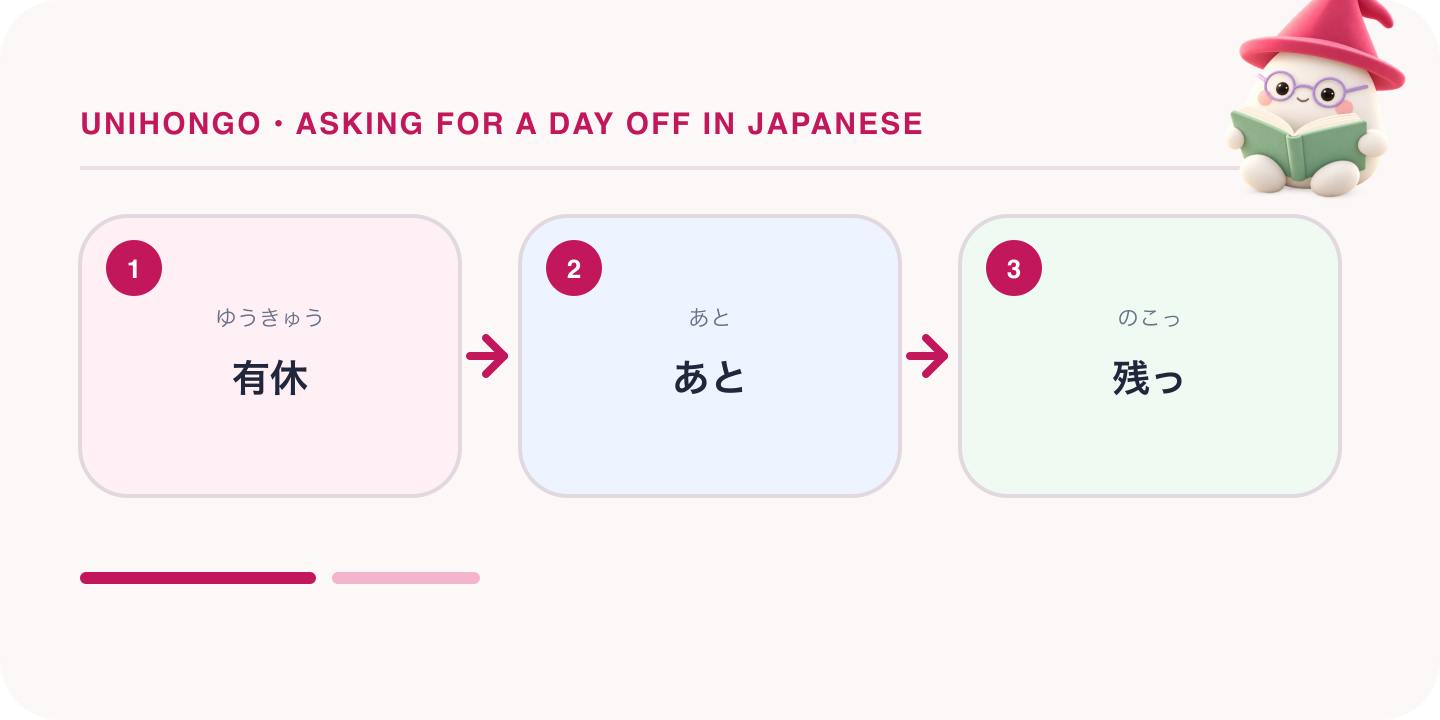
| 有休はあと何日残っていますか。 | Yūkyū wa ato nannichi nokotte imasu ka. | How many days of paid leave do I have left? |
| 来月、有休を取りたいと思っています。 | Raigetsu, yūkyū o toritai to omotte imasu. | I'm thinking of taking paid leave next month. |
| 午後半休をいただけますか。 | Gogo hankyū o itadakemasu ka. | Could I take the afternoon off as a half day? |
| 先週の休日出勤の代休を取りたいです。 | Senshū no kyūjitsu shukkin no daikyū o toritai desu. | I'd like to take a day in lieu for working last weekend. |
| 休暇の申請はどこからしますか。 | Kyūka no shinsei wa doko kara shimasu ka. | Where do I submit a leave request? |
Asking in person, step by step
The safest way to ask is face to face, at a quiet moment, before you put anything in the system. Open with a cushion such as ima yoroshii desu ka, then state the date and use the itadaku pattern. Ending with yoroshii deshō ka or o-negai dekimasu ka turns the sentence into a question and leaves the manager room to say let me check. A flat yasumimasu, I will be off, sounds like informing rather than asking, which can land badly even when the leave is your right.
Keep the exchange short: date, request, one line about coverage, thanks. If you have a fixed appointment, say so; otherwise shiyō de, for private reasons, or yōji ga arimashite, I have something to attend to, is enough.
| Japanese | Romaji | Meaning |
|---|---|---|
| 課長、今少しよろしいでしょうか。 | Kachō, ima sukoshi yoroshii deshō ka. | Chief, do you have a moment? |
| 来週の金曜日にお休みをいただきたいのですが、よろしいでしょうか。 | Raishū no kin'yōbi ni o-yasumi o itadakitai no desu ga, yoroshii deshō ka. | I'd like to take next Friday off, would that be all right? |
| 私用で、一日お休みをいただけますでしょうか。 | Shiyō de, ichinichi o-yasumi o itadakemasu deshō ka. | For private reasons, could I take one day off? |
| 病院の予約がありまして、午前中だけお休みしたいのですが。 | Byōin no yoyaku ga arimashite, gozenchū dake o-yasumi shitai no desu ga. | I have a hospital appointment, so I'd like just the morning off. |
| ご都合が悪ければ、別の日にします。 | Go-tsugō ga warukereba, betsu no hi ni shimasu. | If that's inconvenient, I'll make it another day. |
| ありがとうございます。申請を出しておきます。 | Arigatō gozaimasu. Shinsei o dashite okimasu. | Thank you. I'll submit the request. |
Timing, reasons and the one-line handover
Timing matters more than wording. Company rules on notice vary, and many work regulations name a minimum number of days, so check yours. Beyond the rule: ask as soon as you know, avoid closing and reporting deadlines if you can, and ask before you pay for flights. Managers can legally shift the timing of leave in exceptional cases, jiki henkō, so an early request gives everyone room.
You do not owe a detailed reason. A single phrase does the job: shiyō de for private matters, kazoku no yōji de for a family matter, tsūin de for a medical appointment, ryokō de for a trip. A plain shiyō desu is a complete answer.
The move that turns a request into an easy yes is the handover line: say in one sentence what happens to your work while you are out. Colleagues remember whether your absences created work for them.
| Japanese | Romaji | Meaning |
|---|---|---|
| 急で申し訳ないのですが、明後日お休みをいただけないでしょうか。 | Kyū de mōshiwake nai no desu ga, asatte o-yasumi o itadakenai deshō ka. | I'm sorry it's short notice, but could I take the day after tomorrow off? |
| その日の対応は田中さんにお願いしてあります。 | Sono hi no taiō wa Tanaka-san ni onegai shite arimasu. | I've asked Tanaka to cover things that day. |
| 締め切りの資料は前日までに仕上げておきます。 | Shimekiri no shiryō wa zenjitsu made ni shiagete okimasu. | I'll finish the deadline documents by the day before. |
| 当日は特に予定が入っていません。 | Tōjitsu wa toku ni yotei ga haitte imasen. | There's nothing particular scheduled that day. |
| 緊急の場合は携帯に連絡いただければ対応します。 | Kinkyū no baai wa keitai ni renraku itadakereba taiō shimasu. | If there's an emergency, I can respond if you contact my mobile. |
Asking in chat and by email
Many teams now handle leave through a chat tool or an HR system, with a face-to-face word only for longer breaks. Chat messages are shorter than emails but use the same humble verbs. Start with the name and o-tsukaresama desu, state the date and the request, add the coverage line, and close with yoroshiku onegai itashimasu. Emails add a short subject line and a slightly fuller closing.
The rows below are template pieces you can reuse in order. If your company uses an approval system, the message often becomes a courtesy note saying shinsei o dashimashita, I have submitted the request.
| Japanese | Romaji | Meaning |
|---|---|---|
| 件名:休暇申請のお願い(10月3日) | Kenmei: Kyūka shinsei no onegai (jūgatsu mikka) | Subject: Leave request (3 October) |
| お疲れさまです。山本です。 | O-tsukaresama desu. Yamamoto desu. | Hello, this is Yamamoto. |
| 私用のため、10月3日(金)に有給休暇を取得したく、ご連絡いたしました。 | Shiyō no tame, jūgatsu mikka (kin) ni yūkyū kyūka o shutoku shitaku, go-renraku itashimashita. | I am writing because I would like to take paid leave on Friday 3 October for private reasons. |
| 不在中の業務は佐藤さんに引き継ぎ済みです。 | Fuzai-chū no gyōmu wa Satō-san ni hikitsugi-zumi desu. | Work during my absence has already been handed over to Sato. |
| ご確認のほど、よろしくお願いいたします。 | Go-kakunin no hodo, yoroshiku onegai itashimasu. | I would be grateful if you could confirm. |
| システムから申請を出しましたので、ご承認をお願いいたします。 | Shisutemu kara shinsei o dashimashita node, go-shōnin o onegai itashimasu. | I have submitted the request in the system, so I would appreciate your approval. |
What the boss says back
Replies come in three flavours: yes, let me check, and can you move it. Learners sometimes miss the middle one, because kakunin shimasu, I will check, sounds neutral, but it means the answer is not yet yes. A genuine yes is daijōbu desu, ii desu yo, or a casual un, ii yo. A request to move the date usually comes with a reason, such as a client visit, and an alternative.
When the answer is a reschedule, do not argue and do not fold silently: offer another date on the spot or say you will check. When the answer is yes, thank them, submit the formal request, and, for longer breaks, remind the team a day or two before.
| Japanese | Romaji | Meaning |
|---|---|---|
| 大丈夫ですよ。ゆっくり休んでください。 | Daijōbu desu yo. Yukkuri yasunde kudasai. | That's fine. Have a good rest. |
| その日はちょっと厳しいかな。別の日にできる? | Sono hi wa chotto kibishii ka na. Betsu no hi ni dekiru? | That day might be tough. Could you do another day? |
| 予定を確認して、あとで返事しますね。 | Yotei o kakunin shite, ato de henji shimasu ne. | I'll check the schedule and get back to you. |
| 引き継ぎだけしっかりお願いね。 | Hikitsugi dake shikkari onegai ne. | Just make sure the handover is solid. |
| 承知しました。では、木曜日ではいかがでしょうか。 | Shōchi shimashita. Dewa, mokuyōbi de wa ikaga deshō ka. | Understood. Then how about Thursday? |
| ありがとうございます。それでは、当日はよろしくお願いいたします。 | Arigatō gozaimasu. Sore de wa, tōjitsu wa yoroshiku onegai itashimasu. | Thank you. I'll be counting on you that day, then. |
Leave vocabulary you will meet on forms and in chat
Leave forms and HR portals use a compact written vocabulary that differs from what people say aloud. The table gathers the words you will read on a shinsei form, in the work regulations and in team chat. Which types exist, how many days they carry and whether they are paid all depend on your company.
| Word | Reading | Meaning |
|---|---|---|
| 有給休暇 | yūkyū kyūka | Paid leave, usually shortened to yūkyū |
| 年休 | nenkyū | Annual leave, another shortening of the same thing |
| 半休 | hankyū | Half-day leave, morning (gozen) or afternoon (gogo) |
| 時間単位有休 | jikan-tan'i yūkyū | Hourly paid leave, where the company allows it |
| 代休 | daikyū | Day in lieu for working a holiday |
| 振替休日 | furikae kyūjitsu | Swapped day off arranged in advance |
| 特別休暇 | tokubetsu kyūka | Special leave, for example weddings or bereavement |
| 慶弔休暇 | keichō kyūka | Leave for celebrations and condolences |
| 欠勤 | kekkin | Absence without leave, unpaid and noted |
| 申請 | shinsei | Application or request |
| 承認 | shōnin | Approval, what the manager clicks |
| 取得 | shutoku | Taking leave, the formal verb on forms |
You will also see shutoku-ritsu, the take-up rate, in notices encouraging people to use their leave. Companies must ensure staff take a minimum number of days each year, so a manager nudging you to use your yūkyū is normal and not a hint.
Before, during and after: a short checklist
The request is only the first step. Taking leave well means the day passes without anyone chasing you, and you come back in a way that keeps goodwill.
- Check the notice rule in the work regulations and ask as early as you can
- Ask the manager first, in person or chat, then submit the formal request
- Write one line about who covers what, and tell that person directly
- Put the absence in the shared calendar and set an out-of-office reply
- For longer breaks, send a short reminder to the team a day or two before
- Leave a note on your desk or in chat with the contact for urgent matters
- On return, say tadaima modorimashita and thank whoever covered
- Bring a small omiyage after a trip if that is the custom in your office
The thanks on return is the step learners skip. A short o-yasumi o itadaki, arigatō gozaimashita to the manager and a fuzai-chū wa arigatō gozaimashita to the colleague who covered closes the loop and makes the next request easier.
Mistakes to avoid
The most common mistake is grammatical: saying yasumimasu, I will be off, as a statement to a manager. It is not rude by itself, but it skips the request frame Japanese workplaces expect, and it is what people mean when they complain that a foreign colleague just announces their holidays. Wrap it in itadakitai no desu ga and the same content becomes a polite request.
The second mistake is order: booking the trip, then asking. The third is over-explaining, offering a long personal story when shiyō de would do. The fourth is treating kakunin shimasu as a yes. Wait for the approval, then act.
Finally, do not disappear on the day without an out-of-office message and a contact. Being unreachable when nobody knew you were off is what colleagues remember.
| Japanese | Romaji | Meaning |
|---|---|---|
| 金曜日、休みます。 | Kin'yōbi, yasumimasu. | I'm off on Friday. (Sounds like an announcement; avoid to a manager.) |
| 金曜日にお休みをいただけないでしょうか。 | Kin'yōbi ni o-yasumi o itadakenai deshō ka. | Could I possibly take Friday off? (The polite version.) |
| すみません、先に飛行機を取ってしまいました。 | Sumimasen, saki ni hikōki o totte shimaimashita. | Sorry, I already booked the flight. (The situation to avoid.) |
| ご承認いただけましたでしょうか。 | Go-shōnin itadakemashita deshō ka. | Has it been approved? (A gentle follow-up after kakunin shimasu.) |
| 先日はお休みをいただき、ありがとうございました。 | Senjitsu wa o-yasumi o itadaki, arigatō gozaimashita. | Thank you for letting me take the day off the other day. |