
Ōsōji in four words
Ōsōji is 大 (big) plus 掃除 (cleaning). Everyday cleaning is just sōji, and ōsōji is the once-a-year version where you clean the places you usually ignore: behind the fridge, the top of the wardrobe, the grease on the kitchen fan, the mould in the bathroom.
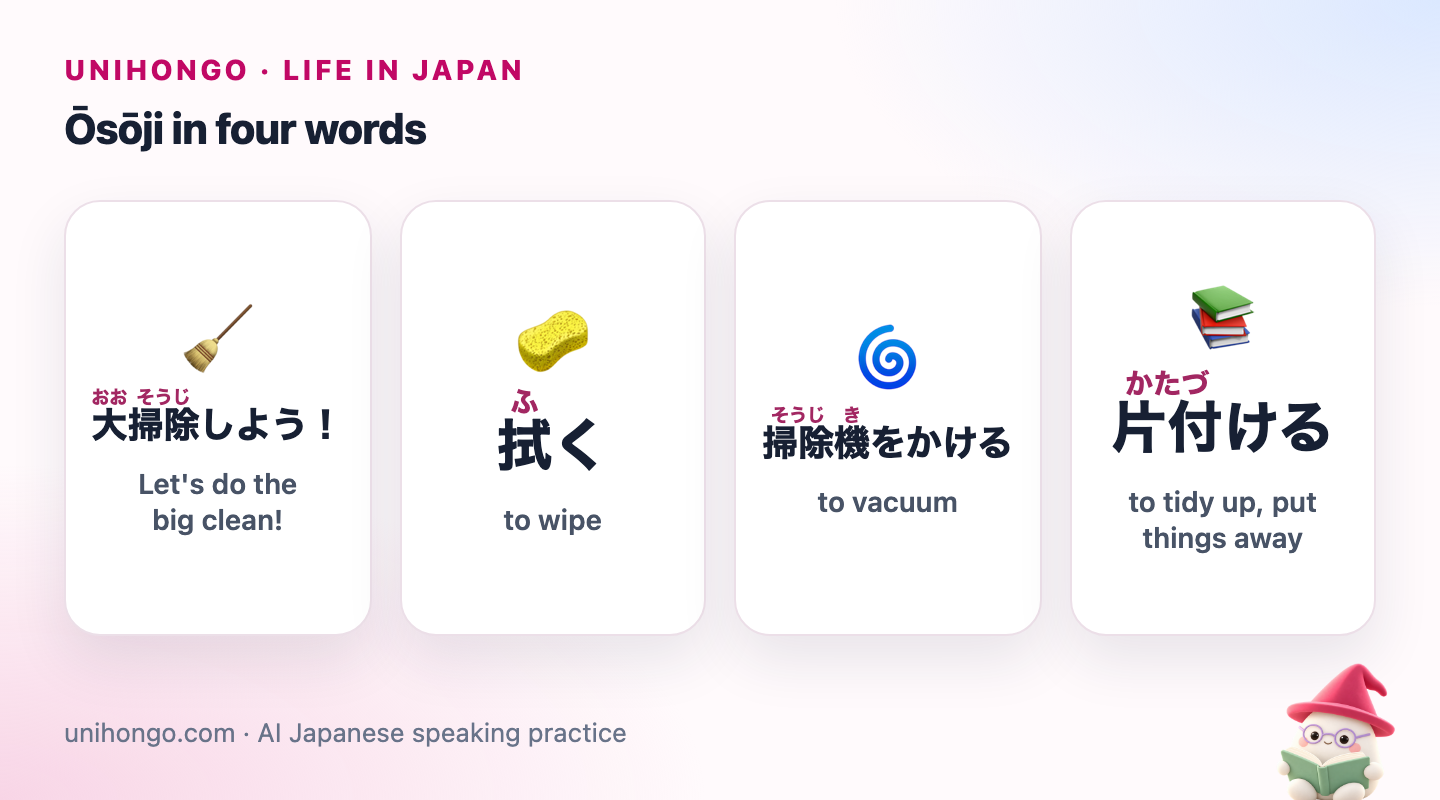
Four expressions do most of the work: the invitation to start, and three verbs you will use over and over.
| Japanese | Romaji | Meaning |
|---|---|---|
| 大掃除しよう! | Ōsōji shiyō! | Let's do the big clean! |
| 拭く | fuku | to wipe |
| 掃除機をかける | sōjiki o kakeru | to vacuum |
| 片付ける | katazukeru | to tidy up, put things away |
| 捨てる | suteru | to throw away |
| 磨く | migaku | to polish, scrub until it shines |
Sōjiki o kakeru literally means to apply the vacuum cleaner. Learners often say sōjiki suru, which is not a word; keep kakeru.
Why Japan cleans at the end of the year
The custom goes back to susuharai (煤払い), sweeping away soot. Houses heated by open fires collected soot over the year, and sweeping it out was part of preparing to welcome Toshigami, the god of the new year, who is said to visit each home at New Year. Many temples and shrines still hold a ceremonial susuharai in December, and the 13th of December is traditionally the day New Year preparations begin, although few families clean that early now.
For most people today, ōsōji is less a religious act than a feeling: you want to start the year without last year's dirt. Some families are very thorough and some do the minimum, and in many homes the clean is a shared family event with music on.
| Japanese | Romaji | Meaning |
|---|---|---|
| 年神様を迎える準備です。 | Toshigamisama o mukaeru junbi desu. | It's preparation to welcome the New Year god. |
| 一年の汚れを落とします。 | Ichinen no yogore o otoshimasu. | We get rid of a year's worth of dirt. |
| 気持ちよく新年を迎えたいです。 | Kimochi yoku shinnen o mukaetai desu. | I want to start the new year feeling fresh. |
| 今年は早めに始めました。 | Kotoshi wa hayame ni hajimemashita. | This year I started early. |
Cleaning verbs that are not interchangeable
English uses clean for almost everything, but Japanese prefers a precise verb for each action. Using sōji suru for everything is understandable, yet the specific verbs sound far more natural, and they are what you will hear when someone gives you instructions.
| Japanese | Romaji | Meaning |
|---|---|---|
| 床を拭いてください。 | Yuka o fuite kudasai. | Please wipe the floor. |
| 窓を磨きます。 | Mado o migakimasu. | I'll polish the windows. |
| 玄関を掃きます。 | Genkan o hakimasu. | I'll sweep the entrance. |
| 換気扇を洗わなきゃ。 | Kankisen o arawanakya. | I need to wash the kitchen fan. (casual) |
| 油汚れがなかなか落ちない。 | Abura yogore ga nakanaka ochinai. | The grease just won't come off. |
| Verb | Action | Typical objects |
|---|---|---|
| fuku | Wipe with a cloth or tissue | Tables, floors, windows, a wet spill |
| migaku | Polish or scrub until it shines | Sinks, taps, shoes, teeth |
| haku | Sweep with a broom | The entrance, the balcony, a path |
| arau | Wash with water and soap | Dishes, the fan filter, the bath |
| otosu | Remove dirt or a stain | Grease, mould, stains |
| sōjiki o kakeru | Vacuum | Carpets, tatami, under the bed |
Tools and products on the shelf
Many cleaning words are native Japanese, but supermarket shelves are full of katakana loanwords too. The zōkin, a folded cotton cloth, is the classic tool; children often sew or bring one to school for classroom cleaning.
| Japanese | Romaji | Meaning |
|---|---|---|
| 雑巾 | zōkin | cleaning cloth |
| ほうき | hōki | broom |
| ちりとり | chiritori | dustpan |
| 洗剤 | senzai | detergent, cleaning spray |
| ゴム手袋 | gomu tebukuro | rubber gloves |
| スポンジ | suponji | sponge |
| 重曹 | jūsō | baking soda |
| カビ取り剤 | kabitorizai | mould remover |
Bottles of strong bathroom cleaner carry a warning in large red characters, mazeru na kiken (まぜるな危険), dangerous, do not mix. It means the product must not be combined with acidic cleaners, because the mixture can release toxic gas. Use one product at a time and open a window.
Throwing things away: rubbish rules and big items
Ōsōji fills a lot of bags, and Japanese rubbish sorting is strict. Most cities separate burnable, non-burnable and recyclable rubbish, each with its own collection day. Large items such as a chair, a bike or a futon are sodai gomi, oversized rubbish, which usually needs an appointment and a paid sticker from the city. Book early in December, because slots fill up.
Collection often pauses over New Year. Check the last collection day on your city's calendar, and do not leave bags out after it, because they will sit on the street for days.
| Japanese | Romaji | Meaning |
|---|---|---|
| 燃えるごみ | moeru gomi | burnable rubbish |
| 資源ごみ | shigen gomi | recyclables |
| 粗大ごみの申し込みをしたいんですが。 | Sodai gomi no mōshikomi o shitai n desu ga. | I'd like to book an oversized-rubbish pickup. |
| 年末の最後の収集日はいつですか。 | Nenmatsu no saigo no shūshūbi wa itsu desu ka. | When is the last collection day of the year? |
| これは何ごみですか。 | Kore wa nani gomi desu ka. | Which rubbish type is this? |
| 思い切って断捨離した。 | Omoikitte danshari shita. | I bravely decluttered. |
Mini dialogue: splitting the jobs with a roommate
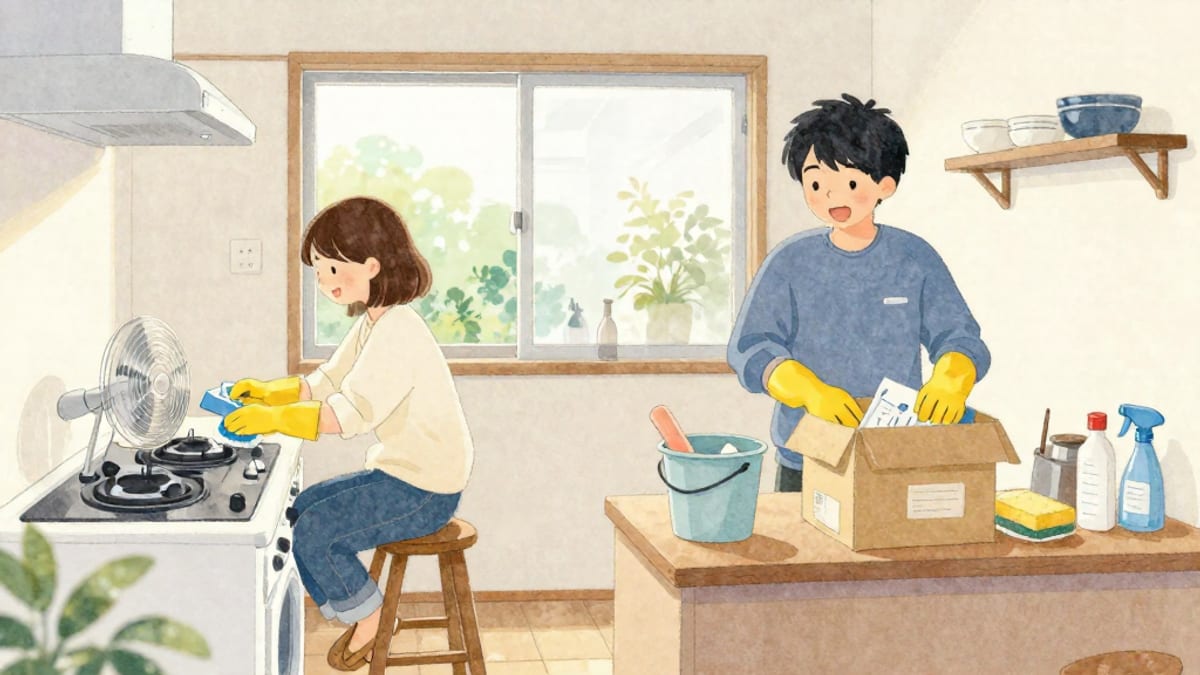
In share houses and families, the big clean starts with dividing the work. Casual Japanese among roommates is short and direct, with ~ te kureru? for asking a favour and ~ te mo ii? for asking permission, especially before throwing anything away.
| Japanese | Romaji | Meaning |
|---|---|---|
| 今日、大掃除しない? | Kyō, ōsōji shinai? | Roommate: Shall we do the big clean today? |
| いいよ。どこからやる? | Ii yo. Doko kara yaru? | You: Sure. Where do we start? |
| 換気扇、お願いしてもいい? | Kankisen, onegai shite mo ii? | Roommate: Could you take the kitchen fan? |
| わかった。じゃあ、お風呂は任せたよ。 | Wakatta. Jā, ofuro wa makaseta yo. | You: OK. Then the bath is all yours. |
| この箱、まだ使う?捨ててもいい? | Kono hako, mada tsukau? Sutete mo ii? | Roommate: Are you still using this box? Can I throw it out? |
| あ、それは取っておいて。 | A, sore wa totte oite. | You: Oh, keep that one. |
Ōsōji at work and at school
Many workplaces hold a short big clean on the last working day, shigoto osame, before the holiday. Everyone clears their own desk, wipes shared surfaces and throws out old papers, then thanks each other for the year. Here the language is polite: offer help in a full sentence and use the standard year-end farewells.
Japanese schools are famous for having pupils clean their own classrooms every day, and before the winter break they do a bigger clean together. If you are an assistant language teacher, joining in is appreciated.
| Japanese | Romaji | Meaning |
|---|---|---|
| 何かお手伝いできることはありますか。 | Nanika otetsudai dekiru koto wa arimasu ka. | Is there anything I can help with? |
| 自分の机の周りを片付けてください。 | Jibun no tsukue no mawari o katazukete kudasai. | Boss: Please tidy around your own desk. |
| この書類は捨ててもいいですか。 | Kono shorui wa sutete mo ii desu ka. | May I throw these documents away? |
| 一年間お疲れさまでした。 | Ichinenkan otsukaresama deshita. | Thank you for all your work this year. |
| 良いお年を。 | Yoi otoshi o. | Have a good New Year. |
Make the cleaning verbs stick with flashcards
Tell Mocchi: /create-flashcards year-end cleaning verbs and tools, with an example sentence each. Mocchi builds the cards, lets you pick a photo for each one, a cloth for fuku, a broom for haku, a shiny tap for migaku, and then reviews them with spaced repetition, so the verbs you confuse come back sooner.
Once the deck exists, play Kotoba Tank with your own flashcards: you hear a word and have to hit the right one, which is exactly the skill you need when a coworker calls out instructions during the office clean.
Common learner mistakes
- Saying sōjiki suru for vacuuming. The phrase is sōjiki o kakeru.
- Using sōji suru for every object. Natural Japanese chooses fuku, migaku, haku or arau.
- Throwing away a roommate's or coworker's things without asking. Check first with sutete mo ii desu ka.
- Putting rubbish out after the last collection of the year. Bags can stay on the street until January; check your city's calendar.
- Mixing strong cleaners. Respect the mazeru na kiken label and use one product at a time.