
Four words for disappointment
Most disappointment in daily Japanese is expressed with four words. Gakkari (がっかり) is the deflating feeling itself. Zannen (残念) labels the situation a shame. Kitai hazure (期待外れ), literally missing the expectation, judges something as a letdown. Ochikomu (落ち込む), to sink, describes the low mood that can follow.
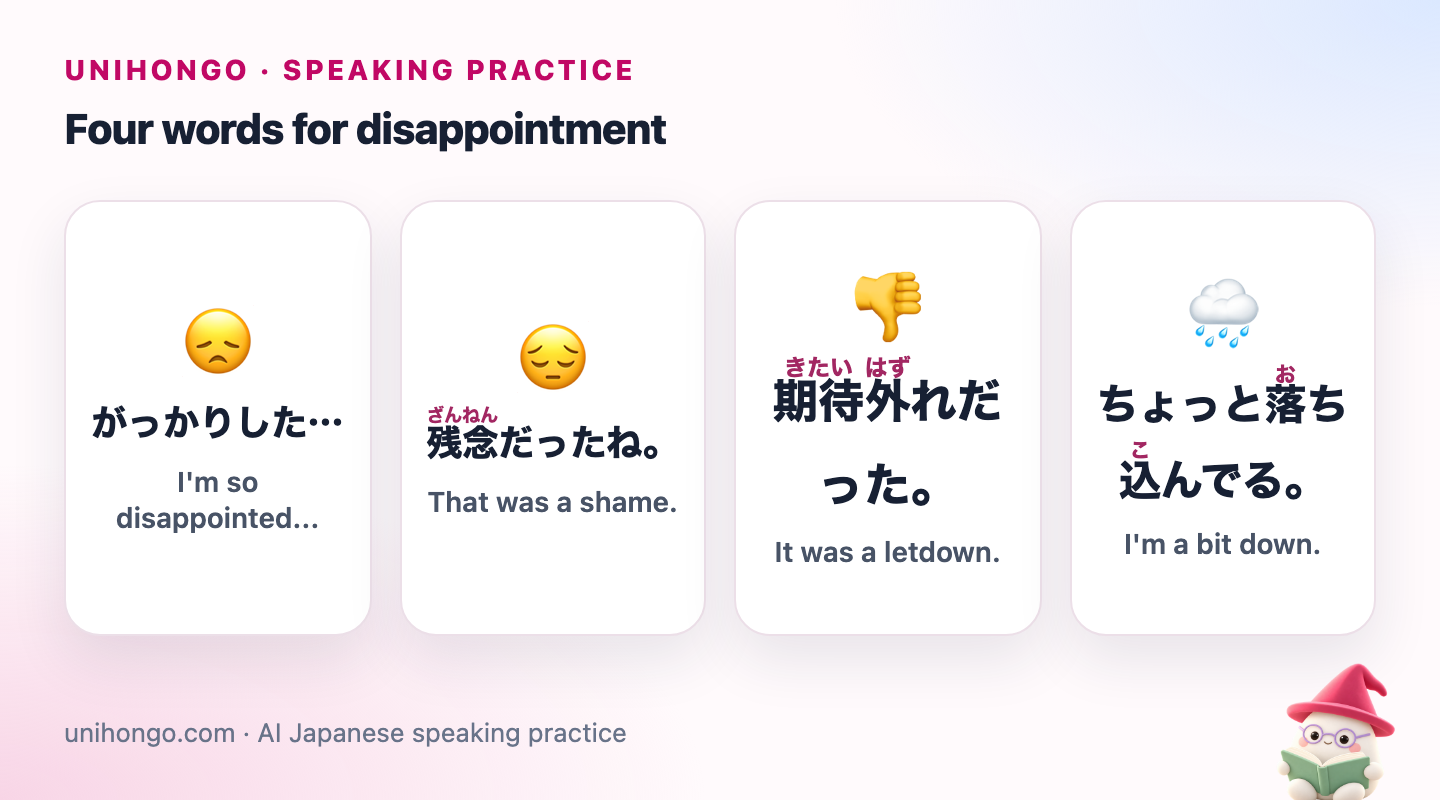
| Japanese | Romaji | Meaning |
|---|---|---|
| がっかりした… | Gakkari shita... | I'm so disappointed... |
| 残念だったね。 | Zannen datta ne. | That was a shame. |
| 期待外れだった。 | Kitai hazure datta. | It was a letdown. |
| ちょっと落ち込んでる。 | Chotto ochikonderu. | I'm a bit down. |
As a rough rule, gakkari is the heart, zannen the polite label, kitai hazure the review, and ochikomu the mood afterwards. You can combine them: zannen datta ne, chotto gakkari shita, that was a shame, I'm a bit disappointed.
Gakkari: the sinking feeling
Gakkari is an onomatopoeic word, and you can almost hear the shoulders drop. Gakkari suru is to be disappointed, and the past form gakkari shita is how you say I'm disappointed about something that has just happened. In casual speech, gakkari on its own, or chotto gakkari, works as a sigh.
The cause takes ni: shiken no kekka ni gakkari shita, I was disappointed by the exam result. To disappoint someone else, use the causative: gakkari saseru.
| Japanese | Romaji | Meaning |
|---|---|---|
| 売り切れで、がっかりしました。 | Urikire de, gakkari shimashita. | It was sold out. I was so disappointed. |
| 結果にがっかりした。 | Kekka ni gakkari shita. | I was disappointed with the result. |
| ちょっとがっかり。 | Chotto gakkari. | A bit disappointing. |
| がっかりさせてごめんね。 | Gakkari sasete gomen ne. | Sorry to disappoint you. |
To comfort someone who is disappointed, Japanese prefers sympathy over denial: kimochi wakaru yo, I know how you feel, or mata chansu aru yo, there'll be another chance. Gakkari suru na, don't be disappointed, sounds blunt and is rarely the right line.
Zannen and kitai hazure
Zannen is the polite all-rounder. It sounds less personal than gakkari because it describes the situation, not your heart, so it fits work, strangers and situations involving other people's feelings. Zannen desu ne is a kind reaction to someone else's bad news. For its full range, including the formal zannen nagara, see our guide to zannen.
Kitai hazure is a verdict: something did not meet expectations. It is natural for films, restaurants, products and events. Used about a person, it is a cutting judgement, so most people avoid it.
| Japanese | Romaji | Meaning |
|---|---|---|
| 雨で中止なんて、残念ですね。 | Ame de chūshi nante, zannen desu ne. | Cancelled for rain? What a shame. |
| 残念ながら、今回は行けません。 | Zannen nagara, konkai wa ikemasen. | Unfortunately I can't go this time. |
| あの映画、期待外れだった。 | Ano eiga, kitai hazure datta. | That film was a letdown. |
| 思ったほどじゃなかった。 | Omotta hodo ja nakatta. | It wasn't as good as I expected. |
Noni and ochikomu: the sigh and the mood
Ending a sentence with noni adds and yet, or even though, and turns a fact into a complaint or a sigh. Tanoshimi ni shiteta noni means and I'd been looking forward to it so much. It is very expressive, so use it about situations; aimed at a person, it sounds like blame.
Ochikomu means to feel down. Ochikonderu, the casual present form, describes a mood that lasts after a letdown. A friend who hears it will usually ask what happened or try to cheer you up.
| Japanese | Romaji | Meaning |
|---|---|---|
| 楽しみにしてたのに。 | Tanoshimi ni shiteta noni. | And I'd been looking forward to it. |
| せっかく来たのに。 | Sekkaku kita noni. | And we came all this way. |
| 昨日からちょっと落ち込んでるんだ。 | Kinō kara chotto ochikonderu n da. | I've been a bit down since yesterday. |
| そんなに落ち込まないで。 | Sonna ni ochikomanaide. | Don't let it get you down. |
Sekkaku is a close cousin of noni. It means after all the trouble, or at this special chance, and sekkaku ... noni is the classic double sigh: sekkaku yoyaku shita noni, and I even made a reservation.
Telling a person you are disappointed
When the disappointment is about someone, Japanese speakers soften it heavily. They describe their own expectation instead of the other person's failure, add chotto, a little, or shōjiki, to be honest, and often leave the sentence trailing with kedo. The listener understands perfectly.
| Japanese | Romaji | Meaning |
|---|---|---|
| 正直、ちょっと残念だったかな。 | Shōjiki, chotto zannen datta ka na. | Honestly, I was a little disappointed. |
| 期待してたんだけど… | Kitai shiteta n da kedo... | I'd been hoping for it, but... |
| 次は一緒に行けるといいね。 | Tsugi wa issho ni ikeru to ii ne. | I hope we can go together next time. |
| Instead of | Try | Why it works |
|---|---|---|
| Anata ni gakkari shita | Chotto zannen datta na | Describes the situation, not the person |
| Kitai hazure da | Kitai shiteta n da kedo | Talks about your hopes, trailing off |
| Nande konakatta no? | Aitakatta na | Says you missed them, not that they failed |
The softer lines do not hide the feeling. A Japanese listener hears a lot in chotto zannen datta na and will often apologise at once. Speaking gently protects the relationship while still saying what you mean.
A spoken exchange: the restaurant is closed
You and a friend have crossed town for a famous tonkatsu restaurant, and the shutters are down. Notice how you share the disappointment, accept it with shō ga nai, it can't be helped, and move on without blaming your friend for not checking.
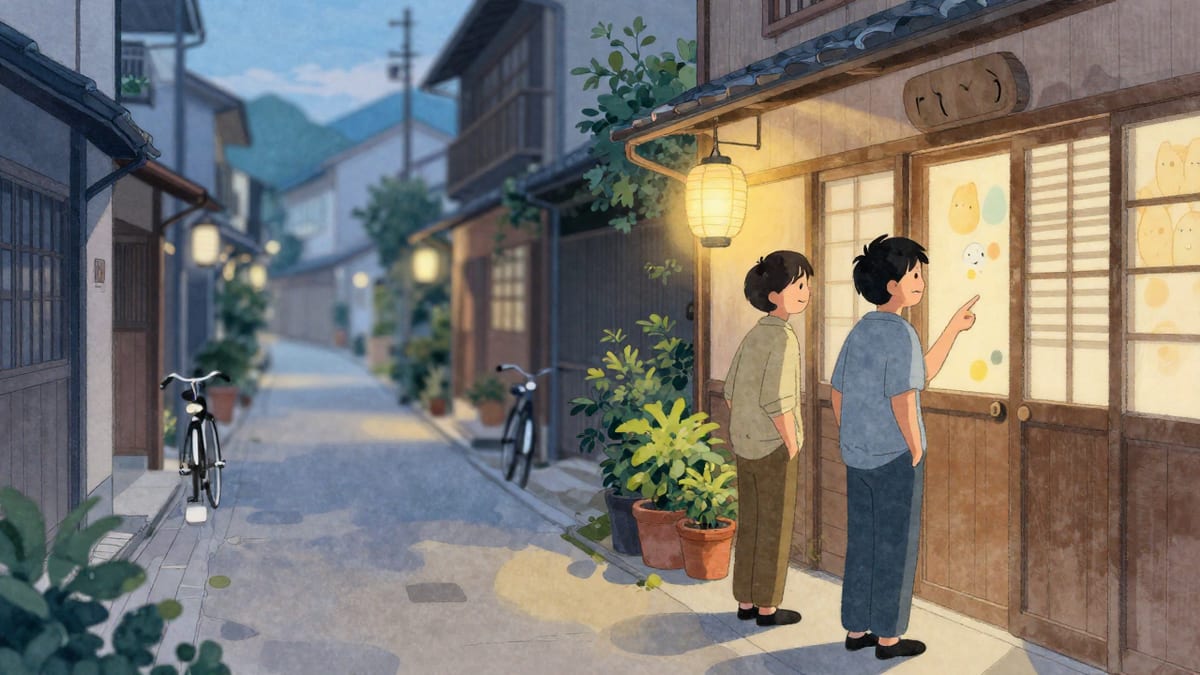
| Japanese | Romaji | Meaning |
|---|---|---|
| あれ、閉まってる… | Are, shimatteru... | Friend: Huh, it's closed... |
| うそ、今日定休日? | Uso, kyō teikyūbi? | You: No way, is today their day off? |
| そうみたい。ごめん、確認すればよかった。 | Sō mitai. Gomen, kakunin sureba yokatta. | Friend: Looks like it. Sorry, I should have checked. |
| えー、楽しみにしてたのに。ちょっとがっかり。 | Ē, tanoshimi ni shiteta noni. Chotto gakkari. | You: Aw, I was looking forward to it. A bit disappointing. |
| でも、しょうがないね。また来よう! | Demo, shō ga nai ne. Mata koyō! | You: But it can't be helped. Let's come again! |
| うん。近くのラーメン、食べに行かない? | Un. Chikaku no rāmen, tabe ni ikanai? | Friend: Yeah. Want to get ramen nearby? |
Shō ga nai, or shikata ga nai in slightly more formal speech, is the key move here. It closes the disappointment and opens the next plan, and many people say it with a small smile.
Disappointment at work
At work, people rarely say gakkari about a colleague's work. Zannen and gentle verdicts carry the message: a project that failed is a zannen na kekka, a disappointing result, and a cancelled event is announced with zannen desu ga. When a client or manager disappoints you, most people describe the outcome and ask about the next step instead of naming the feeling.
When you are the one who disappointed someone, apologise for the result and promise improvement. Gokitai ni kotaerarezu, mōshiwake arimasen, I'm sorry I couldn't meet your expectations, is formal but common in business emails and meetings.
| Japanese | Romaji | Meaning |
|---|---|---|
| 残念な結果になりました。 | Zannen na kekka ni narimashita. | It was a disappointing result. |
| ご期待に応えられず、申し訳ありません。 | Gokitai ni kotaerarezu, mōshiwake arimasen. | I'm sorry I couldn't meet your expectations. |
| 次は頑張ります。 | Tsugi wa ganbarimasu. | I'll do better next time. |
| 気にしないでください。 | Ki ni shinaide kudasai. | Please don't worry about it. |
Common mistakes
- Using kitai hazure about a person's gift or cooking in front of them. It is a verdict; say omotta to chigatta, it was different from what I imagined, only if you must.
- Mixing up gakkari suru and gakkari saseru. I disappointed my teacher is sensei o gakkari saseta.
- Answering good news with zannen. It fits losses and missed chances; for good news, say omedetō or yokatta ne.
- Ending every complaint with noni. It is strong; one sigh is relatable, three sound bitter.
None of these words is rude in itself. The tone comes from where you aim them, so aim the disappointment at the situation and the warmth at the person.