
Coming of Age Day in four phrases
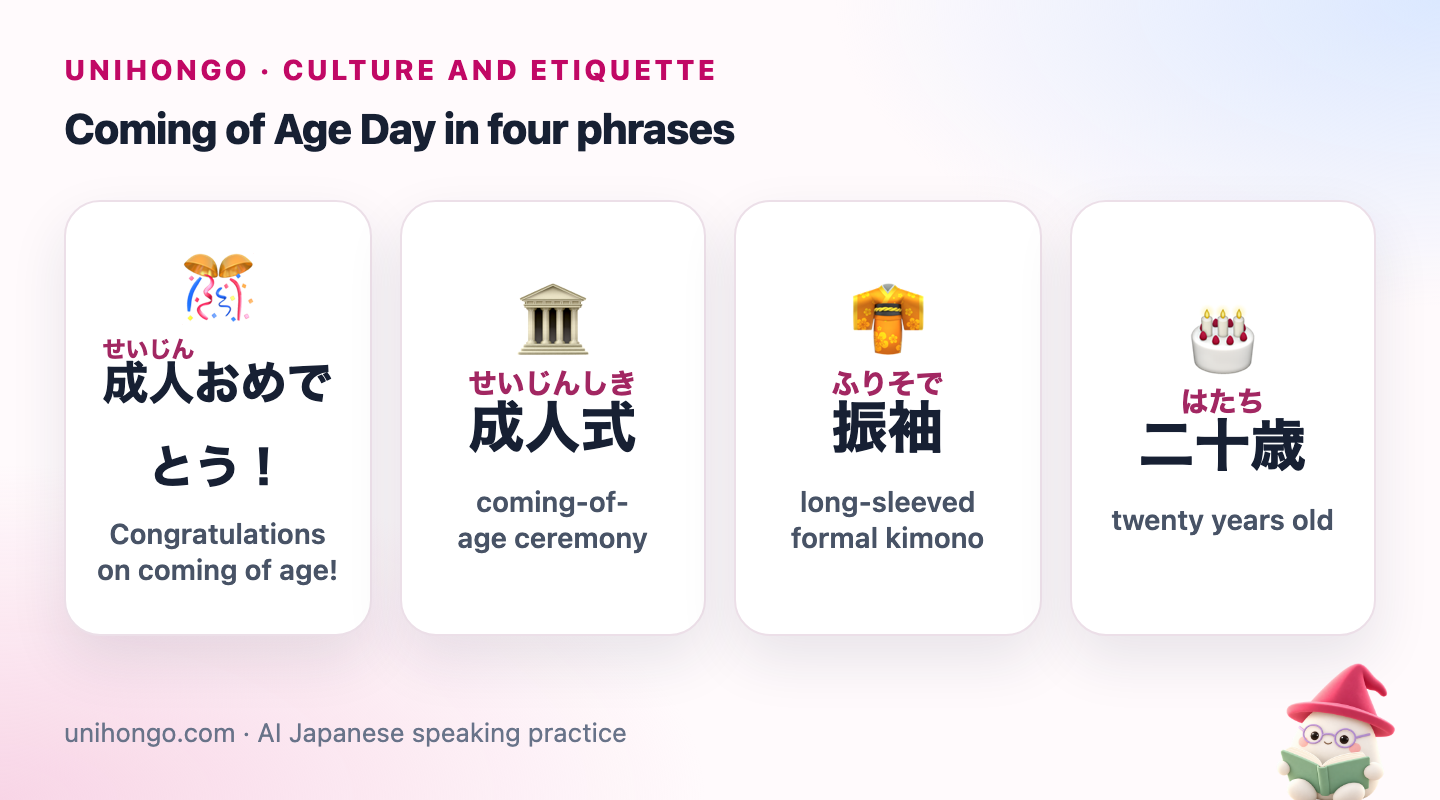
Seijin (成人) means adult, literally a person who has become complete, and seijinshiki (成人式) is the coming-of-age ceremony. Hatachi (二十歳) is the special word for twenty years old; you will rarely hear nijussai about this age. These four lines are what you will hear and say all through the week of the holiday.
| Japanese | Romaji | Meaning |
|---|---|---|
| 成人おめでとう! | Seijin omedetō! | Congratulations on coming of age! |
| 成人式 | seijinshiki | coming-of-age ceremony |
| 振袖 | furisode | long-sleeved formal kimono |
| 二十歳 | hatachi | twenty years old |
18 or 20? What changed in 2022
In April 2022 a change to Japan's Civil Code lowered the age of adulthood from 20 to 18. Eighteen-year-olds can now sign contracts such as a phone plan or a flat lease without a parent's consent. The voting age had already been lowered to 18 in 2016. Drinking and smoking, however, are still allowed only from 20.
The ceremonies are run by local governments, and each one decided for itself. Many chose to keep inviting people in the year they turn 20, partly because many 18-year-olds are busy with university entrance exams in January. Some renamed the event hatachi no tsudoi (二十歳のつどい) or something similar. So if you ask a Japanese friend about it, expect an answer that depends on their town.
| Japanese | Romaji | Meaning |
|---|---|---|
| 日本では十八歳から成人です。 | Nihon de wa jūhassai kara seijin desu. | In Japan you are an adult from 18. |
| お酒は二十歳からです。 | Osake wa hatachi kara desu. | Alcohol is from 20. |
| 式は二十歳の年にあります。 | Shiki wa hatachi no toshi ni arimasu. | The ceremony is in the year you turn 20. |
| 地域によって違います。 | Chiiki ni yotte chigaimasu. | It depends on the area. |
Furisode, hakama and the ceremony itself
A furisode (振袖), literally swinging sleeves, is the most formal kimono for unmarried women, with sleeves that hang far below the wrists. Families rent one, buy one or hand one down from a mother or aunt, and dressing and hair appointments can start before dawn on the day. Many people take studio photos months earlier.
Most men wear a dark suit. Some wear a black crested kimono with striped hakama, and a few choose brightly coloured hakama for fun. The ceremony itself is usually short: speeches by the mayor and guests, sometimes a pledge read by a new adult, then photos outside. For many people the real event is meeting old school friends afterwards at a reunion, a dōsōkai (同窓会), that can go on late into the night.
| Japanese | Romaji | Meaning |
|---|---|---|
| 振袖、すごくきれいだね。 | Furisode, sugoku kirei da ne. | Your furisode is beautiful. (casual) |
| 袴、似合ってるね。 | Hakama, niatteru ne. | The hakama suits you. (casual) |
| 朝五時から着付けでした。 | Asa goji kara kitsuke deshita. | I was getting dressed from 5 a.m. |
| 夜は同窓会があります。 | Yoru wa dōsōkai ga arimasu. | There's a class reunion in the evening. |
How to congratulate a new adult
The register depends on who you are talking to. A friend or younger relative gets the casual form. A colleague's son or daughter, or a client's family, gets the polite form with the honorific prefix go. To the parents, you congratulate them on their child.
| Japanese | Romaji | Meaning |
|---|---|---|
| 成人おめでとう。 | Seijin omedetō. | Congratulations on coming of age. (casual) |
| 二十歳おめでとう! | Hatachi omedetō! | Happy twentieth! (casual) |
| ご成人おめでとうございます。 | Goseijin omedetō gozaimasu. | Congratulations on coming of age. (polite) |
| もう大人だね。 | Mō otona da ne. | You're a grown-up now. (warm, casual) |
| お嬢さんのご成人、おめでとうございます。 | Ojōsan no goseijin, omedetō gozaimasu. | Congratulations on your daughter coming of age. (to a parent) |
Avoid joking that someone can finally drink, especially in front of their parents. Mō otona da ne is affectionate from an older relative or neighbour; between equals, keep it playful.
In a message or card, add a wish for the future. Subarashii mirai ni naru yō ni, wishing you a wonderful future, or korekara mo ganbatte ne, keep up the good work, are common closing lines. Relatives sometimes give a gift of money or a small present, but customs vary by family, so follow what others around you do.
Talking about becoming an adult
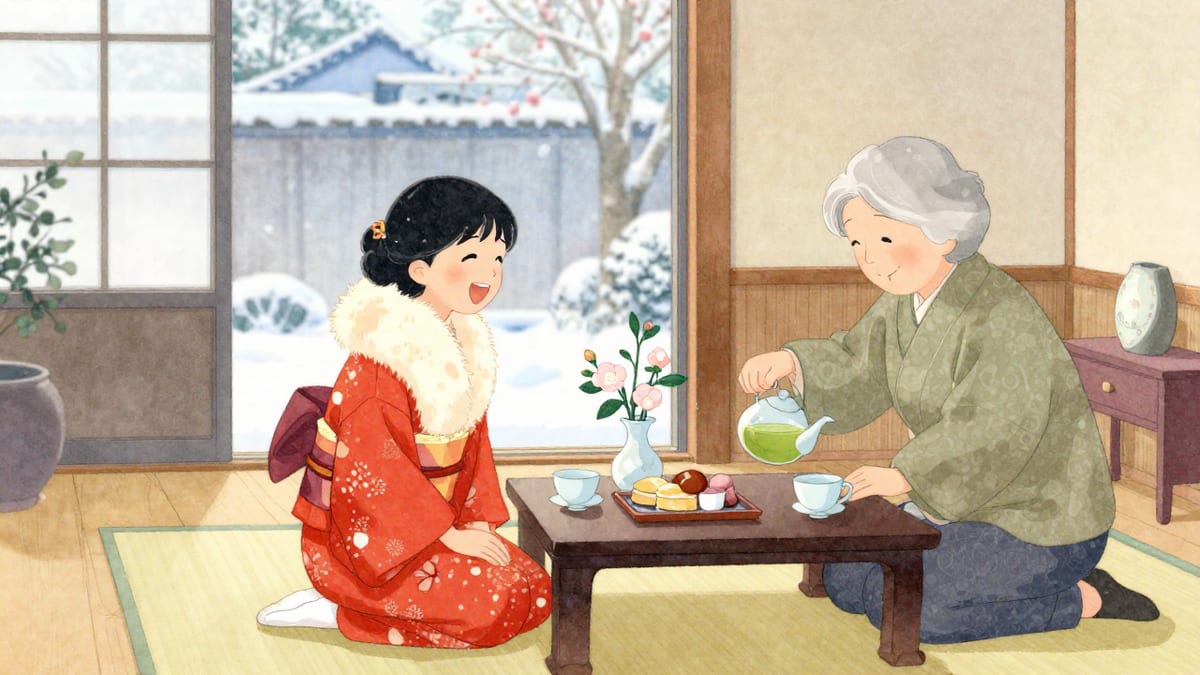
Coming of Age Day is a natural moment for real conversation: what changes when you become an adult, what you want to do and what you used to think adults were like. Three grammar patterns carry most of it. Otona ni natte means since becoming an adult. ~ yō ni natta means you have become able to do something. ~ tai to omoimasu softens a wish into a plan.
| Japanese | Romaji | Meaning |
|---|---|---|
| 大人になって、何が変わりましたか。 | Otona ni natte, nani ga kawarimashita ka. | What changed when you became an adult? |
| 自分で決められるようになりました。 | Jibun de kimerareru yō ni narimashita. | I can now decide things for myself. |
| 責任が重くなった気がします。 | Sekinin ga omoku natta ki ga shimasu. | I feel my responsibilities got heavier. |
| 一人暮らしをしてみたいと思います。 | Hitorigurashi o shite mitai to omoimasu. | I think I'd like to try living alone. |
| 二十歳のころ、何をしていましたか。 | Hatachi no koro, nani o shite imashita ka. | What were you doing when you were 20? |
| 大人って、思っていたより大変ですね。 | Otona tte, omotte ita yori taihen desu ne. | Being an adult is harder than I expected. |
Asking an older person what they were like at twenty is a lovely way to keep the conversation going. Most people enjoy remembering, and it gives you practice with the past continuous, ~ te imashita. Expect a modest answer with a laugh, such as nani mo kangaete inakatta, I was not thinking about anything.
Mini dialogue: a coworker's daughter
| Japanese | Romaji | Meaning |
|---|---|---|
| 週末、娘の成人式なんです。 | Shūmatsu, musume no seijinshiki nan desu. | Coworker: My daughter's coming-of-age ceremony is this weekend. |
| そうなんですか。おめでとうございます。 | Sō nan desu ka. Omedetō gozaimasu. | You: Really? Congratulations. |
| 振袖は私が昔着たものなんです。 | Furisode wa watashi ga mukashi kita mono nan desu. | Coworker: She's wearing the furisode I wore long ago. |
| すてきですね。きっと似合いますよ。 | Suteki desu ne. Kitto niaimasu yo. | You: How lovely. I'm sure it will suit her. |
| ありがとうございます。早いものですね。 | Arigatō gozaimasu. Hayai mono desu ne. | Coworker: Thank you. Time flies, doesn't it? |
Common learner mistakes
- Saying nijussai for twenty. It is correct, but hatachi is what people actually say about this age.
- Assuming everyone celebrated at 18 after 2022. Ask instead: anata no machi de wa nansai deshita ka, how old were people in your town?
- Calling a furisode a yukata. A yukata is a light cotton summer robe; a furisode is formal silk wear.
- Writing just omedetō gozaimasu in a message when it is unclear what you mean. Name the occasion: goseijin omedetō gozaimasu.
- Bringing up the rowdy ceremonies sometimes shown on TV. They are a small minority, and mentioning them can sound like criticism.