
Nanakusa-gayu in four phrases
Nanakusa means seven plants, 七草, and kayu, written 粥 or simply かゆ, means rice porridge. When the two words join, kayu becomes gayu. You will see it written 七草粥 on packaging and 七草がゆ in many recipes, because the kanji 粥 is less familiar.
| Japanese | Romaji | Meaning |
|---|---|---|
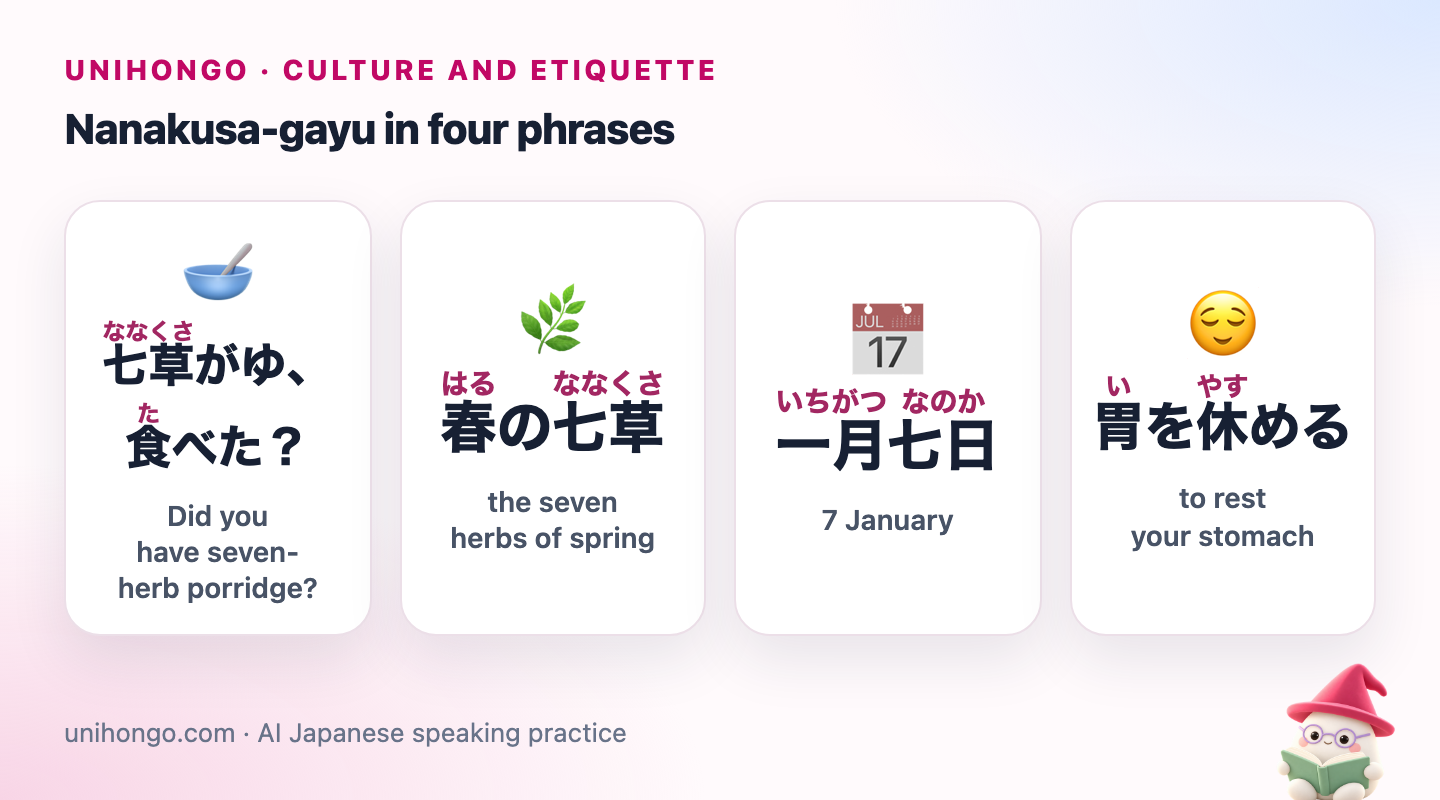
| 七草がゆ、食べた? | Nanakusa gayu, tabeta? | Did you have seven-herb porridge? |
| 春の七草 | haru no nanakusa | the seven herbs of spring |
| 一月七日 | ichigatsu nanoka | 7 January |
| 胃を休める | i o yasumeru | to rest your stomach |
| お粥 | okayu | rice porridge |
Okayu is also what Japanese people eat when they are ill, much like soup elsewhere. That is part of why nanakusa-gayu feels like a reset after New Year.
Why the 7th of January?
The 7th of January is Jinjitsu no sekku (人日の節句), the first of the gosekku, five seasonal festivals that came to Japan from China. Eating young greens at the start of the year, when the first shoots appear, was an old way of asking for health, and the custom of putting seven herbs in porridge on this day was well established by the Edo period.
Today most people describe it in a practical way: after a week of osechi, mochi and drinks, the stomach needs something gentle. Some also see it as the quiet end of the New Year holidays, because in many areas the decorations come down the same day.
| Japanese | Romaji | Meaning |
|---|---|---|
| 人日の節句 | jinjitsu no sekku | the 7 January seasonal festival |
| 無病息災を願います。 | Mubyō sokusai o negaimasu. | We wish for a year free of illness. |
| お正月で疲れた胃を休めます。 | Oshōgatsu de tsukareta i o yasumemasu. | It rests a stomach tired from New Year. |
| 七日の朝に食べます。 | Nanoka no asa ni tabemasu. | We eat it on the morning of the 7th. |
The seven spring herbs, one by one
The herbs keep their old names, and several of them are known by different names today. Most are wild plants of fields and riverbanks; the last two are the familiar turnip and daikon, whose leaves and roots both go in.
| Japanese | Romaji | Meaning |
|---|---|---|
| せり | seri | Japanese parsley |
| なずな | nazuna | shepherd's purse |
| ごぎょう | gogyō | cudweed |
| はこべら | hakobera | chickweed |
| ほとけのざ | hotokenoza | nipplewort |
| すずな | suzuna | turnip |
| すずしろ | suzushiro | daikon radish |
| Old name | Name used today | Note |
|---|---|---|
| nazuna | penpengusa | Its seed pods are said to look like a shamisen plectrum |
| gogyō | hahakogusa | A soft, grey-green plant with small yellow flowers |
| hakobera | hakobe | Common chickweed, found almost everywhere |
| hotokenoza | koonitabirako | Not the purple flower called hotokenoza today |
| suzuna | kabu | Turnip: leaves and root |
| suzushiro | daikon | Daikon radish: leaves and root |
The rhythm everyone memorises
Japanese children learn the herbs as a chant with the rhythm of a traditional poem, five and seven syllables at a time, ending with kore zo nanakusa, these are the seven herbs. Saying it in rhythm is by far the easiest way to remember them, and it is good practice for the long vowel in gogyō.
| Japanese | Romaji | Meaning |
|---|---|---|
| せり、なずな、ごぎょう、はこべら、ほとけのざ、すずな、すずしろ、これぞ七草 | Seri, nazuna, gogyō, hakobera, hotokenoza, suzuna, suzushiro, kore zo nanakusa. | The seven herbs, chanted in rhythm |
| 秋の七草 | aki no nanakusa | the seven autumn flowers (for viewing) |
| 七草を全部言える? | Nanakusa o zenbu ieru? | Can you name all seven herbs? (casual) |
Do not mix up the two sets. The seven spring herbs are for eating; the seven autumn flowers, such as bush clover and pampas grass, are for admiring and appear in poetry.
Buying the herbs and making the porridge
From about 5 January, supermarkets sell nanakusa setto, small packs with all seven herbs, often next to the rice. Some shops also sell freeze-dried versions or ready-made porridge. The method is simple: cook rice with plenty of water until soft, or simmer cooked rice in water, then add the herbs, briefly blanched and finely chopped, and season with salt.
Some families keep an older custom of chopping the herbs on the night of the 6th while singing a short song. Many others simply buy a pack, and some skip the herbs and use daikon leaves or spinach.
| Japanese | Romaji | Meaning |
|---|---|---|
| 七草セットはありますか。 | Nanakusa setto wa arimasu ka. | Do you have seven-herb packs? |
| ご飯から作っても大丈夫です。 | Gohan kara tsukutte mo daijōbu desu. | You can make it from cooked rice. |
| 七草をさっとゆでて刻みます。 | Nanakusa o satto yudete kizamimasu. | Blanch the herbs quickly and chop them. |
| 塩で味をつけます。 | Shio de aji o tsukemasu. | Season it with salt. |
At the table on the morning of the 7th
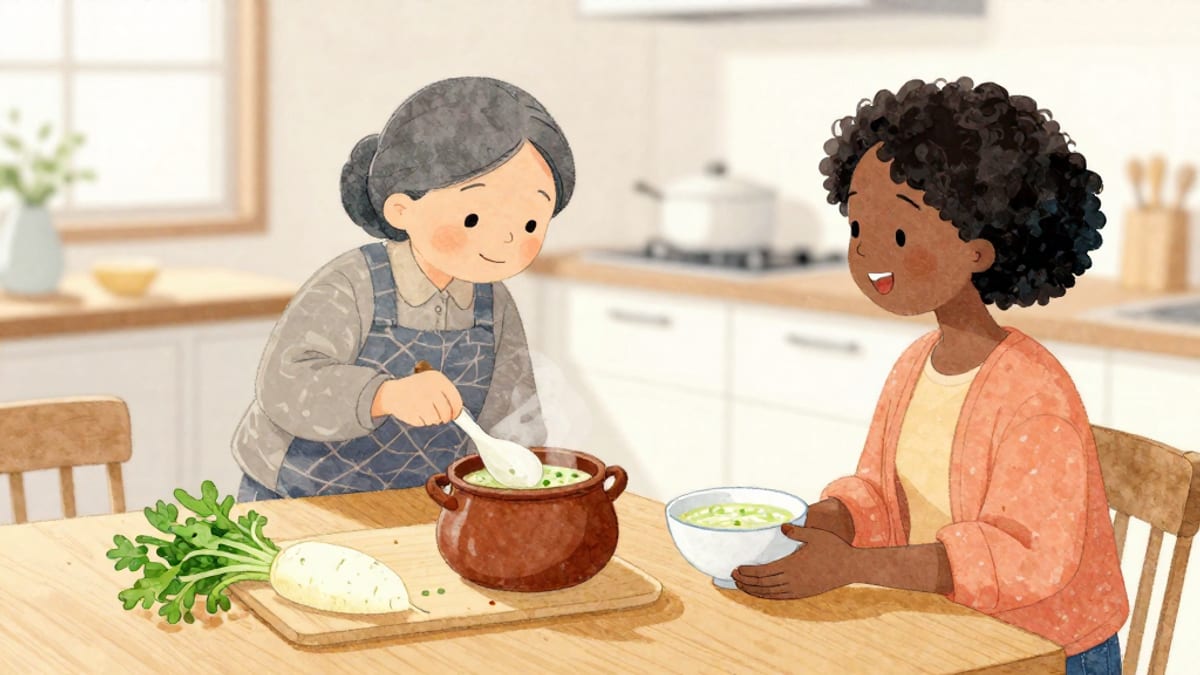
Nanakusa-gayu is a quiet family breakfast. If you are a guest, praise the gentle flavour, and do not worry if you find it plain; many people add a pickled plum or a little soy sauce. Yasashii, kind or gentle, is the key word for describing it.
| Japanese | Romaji | Meaning |
|---|---|---|
| 今日は七草がゆだよ。 | Kyō wa nanakusa gayu da yo. | Host: It's seven-herb porridge today. |
| 優しい味ですね。 | Yasashii aji desu ne. | What a gentle taste. |
| ちょっと苦いけど、おいしい。 | Chotto nigai kedo, oishii. | It's a bit bitter, but tasty. (casual) |
| もう一杯どう? | Mō ippai dō? | Host: How about another bowl? |
| もう十分いただきました。ごちそうさまでした。 | Mō jūbun itadakimashita. Gochisōsama deshita. | I've had plenty. Thank you, that was lovely. |
Mini dialogue: a coworker on 7 January
| Japanese | Romaji | Meaning |
|---|---|---|
| 今朝、七草がゆを食べましたか。 | Kesa, nanakusa gayu o tabemashita ka. | Coworker: Did you have seven-herb porridge this morning? |
| はい、スーパーでセットを買いました。 | Hai, sūpā de setto o kaimashita. | You: Yes, I bought a pack at the supermarket. |
| えらいですね。うちはもう何年も作っていません。 | Erai desu ne. Uchi wa mō nannen mo tsukutte imasen. | Coworker: Good for you. We haven't made it in years. |
| 七草の名前、全部覚えましたよ。 | Nanakusa no namae, zenbu oboemashita yo. | You: I learned all seven herb names. |
| 本当ですか。私より詳しいかも。 | Hontō desu ka. Watashi yori kuwashii kamo. | Coworker: Really? You might know more than me. |
Seven herbs, seven flashcards
Ask Mocchi: /create-flashcards the seven spring herbs of nanakusa-gayu, with their modern names. Pick a photo for each card, a bunch of seri, a white turnip, a leafy daikon, and Mocchi reviews them with spaced repetition, bringing back gogyō and hotokenoza sooner if those are the ones you forget.
For the chant itself, the pronunciation coach has long-vowel drills that train the ō in gogyō, and you can play Flashcard Flip with the deck on the bus.
Common learner mistakes
- Picking wild herbs for the porridge. Seri has a highly poisonous look-alike, and other wild plants are easy to confuse; buy a supermarket pack.
- Confusing the spring herbs with the autumn flowers. Only haru no nanakusa are eaten.
- Reading 七日 as nanokka. The date is nanoka, and some people say nanuka.
- Calling it soup or rice with herbs. It is okayu, porridge, soft and loose.
- Assuming every family eats it. It is common but optional, and customs vary by family and region.