
Arriving on time and the doorway exchange
For a home visit, on time usually means the agreed time or a few minutes after it, not before. The host is still tidying and setting out cups, and arriving early puts them in an awkward position. If you are running late, a short message is enough, and a message when you reach the nearest station is a kind touch that many Japanese guests send anyway. Bring the gift, and if it is raining, fold your umbrella and shake it out before you ring the bell.
At the door the set phrase is ojama shimasu. Literally it means I am going to intrude, but it functions as thank you for having me and is said by everyone, including close friends and family. The host answers with irasshai or dōzo o-agari kudasai, please come up, which is your cue to step in. A quiet shitsurei shimasu as you cross the threshold is common and sounds natural.
| Japanese | Romaji | Meaning |
|---|---|---|
| 少し遅れます。すみません。 | Sukoshi okuremasu. Sumimasen. | I am going to be a little late. Sorry. |
| 今、駅に着きました。 | Ima, eki ni tsukimashita. | I have just arrived at the station. |
| こんにちは。お邪魔します。 | Konnichiwa. Ojama shimasu. | Hello. Thank you for having me. |
| いらっしゃい。よく来てくれました。 | Irasshai. Yoku kite kuremashita. | Welcome. It is good of you to come. (host) |
| どうぞお上がりください。 | Dōzo o-agari kudasai. | Please come in. (host) |
| 失礼します。 | Shitsurei shimasu. | Excuse me. (as you step inside) |
Shoes, slippers and the toilet slippers
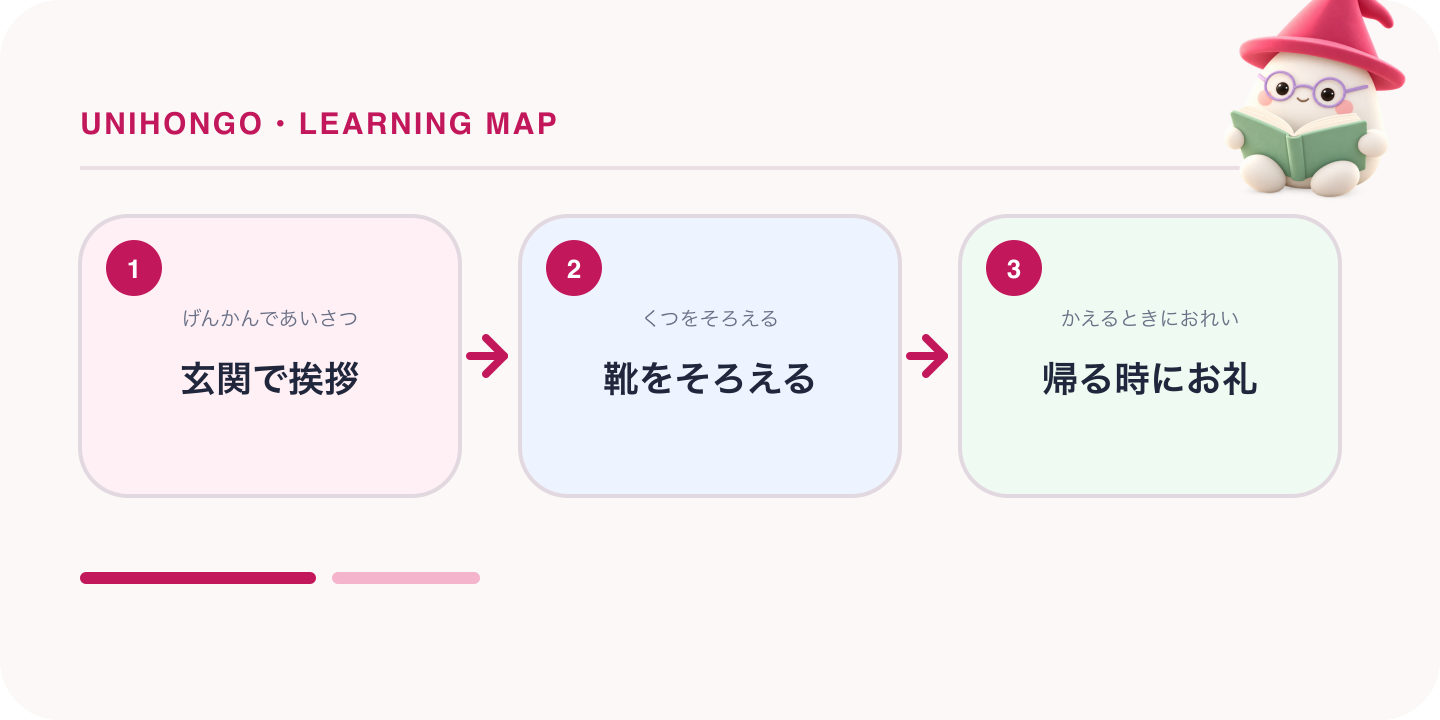
The genkan is a sunken entrance area, and the raised floor beyond it is where shoes are never worn. Step up out of your shoes facing into the house, then turn and nudge them so the toes point toward the door, which makes leaving easier and is what a careful guest does. The host will usually set out slippers; wear them on wooden or carpeted floors and take them off at the edge of any tatami room, leaving them neatly outside.
The toilet usually has its own pair of slippers waiting inside the door. Swap into them on the way in and swap back on the way out. Walking back into the living room in the toilet slippers is the classic guest mistake, and the host will notice even if they say nothing. Socks without holes are worth checking before you leave home, since your feet will be on show all afternoon.
| Japanese | Romaji | Meaning |
|---|---|---|
| スリッパをどうぞ。 | Surippa o dōzo. | Here are some slippers. (host) |
| 靴はこちらでいいですか? | Kutsu wa kochira de ii desu ka? | Is it all right to leave my shoes here? |
| はい、そのままで大丈夫ですよ。 | Hai, sono mama de daijōbu desu yo. | Yes, just leave them as they are. (host) |
| あ、スリッパを履き替えるのを忘れました。 | A, surippa o hakikaeru no o wasuremashita. | Oh, I forgot to change slippers. |
- Step up out of your shoes without touching the raised floor with your shoes.
- Turn your shoes to face the door and place them to one side of the step.
- Put on the offered slippers; if none appear, socks are fine.
- Take slippers off before tatami and leave them at the edge of the room.
- Change into the toilet slippers and change back before you step out.
Handing over the gift
The gift, called temiyage, is usually something to eat or drink that the household can share: sweets, fruit, a cake, or something from your own country. It is normally handed over once you are inside and seated, rather than at the door, and it comes out of the carrier bag first. Offer it with both hands and a short, modest phrase. The traditional line tsumaranai mono desu ga, it is a trifling thing, is still heard from older speakers, but many people now find it too self-deprecating, and hon no kimochi desu, it is just a small token, sounds warmer.
The host will usually say something like wazawaza sumimasen, you should not have gone to the trouble, followed by a thank-you. This is not a refusal. They will take the gift, sometimes open it and serve it with the tea, and often mention it again when you leave. If it is something they can share, say minasan de dōzo so they know it is for the household rather than one person.
| Japanese | Romaji | Meaning |
|---|---|---|
| これ、ほんの気持ちです。 | Kore, hon no kimochi desu. | This is just a small token. |
| お口に合うといいのですが。 | O-kuchi ni au to ii no desu ga. | I hope you like it. |
| 皆さんで召し上がってください。 | Minasan de meshiagatte kudasai. | Please share it with everyone. |
| わざわざすみません。ありがとうございます。 | Wazawaza sumimasen. Arigatō gozaimasu. | You did not have to. Thank you. (host) |
| お気遣いいただいて、ありがとうございます。 | O-kizukai itadaite, arigatō gozaimasu. | Thank you for being so thoughtful. (host) |
Where to sit and the cushion
Wait to be shown a seat rather than choosing one. In most homes the guest is offered the seat furthest from the door, which is the seat of honour, and a mild dewa, shitsurei shimasu as you sit acknowledges it. In a tatami room you will be given a zabuton, a flat floor cushion. Do not step on it; kneel beside it and slide on. The formal kneeling position is seiza, but it is hard on unpractised knees, and the host will almost always tell you to sit comfortably within a minute or two.
When they say dōzo ashi o kuzushite kudasai, please relax your legs, the natural reply is o-kotoba ni amaete, I will take you up on that, and then you can sit cross-legged or to one side. Accepting quickly is fine; refusing and sitting in visible pain is not a virtue and only makes the host uneasy.
| Japanese | Romaji | Meaning |
|---|---|---|
| こちらへどうぞ。お座りください。 | Kochira e dōzo. O-suwari kudasai. | This way, please have a seat. (host) |
| では、失礼します。 | Dewa, shitsurei shimasu. | Thank you, excuse me. (as you sit) |
| ここでいいですか? | Koko de ii desu ka? | Is here all right? |
| どうぞ足を崩してください。 | Dōzo ashi o kuzushite kudasai. | Please sit comfortably. (host) |
| では、お言葉に甘えて。 | Dewa, o-kotoba ni amaete. | Then I will take you up on that. |
Accepting a drink
The drink offer follows a small dance. The host asks what you would like, the guest says dōzo o-kamainaku, please do not go to any trouble, and the host offers again, often with a concrete choice such as tea or coffee. The second offer is the one you accept, and if you are given a choice you should choose, because o-kamainaku again at that point just makes more work for the host. When the cup arrives, a short itadakimasu as you pick it up is normal, and telling them it is good after the first sip is appreciated.
Cold drinks in summer and hot tea in winter are the defaults, and sweets often arrive with them. It is fine to leave some, but drinking nothing at all can read as discomfort. If you have a real restriction, say it plainly with a reason, and the host will happily find water.
| Japanese | Romaji | Meaning |
|---|---|---|
| 何か飲みますか?お茶でいいですか? | Nanika nomimasu ka? O-cha de ii desu ka? | Would you like something to drink? Is tea all right? (host) |
| どうぞお構いなく。 | Dōzo o-kamainaku. | Please do not go to any trouble. |
| コーヒーとお茶、どちらがいいですか? | Kōhī to o-cha, dochira ga ii desu ka? | Which would you prefer, coffee or tea? (host) |
| では、お茶をお願いします。 | Dewa, o-cha o onegai shimasu. | Then tea, please. |
| 温かいうちにどうぞ。 | Atatakai uchi ni dōzo. | Please have it while it is hot. (host) |
| いただきます。おいしいです。 | Itadakimasu. Oishii desu. | Thank you. It is lovely. |
If you are fed: the meal phrases
If the visit includes a meal, wait until the host sits and signals dōzo before you begin, then say itadakimasu with everyone. During the meal, a specific compliment goes further than a general one: naming the dish or asking whether they made it themselves gives the host something to answer. Seconds will be offered; okawari wa ikaga desu ka is the usual form, and accepting once is a compliment in itself. When you have had enough, mō jūbun itadakimashita is the polite way to stop the refills without sounding as if you disliked the food.
Finish with gochisōsama deshita, which thanks the cook rather than the food. The host's set reply is o-somatsu-sama deshita, roughly it was nothing special, which sounds strange in English but is simply the matching half of the exchange. Offering to carry plates to the kitchen is a kind gesture; most hosts will wave you back to your seat, and it is fine to let them. A guide to restaurant Japanese covers ordering and paying; a home meal has none of that, only thanks.
| Japanese | Romaji | Meaning |
|---|---|---|
| では、いただきます。 | Dewa, itadakimasu. | Well then, let me start. |
| これ、とてもおいしいです。 | Kore, totemo oishii desu. | This is really delicious. |
| 手作りですか? | Tezukuri desu ka? | Did you make this yourself? |
| おかわりはいかがですか? | Okawari wa ikaga desu ka? | Would you like another helping? (host) |
| ありがとうございます。もう十分いただきました。 | Arigatō gozaimasu. Mō jūbun itadakimashita. | Thank you, I have had plenty. |
| ごちそうさまでした。とてもおいしかったです。 | Gochisōsama deshita. Totemo oishikatta desu. | Thank you for the meal. It was delicious. |
| お粗末さまでした。 | O-somatsu-sama deshita. | It was nothing special. (host, set reply) |
Admiring the home without overdoing it
One or two compliments about the home early in the visit are welcome, and they should be about atmosphere rather than value: light, the garden, the view, how calm it feels. The host will usually deflect with something like ieie, furui n desu yo, oh no, it is an old place, and may apologise for mess that you cannot see. Reassure them once, briefly, and move on. Repeating the compliment several times starts to sound like a script, and asking what the house cost or what the rent is crosses a line in most families.
Do not wander into other rooms, open doors, or pick things up from shelves unless invited. If a family altar is in the room, it is fine to notice it quietly; you are not expected to do anything, and asking a plain, respectful question about it is acceptable if the host seems open to it.
| Japanese | Romaji | Meaning |
|---|---|---|
| 素敵なお家ですね。 | Suteki na o-uchi desu ne. | What a lovely home. |
| 明るくて気持ちがいいですね。 | Akarukute kimochi ga ii desu ne. | It is so bright and pleasant. |
| 散らかっていてすみません。 | Chirakatte ite sumimasen. | Sorry about the mess. (host) |
| いえいえ、とてもきれいですよ。 | Ieie, totemo kirei desu yo. | Not at all, it is very tidy. |
The bathroom question
The polite way to ask is o-tearai o o-kari shite mo ii desu ka, which frames it as borrowing the washroom. Toire is understood everywhere and is fine among friends, but o-tearai sounds better in a home you are visiting for the first time. Avoid asking for the ofuro, which is the bath itself and usually a separate room. The host will point the way, often with rōka no tsukiatari, the end of the hall. Close the door, use the toilet slippers, and leave the lid as you found it.
| Japanese | Romaji | Meaning |
|---|---|---|
| すみません、お手洗いをお借りしてもいいですか? | Sumimasen, o-tearai o o-kari shite mo ii desu ka? | Excuse me, may I use the toilet? |
| どうぞ。廊下の突き当たりの右です。 | Dōzo. Rōka no tsukiatari no migi desu. | Of course. It is at the end of the hall on the right. (host) |
| トイレ、借りてもいい? | Toire, karite mo ii? | Can I use the loo? (casual, close friends) |
Knowing when to leave
The guest is expected to make the first move to leave, and the host is expected to protest once. The signal word is sorosoro, meaning it is about time, and sorosoro shitsurei shimasu is the whole sentence you need. The host will usually say something like mada ii ja nai desu ka, it is still early, or urge you to stay a little longer. This is hospitality, not a genuine request, so thank them, give a light reason such as an early start, and stand up. Only stay if they press a second time with something concrete, such as dessert that is about to be served.
At the door the phrase from the start comes back in the past tense: ojama shimashita. Put your shoes on, turn and bow, and thank them for the day. Many hosts see guests out to the gate or the lift, so expect to bow once more at the corner and again from further away. The host's ki o tsukete, take care, and mata kite kudasai, come again, are the natural end of the exchange.
| Japanese | Romaji | Meaning |
|---|---|---|
| そろそろ失礼します。 | Sorosoro shitsurei shimasu. | I should be going soon. |
| まだいいじゃないですか。もう少しゆっくりしていってください。 | Mada ii ja nai desu ka. Mō sukoshi yukkuri shite itte kudasai. | It is still early. Please stay a little longer. (host) |
| ありがとうございます。でも、明日も早いので。 | Arigatō gozaimasu. Demo, ashita mo hayai node. | Thank you, but I have an early start tomorrow. |
| 今日は本当にありがとうございました。 | Kyō wa hontō ni arigatō gozaimashita. | Thank you so much for today. |
| お邪魔しました。 | Ojama shimashita. | Thank you for having me. (at the door) |
| 気をつけて帰ってくださいね。また来てください。 | Ki o tsukete kaette kudasai ne. Mata kite kudasai. | Get home safely. Come again. (host) |
The thank-you the next day
A short message the next day, or at the next meeting, closes the visit properly and is usually expected between friends and colleagues alike. It does not need to be long: thank them for yesterday, mention one specific thing you enjoyed, and if you ate there, add gochisōsama deshita again. If you would like to reciprocate, this is the moment to say so, and a message rather than a phone call is the norm unless the host is elderly. The host's reply is nearly always kochira koso, the thanks are mine, and an open invitation to come again.
| Japanese | Romaji | Meaning |
|---|---|---|
| 昨日はありがとうございました。とても楽しかったです。 | Kinō wa arigatō gozaimashita. Totemo tanoshikatta desu. | Thank you for yesterday. I had a lovely time. |
| お料理、本当においしかったです。ごちそうさまでした。 | O-ryōri, hontō ni oishikatta desu. Gochisōsama deshita. | The food was really delicious. Thank you for the meal. |
| 今度はぜひうちにも来てください。 | Kondo wa zehi uchi ni mo kite kudasai. | Next time, please come to my place too. |
| こちらこそ、楽しかったです。また遊びに来てくださいね。 | Kochira koso, tanoshikatta desu. Mata asobi ni kite kudasai ne. | The pleasure was mine. Come round again. (host) |
The whole visit in order
| Moment | You say | You will hear |
|---|---|---|
| Running late | Sukoshi okuremasu. Sumimasen. | Daijōbu desu yo. Ki o tsukete. |
| At the door | Ojama shimasu. | Dōzo o-agari kudasai. |
| Stepping in | Shitsurei shimasu. | Surippa o dōzo. |
| Handing over the gift | Kore, hon no kimochi desu. | Wazawaza sumimasen. Arigatō gozaimasu. |
| Being seated | Dewa, shitsurei shimasu. | Dōzo ashi o kuzushite kudasai. |
| First drink offer | Dōzo o-kamainaku. | O-cha de ii desu ka? |
| Second drink offer | Dewa, o-cha o onegai shimasu. | Atatakai uchi ni dōzo. |
| Starting the meal | Itadakimasu. | Dōzo, meshiagatte kudasai. |
| Seconds offered | Mō jūbun itadakimashita. | Sō desu ka. Dewa, dezāto o. |
| End of the meal | Gochisōsama deshita. | O-somatsu-sama deshita. |
| Asking for the toilet | O-tearai o o-kari shite mo ii desu ka? | Dōzo. Rōka no tsukiatari desu. |
| Signalling the end | Sorosoro shitsurei shimasu. | Mō sukoshi yukkuri shite itte kudasai. |
| At the door again | Ojama shimashita. | Ki o tsukete. Mata kite kudasai. |
| The next day | Kinō wa arigatō gozaimashita. | Kochira koso. Mata asobi ni kite kudasai. |
Read the right-hand column aloud as well as the middle one. Half of a smooth visit is recognising the host's line quickly enough to answer it, and the host lines are the ones nobody drills. Once both columns feel familiar, the etiquette takes care of itself, because every step already has a sentence attached.