
Four ways to say money is tight
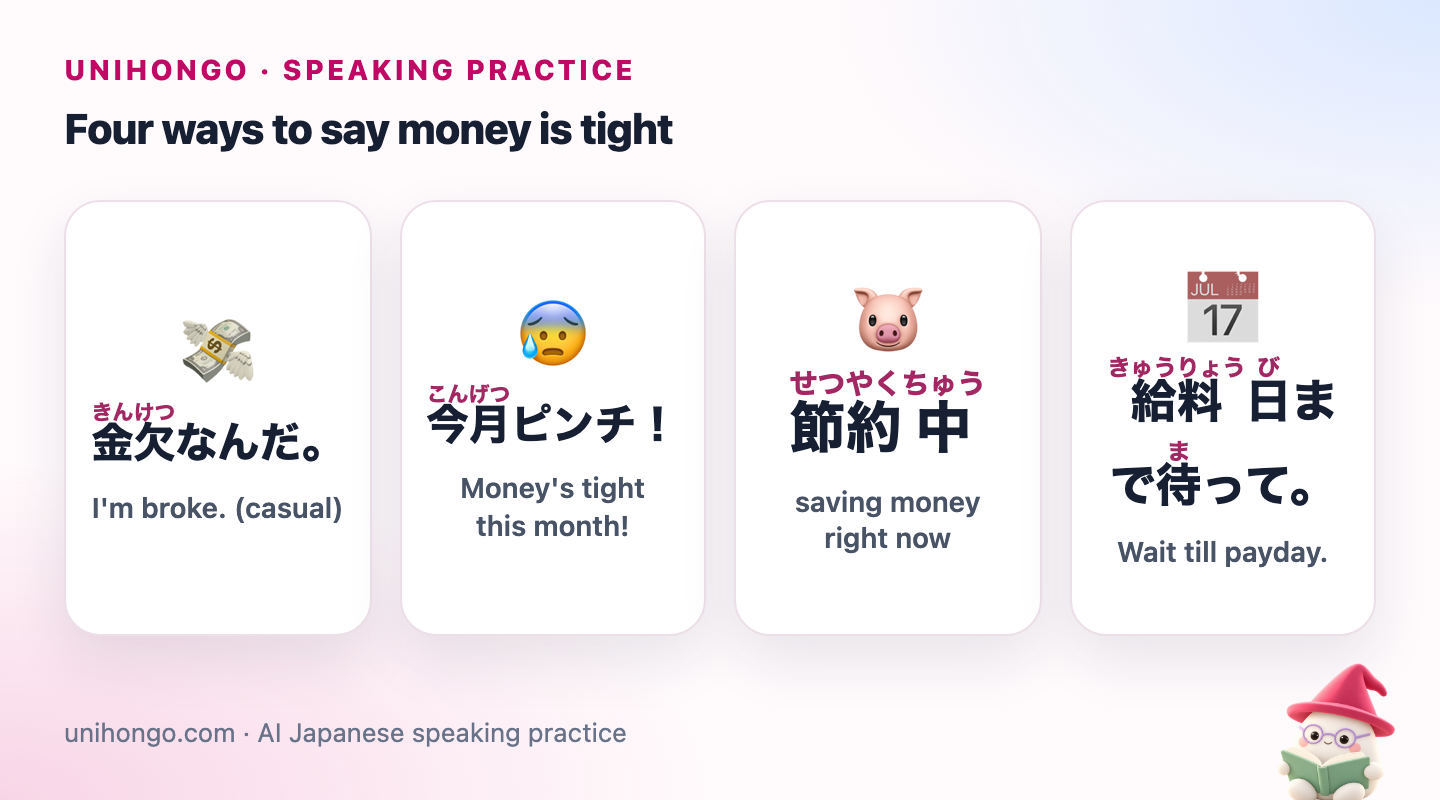
These four lines are what students and young workers actually say. Kinketsu is the cheerful casual word for being broke. Pinchi, from the English pinch, means a tight spot. Setsuyaku-chū says you are in the middle of saving. Kyūryōbi made matte, wait until payday, is half a joke and half a promise.
| Japanese | Romaji | Meaning |
|---|---|---|
| 金欠なんだ。 | Kinketsu nan da. | I'm broke. (casual) |
| 今月ピンチ! | Kongetsu pinchi! | Money's tight this month! |
| 節約中 | setsuyaku-chū | saving money right now |
| 給料日まで待って。 | Kyūryōbi made matte. | Wait till payday. |
Pinchi is borrowed from English pinch but used for any tight spot. Dai-pinchi, a huge crisis, is common in sports commentary and in jokes about your bank balance.
Kinketsu, okane ga nai and binbō
Kinketsu is light: everyone has a kinketsu month. Okane ga nai, I have no money, is plain and can sound flat or a little heavy, depending on the voice. Kinketsu gimi, a bit broke, softens it further.
Binbō (貧乏) means poor. Students joke about being binbō gakusei, poor students, and nobody minds. Said seriously, or about someone else, it can sound harsh or self-pitying, so keep it for jokes about yourself.
| Japanese | Romaji | Meaning |
|---|---|---|
| 今、お金がないんだ。 | Ima, okane ga nai n da. | I've got no money right now. |
| ちょっと金欠気味で。 | Chotto kinketsu gimi de. | I'm a bit short of money. |
| 貧乏学生なので。 | Binbō gakusei na node. | I'm a poor student, you see. (joking) |
| 財布が空っぽ。 | Saifu ga karappo. | My wallet is empty. |
Gimi, a touch of, is useful beyond money: kaze gimi, a touch of a cold, and tsukare gimi, a bit tired. It softens any state you do not want to sound dramatic about.
Polite versions for coworkers
With coworkers, neighbours or anyone you speak politely to, Japanese avoids naming money directly. Kibishii, tough or strict, and yoyū ga nai, I have no leeway, let the listener understand without details. The sentence often trails off with -kute or kedo, and that unfinished ending is itself the polite part.
| Japanese | Romaji | Meaning |
|---|---|---|
| 今月はちょっと厳しくて… | Kongetsu wa chotto kibishikute... | This month is a bit tough... |
| 今、お金に余裕がなくて。 | Ima, okane ni yoyū ga nakute. | Money is a bit tight for me right now. |
| 節約しているので、今回は遠慮します。 | Setsuyaku shite iru node, konkai wa enryo shimasu. | I'm saving, so I'll sit this one out. |
| 給料日の後でもいいですか。 | Kyūryōbi no ato demo ii desu ka. | Could we do it after payday? |
Kibishii is the key word here. It means strict or tough and covers money without saying money, so it works for budgets at work too: yosan ga kibishii, the budget is tight.
Saying no to the plan, yes to the person
A flat no to an invitation can feel like rejecting the friend. Japanese speakers often decline the plan and offer another in the same breath. Shinai?, shall we not?, and wa dō?, how about?, make suggestions sound easy to refuse in turn, which is what makes them friendly.
| Japanese | Romaji | Meaning |
|---|---|---|
| 安いところにしない? | Yasui tokoro ni shinai? | Shall we go somewhere cheap? |
| 家で飲まない? | Ie de nomanai? | Want to have drinks at home? |
| ランチならどう? | Ranchi nara dō? | How about lunch instead? |
| 給料が出たら、絶対行こう! | Kyūryō ga detara, zettai ikō! | Once I get paid, let's definitely go! |
Nara, if it's, is the friendliest way to make a counter-offer, because it accepts the idea of meeting and only changes the details. Ranchi nara dō? tells your friend you still want to see them.
Ogoru and warikan: who pays
When money comes up, someone may offer to treat you. Ogoru means to treat, and ogoru yo is I'll treat you. Accept with a big thank you and promise to return it, tsugi wa watashi ga ogoru ne. Warikan is splitting the bill equally. Among friends of the same age, warikan is the default in many groups; at work, a senior often pays more, though customs vary between workplaces.
| Japanese | Romaji | Meaning |
|---|---|---|
| 今日はおごるよ。 | Kyō wa ogoru yo. | Today's on me. |
| 本当に?ありがとう!次は私がおごるね。 | Hontō ni? Arigatō! Tsugi wa watashi ga ogoru ne. | Really? Thanks! Next time's on me. |
| Phrase | Meaning | Who says it |
|---|---|---|
| Ogoru yo | I'll treat you | The person paying |
| Gochisōsama desu | Thank you for treating me | The person treated |
| Tsugi wa watashi ga ogoru ne | Next time is on me | The person treated |
| Warikan ni shiyō | Let's split it | Anyone |
Ogotte, treat me, said with a grin to a close friend, is a common joke. With anyone else, let them offer. Gochisōsama desu, said at the register or as you leave, is the standard thanks.
A spoken exchange: the expensive dinner
A friend messages you about a famous grilled-meat restaurant on Saturday. You would love to go, but payday is still a week away.
| Japanese | Romaji | Meaning |
|---|---|---|
| 土曜日、高級焼肉行かない? | Doyōbi, kōkyū yakiniku ikanai? | Friend: Want to go for fancy yakiniku on Saturday? |
| 行きたいけど、今月金欠なんだ。 | Ikitai kedo, kongetsu kinketsu nan da. | You: I'd love to, but I'm broke this month. |
| えー、そうなの? | Ē, sō na no? | Friend: Oh no, really? |
| 給料日前でピンチで…。安いところにしない? | Kyūryōbi mae de pinchi de... Yasui tokoro ni shinai? | You: Payday's not here yet. Somewhere cheap? |
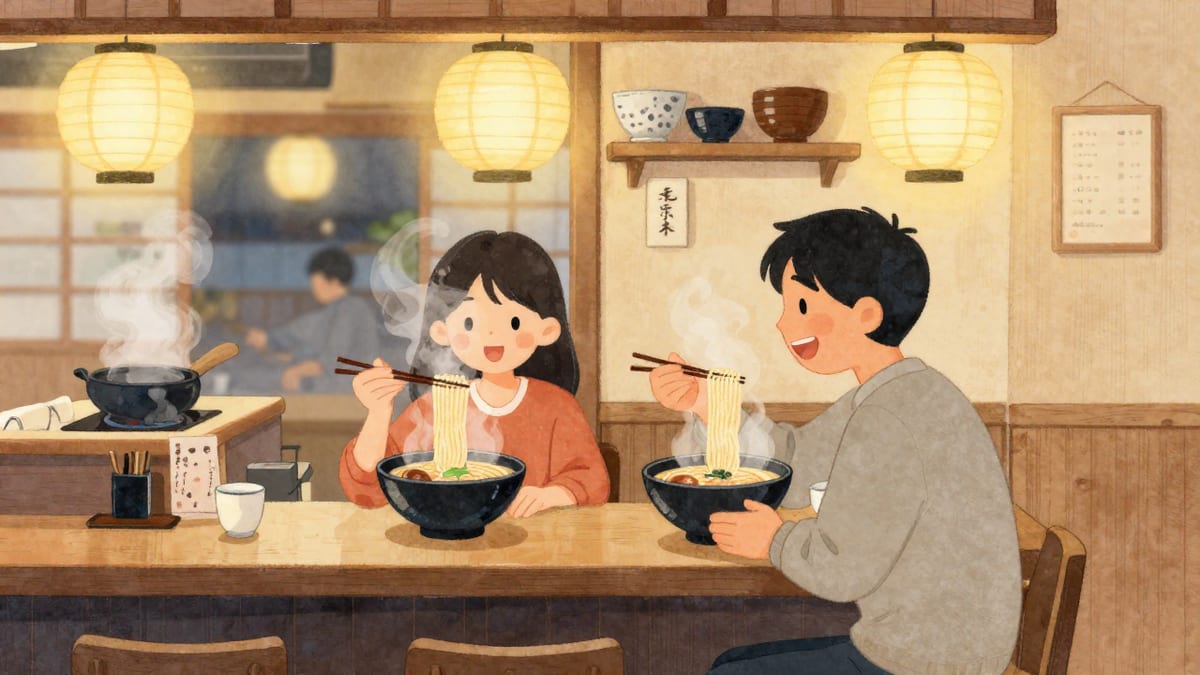
| いいよ。じゃあ、ラーメンは? | Ii yo. Jā, rāmen wa? | Friend: Sure. How about ramen, then? |
| 最高!給料が出たら、焼肉行こう。 | Saikō! Kyūryō ga detara, yakiniku ikō. | You: Perfect! Yakiniku once I get paid. |
Notice the chain: a sincere wish to go, the reason, a counter-offer and a promise. Even without the word sorry, the friend feels wanted, which makes the refusal easy to hear.
Saving up and payday
Setsuyaku, saving or economising, is a respectable, even admired, habit, so setsuyaku-chū sounds sensible rather than sad. Chokin, savings, is for a goal: ryokō no tame ni chokin shite imasu, I'm saving up for a trip. Giving a goal makes declining an invitation sound positive.
Everyday money-saving habits make easy conversation: making a packed lunch, bentō, buying discounted food at the supermarket in the evening, or cooking at home. Asking someone for their tips is a friendly way to talk about money without anyone revealing numbers. And when payday finally comes, kyūryōbi da!, it's payday!, is a happy announcement.
| Japanese | Romaji | Meaning |
|---|---|---|
| 旅行のために貯金しています。 | Ryokō no tame ni chokin shite imasu. | I'm saving up for a trip. |
| 最近はお弁当を作ってます。 | Saikin wa obentō o tsukuttemasu. | I've been making packed lunches lately. |
| 節約のコツ、教えて! | Setsuyaku no kotsu, oshiete! | Tell me your money-saving tips! |
| 今月は外食を控えてるんだ。 | Kongetsu wa gaishoku o hikaeteru n da. | I'm not eating out much this month. |
| 今日は給料日だ! | Kyō wa kyūryōbi da! | It's payday today! |
Common mistakes
- Saying okane ga nai to a coworker's invitation. Use kongetsu wa chotto kibishikute or konkai wa enryo shimasu.
- Calling someone else binbō. It is fine as a joke about yourself only.
- Declining without an alternative. A counter-offer shows you still want to meet.
- Accepting ogoru without a thank you or a return promise. Gochisōsama and tsugi wa watashi ga matter.
Prices and salaries are personal. Many people are happy to swap money-saving tips but would rather not say what they earn, so let others bring up numbers.