
Staying warm in four phrases
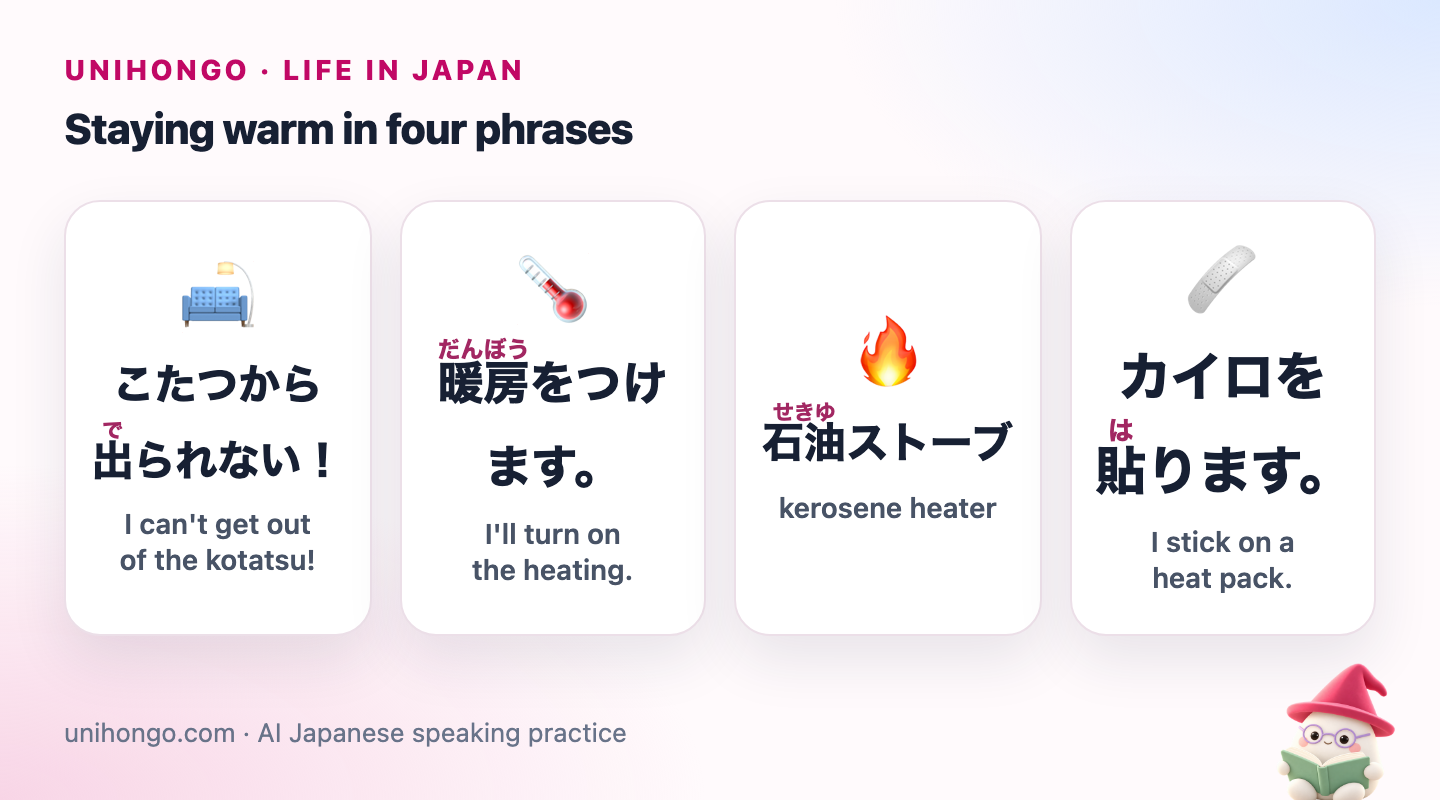
These four lines cover most winter conversations at home. The first is a national joke: the kotatsu is so warm that nobody can get out. The others name the three most common ways people keep warm.
| Japanese | Romaji | Meaning |
|---|---|---|
| こたつから出られない! | Kotatsu kara derarenai! | I can't get out of the kotatsu! |
| 暖房をつけます。 | Danbō o tsukemasu. | I'll turn on the heating. |
| 石油ストーブ | sekiyu sutōbu | kerosene heater |
| カイロを貼ります。 | Kairo o harimasu. | I stick on a heat pack. |
Why Japanese homes feel cold
Many Japanese houses were built for humid summers, with an emphasis on airflow rather than keeping heat in. Older buildings often have thin walls, single-glazed aluminium window frames and gaps around sliding doors. Insulation standards have improved a great deal, so a new flat can be warm, but a 30-year-old wooden house or a cheap rental can be very cold.
The habit that follows is to heat the room you are using. The living room is warm, the corridor and toilet are not, and the bathroom can be the coldest place of all. Many homes have a heated toilet seat for exactly this reason. Sudden temperature changes between a warm room and a cold bathroom are called heat shock (ヒートショック) in Japanese, and it is a common winter health topic on TV, especially for older people.
| Japanese | Romaji | Meaning |
|---|---|---|
| この部屋、寒いですね。 | Kono heya, samui desu ne. | This room is cold, isn't it? |
| 廊下が冷えます。 | Rōka ga hiemasu. | The corridor gets really cold. |
| すきま風が入ります。 | Sukimakaze ga hairimasu. | There's a draught coming in. |
| 窓が一枚ガラスです。 | Mado ga ichimai garasu desu. | The windows are single-glazed. |
The kotatsu: Japan's favourite winter furniture
A kotatsu is a low table with an electric heater under the top. In autumn you bring out the quilt, the kotatsu buton (こたつ布団), lay it over the frame and put the tabletop back on. You sit on the floor with your legs under the quilt, and the warm air stays trapped there. It uses much less electricity than heating the whole room, which is why it survives even in homes with air conditioners.
The kotatsu is also a social space. Families eat dinner, play cards and watch New Year TV around it, and a bowl of mandarins, mikan, on top is the classic winter picture. The downside is famous: once you are in, you do not want to get out, and people fall asleep under it. Many people advise against sleeping in one all night, since your body dries out and it is easy to get dehydrated.
| Japanese | Romaji | Meaning |
|---|---|---|
| こたつ、出しました。 | Kotatsu, dashimashita. | I've got the kotatsu out. |
| こたつに入って。 | Kotatsu ni haitte. | Come and get in the kotatsu. (casual) |
| こたつで寝ちゃだめだよ。 | Kotatsu de necha dame da yo. | Don't sleep in the kotatsu. (casual) |
| みかん、取ってくれる? | Mikan, totte kureru? | Can you pass me a mandarin? (casual) |
Air-con, kerosene and other heaters
Most flats have an air conditioner on the wall, the eakon (エアコン), which also heats. Heating mode is danbō (暖房), and in very cold weather it can struggle and run up a high bill. Many families add a kerosene heater: either a sekiyu sutōbu, which heats by radiant warmth, or a sekiyu fan hītā, which blows hot air. Kerosene, tōyu (灯油), is sold at petrol stations and by small delivery trucks that drive around neighbourhoods playing a recognisable tune.
Kerosene and gas heaters burn fuel inside the room, so they need fresh air. Many people open a window for a few minutes every hour, and manuals tell you to do so. Some rental buildings forbid them entirely. Electric options include oil-filled radiators, ceramic fan heaters and electric blankets, denki mōfu (電気毛布).
| Japanese | Romaji | Meaning |
|---|---|---|
| 暖房を二十度にしましょう。 | Danbō o nijūdo ni shimashō. | Let's set the heating to 20 degrees. |
| 灯油がなくなりそうです。 | Tōyu ga nakunarisō desu. | We're about to run out of kerosene. |
| ちょっと換気しようか。 | Chotto kanki shiyō ka. | Shall we air the room a bit? (casual) |
| 空気が乾燥していますね。 | Kūki ga kansō shite imasu ne. | The air is dry, isn't it? |
| Heater | Japanese | Good to know |
|---|---|---|
| Air conditioner (heating) | エアコンの暖房 | Already installed; dries the air |
| Kerosene heater | 石油ストーブ・ファンヒーター | Very warm; needs ventilation; check your lease |
| Electric blanket | 電気毛布 | Cheap to run; for sleeping |
| Hot water bottle | 湯たんぽ | Filled with hot water; put in the bed before sleeping |
Kairo, yutanpo and dressing warm
The disposable heat pack, kairo (カイロ), is everywhere in winter: in convenience stores, pharmacies and 100-yen shops. There are pocket ones to hold and sticky ones, harukairo (貼るカイロ), to put on your clothes over your lower back or stomach. Do not stick them directly on skin, and follow the packet instructions.
The yutanpo (湯たんぽ) is a hot water bottle, often a hard plastic or metal one in a fleece cover, filled at night and put in the bed. Indoors, people wear layers and fleece, warm socks and slippers, and a padded jacket called a hanten (半纏) or dotera (どてら) is still loved in some homes.
| Japanese | Romaji | Meaning |
|---|---|---|
| 貼るカイロ、持ってる? | Haru kairo, motteru? | Do you have a stick-on heat pack? (casual) |
| 湯たんぽを入れて寝ます。 | Yutanpo o irete nemasu. | I sleep with a hot water bottle in the bed. |
| 足が冷たいです。 | Ashi ga tsumetai desu. | My feet are cold. |
| 厚着しています。 | Atsugi shite imasu. | I'm wearing lots of layers. |
Condensation, mould and talking to your landlord
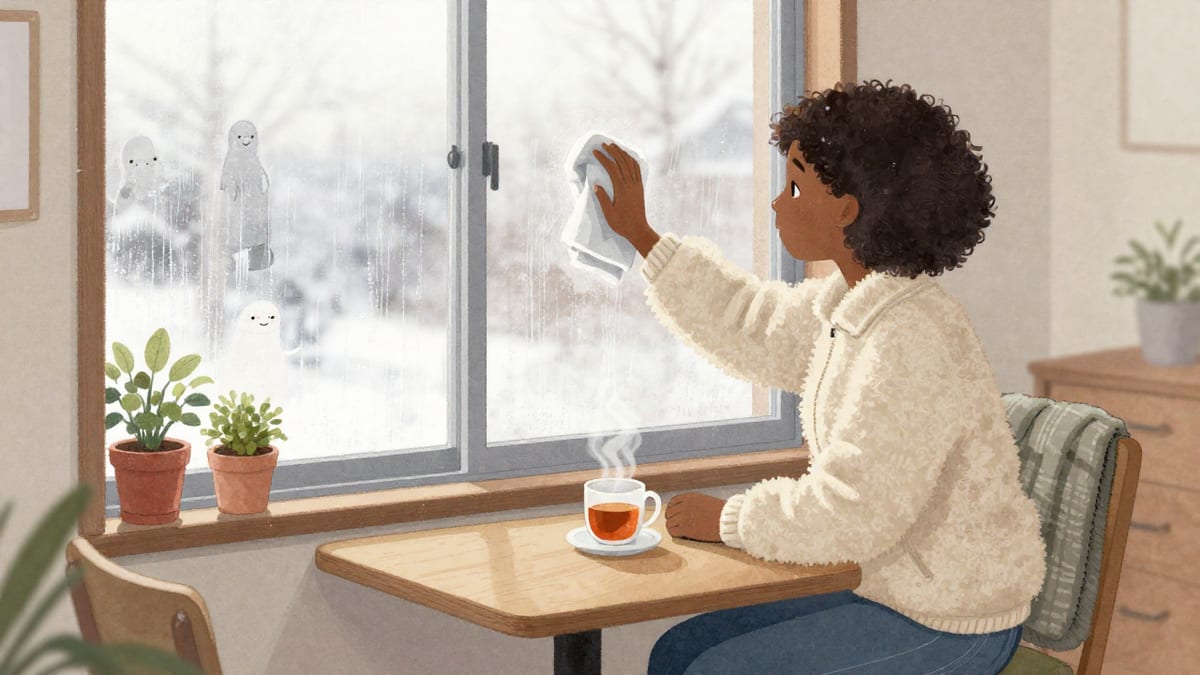
When a warm, humid room meets a cold window, water runs down the glass. That is ketsuro (結露), and in a rental it quickly becomes black mould, kabi, on frames, curtains and the backs of wardrobes. Wipe the windows in the morning, air the room, run the bathroom fan and keep furniture slightly away from outside walls. If the problem is severe or something is broken, contact the landlord or management company, the kanri gaisha (管理会社), politely and early.
| Japanese | Romaji | Meaning |
|---|---|---|
| 窓の結露がひどいんですが。 | Mado no ketsuro ga hidoi n desu ga. | The condensation on the windows is really bad. |
| カビが生えてしまいました。 | Kabi ga haete shimaimashita. | Mould has started to grow. |
| エアコンの暖房が効かないんです。 | Eakon no danbō ga kikanai n desu. | The air-con heating isn't working. |
| 石油ストーブを使ってもいいですか。 | Sekiyu sutōbu o tsukatte mo ii desu ka. | May I use a kerosene heater? |
| 見に来ていただけますか。 | Mi ni kite itadakemasu ka. | Could you come and take a look? |
Electricity bill talk and a family dialogue
Heating bills are a favourite winter topic, and denkidai (電気代), the electricity bill, comes up at home, at work and in the news. In a family or share house, deciding when to switch the heater on is a small daily negotiation. Here is how it sounds in casual speech.
| Japanese | Romaji | Meaning |
|---|---|---|
| 今月の電気代、高かったね。 | Kongetsu no denkidai, takakatta ne. | Partner: This month's electricity bill was high. |
| 暖房、つけっぱなしだったからね。 | Danbō, tsukeppanashi datta kara ne. | You: Because we left the heating on all the time. |
| 夜はこたつだけにしようか。 | Yoru wa kotatsu dake ni shiyō ka. | Partner: Shall we use just the kotatsu at night? |
| いいよ。でも寝る前は湯たんぽね。 | Ii yo. Demo neru mae wa yutanpo ne. | You: OK. But a hot water bottle before bed. |
Tsukeppanashi means left on, from the verb plus ~ppanashi, leaving something in a state. You will also hear denki no tsukeppanashi, leaving the lights on, and mado no akeppanashi, leaving the window open.