
Fukubukuro in four words
Fukubukuro is written 福袋: 福 is good fortune and 袋 is bag, which changes to bukuro when the two words join. The idea is simple. You pay a fixed price for a bag whose contents are partly or fully hidden, and the shop promises that what is inside is worth more than you paid.
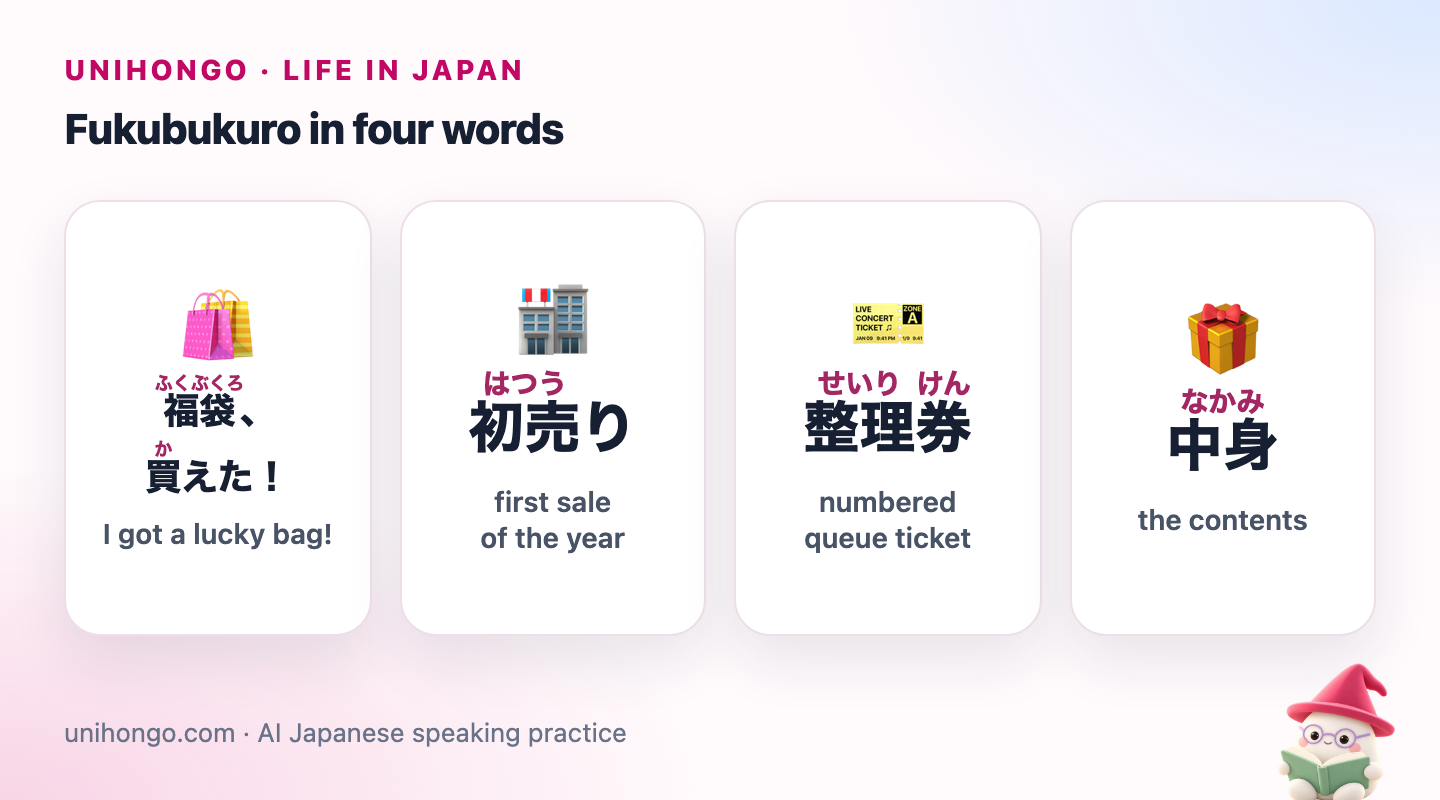
Four words will get you through almost any New Year sale: the bag itself, the first sale of the year, the numbered ticket handed out to the queue, and the contents that everyone wants to know about.
| Japanese | Romaji | Meaning |
|---|---|---|
| 福袋、買えた! | Fukubukuro, kaeta! | I got a lucky bag! |
| 初売り | hatsuuri | first sale of the year |
| 整理券 | seiriken | numbered queue ticket |
| 中身 | nakami | the contents |
| 先着順 | senchakujun | first come, first served |
| 抽選 | chūsen | lottery draw |
Before New Year: asking how a shop sells its bags
Every shop runs its sale differently, and the rules are often announced in December. Some take reservations in store, some run an online lottery, and others sell only on the day, first come, first served. If you have a favourite shop, ask a member of staff a few weeks before. These questions are polite enough for any shop counter.
| Japanese | Romaji | Meaning |
|---|---|---|
| 福袋はいつから販売ですか。 | Fukubukuro wa itsu kara hanbai desu ka. | From when are the lucky bags on sale? |
| 予約はできますか。 | Yoyaku wa dekimasu ka. | Can I reserve one? |
| 抽選ですか、先着順ですか。 | Chūsen desu ka, senchakujun desu ka. | Is it a lottery or first come, first served? |
| 初売りは何時からですか。 | Hatsuuri wa nanji kara desu ka. | What time does the first sale start? |
| オンラインでも買えますか。 | Onrain demo kaemasu ka. | Can I buy one online too? |
Listen for a few words in the answer. Uketsuke means taking applications, as in yoyaku no uketsuke wa jūni gatsu kara desu, reservations open in December. Tōsen means winning the lottery, and tōsen shita kata nomi means only people who won.
In the queue on the first sale day
Popular shops often open early and hand out numbered tickets to people already waiting, then call ticket numbers in order. Many limit each customer to one bag of each type. Queues are usually calm and orderly. Saving a place for friends who have not arrived is often not allowed, so check the rules on the day.
| Japanese | Romaji | Meaning |
|---|---|---|
| 列はここからですか。 | Retsu wa koko kara desu ka. | Does the line start here? |
| 整理券をお配りしています。 | Seiriken o okubari shite imasu. | Staff: We're handing out numbered tickets. |
| お一人様一点限りです。 | Ohitorisama itten kagiri desu. | Staff: Limited to one per person. |
| まだ残っていますか。 | Mada nokotte imasu ka. | Are there any left? |
| こちらは売り切れました。 | Kochira wa urikiremashita. | Staff: This one is sold out. |
Itten (一点) is the counter for items in shops, more formal than hitotsu. Staff use it all the time: itten de gozaimasu, that is one item. You can answer with plain hitotsu; nobody expects you to match shop language.
Choosing the right bag
Fashion bags often come in sizes and in men's and women's versions, and some shops let you choose a colour range or a style. Because returns are usually refused, this is the moment to ask questions. Many shops display a sample or a list of what kinds of items are inside, even when the exact items are a surprise.
| Japanese | Romaji | Meaning |
|---|---|---|
| サイズは選べますか。 | Saizu wa erabemasu ka. | Can I choose the size? |
| Mサイズをお願いします。 | Emu saizu o onegai shimasu. | Medium, please. |
| メンズとレディース、どちらですか。 | Menzu to redīsu, dochira desu ka. | Is this the men's or the women's one? |
| 中身は見られますか。 | Nakami wa miraremasu ka. | Can I see what's inside? |
| どんなものが入っていますか。 | Donna mono ga haitte imasu ka. | What kind of things are in it? |
Paying, and the no-returns line
At the till you will hear the usual shop questions, plus one that is special to lucky bags. Dekikanemasu is a very polite way of saying cannot. It literally sounds like a struggle to do something, but in shop and business Japanese it is a firm, courteous no. Do not take it as an opening for negotiation.
| Japanese | Romaji | Meaning |
|---|---|---|
| カードで払えますか。 | Kādo de haraemasu ka. | Can I pay by card? |
| 返品や交換はできかねます。 | Henpin ya kōkan wa dekikanemasu. | Staff: We're unable to take returns or exchanges. |
| わかりました。大丈夫です。 | Wakarimashita. Daijōbu desu. | Understood. That's fine. |
| 袋はお分けしますか。 | Fukuro wa owake shimasu ka. | Staff: Shall I bag them separately? |
| 一緒で大丈夫です。 | Issho de daijōbu desu. | Together is fine. |
Faulty items are a different matter: if something inside is broken, go back with the receipt and say naka no shōhin ga kowarete imashita, an item inside was broken.
Opening the bag
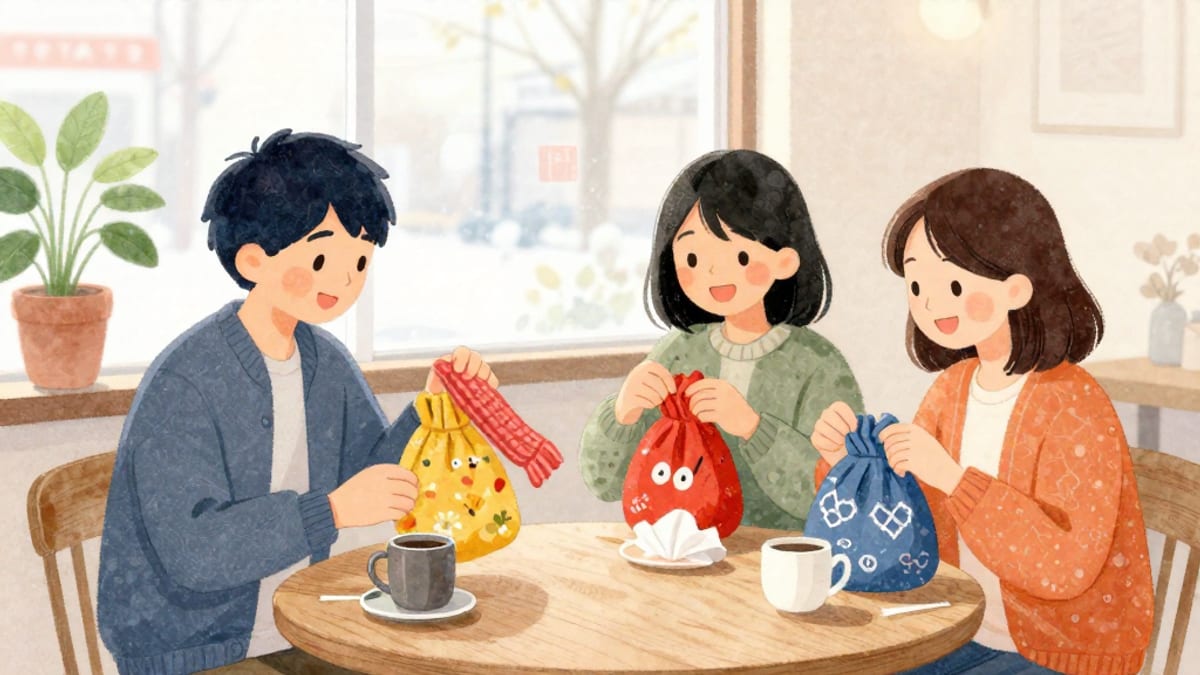
Many people open their bags at home, but friends often open them together over coffee after the sale, comparing what they got and swapping items that do not fit. Families do the same around the table on 2 January. It is a cheerful moment with its own vocabulary: atari, a winning ticket, for a great bag, and hazure, a miss, for a disappointing one.
| Japanese | Romaji | Meaning |
|---|---|---|
| 開けてみよう! | Akete miyō! | Let's open it! |
| 当たりだ! | Atari da! | Jackpot! |
| うーん、ハズレかも。 | Ūn, hazure kamo. | Hmm, maybe it's a miss. |
| これ、交換しない? | Kore, kōkan shinai? | Want to swap this? (casual) |
| かなり得したね。 | Kanari toku shita ne. | We got a really good deal. |
Toku suru means to gain or save money, and its opposite is son suru, to lose out. Kanari toku shita is the classic happy summary of a good bag.
Mini dialogue: at a coffee shop's first sale
| Japanese | Romaji | Meaning |
|---|---|---|
| いらっしゃいませ。福袋はこちらです。 | Irasshaimase. Fukubukuro wa kochira desu. | Clerk: Welcome. The lucky bags are over here. |
| コーヒー豆はどれに入っていますか。 | Kōhī mame wa dore ni haitte imasu ka. | You: Which one has coffee beans in it? |
| こちらの大きい方に入っております。 | Kochira no ōkii hō ni haitte orimasu. | Clerk: They're in this larger one. |
| じゃあ、それを一つお願いします。 | Jā, sore o hitotsu onegai shimasu. | You: Then one of those, please. |
| お一人様一点限りですが、よろしいですか。 | Ohitorisama itten kagiri desu ga, yoroshii desu ka. | Clerk: It's one per person. Is that all right? |
| はい、大丈夫です。 | Hai, daijōbu desu. | You: Yes, that's fine. |
Learn the shop lines with a quick Mocchi quiz
- Ask Mocchi: /quiz fukubukuro shopping phrases, one at a time. Mocchi asks you how to say each step, from the queue to the till, and explains any answer you get wrong.
- Ask what dekikanemasu and haitte orimasu really mean. Mocchi remembers the polite forms you found hard and brings them back in a later review.
- Then open Sentence Builder in Unihongo's games and put shop questions such as Chūsen desu ka, senchakujun desu ka back in the right order until it is automatic.
Common learner mistakes
- Opening a bag before paying to check the contents. Sealed bags stay sealed; ask about contents instead.
- Arguing when staff say dekikanemasu. It is a polite but final no, not the start of a discussion.
- Asking for a lucky bag as rakkī baggu. Shops say fukubukuro, and it is the only word people use.
- Assuming every shop opens on 1 January. Many department stores start on 2 January, and some shops sell only online or by lottery.
- Joining a queue without checking what it is for. At big stores, separate queues may form for different brands; ask kore wa nan no retsu desu ka, what is this line for?