

Walking in and asking for a bouquet
Most flower shops let you browse freely. The flowers stand in buckets, often with a small card showing the name and the price per stem, and staff will greet you with irasshaimase without expecting a reply. When you are ready, catch someone's attention with sumimasen and say what you want.
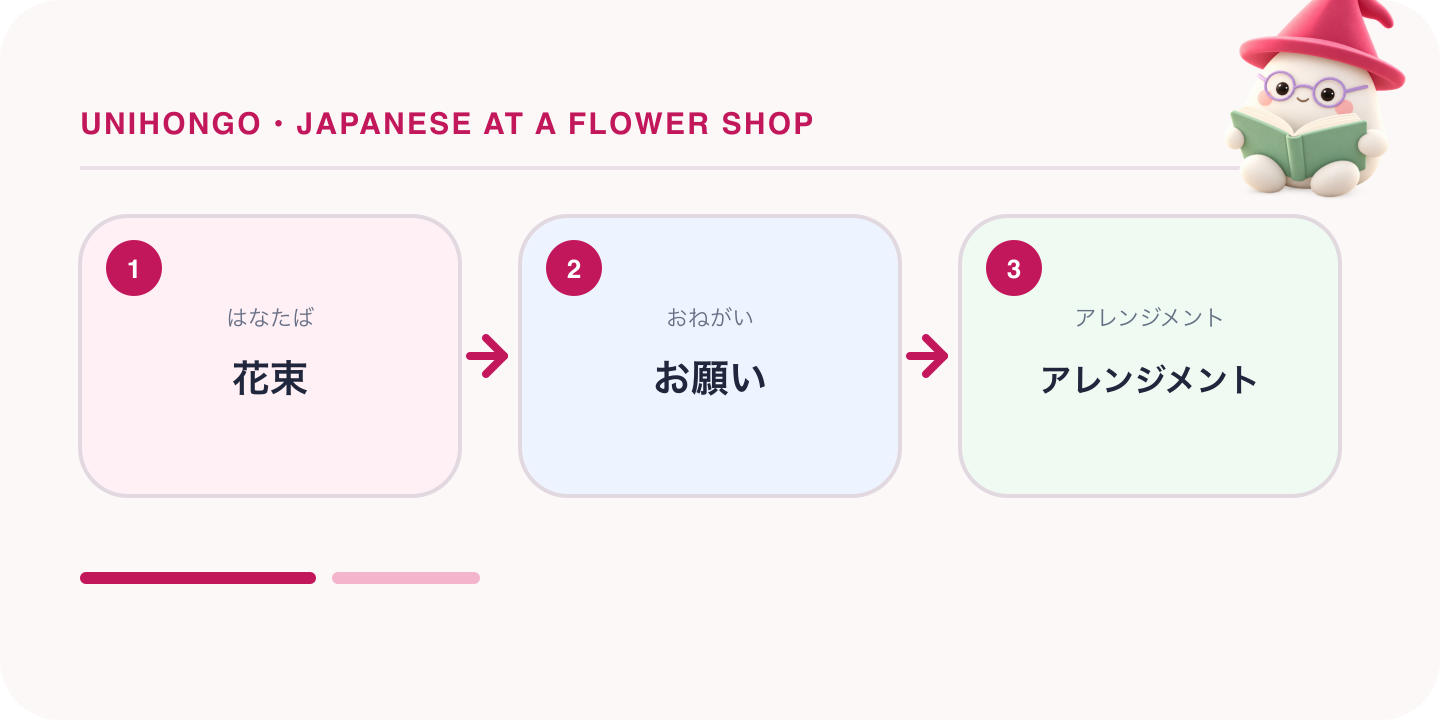
The key word is hanataba, a bouquet. If you want something that stands on its own, such as for a table or a reception desk, ask for an arenjimento, an arrangement set in floral foam in a basket or box. If you only want a few loose stems for your home, you can simply point and say how many.
| Japanese | Romaji | Meaning |
|---|---|---|
| すみません、花束をお願いしたいんですが。 | Sumimasen, hanataba o onegai shitai n desu ga. | Excuse me, I'd like to order a bouquet. |
| アレンジメントにできますか。 | Arenjimento ni dekimasu ka. | Could you make it an arrangement? |
| 小さめの花束でいいです。 | Chiisame no hanataba de ii desu. | A smallish bouquet is fine. |
| このバラを三本ください。 | Kono bara o sanbon kudasai. | Three of these roses, please. |
| これは一本いくらですか。 | Kore wa ippon ikura desu ka. | How much is this per stem? |
| 今日はどれくらい時間がかかりますか。 | Kyō wa dore kurai jikan ga kakarimasu ka. | How long will it take today? |
Explaining the purpose
The first thing a florist usually asks is what the flowers are for. The answer shapes everything else: colours, flower choice, size and wrapping. The standard question is purezento-yō desu ka, is it for a gift, and the ending -yō means for the use of.
Common purposes are a birthday, tanjōbi; a thank-you, o-rei; a farewell or retirement, sōbetsu or taishoku; a recital or performance, happyōkai; a visit to someone who is ill, o-mimai; and flowers for a family Buddhist altar or grave, called butsuka. Many shops keep ready-made bunches of butsuka by the entrance, especially around the O-bon and higan periods. If the flowers are for yourself, say jitaku-yō, for home, and the florist will usually skip the gift wrapping.
| Japanese | Romaji | Meaning |
|---|---|---|
| プレゼント用ですか。 | Purezento-yō desu ka. | Is it for a gift? |
| 誕生日のプレゼントです。 | Tanjōbi no purezento desu. | It's a birthday present. |
| 退職する同僚に渡します。 | Taishoku suru dōryō ni watashimasu. | It's for a colleague who is retiring. |
| お見舞い用です。 | O-mimai-yō desu. | It's for visiting someone who is ill. |
| 自宅用なので、簡単で大丈夫です。 | Jitaku-yō na node, kantan de daijōbu desu. | It's for my home, so simple is fine. |
| 仏花はありますか。 | Butsuka wa arimasu ka. | Do you have flowers for a Buddhist altar? |
Budget, colours and leaving it to the florist
Japanese florists are used to working from a budget rather than a list of flowers. Give an amount and add kurai de, about, or inai de, within, and they will pick stems to match. Prices vary a great deal by shop, season and flower, so there is no standard price for a bouquet; if you are unsure, ask what a typical size costs and adjust from there.
Next comes the feeling of the bouquet. Florists often talk in colour families with -kei, so pinku-kei is pinkish and shiro to midori is white and green. You can also describe a mood: akarui, bright; yasashii, soft; otona-ppoi, grown-up and understated. If you have no strong view, o-makase shimasu hands the choice to the florist, which is common and often gives the best result.
| Japanese | Romaji | Meaning |
|---|---|---|
| ご予算はおいくらくらいですか。 | Go-yosan wa o-ikura kurai desu ka. | About how much is your budget? |
| 三千円くらいでお願いします。 | Sanzen-en kurai de onegai shimasu. | About three thousand yen, please. |
| 五千円以内でできますか。 | Gosen-en inai de dekimasu ka. | Can you do it within five thousand yen? |
| 色の感じはどうしますか。 | Iro no kanji wa dō shimasu ka. | What sort of colours would you like? |
| ピンク系で、優しい感じにしてください。 | Pinku-kei de, yasashii kanji ni shite kudasai. | Pinkish, with a soft feel, please. |
| お任せします。 | O-makase shimasu. | I'll leave it to you. |
| この花は必ず入れてください。 | Kono hana wa kanarazu irete kudasai. | Please be sure to include this flower. |
Flowers to avoid for o-mimai and celebrations
O-mimai flowers are where most mistakes happen, so it is worth knowing the traditional associations. Potted plants, hachiue, are the classic thing to avoid, because a plant that has taken root, nezuku, suggests the illness settling in and the stay becoming longer. Chrysanthemums, kiku, are strongly associated with funerals and graves. Camellias, tsubaki, drop their whole flower head at once, which some people link to a head falling. Cyclamen, shikuramen, begins with the sounds shi and ku, which echo death and suffering.
Practical concerns matter as much as symbolism. Strongly scented flowers such as some lilies can bother people in a shared room, and pollen can stain. Many hospitals now restrict or ban fresh flowers for hygiene reasons, so ask the ward or the patient's family first. If flowers are not allowed, a small gift or a card is a safe alternative.
For weddings and other celebrations, all-white or very muted bouquets with chrysanthemums can look like funeral flowers, and some people avoid bunches of four or nine stems because of the sounds shi and ku. Not everyone cares about these customs, but telling the florist the purpose means they will steer you away from them automatically.
- Hachiue (potted plants): suggests the illness taking root
- Kiku (chrysanthemums): associated with funerals and graves
- Tsubaki (camellias): the flower head falls off whole
- Shikuramen (cyclamen): the sounds shi and ku
- Strong scents and heavy pollen: unpleasant in a shared room
If you are not sure, say o-mimai-yō na node, sakenaide hoshii hana wa arimasu ka, it's for a hospital visit, so are there flowers I should avoid? The florist will be glad you asked.
Wrapping, water and message cards
Once the flowers are chosen, the florist will ask about wrapping, rappingu. Gift bouquets usually come in paper or film with a ribbon, ribon, and you may be asked to choose a colour. For your own home, a simple wrap in paper is normal. Wrapping is often included, but some shops charge for special boxes or baskets, so ask if you are not sure.
If you will carry the bouquet for a while, ask for hosui, keeping the stems watered. The florist wraps a moist pad or a small water pack around the stems so the flowers survive the journey. They may also ask mochiaruki no jikan wa dono kurai desu ka, how long will you be carrying it. A paper bag, kamibukuro, is useful for hiding a surprise bouquet on the train, and some shops charge for bags.
A message card is called a messēji kādo. Most shops have small blank cards you can write on yourself, and some will write a short message for you.
| Japanese | Romaji | Meaning |
|---|---|---|
| ラッピングはどうなさいますか。 | Rappingu wa dō nasaimasu ka. | How would you like it wrapped? |
| リボンは赤でお願いします。 | Ribon wa aka de onegai shimasu. | A red ribbon, please. |
| 二時間くらい持ち歩きます。 | Ni-jikan kurai mochiarukimasu. | I'll be carrying it for about two hours. |
| 保水をお願いできますか。 | Hosui o onegai dekimasu ka. | Could you keep the stems watered? |
| メッセージカードをつけてもらえますか。 | Messēji kādo o tsukete moraemasu ka. | Could you add a message card? |
| 紙袋に入れてください。 | Kamibukuro ni irete kudasai. | Please put it in a paper bag. |
Flower names you will see on the price cards
Flower names are usually written in katakana or hiragana on the price cards, even when a kanji spelling exists. Many are loanwords, so they are easier than they look once you read the katakana. A few of the most common ones are below, along with the seasons when you are likely to see native Japanese favourites.
| Flower | Reading | Notes |
|---|---|---|
| バラ | bara | Rose; the most common gift flower |
| カーネーション | kānēshon | Carnation; strongly linked with Mother's Day |
| ユリ | yuri | Lily; beautiful but strongly scented |
| ガーベラ | gābera | Gerbera; bright and cheerful |
| チューリップ | chūrippu | Tulip; common in spring |
| かすみ草 | kasumisō | Baby's breath; the classic filler |
| ひまわり | himawari | Sunflower; summer |
| 紫陽花 | ajisai | Hydrangea; the rainy season |
| 桜 | sakura | Cherry blossom branches; early spring |
| 菊 | kiku | Chrysanthemum; altars and graves |
| 胡蝶蘭 | kochōran | Moth orchid; often sent for business openings |
Around each price you may see tanka, the unit price, ippon, per stem, or zeikomi, tax included. Seasonal signs such as kisetsu no hana, flowers of the season, point to what is fresh and good value that week.
Care, delivery and paying
If the flowers are for yourself, it is worth asking how long they will last, himochi, and how to look after them. Florists often recommend mizukiri, cutting the stems under water, and changing the water often. A small packet of flower food, kasseizai, may come with the bouquet.
For delivery, haitatsu, the florist will need the address, the delivery date and time, and the name to write on the card. Delivery areas, fees and how far ahead you need to order all vary by shop, so ask directly. For larger standing arrangements for shop openings or events, businesses usually order through a florist well in advance.
| Japanese | Romaji | Meaning |
|---|---|---|
| 日持ちするのはどれですか。 | Himochi suru no wa dore desu ka. | Which ones last longest? |
| お手入れの仕方を教えてください。 | O-teire no shikata o oshiete kudasai. | Please tell me how to look after them. |
| 配達はできますか。 | Haitatsu wa dekimasu ka. | Can you deliver? |
| 明日の午前中に届けてほしいです。 | Ashita no gozenchū ni todokete hoshii desu. | I'd like it delivered tomorrow morning. |
| カードで払えますか。 | Kādo de haraemasu ka. | Can I pay by card? |
| 領収書をお願いします。 | Ryōshūsho o onegai shimasu. | A receipt, please. |
When something goes wrong
Most problems at a flower shop are small and easy to fix with a polite sentence. If the bouquet looks bigger or more expensive than you expected, say so before they finish wrapping rather than afterwards. If a flower you wanted is sold out, urikire, ask for something similar; florists are good at substitutions.
If you realise too late that the bouquet contains something unsuitable, such as chrysanthemums for a hospital visit, you can go back and ask for it to be changed. Explaining the purpose is enough: the florist will understand immediately.
| Japanese | Romaji | Meaning |
|---|---|---|
| すみません、もう少し小さくしてもらえますか。 | Sumimasen, mō sukoshi chiisaku shite moraemasu ka. | Sorry, could you make it a little smaller? |
| 予算を少しオーバーしてしまいそうです。 | Yosan o sukoshi ōbā shite shimaisō desu. | I think it's going to go a bit over my budget. |
| 似た色の花はありますか。 | Nita iro no hana wa arimasu ka. | Do you have flowers in a similar colour? |
| お見舞い用なので、菊は抜いてもらえますか。 | O-mimai-yō na node, kiku wa nuite moraemasu ka. | It's for a hospital visit, so could you take out the chrysanthemums? |
| やっぱりラッピングはなしで大丈夫です。 | Yappari rappingu wa nashi de daijōbu desu. | Actually, no wrapping is fine. |