

Takai: the basic word for expensive
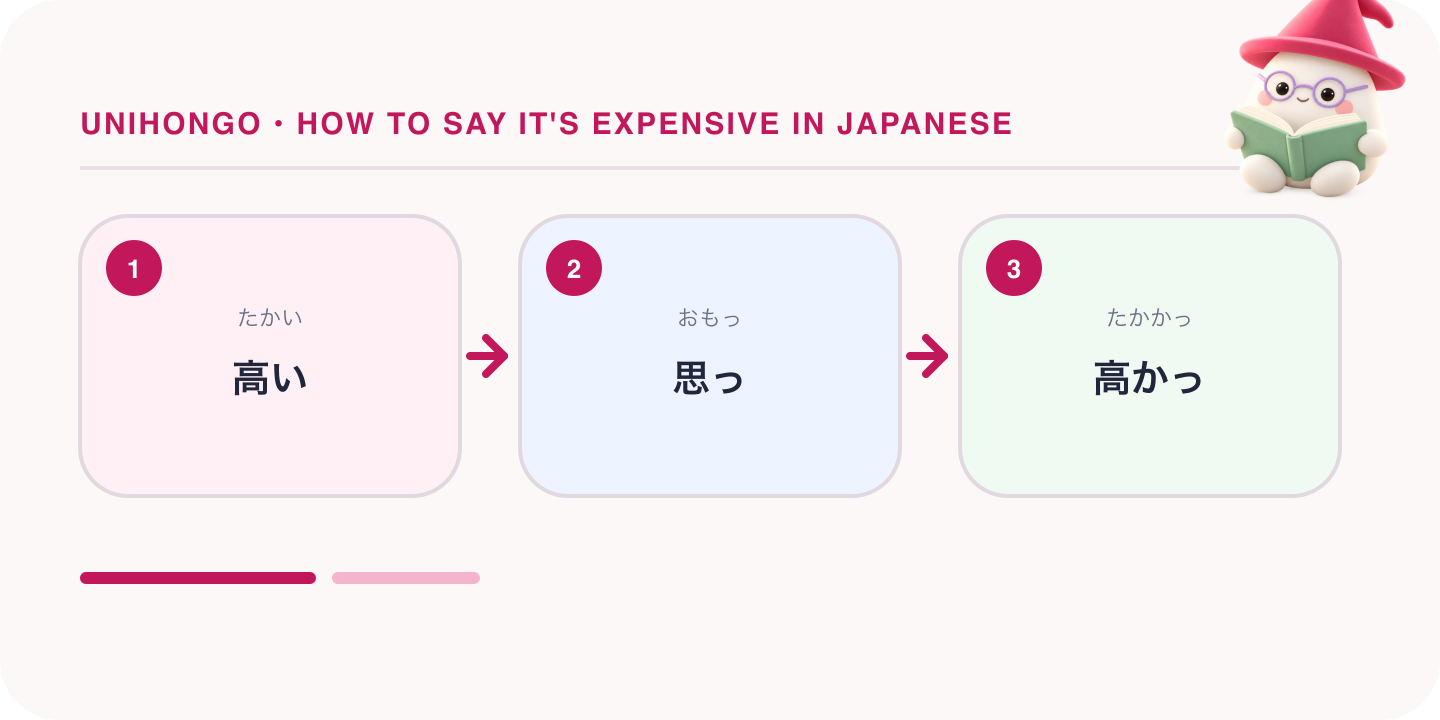
高い (takai) is an i-adjective meaning expensive. It also means high or tall, so takai yama is a high mountain and takai tatemono a tall building. When the topic is money, though, everyone hears it as expensive. Add desu for polite speech: takai desu. The past form is takakatta, it was expensive.
The quickest casual reaction is simply takai! with a rising tone, or takasugi, a shortened form of takasugiru, too expensive. Young people also say takē, a rough, drawn-out version you will hear among friends but should not use with strangers.
| Japanese | Romaji | Meaning |
|---|---|---|
| 高い! | Takai! | That's expensive! |
| 高すぎ! | Takasugi! | Way too expensive! |
| 高いですね。 | Takai desu ne. | It's expensive, isn't it? |
| 思ったより高かった。 | Omotta yori takakatta. | It was more expensive than I thought. |
| 東京は家賃が高い。 | Tōkyō wa yachin ga takai. | Rent is expensive in Tokyo. |
| ちょっと手が出ない。 | Chotto te ga denai. | It's a bit out of my price range. |
Saying it politely in a shop
Telling a shop assistant takai desu is not wrong, but it can sound like a complaint about their prices. Japanese speakers usually soften it with chotto, a little, and ne, which invites agreement: chotto takai desu ne. The meaning is clear, and it leaves room for the assistant to suggest something else.
Another common approach is to talk about your budget rather than the price. Yosan ga, the budget, followed by a trailing pause, is a very Japanese way to say it is more than you planned to spend.
| Japanese | Romaji | Meaning |
|---|---|---|
| ちょっと高いですね。 | Chotto takai desu ne. | It's a little pricey. |
| 予算オーバーです。 | Yosan ōbā desu. | It's over my budget. |
| 予算は一万円ぐらいなんですが。 | Yosan wa ichiman-en gurai nan desu ga. | My budget is around ten thousand yen, though. |
| もう少し考えます。 | Mō sukoshi kangaemasu. | I'll think about it a bit more. |
| 今回はやめておきます。 | Konkai wa yamete okimasu. | I'll pass this time. |
Asking for something cheaper
If the price is too high, ask for an alternative. The key phrase is もう少し安いのはありますか (mō sukoshi yasui no wa arimasu ka), is there a slightly cheaper one? The no here means one, so you can swap in other adjectives: chiisai no, a smaller one, or betsu no iro, a different colour.
Comparing prices is also easy with dochira ga yasui desu ka, which one is cheaper? Shop staff in Japan are generally happy to explain the differences between models or sizes.
| Japanese | Romaji | Meaning |
|---|---|---|
| もう少し安いのはありますか。 | Mō sukoshi yasui no wa arimasu ka. | Do you have a slightly cheaper one? |
| 一番安いのはどれですか。 | Ichiban yasui no wa dore desu ka. | Which is the cheapest? |
| どちらが安いですか。 | Dochira ga yasui desu ka. | Which one is cheaper? |
| 値段の違いは何ですか。 | Nedan no chigai wa nan desu ka. | What's the difference in price? |
| これはいくらですか。 | Kore wa ikura desu ka. | How much is this? |
| 税込みですか。 | Zeikomi desu ka. | Does that include tax? |
Discounts and sales: waribiki and more
割引 (waribiki) means discount. Waribiki wa arimasu ka, is there a discount?, is a normal question in many settings, especially for students, children, groups or members. Japanese uses wari for ten percent units: ichiwari biki is ten percent off, niwari biki twenty percent off. You will also see percentages and the word OFF on signs.
Supermarkets often put stickers on food near its best-before time in the evening, marked hangaku, half price, or with a yen amount off. Sēru is a sale, and tokka means a special price.
| Word | Romaji | Meaning |
|---|---|---|
| 割引 | waribiki | Discount |
| 2割引 | niwari biki | 20 percent off |
| 半額 | hangaku | Half price |
| セール | sēru | Sale |
| 特価 | tokka | Special price |
| 学割 | gakuwari | Student discount |
| ポイントカード | pointo kādo | Points card |
| 値下げ | nesage | Price reduction |
At the till, staff often ask pointo kādo wa o-mochi desu ka, do you have a points card? A simple nai desu or daijōbu desu, no thanks, is enough.
Where bargaining is and isn't normal
Japan is mostly a fixed-price country. In supermarkets, convenience stores, department stores, restaurants, chain shops and most small businesses, asking for a lower price will usually just cause confusion or an apologetic no. Taxi fares, train tickets and restaurant bills are not negotiable.
There are exceptions. At flea markets, called furīma, and some antique or second-hand markets, a polite request for a small reduction is normal, particularly towards the end of the day or when buying several items. In large electronics retailers, customers sometimes ask about price matching with a competitor or whether any discount is possible on an expensive item; whether staff can help depends on the shop's policy. Practices vary, so ask once, politely, and accept the answer.
| Japanese | Romaji | Meaning |
|---|---|---|
| もう少し安くなりませんか。 | Mō sukoshi yasuku narimasen ka. | Could it be a little cheaper? |
| 二つ買うので、少し安くしてもらえますか。 | Futatsu kau node, sukoshi yasuku shite moraemasu ka. | I'm buying two, so could you lower the price a bit? |
| 他の店ではもう少し安かったんですが。 | Hoka no mise de wa mō sukoshi yasukatta n desu ga. | It was a bit cheaper at another shop, though. |
| これ以上は難しいですか。 | Kore ijō wa muzukashii desu ka. | Is that as low as you can go? |
| じゃあ、それでお願いします。 | Jā, sore de o-negai shimasu. | OK, I'll take it at that price. |
What shop staff say back
When you say something is a little expensive, staff usually respond by offering alternatives, explaining the quality, or apologising that they cannot lower the price. Recognising these replies helps you keep the conversation going.
| Japanese | Romaji | Meaning |
|---|---|---|
| こちらはいかがですか。 | Kochira wa ikaga desu ka. | How about this one? |
| こちらの方がお手頃です。 | Kochira no hō ga o-tegoro desu. | This one is more reasonably priced. |
| 申し訳ございませんが、値引きはできかねます。 | Mōshiwake gozaimasen ga, nebiki wa dekikanemasu. | I'm sorry, but we can't offer a discount. |
| 今ならセール中です。 | Ima nara sēru-chū desu. | It's on sale right now. |
| 品質がいいので、長く使えますよ。 | Hinshitsu ga ii node, nagaku tsukaemasu yo. | The quality is good, so it will last a long time. |
| ごゆっくりご覧ください。 | Go-yukkuri go-ran kudasai. | Please take your time looking. |
Common mistakes with takai and prices
- Saying takai desu flatly to a shop assistant. Add chotto and ne so it sounds like an observation, not a complaint.
- Using yasui to praise something. Yasui can suggest cheap in quality; o-tegoro, reasonably priced, or o-kaidoku, good value, sound more positive.
- Mixing up takai as expensive and as tall. Takai hito usually means a tall person, not an expensive one.
- Trying to haggle in supermarkets or chain stores. It is not part of the culture there and can put staff in an awkward position.
- Forgetting tax. Zeinuki prices look cheaper than what you will pay at the till.
- Saying iranai, I don't need it, to refuse. It sounds blunt; kekkō desu or daijōbu desu with a small smile is politer.