

Choose a line you can explain in plain language
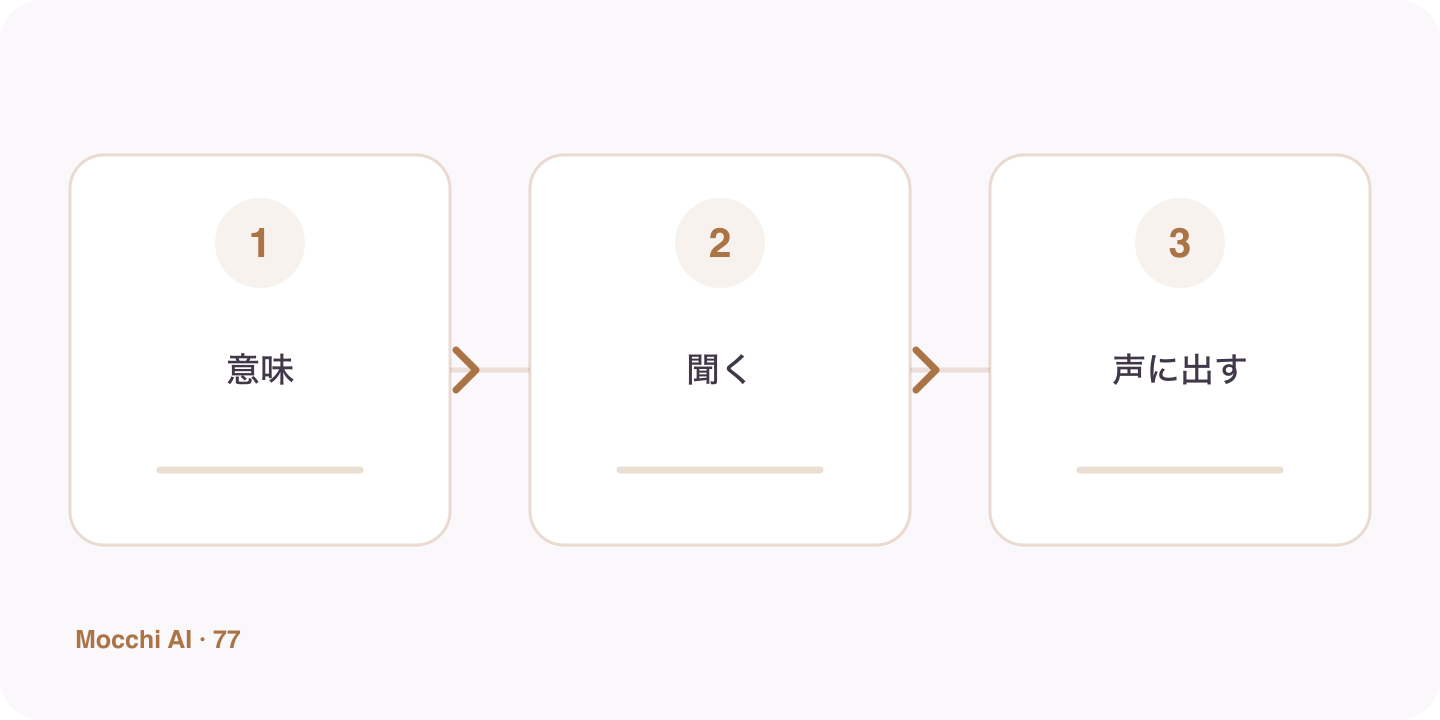
Before repeating, identify what the line means and why someone would say it. Ask Mocchi about one blocking expression rather than requesting a full lesson on every word. A clear message gives the sound sequence a useful anchor and makes it easier to notice when you skip or distort a part while trying to keep up.
Use material you can appropriately practice with and keep the excerpt short. The first goal is controlled listening and repetition, not collecting a large library of audio. An understandable line provides enough work when you inspect its timing and one target sound carefully.
Listen once without preparing to speak
A simple request such as もう一度お願いします gives you a familiar meaning and a short phrase to hear as a whole. Listen before joining in, then repeat after the model at a comfortable pace. Ask Mocchi to explain a timing feature only when it helps the next attempt, rather than adding technical detail that distracts from the sound.
| Japanese | Romaji | Meaning |
|---|---|---|
| もう一度お願いします。 | Mō ichido onegaishimasu. | Once more, please. |
| 少しゆっくりお願いします。 | Sukoshi yukkuri onegaishimasu. | A little more slowly, please. |
Move closer to the model gradually
If repeating after the line is manageable, try following more closely. Keep the line short enough that you can notice the target feature. When you lose the ending or meaning, reduce the demand rather than repeatedly rushing through an incomplete version. The practice should make the line clearer, not simply faster.
Choose one feature to inspect after several attempts
Listen for a long vowel, small っ, or a phrase movement you chose in advance. Ask what became clearer and what still needs support. If you use a recording, compare under similar conditions. Avoid treating repeated exposure as proof of improvement without checking a specific feature or trying another short line later.
Use the coach for a supported follow-up
When a particular sound remains difficult, ask Mocchi for a focused pronunciation activity and work through its supplied lines. Read the actual feedback and available mode. This keeps the self-directed shadowing routine and the app's coached exercise connected without claiming they are the same feature. End with one next target so the following session has a clear reason to begin.