

Calling 119 or going yourself
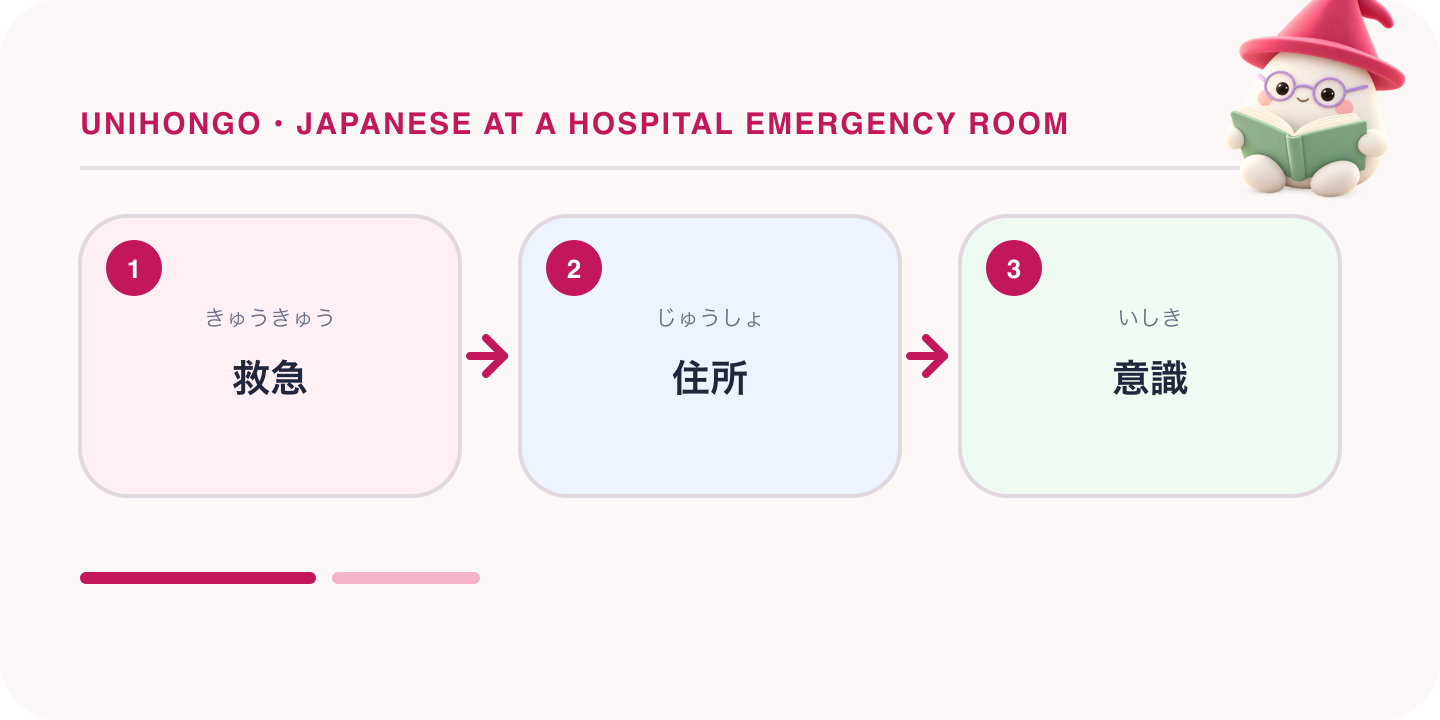
The first decision is whether this is a kyūkyūsha, ambulance, situation or a walk-in one. Chest pain, difficulty breathing, heavy bleeding, a suspected stroke, a bad fall with a head injury, or someone who will not wake up: call 119 at once. The operator will ask whether it is fire or medical, your address, what happened, the person's age and whether they are conscious; many centres can connect an interpreter.
For anything less urgent, such as a cut that needs stitches, a high fever or a sprain, going yourself by taxi is normal and expected. Many regions also run a telephone advice line, dialled with the hash key and 7119 in some cities and a local number in others, where a nurse tells you whether to call an ambulance, go tonight or wait until morning. Look up the number for your city before you need it.
| Japanese | Romaji | Meaning |
|---|---|---|
| 救急です。 | Kyūkyū desu. | It's a medical emergency (answer to the 119 operator). |
| 住所は港区の一丁目二番三号です。 | Jūsho wa Minato-ku no itchōme niban sangō desu. | The address is 1-2-3, Minato ward. |
| 意識がありません。 | Ishiki ga arimasen. | He or she is unconscious. |
| 息が苦しそうです。 | Iki ga kurushisō desu. | He or she seems to be struggling to breathe. |
| 救急車を呼んだほうがいいですか。 | Kyūkyūsha o yonda hō ga ii desu ka. | Should I call an ambulance? |
| 自分で病院に行けます。 | Jibun de byōin ni ikemasu. | I can get to the hospital myself. |
Finding the night and holiday clinic
Regular clinics close in the evening and on holidays, so after-hours care is organised separately. Larger hospitals have a kyūkyū gairai, emergency outpatient department, with its own entrance. Many cities also run a yakan kyūjitsu shinryōjo, a night and holiday clinic, for fevers, colds, minor injuries and children, which keeps the hospitals free for serious cases. The city website or the advice line will tell you which one fits your symptoms.
Phone before you go. The person who answers will ask your symptoms and age and either tell you to come or send you elsewhere. At the door, look for the signs 救急 or 夜間, follow the arrows to the night entrance, and use the intercom if it is locked.
| Japanese | Romaji | Meaning |
|---|---|---|
| 今夜、診てもらえますか。 | Kon'ya, mite moraemasu ka. | Can you see me tonight? |
| 夜間診療はやっていますか。 | Yakan shinryō wa yatte imasu ka. | Are you open for night consultations? |
| 子どもが熱を出しました。 | Kodomo ga netsu o dashimashita. | My child has a fever. |
| 何時まで受け付けていますか。 | Nanji made uketsukete imasu ka. | Until what time do you accept patients? |
| 夜間の入口はどこですか。 | Yakan no iriguchi wa doko desu ka. | Where is the night entrance? |
| これから行きます。 | Kore kara ikimasu. | I'm coming now. |
Reception and the insurance card
Inside, the first stop is uketsuke, reception. The clerk will ask for your hokenshō, health insurance card, or the My Number card if you use it for insurance, and whether you have been to that hospital before. If you take regular medicine, hand over your okusuri techō, the pharmacy medicine notebook, or show the packaging on your phone.
Out-of-hours visits often carry an additional charge, and large hospitals may add a fee for patients without a referral letter. The amounts are set by each hospital, so ask at the desk before treatment. You will then be given a clipboard with a form and told where to sit.
| Japanese | Romaji | Meaning |
|---|---|---|
| 保険証はお持ちですか。 | Hokenshō wa o-mochi desu ka. | Do you have your insurance card? |
| 初めてです。 | Hajimete desu. | It's my first time here. |
| お薬手帳はありますか。 | Okusuri techō wa arimasu ka. | Do you have your medicine notebook? |
| 旅行保険に入っています。 | Ryokō hoken ni haitte imasu. | I have travel insurance. |
| 夜間の追加料金はいくらですか。 | Yakan no tsuika ryōkin wa ikura desu ka. | How much is the extra charge for night visits? |
| この用紙に記入してください。 | Kono yōshi ni kinyū shite kudasai. | Please fill in this form. |
The triage questions and how to answer
Before you see a doctor, a nurse carries out toriāji, triage, to decide how urgent you are. The questions come quickly and in a predictable order: what is wrong, when it started, how strong it is, whether it has happened before, and what medicines and allergies you have. Short answers are better than full sentences.
The time question is the one learners struggle with most. Itsu kara means since when, and the answer is a time plus kara: kesa kara, since this morning; ichi-jikan mae kara, since an hour ago; kinō no yoru kara, since last night. For intensity, nurses ask you to rate pain out of ten or ask whether it is getting worse, hidoku natte imasu ka. A number or hai and iie is a complete answer.
| Japanese | Romaji | Meaning |
|---|---|---|
| どうしましたか。 | Dō shimashita ka. | What's the matter? |
| いつからですか。 | Itsu kara desu ka. | Since when? |
| 二時間前からです。 | Ni-jikan mae kara desu. | Since two hours ago. |
| 痛みは十段階でどのくらいですか。 | Itami wa jū dankai de dono kurai desu ka. | On a scale of ten, how strong is the pain? |
| 七くらいです。だんだんひどくなっています。 | Nana kurai desu. Dandan hidoku natte imasu. | About seven. It's getting gradually worse. |
| アレルギーはありますか。 | Arerugī wa arimasu ka. | Do you have any allergies? |
| ペニシリンにアレルギーがあります。 | Penishirin ni arerugī ga arimasu. | I'm allergic to penicillin. |
Explaining what happened
Once you are with the doctor, you need a short story: what you were doing, what happened and what you feel now. The past tense of a few verbs does most of the work. Korobimashita, I fell; kirimashita, I cut myself; butsukemashita, I hit or bumped it; yakedo shimashita, I burned myself; tabemashita, I ate. Follow with the symptom in the present: ima, itai desu, it hurts now.
Be concrete about the body part and the side. Migi, right, and hidari, left, are easy to mix up when you are in pain, so point as well as speak. If something is broken, bleeding or swollen, the words are oreta kamo shiremasen, it may be broken; chi ga tomarimasen, the bleeding will not stop; harete imasu, it is swollen. Doctors also ask whether you drank alcohol and whether you have a chronic condition, jibyō.
| Japanese | Romaji | Meaning |
|---|---|---|
| 階段で転びました。 | Kaidan de korobimashita. | I fell on the stairs. |
| 包丁で指を切りました。 | Hōchō de yubi o kirimashita. | I cut my finger with a kitchen knife. |
| 血が止まりません。 | Chi ga tomarimasen. | The bleeding won't stop. |
| 右の足首が腫れています。 | Migi no ashikubi ga harete imasu. | My right ankle is swollen. |
| 夕食のあとで吐きました。 | Yūshoku no ato de hakimashita. | I vomited after dinner. |
| 喘息の持病があります。 | Zensoku no jibyō ga arimasu. | I have asthma as a chronic condition. |
| お酒は飲んでいません。 | O-sake wa nonde imasen. | I haven't been drinking. |
The words on the intake form
The clipboard form is a monshinhyō, a medical questionnaire, and its layout is nearly identical from one hospital to the next. Some hospitals have an English version, but many at night do not, so it is worth recognising the common fields. Write your name as it appears on your passport or residence card.
| On the form | Reading | Meaning |
|---|---|---|
| 問診票 | monshinhyō | Medical questionnaire, the intake form |
| 氏名 | shimei | Full name |
| 生年月日 | seinengappi | Date of birth |
| 症状 | shōjō | Symptoms |
| 既往歴 | kiōreki | Medical history, past illnesses |
| 現在服用中の薬 | genzai fukuyō-chū no kusuri | Medicines you currently take |
| アレルギー | arerugī | Allergies |
| 妊娠の可能性 | ninshin no kanōsei | Possibility of pregnancy |
| 緊急連絡先 | kinkyū renrakusaki | Emergency contact |
| かかりつけ医 | kakaritsuke-i | Your regular doctor |
| 体温 | taion | Body temperature |
Yes and no boxes are labelled 有 and 無, or hai and iie, and 該当なし means not applicable. If a question is unclear, leave it and ask the nurse; an honest blank is better than a guessed answer on a medical form.
Waiting, speaking for someone else and leaving
Emergency rooms treat by urgency, so the wait can be long for minor cases. You will be called by name or number, so listen for both. Tests come with a short explanation: kensa, test; saiketsu, blood draw; rentogen, X-ray; CT, read as shī tī.
If you have brought someone else, you become their voice. Introduce the relationship first, then speak in the third person: kanojo wa, she; kare wa, he; musuko wa, my son. Staff will ask what you saw, whether the person has been drinking, whether they hit their head and whether they have a known condition. Answer what you know and say wakarimasen for what you do not.
| Japanese | Romaji | Meaning |
|---|---|---|
| 友達が倒れました。 | Tomodachi ga taoremashita. | My friend collapsed. |
| 私は付き添いです。 | Watashi wa tsukisoi desu. | I'm accompanying the patient. |
| 彼は頭を打ちました。 | Kare wa atama o uchimashita. | He hit his head. |
| 妻は糖尿病があります。 | Tsuma wa tōnyōbyō ga arimasu. | My wife has diabetes. |
| どのくらい待ちますか。 | Dono kurai machimasu ka. | How long is the wait? |
| 検査の結果はいつ出ますか。 | Kensa no kekka wa itsu demasu ka. | When will the test results be ready? |
| さっきより悪くなっています。 | Sakki yori waruku natte imasu. | It's worse than it was earlier. |
- Phone before you go; many hospitals cannot take every kind of case at night
- Speak quietly and turn your phone to silent in the waiting area
- Let one person do the talking when you accompany a patient
- Keep your insurance card, medicine notebook and ID together in one pouch
- Say osewa ni narimashita to the staff when you leave, a thank-you for their care
- Collect the receipt and any referral letter; you may need them for insurance or a follow-up
When you are discharged you may be given a shōkaijō, a referral letter, and told to see a clinic in the morning. That daytime visit is covered in the guide to Japanese at the doctor, and the general vocabulary for accidents and disasters is in the emergency phrases guide.
When something goes wrong
The common problems are language, money and being sent elsewhere. If you cannot follow the doctor, ask for an interpreter; availability varies, and a friend on speakerphone is an acceptable substitute. If the bill is more than you can pay tonight, say so at the cashier: hospitals have procedures for paying later.
If the hospital says it cannot treat you, ask where you should go and whether they can phone ahead. Do not leave without a destination. If you were given medicine, check the dosage on the bag before you leave.
| Japanese | Romaji | Meaning |
|---|---|---|
| 通訳をお願いできますか。 | Tsūyaku o onegai dekimasu ka. | Could I have an interpreter? |
| もう一度、ゆっくり言ってください。 | Mō ichido, yukkuri itte kudasai. | Please say that once more, slowly. |
| 今日は全額払えません。 | Kyō wa zengaku haraemasen. | I can't pay the full amount today. |
| どこの病院に行けばいいですか。 | Doko no byōin ni ikeba ii desu ka. | Which hospital should I go to? |
| この薬は一日何回飲みますか。 | Kono kusuri wa ichinichi nankai nomimasu ka. | How many times a day do I take this medicine? |