
The meaning, kanji by kanji
Ichigo ichie is a yoji jukugo, a four-kanji expression. 一期 (ichigo) means one lifetime; the reading go for 期 is the Buddhist one, which is why it is not the usual reading ki. 一会 (ichie) means one meeting or gathering; e is the Buddhist reading of 会, which normally reads kai or au. So the phrase pairs one whole lifetime with one single meeting.
The message is that this meeting is a once-in-a-lifetime event. Even if you meet the same person again, the season, the mood and the two of you will never be quite the same. A host should therefore give everything to the guest, and the guest should receive it with the same sincerity.
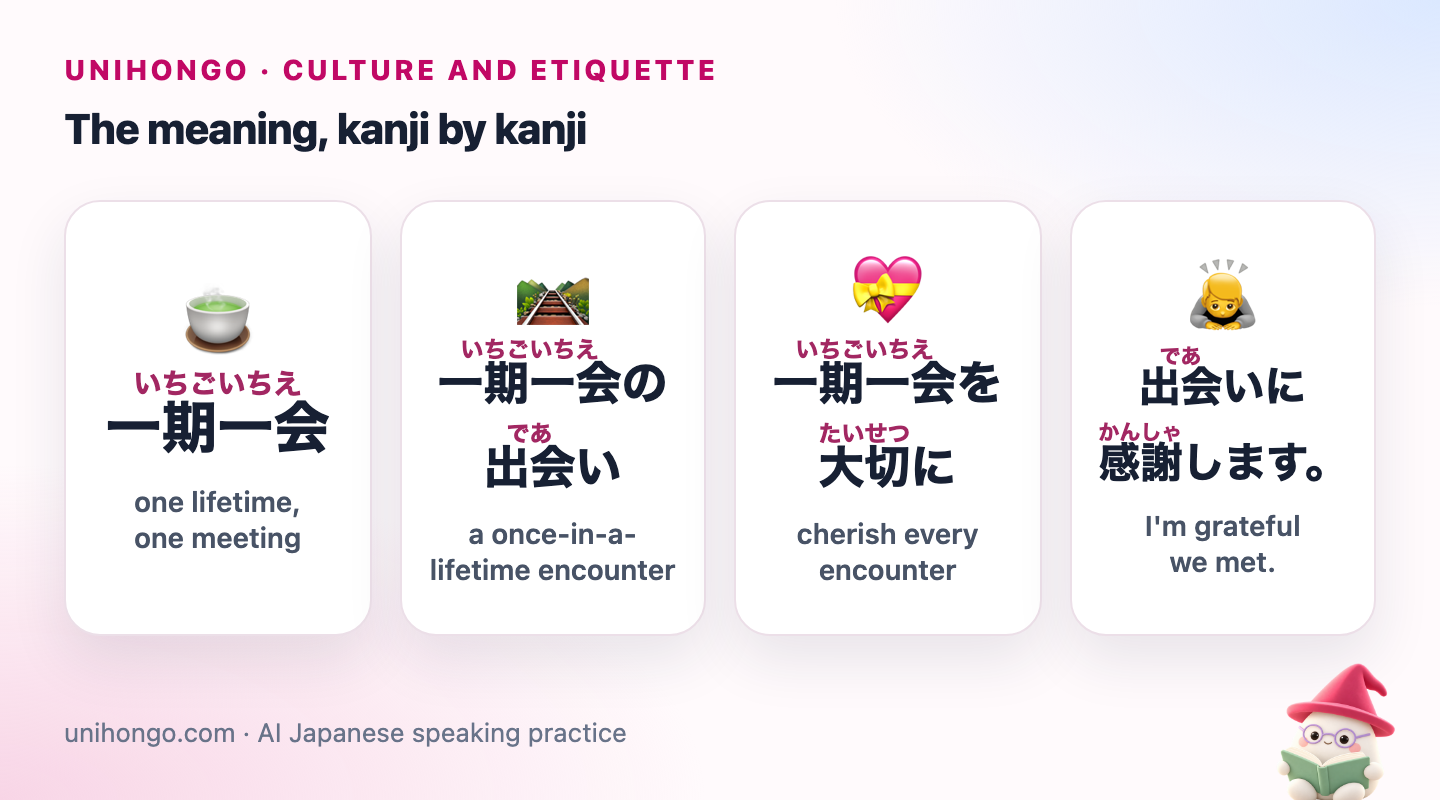
| Japanese | Romaji | Meaning |
|---|---|---|
| 一期一会 | ichigo ichie | one lifetime, one meeting |
| 一期一会の出会い | ichigo ichie no deai | a once-in-a-lifetime encounter |
| 一期一会を大切に | ichigo ichie o taisetsu ni | cherish every encounter |
| 出会いに感謝します。 | Deai ni kansha shimasu. | I'm grateful we met. |
Tea-ceremony roots
In the tea ceremony, chanoyu, a host may spend days preparing for a single gathering: choosing the scroll and the flowers for the season, cleaning the garden path, selecting the tea bowls. The guests, in turn, pay close attention to every detail. Ichigo ichie is the attitude behind this effort.
The idea is commonly traced to Sen no Rikyū, the sixteenth-century tea master, through a record by his disciple Yamanoue Sōji that urges hosts to treat each gathering as if it happened only once in a lifetime. The neat four-character form is often credited to Ii Naosuke, a nineteenth-century statesman and tea practitioner, in his writings on tea. Historians describe the details in different ways, so it is safest to say the phrase grew out of tea-ceremony teaching rather than to name a single author.
Many tea rooms still hang a scroll with 一期一会, and teachers often explain it to beginners as the spirit of the whole practice.
| Japanese | Romaji | Meaning |
|---|---|---|
| 茶道の言葉です。 | Sadō no kotoba desu. | It's a phrase from the tea ceremony. |
| おもてなしの心を表しています。 | Omotenashi no kokoro o arawashite imasu. | It expresses the spirit of hospitality. |
| 一回一回のお茶会を大切にします。 | Ikkai ikkai no ochakai o taisetsu ni shimasu. | Each tea gathering is treasured. |
How it is used today
Outside the tea room, ichigo ichie has become an everyday ideal, especially in hospitality. Inns, restaurants and shops quote it to describe their attitude to customers, and staff training often mentions it alongside omotenashi. It is a favourite word for calligraphy and souvenirs, and the kind of phrase people choose as a personal motto.
Among ordinary speakers, it comes up most often in three situations: a meaningful chance meeting while travelling, a farewell to people you may not see again, and a speech or message reflecting on time spent together. In each case it adds a gentle, slightly literary note. Said casually between friends, ichigo ichie da ne sounds warm and a little poetic.
| Japanese | Romaji | Meaning |
|---|---|---|
| 旅先での出会いは一期一会ですね。 | Tabisaki de no deai wa ichigo ichie desu ne. | Meetings on a journey are once in a lifetime, aren't they? |
| 一期一会の気持ちでお客様をお迎えしています。 | Ichigo ichie no kimochi de okyakusama o omukae shite imasu. | We welcome every guest as a once-in-a-lifetime meeting. |
| これも一期一会だね。 | Kore mo ichigo ichie da ne. | This is one of those one-time moments. (casual) |
| 一期一会が私の座右の銘です。 | Ichigo ichie ga watashi no zayū no mei desu. | Ichigo ichie is my personal motto. |
Saying it in a speech or a farewell
Ichigo ichie fits naturally into a farewell speech, a wedding toast or the last day of a course. The classic structure is: introduce the saying, explain what it means to you, connect it to the people in front of you, and close with thanks. Keep it short; the phrase carries the emotion on its own.
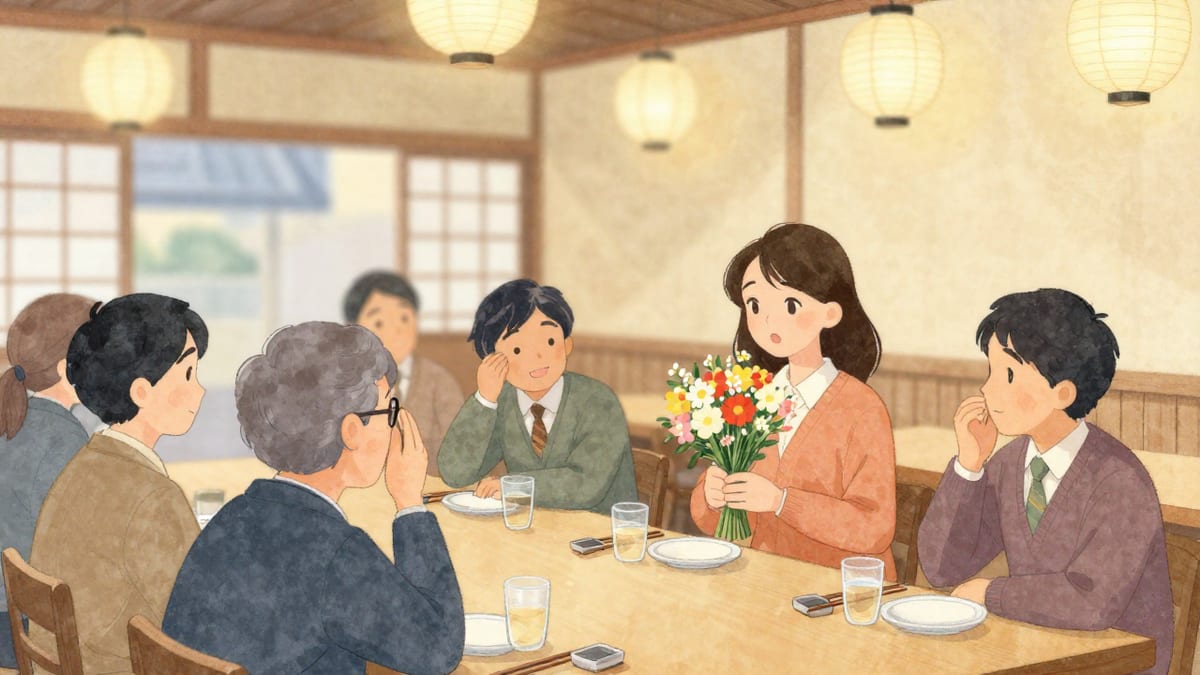
In the scene below, a learner who spent a year working in Japan says goodbye at a small farewell party.
| Japanese | Romaji | Meaning |
|---|---|---|
| 皆さん、一年間ありがとうございました。 | Minasan, ichinenkan arigatō gozaimashita. | Speaker: Everyone, thank you for this year. |
| 一期一会という言葉があります。 | Ichigo ichie to iu kotoba ga arimasu. | Speaker: There is a saying, ichigo ichie. |
| 一つ一つの出会いを大切にするという意味です。 | Hitotsu hitotsu no deai o taisetsu ni suru to iu imi desu. | Speaker: It means treasuring each encounter. |
| 皆さんとの出会いは、私にとって宝物です。 | Minasan to no deai wa, watashi ni totte takaramono desu. | Speaker: Meeting all of you has been a treasure for me. |
| またどこかでお会いできたら嬉しいです。 | Mata dokoka de oai dekitara ureshii desu. | Speaker: I'd be happy to meet you again somewhere. |
| お元気で! | Ogenki de! | Colleagues: Take care! |
Replying when someone says ichigo ichie to you
If an innkeeper, a tea teacher or a new friend mentions ichigo ichie as you part, they are telling you the meeting mattered to them. The natural response is to agree warmly and thank them for the encounter, not to argue that you will surely meet again. You can add that you hope to see them again, which Japanese speakers often do in the same breath: the phrase does not forbid a second meeting, it simply asks you to treasure this one.
On a trip, the phrase often comes up with people you meet by chance: a fellow hiker, the owner of a small bar, an older couple on a ferry. Writing a short message afterwards, with a photo and the words ichigo ichie, is a kind gesture many people appreciate.
| Japanese | Romaji | Meaning |
|---|---|---|
| 本当にそうですね。 | Hontō ni sō desu ne. | That's so true. |
| 素敵な出会いをありがとうございました。 | Suteki na deai o arigatō gozaimashita. | Thank you for this lovely encounter. |
| またいつか会えるといいですね。 | Mata itsuka aeru to ii desu ne. | I hope we meet again someday. |
| 今日のことは忘れません。 | Kyō no koto wa wasuremasen. | I won't forget today. |
Related words and phrases
Ichigo ichie belongs to a group of words about meetings and connections. Some are everyday, some literary.
| Japanese | Romaji | Meaning |
|---|---|---|
| 素敵なご縁に感謝します。 | Suteki na goen ni kansha shimasu. | I'm grateful for this wonderful connection. |
| 一生に一度の経験でした。 | Isshō ni ichido no keiken deshita. | It was a once-in-a-lifetime experience. |
| 出会いと別れの季節ですね。 | Deai to wakare no kisetsu desu ne. | It's the season of meetings and partings, isn't it? |
| Expression | Meaning | When you hear it |
|---|---|---|
| Deai (出会い) | An encounter, meeting someone | Everyday; also dating contexts |
| En / goen (縁, ご縁) | A connection, often felt as fate | Warm; business thanks and personal talk |
| Isshō ni ichido (一生に一度) | Once in a lifetime | Everyday; big experiences |
| Omotenashi (おもてなし) | Wholehearted hospitality | Service, tourism, hosting |
| Wakare (別れ) | Parting, farewell | Everyday and emotional |
Deai to wakare no kisetsu usually refers to spring in Japan, when the school and business year ends and begins, and many people change schools, jobs or cities.
Common mistakes
| Japanese | Romaji | Meaning |
|---|---|---|
| 今日の出会いも一期一会。 | Kyō no deai mo ichigo ichie. | Today's meeting is once in a lifetime too. |
| この時間を大切にしましょう。 | Kono jikan o taisetsu ni shimashō. | Let's make the most of this time. |
- Reading it ichiki ichikai. The Buddhist readings go and e are fixed in this phrase: ichigo ichie.
- Using it for routine meetings. Saying ichigo ichie about your weekly team call sounds ironic. Keep it for moments that feel special.
- Overusing it in one speech. Once is powerful; three times sounds like a slogan.
- Confusing it with isshō ni ichido. That phrase describes a rare experience; ichigo ichie is about an attitude to every meeting.