
The core sentence
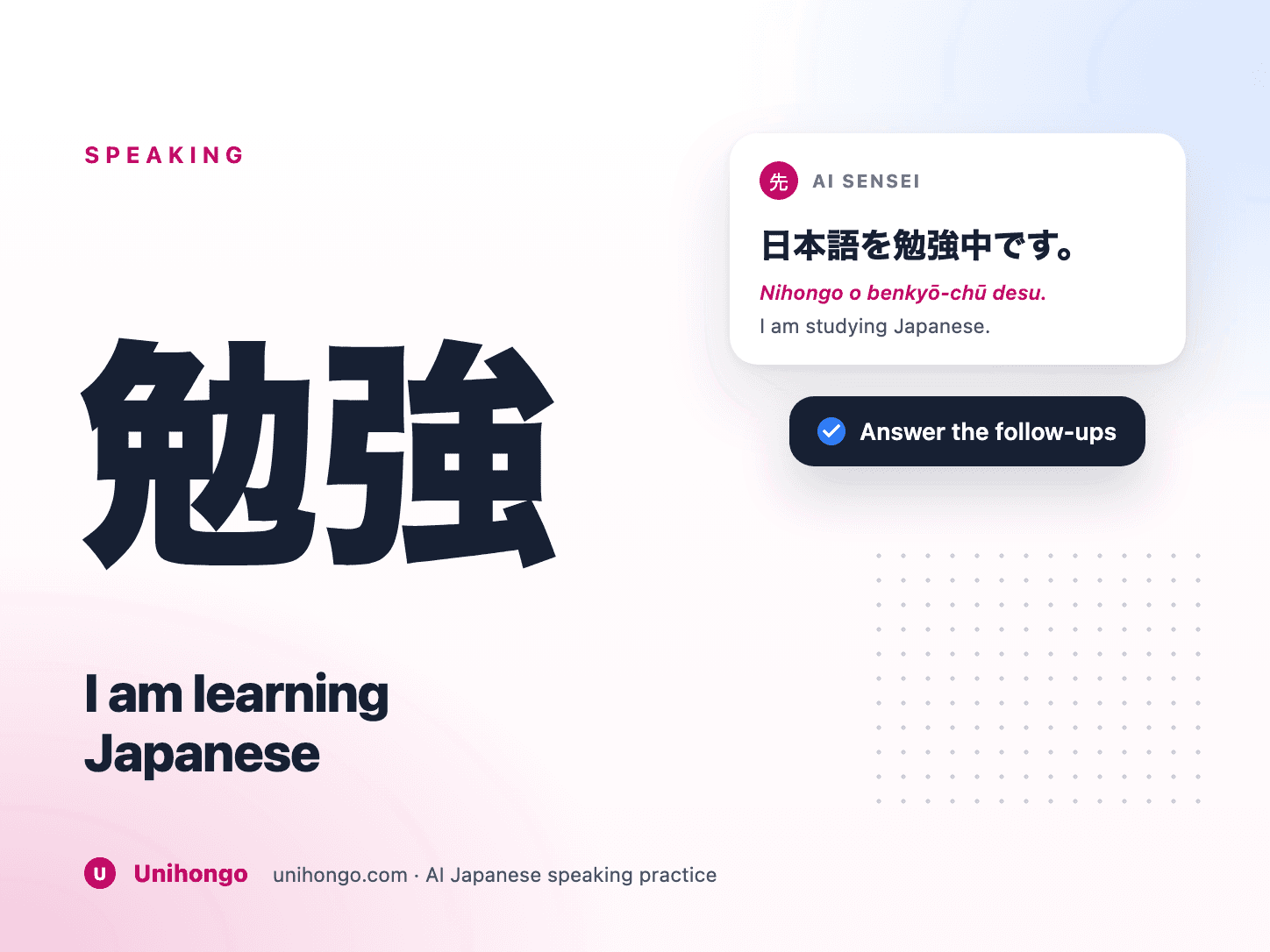
Benkyō shite imasu, I am studying, is the form you will use most. The te imasu ending describes an ongoing activity, so it covers both I am learning right now and I have been learning for a while.
Choose naratte imasu if you take lessons, and dokugaku de if you are teaching yourself. In relaxed speech shite imasu often shortens to shitemasu, and with friends to shiteru.
| Japanese | Romaji | Meaning |
|---|---|---|
| 日本語を勉強しています。 | Nihongo o benkyō shite imasu. | I am learning Japanese. |
| 日本語を勉強してる。 | Nihongo o benkyō shiteru. | I am learning Japanese. (casual) |
| 日本語を習っています。 | Nihongo o naratte imasu. | I am taking Japanese lessons. |
| 独学で勉強しています。 | Dokugaku de benkyō shite imasu. | I am teaching myself. |
| 今、日本語を勉強中です。 | Ima, nihongo o benkyō-chū desu. | I am currently studying Japanese. |
How long and how well
The first follow-up is almost always how long. Add a length of time with gurai, about, before the verb, or say when you started with mae ni hajimemashita.
Describing your level with mada, still, sets expectations without apologising. Sukoshi, a little, and kantan na kaiwa, simple conversation, give the listener a clear idea of how to speak to you.
| Japanese | Romaji | Meaning |
|---|---|---|
| 一年ぐらい勉強しています。 | Ichinen gurai benkyō shite imasu. | I have been studying for about a year. |
| 半年前に始めました。 | Hantoshi mae ni hajimemashita. | I started six months ago. |
| まだ勉強中です。 | Mada benkyō-chū desu. | I am still learning. |
| まだ初心者です。 | Mada shoshinsha desu. | I am still a beginner. |
| 少しだけ話せます。 | Sukoshi dake hanasemasu. | I can speak a little. |
| 簡単な会話ならできます。 | Kantan na kaiwa nara dekimasu. | I can manage simple conversations. |
Why you are learning
Dōshite nihongo o, why Japanese, is the second question you will hear. A short, specific reason works better than a long explanation, and ending with node or kara keeps it natural.
Your reason is also a conversation topic. Mentioning a specific interest gives the other person something to ask about next.
| Japanese | Romaji | Meaning |
|---|---|---|
| 日本のドラマが好きで始めました。 | Nihon no dorama ga suki de hajimemashita. | I started because I love Japanese dramas. |
| 仕事で日本語が必要なんです。 | Shigoto de nihongo ga hitsuyō nan desu. | I need Japanese for work. |
| 来年、日本に行く予定なので。 | Rainen, Nihon ni iku yotei na node. | Because I am planning to go to Japan next year. |
| 日本に住んでいるので、勉強しています。 | Nihon ni sunde iru node, benkyō shite imasu. | I live in Japan, so I am studying. |
Asking for help mid-conversation
Once people know you are learning, they are usually happy to adjust. You only need to ask, and these phrases are polite enough for anyone.
Mō sukoshi yukkuri, a little more slowly, is the most important of them. It is far better than pretending to understand and losing the thread.
| Japanese | Romaji | Meaning |
|---|---|---|
| もう少しゆっくり話していただけますか。 | Mō sukoshi yukkuri hanashite itadakemasu ka. | Could you speak a little more slowly? |
| もう一度お願いします。 | Mō ichido onegaishimasu. | Could you say that again, please? |
| 今の、どういう意味ですか。 | Ima no, dō iu imi desu ka. | What did that mean? |
| これは日本語で何と言いますか。 | Kore wa nihongo de nan to iimasu ka. | How do you say this in Japanese? |
When they switch to English or praise you
Two things often happen next: the other person compliments your Japanese, or switches to English to help. Both are kind, and both can end your practice.
A modest reply handles the compliment, and asking to continue in Japanese because you want to practise handles the switch politely. The complete set of replies to praise is in the guide to answering nihongo jōzu, and switching languages has its own guide as well.
| Japanese | Romaji | Meaning |
|---|---|---|
| いえいえ、まだまだです。 | Ie ie, mada mada desu. | Oh no, I still have a long way to go. |
| ありがとうございます。頑張ります。 | Arigatō gozaimasu. Ganbarimasu. | Thank you. I will keep working at it. |
| 練習したいので、日本語で話してもいいですか。 | Renshū shitai node, nihongo de hanashite mo ii desu ka. | I would like to practise, so may I speak Japanese? |
The questions that always follow
These four questions come up in nearly every conversation about learning Japanese. Preparing a short answer to each means you can spend your attention on listening rather than building sentences from scratch.
| Japanese | Romaji | Meaning |
|---|---|---|
| どのくらい勉強していますか。 | Dono kurai benkyō shite imasu ka. | How long have you been studying? |
| どうして日本語を勉強しているんですか。 | Dōshite nihongo o benkyō shite iru n desu ka. | Why are you learning Japanese? |
| 難しくないですか。 | Muzukashiku nai desu ka. | Isn't it difficult? |
| 漢字は読めますか。 | Kanji wa yomemasu ka. | Can you read kanji? |
| Question | What they are really asking | Answer strategy |
|---|---|---|
| How long have you studied? | How much should I simplify? | A time with about, plus still learning |
| Why Japanese? | What are you interested in? | One specific reason they can ask about |
| Isn't it hard? | An invitation to chat about the language | Name one hard part and one fun part |
| Can you read kanji? | Curiosity about your level | A little, and give a number or example |
Turning the sentence into practice
This exchange is short, predictable and repeated in almost every first conversation, which makes it the ideal thing to rehearse until it is effortless. When the first minute runs smoothly, you have more attention left for the rest of the conversation.
Unihongo is built for exactly this kind of rehearsal. The AI Sensei in the 3D classroom asks the follow-up questions a real person would, reacts to your answers, and keeps going in Japanese. Afterwards the session report and flashcards built from your session show which phrases you hesitated over, so the next run is smoother.
- Learn your four-line introduction by heart.
- Prepare one sentence for each common follow-up question.
- Keep mō sukoshi yukkuri ready for when you get lost.
- Ask to keep practising in Japanese when they switch.