

Okotte iru: the everyday word for angry
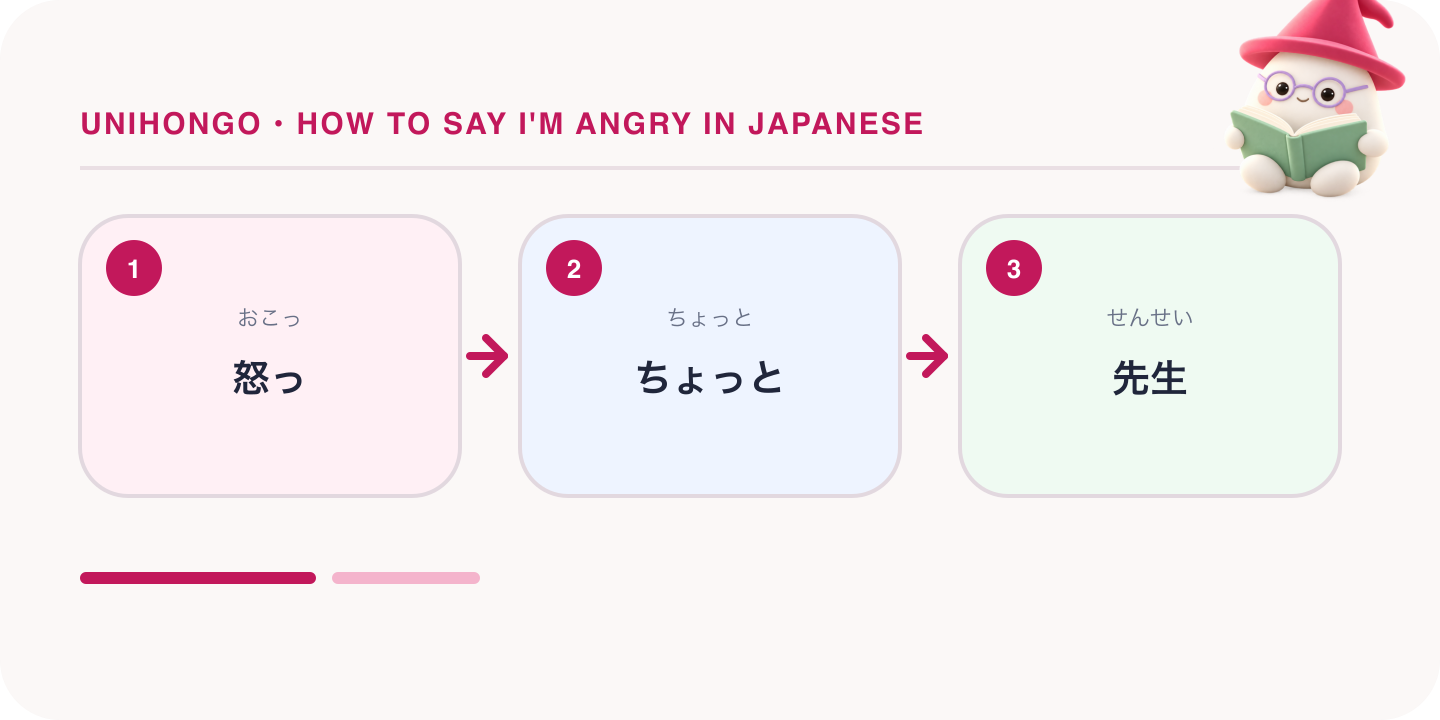
The verb 怒る (okoru) means to get angry. Because it describes a change of state, Japanese uses the te-iru form to say someone is angry right now: 怒っている (okotte iru), or 怒ってる (okotteru) in casual speech. Okotta, the past, means someone got angry or told someone off.
Okoru also has a second use: to scold. Sensei ni okorareta means I was told off by the teacher, not that the teacher was angry in general. Context usually makes this clear, and it is one of the most common ways you will hear the word used.
| Japanese | Romaji | Meaning |
|---|---|---|
| 怒ってる。 | Okotteru. | I'm angry. (casual) |
| 怒っています。 | Okotte imasu. | I'm angry. (polite) |
| ちょっと怒ってるよ。 | Chotto okotteru yo. | I'm a bit angry, you know. |
| 彼女、怒ってた。 | Kanojo, okotteta. | She was angry. |
| 先生に怒られた。 | Sensei ni okorareta. | I got told off by the teacher. |
| もう怒ってないよ。 | Mō okottenai yo. | I'm not angry any more. |
Hara ga tatsu: anger you feel inside
腹が立つ (hara ga tatsu) literally means the belly stands up. It describes the feeling of anger rising, and it is often used for things that annoy you rather than people you confront. It works in neutral and polite speech: hontō ni hara ga tachimashita, it really made me angry, is fine to say to a colleague when telling a story.
A related, more formal word is 腹立たしい (haradatashii), infuriating, which you will mostly see in writing. The noun form, 腹いせ (haraise), means doing something out of spite.
| Japanese | Romaji | Meaning |
|---|---|---|
| 腹が立つ。 | Hara ga tatsu. | It makes me angry. |
| 本当に腹が立ちました。 | Hontō ni hara ga tachimashita. | It really made me angry. |
| あの言い方には腹が立った。 | Ano iikata ni wa hara ga tatta. | The way they said it made me angry. |
| 自分に腹が立つ。 | Jibun ni hara ga tatsu. | I'm angry with myself. |
Iraira and atama ni kuru: irritation and boiling point
イライラ (iraira) is the sound-symbolic word for irritation or impatience: the feeling of waiting for a late train or dealing with a slow computer. Iraira suru means to be irritated. It is milder than okoru and safe to use in most casual and neutral conversations.
頭に来る (atama ni kuru), literally it comes to my head, means something makes your blood boil. It is stronger than iraira and casual, but not vulgar. Atama ni kita, it made me furious, is very common when retelling a frustrating story. Another common expression is むかっとする (mukatto suru), a sudden flash of anger.
| Japanese | Romaji | Meaning |
|---|---|---|
| イライラする。 | Iraira suru. | I'm irritated. |
| 電車が遅れてイライラしています。 | Densha ga okurete iraira shite imasu. | I'm irritated because the train is late. |
| マジで頭に来た。 | Maji de atama ni kita. | That really made me furious. |
| その一言にムカッとした。 | Sono hitokoto ni mukatto shita. | That one comment made me snap inside. |
| ストレスが溜まってる。 | Sutoresu ga tamatteru. | I'm really stressed out. |
Mukatsuku and kireru: strong, casual and risky
むかつく (mukatsuku) is one of the first anger words learners pick up from anime and dramas, and one of the easiest to misuse. It is blunt and casual, closer to "that pisses me off" or "he gets on my nerves". Among close friends and teenagers it is everyday language, but said to a colleague or about a customer it sounds childish or rude. Mukatsuku can also mean feeling sick in the stomach, though in conversation the anger meaning dominates.
キレる (kireru), to snap, describes someone suddenly losing their temper. Kireta means he or she exploded. Buchigire is an even stronger slang version. These words describe outbursts, so saying kireta about yourself admits you lost control.
| Japanese | Romaji | Meaning |
|---|---|---|
| むかつく! | Mukatsuku! | That pisses me off! (rude) |
| あいつ、むかつく。 | Aitsu, mukatsuku. | That guy gets on my nerves. (rude) |
| 上司がいきなりキレた。 | Jōshi ga ikinari kireta. | My boss suddenly snapped. |
| キレないで。 | Kirenaide. | Don't lose your temper. |
| ブチギレてた。 | Buchigireteta. | They were absolutely furious. (slang) |
How strong is each word?
Use this table as a rough guide. Politeness depends on the verb ending as well as the word, but some words stay casual even with desu and masu attached.
| Word | Romaji | Strength | Where to use it |
|---|---|---|---|
| イライラする | iraira suru | Mild irritation | Almost anywhere |
| 腹が立つ | hara ga tatsu | Real anger, felt inside | Casual and neutral, polite with masu |
| 怒っている | okotte iru | Clearly angry | Casual and neutral |
| 頭に来る | atama ni kuru | Furious | Casual storytelling |
| むかつく | mukatsuku | Strong, blunt | Close friends only |
| キレる | kireru | Losing your temper | Casual, describing outbursts |
Expressing displeasure politely
In polite and business Japanese, people very rarely say okotte imasu. Stating your anger openly can make you look like the unreasonable one, even if you are right. Instead, speakers describe the problem, its effect, and what they want to happen, usually in a calm, low voice. The listener understands the displeasure perfectly well.
Komarimasu, it troubles me, is the key word. Chotto komarimasu is a clear, polite no. Nattoku dekimasen, I cannot accept this, is firmer and useful with customer service. Zannen desu, it is a pity, expresses disappointment with dignity.
| Japanese | Romaji | Meaning |
|---|---|---|
| それはちょっと困ります。 | Sore wa chotto komarimasu. | That's a bit of a problem for me. |
| 正直、少し残念です。 | Shōjiki, sukoshi zannen desu. | Honestly, I'm a little disappointed. |
| この説明では納得できません。 | Kono setsumei de wa nattoku dekimasen. | I can't accept this explanation. |
| 何度もお願いしているのですが。 | Nando mo o-negai shite iru no desu ga. | I have asked several times, though. |
| 今後は気をつけていただけますか。 | Kongo wa ki o tsukete itadakemasu ka. | Could you please be careful in future? |
| 責任者の方とお話しできますか。 | Sekininsha no kata to o-hanashi dekimasu ka. | May I speak to the person in charge? |
What people say back
When someone is angry, the usual responses are apologies, calming phrases and questions. Friends might say mā mā, now now, or ochitsuite, calm down. At work or in a shop, you will hear mōshiwake gozaimasen, I am terribly sorry, followed by an explanation or a solution.
Be careful with ochitsuite: telling an angry person to calm down can make things worse in Japanese, just as in English. Mā mā is gentler and often said with a small hand gesture.
| Japanese | Romaji | Meaning |
|---|---|---|
| まあまあ。 | Mā mā. | Now, now. (calming) |
| 落ち着いて。 | Ochitsuite. | Calm down. |
| どうしたの? | Dō shita no? | What's wrong? |
| 怒らないで。 | Okoranaide. | Please don't be angry. |
| ごめん、そんなつもりじゃなかった。 | Gomen, sonna tsumori ja nakatta. | Sorry, I didn't mean it like that. |
| 大変申し訳ございません。 | Taihen mōshiwake gozaimasen. | I am terribly sorry. (formal) |
Common mistakes when talking about anger
- Using mukatsuku in polite company because it appears so often in anime. It sounds rude and immature outside close friendships.
- Saying okotte imasu to a customer service worker. It is understandable but tends to escalate things; describe the problem and use komarimasu instead.
- Confusing okoru, to be angry, with okoraseru, to make someone angry. Kare o okoraseta means I made him angry.
- Forgetting that okoru also means to scold. Okorareta usually means you were told off, not that someone was simply in a bad mood.
- Raising your voice. In Japan, a quiet, steady tone with polite wording often has more effect than volume, and shouting can lose you sympathy quickly.
- Using kireta about yourself casually. It admits that you lost control, which can sound more serious than you mean.