
The shinnenkai in four words
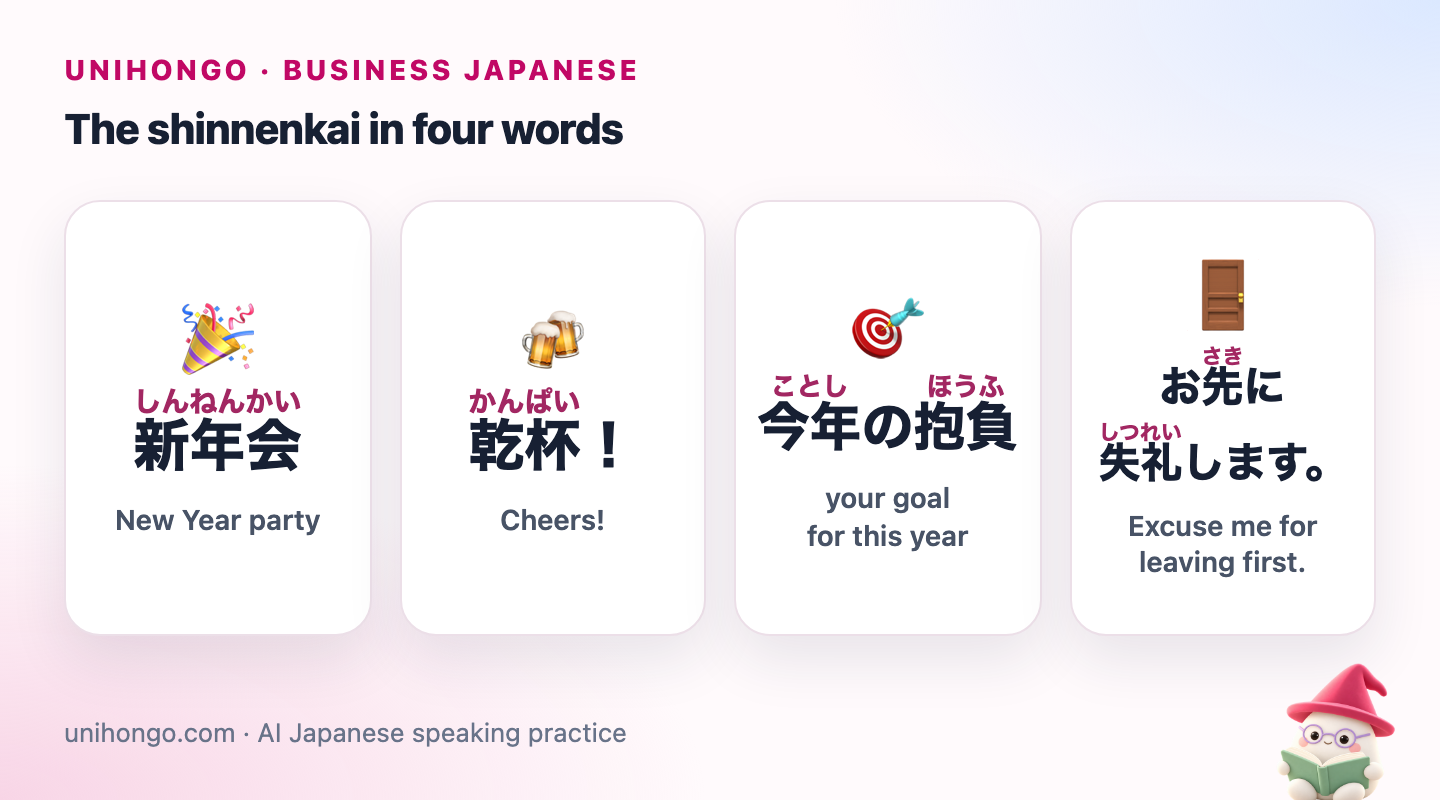
Four words carry the evening. The party itself. The toast that opens it. Your goal for the year, which you may be asked to share. And the line you say when you leave before the others. Learn these and you can follow the shape of any shinnenkai, whether it is a large company dinner or a small team at an izakaya.
| Japanese | Romaji | Meaning |
|---|---|---|
| 新年会 | shinnenkai | New Year party |
| 乾杯! | Kanpai! | Cheers! |
| 今年の抱負 | kotoshi no hōfu | your goal for this year |
| お先に失礼します。 | Osaki ni shitsurei shimasu. | Excuse me for leaving first. |
Shinnenkai or bōnenkai?
Both are group dinners with drinks, often in a private room of a restaurant or izakaya with a set course and an all-you-can-drink plan. The difference is the direction they face. A bōnenkai in December closes the year and thanks everyone for their work. A shinnenkai in January opens the new one, so the greetings are New Year greetings and the speeches look ahead.
Some groups hold one and not the other, and many offices keep both small and optional these days. Clubs, sports teams, alumni groups and neighbourhood associations hold shinnenkai too, often in a more relaxed style.
| Point | Bōnenkai (忘年会) | Shinnenkai (新年会) |
|---|---|---|
| When | December | January, sometimes early February |
| Mood | Thanks for the year, letting go | New start, looking ahead |
| Typical greeting | Kotoshi mo otsukaresama deshita | Akemashite omedetō gozaimasu |
| Speeches | Looking back on the year | Plans and goals for the year |
| Parting words | Yoi otoshi o | Kotoshi mo yoroshiku onegai shimasu |
The invitation and your reply
The invitation usually comes by email or a group chat from the kanji, the organiser, who is often a younger member of the team. It gives the date, the place, the fee (kaihi) and a reply deadline. Reply early and politely, even in a casual group, because the organiser needs numbers for the booking.
If you cannot go, a short apology is enough; you do not need to give a detailed reason. If you will be late, say so in advance, since the course may start without you.
| Japanese | Romaji | Meaning |
|---|---|---|
| 新年会、ぜひ参加させていただきます。 | Shinnenkai, zehi sanka sasete itadakimasu. | I'd be glad to join the New Year party. |
| 残念ですが、今回は欠席させていただきます。 | Zannen desu ga, konkai wa kesseki sasete itadakimasu. | Unfortunately, I won't be able to come this time. |
| 少し遅れて参加してもよろしいですか。 | Sukoshi okurete sanka shite mo yoroshii desu ka. | Would it be all right if I arrived a little late? |
| 会費はいくらですか。 | Kaihi wa ikura desu ka. | How much is the fee? |
| 幹事、ありがとうございます。 | Kanji, arigatō gozaimasu. | Thank you for organising it. |
The opening: greetings, speech and toast
When everyone is seated, the organiser starts the evening. The most senior person usually gives a short New Year speech, and someone is asked to lead the toast, a role called kanpai no ondo. Until the toast, people wait with their glasses filled, and nobody starts eating or drinking. Then everyone raises their glass, says kanpai, and the room relaxes.
Unlike at the bōnenkai, people greet each other with the New Year greeting as they arrive, especially those they have not seen since the holidays.
| Japanese | Romaji | Meaning |
|---|---|---|
| あけましておめでとうございます。今年もよろしくお願いします。 | Akemashite omedetō gozaimasu. Kotoshi mo yoroshiku onegai shimasu. | Happy New Year. I look forward to working with you this year. |
| それでは、部長からひと言お願いします。 | Sore de wa, buchō kara hitokoto onegai shimasu. | Organiser: Now, a few words from our department head. |
| 皆さん、グラスをお持ちください。 | Minasan, gurasu o omochi kudasai. | Organiser: Everyone, please raise your glasses. |
| 今年もよろしく、乾杯! | Kotoshi mo yoroshiku, kanpai! | Here's to another year together. Cheers! |
Saying your goal for the year
At many shinnenkai, especially in small teams, each person is asked to say a word or two about their hōfu, their aim for the year. Keep it short and concrete. A work goal is safest at a company party, but a light personal goal is fine and often gets a laugh. As a learner, a goal about your Japanese is perfect, because everyone can relate to it and will cheer you on.
The pattern kotoshi wa ... tai to omoimasu, this year I would like to ..., works for any goal. End with yoroshiku onegai shimasu and a small bow.
| Japanese | Romaji | Meaning |
|---|---|---|
| 一人ずつ、今年の抱負をお願いします。 | Hitori zutsu, kotoshi no hōfu o onegai shimasu. | Organiser: One by one, please share your goal for the year. |
| 今年は日本語能力試験のN2に合格したいと思います。 | Kotoshi wa nihongo nōryoku shiken no N2 ni gōkaku shitai to omoimasu. | This year I'd like to pass JLPT N2. |
| 今年はお客様ともっと日本語で話せるように頑張ります。 | Kotoshi wa okyakusama to motto nihongo de hanaseru yō ni ganbarimasu. | This year I'll work on speaking more Japanese with clients. |
| 今年こそ、毎朝走りたいと思います。 | Kotoshi koso, maiasa hashiritai to omoimasu. | This year, for real, I want to run every morning. |
| どうぞよろしくお願いします。 | Dōzo yoroshiku onegai shimasu. | I'd appreciate your support. |
Drinks, pouring and saying no
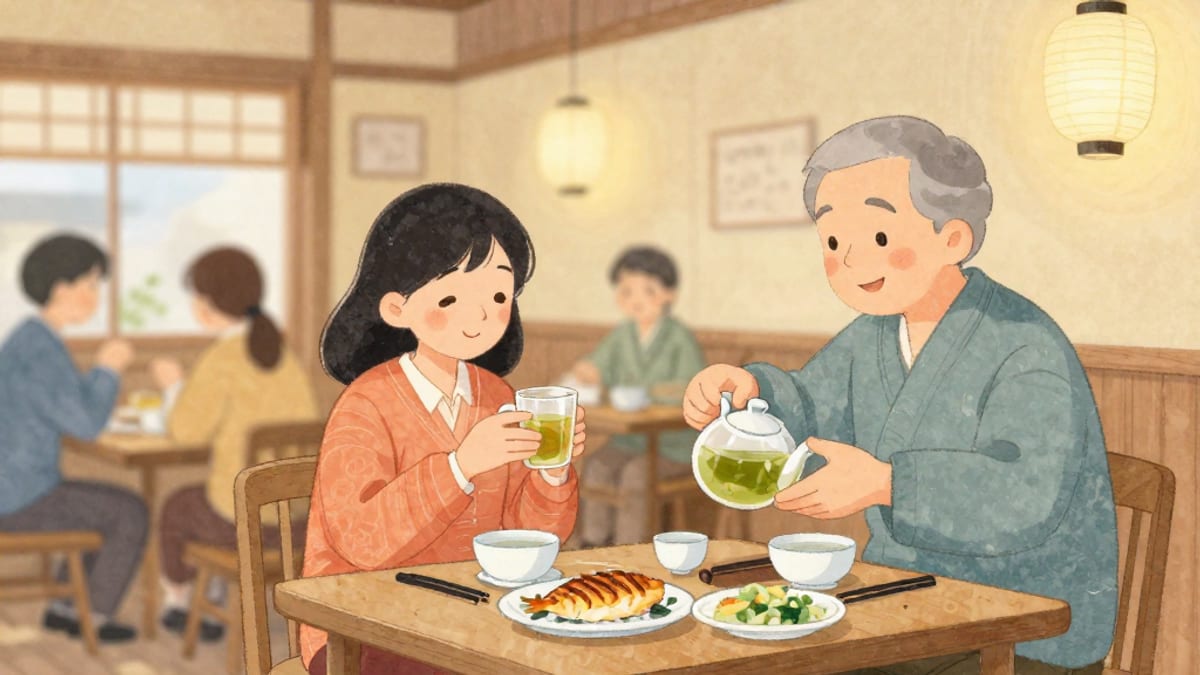
At a traditional party, people pour for each other rather than for themselves, and juniors often go round the table to pour for seniors and exchange a few words. You do not have to do this, but offering once to your direct boss is a kind gesture. When someone pours for you, hold your glass up a little with both hands.
If you do not drink, say so early and order a soft drink for the toast. You can still join the pouring with tea. When you have had enough, leave a little in your glass; an empty glass often gets refilled.
| Japanese | Romaji | Meaning |
|---|---|---|
| お注ぎします。 | Otsugi shimasu. | You: Let me pour for you. |
| ありがとう。何飲んでる? | Arigatō. Nani nonderu? | Manager: Thanks. What are you drinking? |
| お酒が飲めないので、ウーロン茶です。 | Osake ga nomenai node, ūroncha desu. | You: I can't drink alcohol, so oolong tea. |
| そうなんだ。じゃあ、お茶で乾杯しよう。 | Sō nan da. Jā, ocha de kanpai shiyō. | Manager: I see. Then let's toast with tea. |
| もう十分いただきました。 | Mō jūbun itadakimashita. | You: I've had plenty, thank you. |
| 今年の抱負、よかったよ。 | Kotoshi no hōfu, yokatta yo. | Manager: Your goal for the year was great. |
Notice that the manager speaks casually and you answer politely. At a party the senior person often relaxes their speech first; you can soften yours a little too, but keeping desu and masu with a boss is never wrong.
The ending, the second party and the next morning
Many parties end with a short closing speech and a ceremonial clap, such as ippon jime, in which everyone claps together in a set rhythm led by one person. Watch and copy; nobody expects a newcomer to know it. Then some people go on to a nijikai, a second party, often karaoke. Joining is optional.
The next morning, thank the organiser, and if someone senior paid more than their share or treated you, thank them too. This small habit is noticed more than anything you said at the party.
| Japanese | Romaji | Meaning |
|---|---|---|
| 二次会、行く人? | Nijikai, iku hito? | Colleague: Who's coming to the second party? |
| 今日はここで失礼します。 | Kyō wa koko de shitsurei shimasu. | I'll call it a night here. |
| 昨日はありがとうございました。楽しかったです。 | Kinō wa arigatō gozaimashita. Tanoshikatta desu. | Thank you for yesterday. I had a great time. |
| 昨日はごちそうさまでした。 | Kinō wa gochisōsama deshita. | Thank you for treating us last night. |
Common mistakes at a shinnenkai
- Drinking before the toast. Wait until everyone has said kanpai.
- Saying yoi otoshi o at the end. That is for December; at a shinnenkai, say kotoshi mo yoroshiku onegai shimasu.
- Giving a long speech for your goal. One or two sentences is ideal.
- Refusing a pour without a word. A simple mō jūbun desu, arigatō gozaimasu keeps the mood warm.
- Leaving without telling anyone. Tell the organiser, then say osaki ni shitsurei shimasu.
- Forgetting the next-morning thank you, especially to the person who organised or paid.
Rehearse the evening before it happens
Open AI Sensei, pick Hana-sensei and start the First Round at an Izakaya mission; ask her to make it a company shinnenkai and to play your section manager. Give your New Year goal, accept a pour, decline a second drink and leave early, all out loud. The session report shows what to fix.
Then tell Mocchi: help me write my New Year goal for a work party in two polite sentences, and check it. Mocchi corrects it, remembers your goal, and can bring it back in a later chat so you can say how it is going.