
Four phrases for eating less
Most conversations about dieting in Japanese use a handful of phrases. Daietto-chū says you are on a diet. Tōshitsu seigen names a low-carb diet. Hikaeru, to hold back, says you are cutting down on something. Chotto dake itadakimasu lets you join in with a small portion.
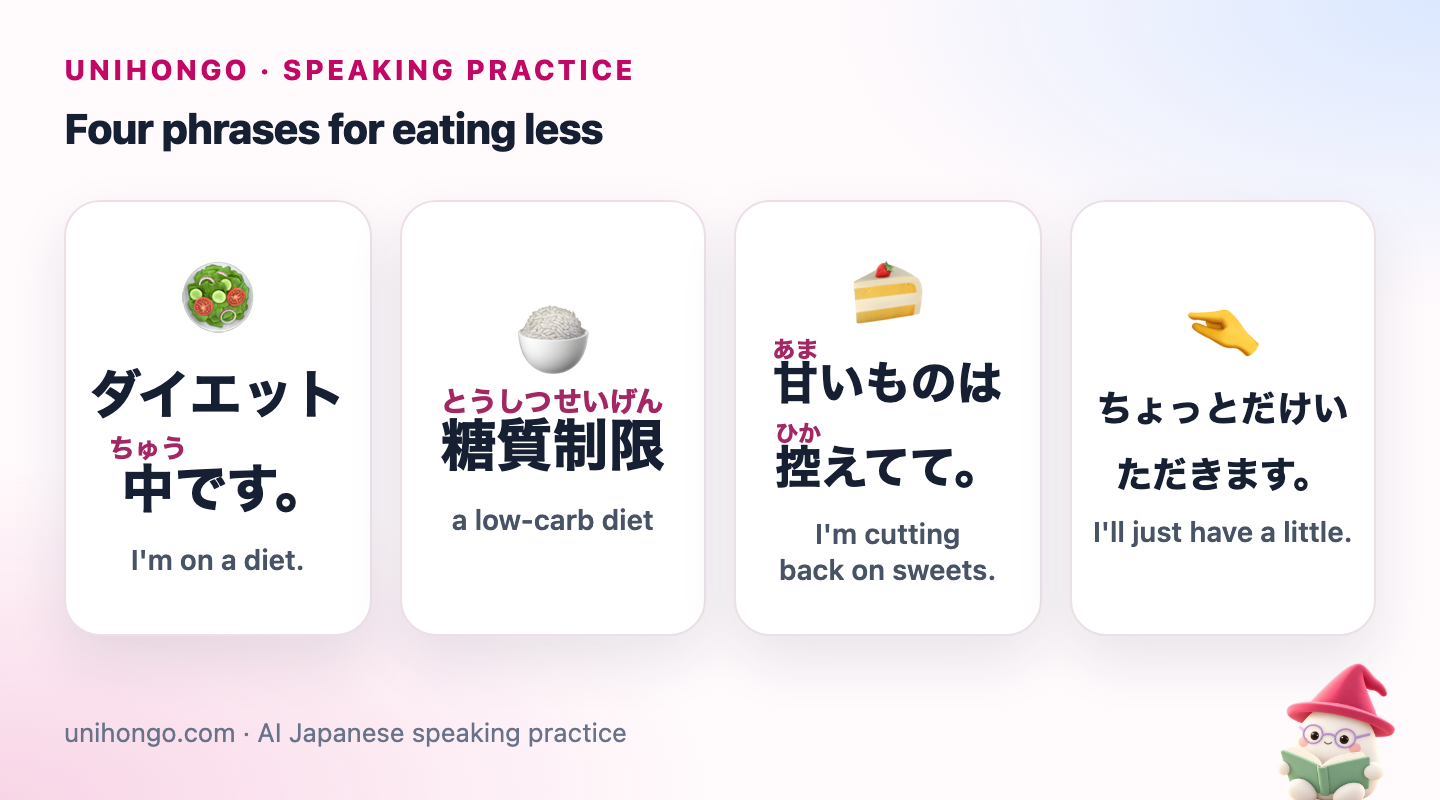
| Japanese | Romaji | Meaning |
|---|---|---|
| ダイエット中です。 | Daietto-chū desu. | I'm on a diet. |
| 糖質制限 | tōshitsu seigen | a low-carb diet |
| 甘いものは控えてて。 | Amai mono wa hikaetete. | I'm cutting back on sweets. |
| ちょっとだけいただきます。 | Chotto dake itadakimasu. | I'll just have a little. |
Chū is the same suffix you see in benkyō-chū, studying, and kaigi-chū, in a meeting. It marks a state you are in the middle of, so daietto-chū suggests a temporary effort, which makes it easy and light to say.
What daietto really means
The loanword daietto means trying to lose weight. It covers eating less and exercising, so jogging for weight loss is also daietto. It does not mean the food you normally eat. My diet is mostly vegetables is shokuseikatsu wa yasai ga ōi desu, not daietto.
Ashita kara daietto, I'll start the diet tomorrow, is a classic joke said while reaching for dessert.
| Japanese | Romaji | Meaning |
|---|---|---|
| 夏までに痩せたいんです。 | Natsu made ni yasetai n desu. | I want to lose weight by summer. |
| 健康のために、食生活に気をつけています。 | Kenkō no tame ni, shokuseikatsu ni ki o tsukete imasu. | I'm careful about my diet for my health. |
| 明日からダイエット! | Ashita kara daietto! | The diet starts tomorrow! (joking) |
| English | Japanese | Note |
|---|---|---|
| I'm on a diet (to lose weight) | Daietto-chū | The everyday phrase |
| My diet, what I usually eat | Shokuseikatsu | Eating habits |
| Medical diet, restrictions | Shokuji seigen | Doctor's orders |
| Low-carb diet | Tōshitsu seigen | Very common term |
Yaseru, to lose weight, and futoru, to gain weight, are the core verbs. They describe a change, so I've lost weight is yaseta, and someone who is slim is yasete iru.
Cutting back: hikaeru and ki o tsukeru
Hikaeru means to hold back or refrain, and hikaete imasu is a soft, adult way to say I'm cutting down. It works for sugar, alcohol, rice at night or salt, and it does not invite questions about your weight. Ki o tsukete imasu, I'm being careful, is even vaguer and politer. Nuku, to skip, is for cutting something out completely.
| Japanese | Romaji | Meaning |
|---|---|---|
| お酒は控えています。 | Osake wa hikaete imasu. | I'm cutting back on alcohol. |
| 夜は炭水化物を抜いています。 | Yoru wa tansuikabutsu o nuite imasu. | I skip carbs in the evening. |
| 食べすぎに気をつけてるんだ。 | Tabesugi ni ki o tsuketeru n da. | I'm trying not to overeat. |
| 最近ジムに通ってます。 | Saikin jimu ni kayottemasu. | I've been going to the gym lately. |
Many set-meal restaurants will happily serve less rice if you ask. Gohan sukuname de, less rice, please, is a useful line, and some places offer extra rice for free, so it is worth saying before the bowl arrives.
Declining food without rejecting the giver
When someone offers food, the offer is about kindness, so the answer should honour the kindness first. Thank them, then choose: a little now, save it for later, or a polite full refusal. Kekkō desu, no thank you, is correct but can sound brisk on its own; with a thank you and a softer phrase it is fine.
| Japanese | Romaji | Meaning |
|---|---|---|
| ありがとうございます。後でいただきます。 | Arigatō gozaimasu. Ato de itadakimasu. | Thank you. I'll have it later. |
| 持って帰ってもいいですか。 | Motte kaette mo ii desu ka. | May I take it home? |
| お気持ちだけいただきます。 | Okimochi dake itadakimasu. | I'll accept just the kind thought. |
| もうお腹いっぱいです。 | Mō onaka ippai desu. | I'm already full. |
| おいしかったです。ごちそうさまでした。 | Oishikatta desu. Gochisōsama deshita. | It was delicious. Thank you for the meal. |
At a home meal, the host may offer more than once, and a second warm refusal is normal and usually accepted. Mō jūbun itadakimashita, I've had plenty, with a smile closes the topic.
When people comment on your weight
Comments such as yaseta? (have you lost weight?) or even futotta? (have you put on weight?) can come up between friends and family more directly than many English speakers expect, though plenty of people find them rude too. You do not owe an explanation. A light answer moves the conversation on.
For your own body, futotchatta, I've put on weight, said with a smile, is the usual self-deprecating line. Avoid commenting on other people's weight yourself unless they raise it.
| Japanese | Romaji | Meaning |
|---|---|---|
| ちょっと太っちゃった。 | Chotto futotchatta. | I've put on a little weight. |
| ありがとう、少し痩せました。 | Arigatō, sukoshi yasemashita. | Thanks, I've lost a bit of weight. |
| そうかな?元気だよ。 | Sō ka na? Genki da yo. | Do you think so? I'm doing well. |
If a comment stings, it is fine to change the subject. Sore yori, anyway, followed by a new topic, is a gentle way to steer away without making a scene.
A spoken exchange: omiyage at the office
A coworker is back from Hokkaido and going from desk to desk with a box of sweets. You are cutting back, but you do not want to be the only person who refuses.

| Japanese | Romaji | Meaning |
|---|---|---|
| 北海道のお土産です。よかったらどうぞ。 | Hokkaidō no omiyage desu. Yokattara dōzo. | Coworker: Souvenirs from Hokkaido. Please have one. |
| わあ、ありがとうございます。 | Wā, arigatō gozaimasu. | You: Oh, thank you. |
| 今ダイエット中なので、後でいただきますね。 | Ima daietto-chū na node, ato de itadakimasu ne. | You: I'm on a diet, so I'll have it later. |
| そうなんだ。一つだけでも? | Sō nan da. Hitotsu dake demo? | Coworker: I see. Not even one? |
| じゃあ、ちょっとだけいただきます。 | Jā, chotto dake itadakimasu. | You: All right, I'll have just a little. |
| おいしい!やっぱり我慢できませんね。 | Oishii! Yappari gaman dekimasen ne. | You: Delicious! I knew I couldn't resist. |
Yappari, as expected, makes giving in sound charming. Plenty of conversations about diets in Japan end exactly like this, with a small bite and a shared laugh.
Exercise and health check talk
Conversations about diets often turn to exercise and health checks. Many companies in Japan hold an annual health check, kenkō shindan, and the results are a common, slightly rueful topic among coworkers. Undō busoku, not enough exercise, is the classic confession, and kintore, strength training, is a popular hobby to mention.
Saying what you do is a friendly way to move the conversation away from food: saikin hashittemasu, I've been running lately, invites questions instead of another sweet. If a coworker mentions their own diet, support is the usual reply rather than advice: ganbatte kudasai, good luck, or otagai ganbarimashō, let's both keep at it.
| Japanese | Romaji | Meaning |
|---|---|---|
| 健康診断の結果が気になります。 | Kenkō shindan no kekka ga ki ni narimasu. | I'm worried about my health check results. |
| 最近、走ってます。 | Saikin, hashittemasu. | I've been running lately. |
| 週に二回、筋トレをしています。 | Shū ni nikai, kintore o shite imasu. | I do strength training twice a week. |
| 運動不足なんです。 | Undō busoku nan desu. | I don't get enough exercise. |
| お互い頑張りましょう。 | Otagai ganbarimashō. | Let's both keep at it. |
Common mistakes
- Using daietto for your usual eating. Say shokuseikatsu.
- Answering an offer with a bare iranai. Thank the person and add ato de or chotto dake.
- Giving a diet excuse for an allergy. Say the real reason so nobody serves it to you by mistake.
- Telling a host the food is too much. Mō onaka ippai desu, I'm full, keeps the compliment intact.
Whatever you choose, the thank you comes first. A refusal wrapped in gratitude rarely offends anyone.