

Atsui: three kanji, one sound
The sound atsui covers three different words. 暑い means hot weather or a hot place, the heat you feel all around you. 熱い means hot to the touch: tea, soup, a pan, bath water, and also figuratively hot, as in passionate. 厚い means thick, as in a book or a coat. In speech you usually know which is meant from the subject.
In standard Tokyo pitch accent, 暑い and 熱い sound alike, with a drop after the second syllable, while 厚い is flat. Pitch accent differs around Japan, so do not rely on it too heavily, but it is worth knowing if you want your speech to sound natural.
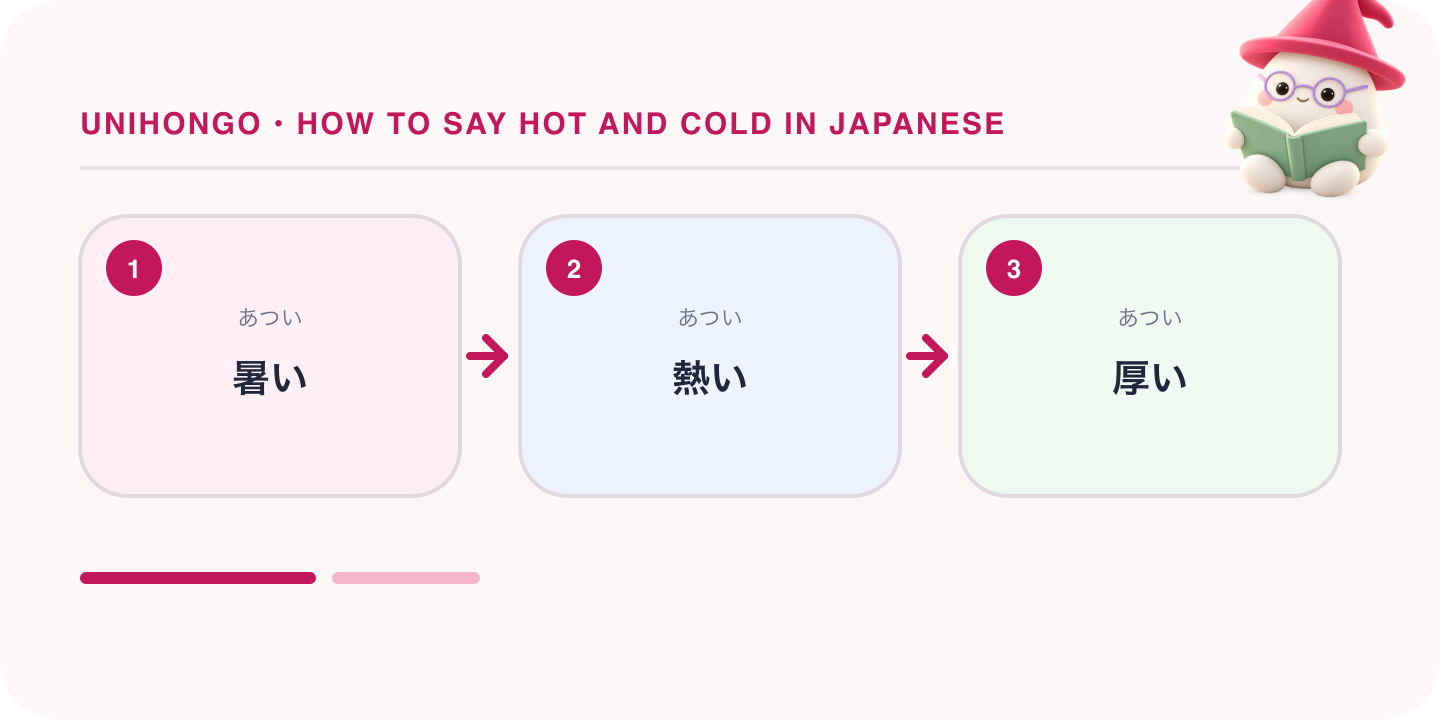
| Kanji | Reading | Meaning | Example |
|---|---|---|---|
| 暑い | atsui | Hot (weather, place) | 今日は暑い (kyō wa atsui) |
| 熱い | atsui | Hot (to touch), passionate | お茶が熱い (ocha ga atsui) |
| 厚い | atsui | Thick | 厚い本 (atsui hon) |
The opposites follow the same split. The opposite of 暑い is 寒い (samui), cold weather. The opposite of 熱い is 冷たい (tsumetai), cold to the touch. The opposite of 厚い is 薄い (usui), thin.
Samui vs tsumetai: two kinds of cold
寒い (samui) is cold you feel with your whole body: the weather, a room, a draught. 冷たい (tsumetai) is cold you feel with part of your body, usually by touching or drinking something: a can from the vending machine, the sea, a metal railing, your own hands. Saying mizu ga samui for "the water is cold" is one of the most common learner mistakes.
Tsumetai also works figuratively: tsumetai hito is a cold, unfriendly person. Samui has its own slang use: a joke that falls flat is samui, and the atmosphere goes cold. Both are worth recognising.
| Japanese | Romaji | Meaning |
|---|---|---|
| 今日は寒いね。 | Kyō wa samui ne. | It's cold today, isn't it. |
| この部屋、ちょっと寒い。 | Kono heya, chotto samui. | This room is a bit cold. |
| 水が冷たい。 | Mizu ga tsumetai. | The water is cold. |
| 手が冷たくなった。 | Te ga tsumetaku natta. | My hands have gone cold. |
| 冷たい飲み物をください。 | Tsumetai nomimono o kudasai. | A cold drink, please. |
| そのギャグ、寒いよ。 | Sono gyagu, samui yo. | That joke fell flat. |
Mushiatsui and summer heat words
Japanese summers are hot and humid in most of the country, so the vocabulary is rich. 蒸し暑い (mushiatsui) means hot and humid, muggy, and it is probably the single most useful summer word. Jimejime describes damp, sticky air, especially in the rainy season, and mōsho means a heatwave.
Weather forecasts also use the words manatsubi for a day of 30 degrees or more and mōshobi for 35 or more; nettaiya, a tropical night, means the temperature does not fall below 25 overnight. Netchūshō, heatstroke, is something you will hear warnings about every summer.
| Japanese | Romaji | Meaning |
|---|---|---|
| 今日は蒸し暑いですね。 | Kyō wa mushiatsui desu ne. | It's muggy today, isn't it. |
| じめじめして気持ち悪い。 | Jimejime shite kimochi warui. | It's damp and sticky, horrible. |
| 暑すぎて何もしたくない。 | Atsusugite nani mo shitakunai. | It's too hot to do anything. |
| 昨日は熱帯夜で眠れなかった。 | Kinō wa nettaiya de nemurenakatta. | It was a tropical night and I couldn't sleep. |
| 熱中症に気をつけてください。 | Netchūshō ni ki o tsukete kudasai. | Watch out for heatstroke. |
| クーラーをつけてもいいですか。 | Kūrā o tsukete mo ii desu ka. | Is it all right if I turn on the air conditioning? |
Hiekomu and winter cold words
冷え込む (hiekomu) means the temperature drops and the cold settles in, typically on a clear winter night or morning. Kesa wa hiekomimashita ne, "it got really cold this morning", is a classic polite greeting. 冷える (hieru) is the simpler verb for getting cold: karada ga hieru, your body gets cold.
Kogoeru means to freeze, to be numb with cold, and kogoesō means "I'm freezing". Samukeru is the chill you feel when coming down with a cold. Hieshō describes a constitution that feels the cold easily, and many people, especially women, describe themselves this way.
| Japanese | Romaji | Meaning |
|---|---|---|
| 今朝は冷え込みましたね。 | Kesa wa hiekomimashita ne. | It turned really cold this morning. |
| 寒くなりましたね。 | Samuku narimashita ne. | It's got cold, hasn't it. |
| 凍えそう。 | Kogoesō. | I'm freezing. |
| 足が冷える。 | Ashi ga hieru. | My feet get cold. |
| ちょっと寒気がします。 | Chotto samuke ga shimasu. | I feel a bit of a chill. |
| 私、冷え性なんです。 | Watashi, hieshō nan desu. | I feel the cold easily. |
Food, drinks and baths: atsui, nurui and hot or iced
For food and drink, 熱い (atsui) means hot and 冷たい (tsumetai) means cold. At cafés you choose hotto or aisu, hot or iced, and some drinks come atsukan, hot sake, or hiya, cold. Nekojita, "cat's tongue", describes someone who cannot handle very hot food or drinks.
ぬるい (nurui) means lukewarm, and it nearly always sounds disappointed: a beer that has gone warm, tea that has cooled, a bath that is not hot enough. For baths, people also say atsume and nurume, on the hot side and on the cool side, and chōdo ii, just right. The onsen etiquette guide covers what to expect at hot springs.
| Japanese | Romaji | Meaning |
|---|---|---|
| 熱いから気をつけてね。 | Atsui kara ki o tsukete ne. | It's hot, so be careful. |
| ホットとアイス、どちらになさいますか。 | Hotto to aisu, dochira ni nasaimasu ka. | Would you like it hot or iced? |
| ビールがぬるくなっちゃった。 | Bīru ga nuruku nacchatta. | The beer's gone warm. |
| お風呂、ちょっとぬるいね。 | Ofuro, chotto nurui ne. | The bath's a bit lukewarm. |
| お湯加減はどうですか。 | Oyu kagen wa dō desu ka. | How's the water temperature? |
| ちょうどいいです。 | Chōdo ii desu. | It's just right. |
| 猫舌なので、少し冷ましてから飲みます。 | Nekojita na node, sukoshi samashite kara nomimasu. | I can't handle hot drinks, so I'll let it cool first. |
Weather small talk: casual, polite and formal
Talking about the heat or the cold is the easiest way to start a conversation in Japan, with neighbours, colleagues, shop staff or taxi drivers. The pattern is simple: state the weather and add ne, inviting agreement. The other person agrees and often adds a comment.
Formal speech uses the same topic with softer grammar. At the start of a business call or meeting, a line such as atsui hi ga tsuzuite orimasu ne sounds polished. Our weather vocabulary guide covers rain, typhoons and forecasts.
| Japanese | Romaji | Meaning |
|---|---|---|
| 暑いですね。 | Atsui desu ne. | Hot, isn't it. |
| 本当ですね。毎日暑くて。 | Hontō desu ne. Mainichi atsukute. | It really is. Every day's so hot. |
| だいぶ涼しくなりましたね。 | Daibu suzushiku narimashita ne. | It's got much cooler, hasn't it. |
| 暖かくなってきましたね。 | Atatakaku natte kimashita ne. | It's getting warmer, isn't it. |
| お体に気をつけてください。 | O-karada ni ki o tsukete kudasai. | Please take care of yourself. |
| Level | Hot | Cold |
|---|---|---|
| Casual | 暑いね (atsui ne) | 寒いね (samui ne) |
| Polite | 暑いですね (atsui desu ne) | 寒いですね (samui desu ne) |
| Formal | 暑い日が続いておりますね (atsui hi ga tsuzuite orimasu ne) | 寒さが厳しくなってまいりました (samusa ga kibishiku natte mairimashita) |
What people say back
Temperature small talk rarely needs more than agreement plus one detail. If someone says atsui desu ne, reply with hontō desu ne, sō desu ne, or a comment about the forecast. If someone says they are cold, offering to change something is the natural reply.
| Japanese | Romaji | Meaning |
|---|---|---|
| そうですね。今日は特に暑いですね。 | Sō desu ne. Kyō wa toku ni atsui desu ne. | Yes, today is especially hot. |
| 明日はもっと暑くなるらしいですよ。 | Ashita wa motto atsuku naru rashii desu yo. | Apparently it'll be even hotter tomorrow. |
| 寒い?窓閉めようか。 | Samui? Mado shimeyō ka. | Cold? Shall I close the window? |
| エアコンの温度、上げましょうか。 | Eakon no ondo, agemashō ka. | Shall I turn the air conditioning up? |
| 温かいお茶でもどうですか。 | Atatakai ocha demo dō desu ka. | How about some hot tea? |
Common mistakes with hot and cold
- Saying mizu ga samui: water is cold to the touch, so say mizu ga tsumetai.
- Saying kyō wa tsumetai for the weather: the weather is samui.
- Writing 熱い for hot weather: use 暑い for the weather and 熱い for things you touch.
- Using atsui for a pleasant warm day: atsui suggests uncomfortable heat. For a nice spring day, say atatakai.
- Using nurui as a neutral word for warm: it usually implies disappointment. For pleasant warmth, use atatakai.
- Mixing up 暖かい and 温かい: the first is for weather and rooms, the second for food, drinks and kindness.