
The payment questions in four lines
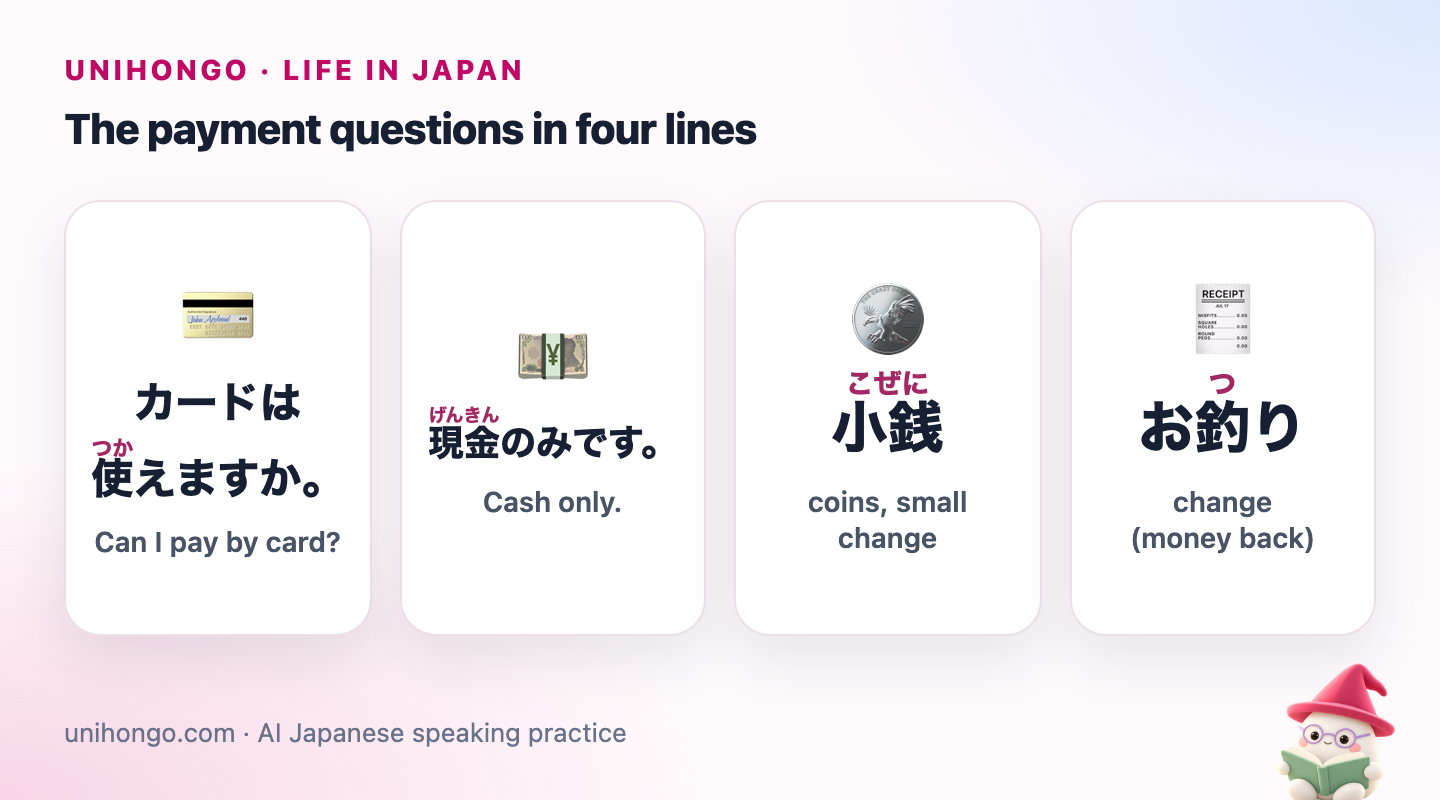
Most cash conversations in Japan come down to these four lines: asking about cards, hearing that it is cash only, and the two money words you need at every register, coins and change.
| Japanese | Romaji | Meaning |
|---|---|---|
| カードは使えますか。 | Kādo wa tsukaemasu ka. | Can I pay by card? |
| 現金のみです。 | Genkin nomi desu. | Cash only. |
| 小銭 | kozeni | coins, small change |
| お釣り | otsuri | change (money back) |
Kozeni is the coins in your purse; otsuri is the money the shop gives back. Japanese coins come in 1, 5, 10, 50, 100 and 500 yen, and notes in 1,000, 5,000 and 10,000 yen. New banknote designs were issued in July 2024, and the older notes remain valid.
Why cash still feels natural
There is no single reason, and Japanese people themselves give different answers. These are the ones mentioned most often.
- Safety. Street crime is low in most areas, so carrying a full wallet does not feel risky to many people. Many stories are told of lost wallets being handed in to a police box with the cash still inside.
- Easy ATMs. ATMs in convenience stores, post offices and banks make cash easy to get in most towns.
- Shop costs. For a small family business, card fees and terminals are a real expense, so many prefer cash.
- Habit and trust. Older generations grew up with cash, and coins and notes feel simple and reliable.
- Budgeting and privacy. Some people like seeing exactly how much they have left, and leaving no record.
- Disasters. After earthquakes and power cuts, card terminals may stop working, and many households keep some cash at home for emergencies.
These reasons are changing. The government and big companies have promoted cashless payment for years, phone payments are now common among younger people, and many shops that were cash-only a few years ago now accept cards or QR codes. Expect a mix.
Cash in Japanese customs
Cash also lives on in traditions where money is given as a gift. These customs explain why many people still keep crisp notes at home.
| Japanese | Romaji | Meaning |
|---|---|---|
| お年玉 | otoshidama | New Year money for children |
| ご祝儀 | goshūgi | cash gift at a wedding |
| 香典 | kōden | condolence money at a funeral |
| 新札 | shinsatsu | new, crisp banknotes |
| お賽銭 | osaisen | coin offering at a shrine or temple |
For weddings, people usually put new, uncreased notes in a special envelope to show they prepared ahead. For funerals, many people traditionally avoid brand-new notes, so it does not look as if they had prepared for a death. Customs vary, so follow what people around you do. At shrines and temples, offerings and charms are usually paid in cash.
Where you are most likely to need cash
Treat this as a rough guide. Acceptance changes fast, and a shop's sign at the entrance is the best clue; many display the logos of the cards and apps they accept.
| Place | Cash needed? | Notes |
|---|---|---|
| Convenience stores and chains | Rarely | Cards, IC cards and phone payments widely accepted |
| Small restaurants and ramen shops | Often | Some ticket machines take cash only |
| Shrines and temples | Usually | Offerings, charms and some entry fees |
| Festival stalls and markets | Usually | Bring coins and small notes |
| Rural buses and small inns | Sometimes | Check ahead, especially in the countryside |
| Taxis | Rarely | Most city taxis take cards; ask if unsure |
How paying works at a Japanese register
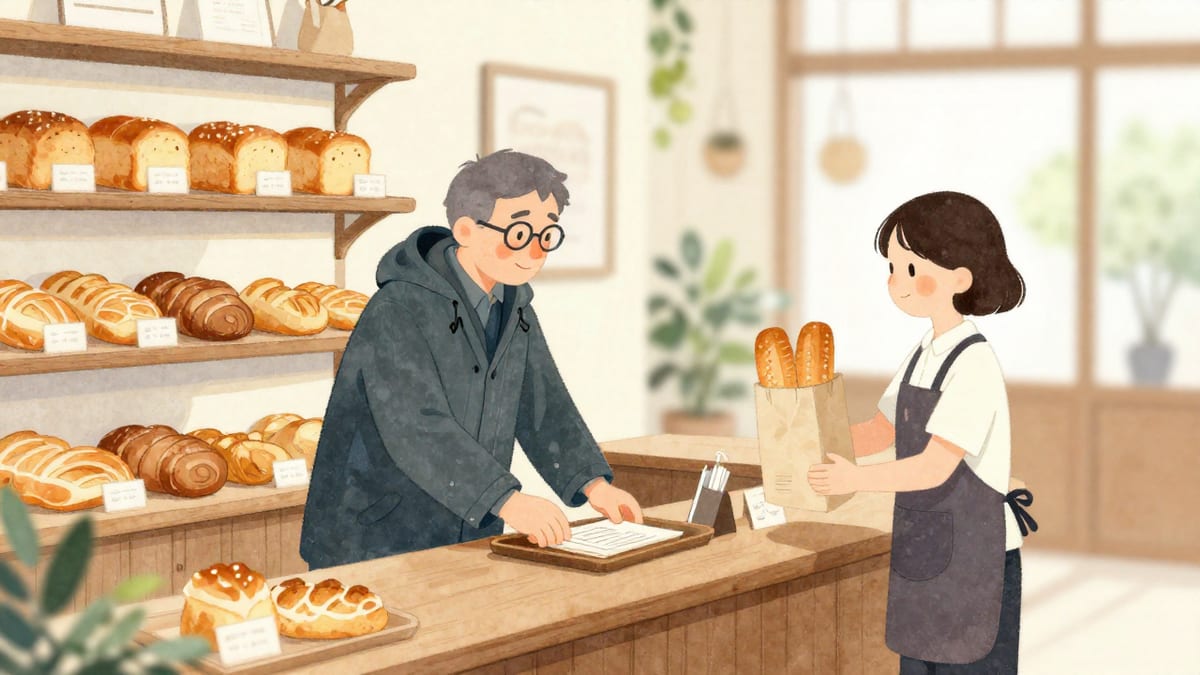
Most shops have a small tray, often called a cash tray or karuton, on the counter. You put your money or card on the tray instead of handing it directly to the staff, and the staff put your change on it or hand it to you with the receipt. The clerk usually announces the amount you gave, so both of you agree, then counts out the change.
Paying with a 10,000-yen note for a small amount is common and generally fine, but a short apology sounds considerate, especially at a small shop early in the morning, when they may not have much change.
| Japanese | Romaji | Meaning |
|---|---|---|
| 現金でお願いします。 | Genkin de onegai shimasu. | In cash, please. |
| 一万円札しかないんですが… | Ichiman'en satsu shika nai n desu ga... | I only have a 10,000-yen note, sorry... |
| 大丈夫ですよ。 | Daijōbu desu yo. | Clerk: That's fine. |
| 一万円お預かりします。 | Ichiman'en oazukari shimasu. | Clerk: Out of 10,000 yen. |
| 先に大きいほうから、五千円のお返しです。 | Saki ni ōkii hō kara, gosen'en no okaeshi desu. | Clerk: First the large notes, 5,000 yen change. |
| 細かいのがなくてすみません。 | Komakai no ga nakute sumimasen. | Sorry, I don't have anything smaller. |
| ちょうどです。 | Chōdo desu. | It's the exact amount. |
Oazukari shimasu, I will hold this for you, is the humble phrase staff use as they take your money before giving change. When you pay the exact amount, they may say chōdo itadakimasu instead.
Common learner mistakes
- Handing money straight to the clerk's hand when there is a tray. Put it on the tray.
- Saying kādo daijōbu? to staff. It is understood, but kādo wa tsukaemasu ka is clearer and more polite.
- Confusing otsuri, change, with kozeni, coins. You receive otsuri; you pay with kozeni.
- Assuming every ticket machine takes cards. Many older ones take only cash, and some newer ones only cards.
- Running out of cash in the countryside. Withdraw some before you leave the city.
- Leaving a tip. Tipping is not customary in Japan, and staff may run after you to return the money.
Mini dialogue: a cash-only ramen shop
You walk into a small ramen shop with a ticket machine by the door, holding only a card. Here is how the conversation might go.
| Japanese | Romaji | Meaning |
|---|---|---|
| すみません、カードは使えますか。 | Sumimasen, kādo wa tsukaemasu ka. | You: Excuse me, can I pay by card? |
| すみません、うちは現金だけなんです。 | Sumimasen, uchi wa genkin dake nan desu. | Staff: Sorry, we only take cash. |
| 近くにATMはありますか。 | Chikaku ni ATM wa arimasu ka. | You: Is there an ATM nearby? |
| 角のコンビニにありますよ。 | Kado no konbini ni arimasu yo. | Staff: There's one at the convenience store on the corner. |
| ありがとうございます。すぐ戻ります。 | Arigatō gozaimasu. Sugu modorimasu. | You: Thank you. I'll be right back. |
Uchi, literally our house, is how shop staff often refer to their own shop. Uchi wa genkin dake nan desu sounds friendly and a little apologetic, which is exactly the tone they mean.
Fit money Japanese into your study plan
If a trip or a move to Japan is coming up, tell Mocchi: add a few days on shopping and paying in cash to my plan before my trip. Mocchi slips small tasks into your study plan, such as numbers with man and sen, register phrases and a short listening check, and ticks them off as you finish them in the chat. Because it remembers what you struggled with, a confusing number like ichiman gosen'en will come back in a later quiz.
When the plan reaches its speaking step, it opens AI Sensei, where you can run the Convenience Store Checkout mission and pay out loud, answering the clerk's questions one by one.