
Tamago kake gohan in one bowl
The name says exactly what the dish is: 卵 (tamago, egg), かけ (kake, poured over) and ご飯 (gohan, cooked rice). You put hot rice in a bowl, add one raw egg, pour in a little soy sauce and mix. The heat of the rice warms the egg slightly and turns it into a silky, pale yellow coating.
In writing you will also see 卵かけごはん and 玉子かけご飯, with 玉子 being a common spelling for eggs as food. Spoken Japanese often shortens the whole thing to TKG, pronounced tī kē jī. It is a home dish first, but many breakfast chains and ryokan offer a raw egg with the rice so you can make your own.
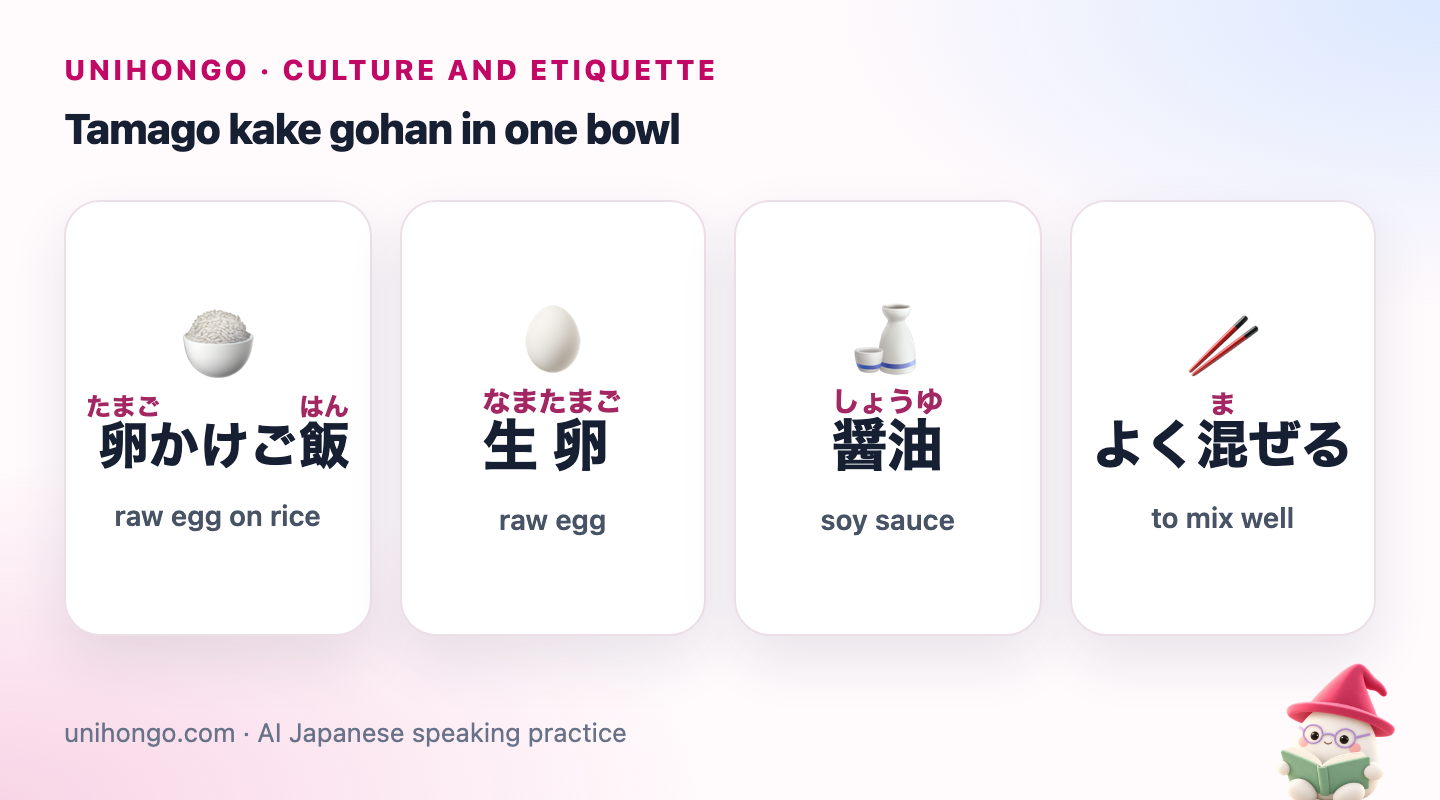
| Japanese | Romaji | Meaning |
|---|---|---|
| 卵かけご飯 | tamago kake gohan | raw egg on rice |
| 生卵 | nama tamago | raw egg |
| 醤油 | shōyu | soy sauce |
| よく混ぜる | yoku mazeru | to mix well |
| 白いご飯 | shiroi gohan | plain white rice |
| 黄身 | kimi | egg yolk |
| 白身 | shiromi | egg white |
How to make it: two schools of mixing
There is no single correct method, and people enjoy arguing about it. Broadly there are two schools. In the first, you beat the egg with soy sauce in a small bowl and pour it over the rice. In the second, you make a small hollow in the rice, crack the egg straight into it, add soy sauce and mix everything in the bowl. Some people separate the egg, mixing the white into the rice first for a fluffy texture and placing the yolk on top at the end.
Use freshly cooked, hot rice. Cold rice does not warm the egg and the result is runny. Start with a little soy sauce and add more after tasting: it is easy to overdo.
| Japanese | Romaji | Meaning |
|---|---|---|
| ご飯をよそう | gohan o yosou | to serve rice into a bowl |
| 卵を割る | tamago o waru | to crack an egg |
| 真ん中にくぼみを作る | mannaka ni kubomi o tsukuru | to make a hollow in the middle |
| 醤油を少しかける | shōyu o sukoshi kakeru | to pour on a little soy sauce |
| ふわふわになるまで混ぜる | fuwafuwa ni naru made mazeru | to mix until fluffy |
| 溶き卵 | tokitamago | beaten egg |
Why raw eggs are common in Japan
Raw egg is not only for TKG. It is the dipping sauce for sukiyaki, the topping on gyūdon at many chains, and the finishing touch on some ramen and udon. People eat raw egg this casually largely because of trust in the egg supply. Eggs sold in Japanese shops usually go through washing, inspection and grading, and the date printed on the pack, the shōmi kigen, is generally set on the assumption that the egg will be eaten raw. After that date, the usual advice is to cook it thoroughly.
That trust has limits, and it is worth being careful rather than romantic about it. Keep eggs refrigerated, do not use cracked ones raw, and remember that common advice in Japan, too, is for small children, pregnant people, older people and anyone unwell to avoid raw eggs. Abroad, the situation can be quite different, so follow local food-safety advice.
| Japanese | Romaji | Meaning |
|---|---|---|
| この卵、生で食べられますか。 | Kono tamago, nama de taberaremasu ka. | Can this egg be eaten raw? |
| 賞味期限はいつまでですか。 | Shōmi kigen wa itsu made desu ka. | Until when is the best-before date? |
| 期限が過ぎたら、加熱してね。 | Kigen ga sugitara, kanetsu shite ne. | Once it's past the date, cook it. (casual) |
| Label or word | Meaning | What it tells you |
|---|---|---|
| 賞味期限 (shōmi kigen) | Best-before date | On Japanese eggs, usually the last day to eat them raw |
| 生食用 (namashokuyō) | For eating raw | Sold with raw eating in mind |
| 加熱調理 (kanetsu chōri) | Cook before eating | Seen after the date, or on some products |
| 要冷蔵 (yō reizō) | Keep refrigerated | Store it in the fridge |
Toppings and the great TKG debate
Once the basics are in the bowl, people customise. Some add a pinch of salt instead of soy sauce, others swear by a drop of sesame oil or a knob of butter. Dashi-flavoured soy sauce sold especially for TKG is a common supermarket item. Mixing in nattō creates a famously sticky bowl that some people love and others cannot face.
| Japanese | Romaji | Meaning |
|---|---|---|
| ネギ | negi | green onion |
| 海苔 | nori | nori seaweed |
| かつお節 | katsuobushi | bonito flakes |
| 納豆 | nattō | fermented soybeans |
| ごま | goma | sesame |
| 卵かけご飯専用の醤油 | tamago kake gohan sen'yō no shōyu | soy sauce made for TKG |
| 私はネギと海苔派です。 | Watashi wa negi to nori ha desu. | I'm team green onion and nori. |
| 納豆も入れる? | Nattō mo ireru? | Do you put nattō in too? (casual) |
The suffix ~ ha (派) means a camp or school of thought, and it is handy for friendly food debates: medamayaki wa shōyu ha? Sōsu ha? (are you a soy sauce or a Worcestershire sauce person for fried eggs?). It is light and playful, not argumentative.
Accepting or declining a raw egg politely
At a ryokan breakfast, a homestay or a friend's home, you may be handed a raw egg without explanation, because your hosts assume you know what to do with it. If you want to try it, show enthusiasm. If you do not, the polite approach is to apologise softly and trail off rather than say no directly. Hosts are usually happy to cook the egg, and asking is perfectly acceptable.
Avoid saying the egg is dirty or dangerous. Your host is eating it too. Talk about your own taste or habits instead: you are not used to it, or it does not agree with you.
| Japanese | Romaji | Meaning |
|---|---|---|
| ぜひいただきます。 | Zehi itadakimasu. | I'd love to try it. (polite) |
| 生卵はちょっと苦手で… | Nama tamago wa chotto nigate de... | I'm not very good with raw egg... (soft refusal) |
| 焼いてもらえますか。 | Yaite moraemasu ka. | Could you cook it for me? |
| 生卵を食べ慣れていないんです。 | Nama tamago o tabe narete inai n desu. | I'm not used to eating raw egg. |
| もちろん、目玉焼きにしましょうか。 | Mochiron, medamayaki ni shimashō ka. | Host: Of course, shall I fry it for you? |
Mini dialogue: breakfast at a friend's home
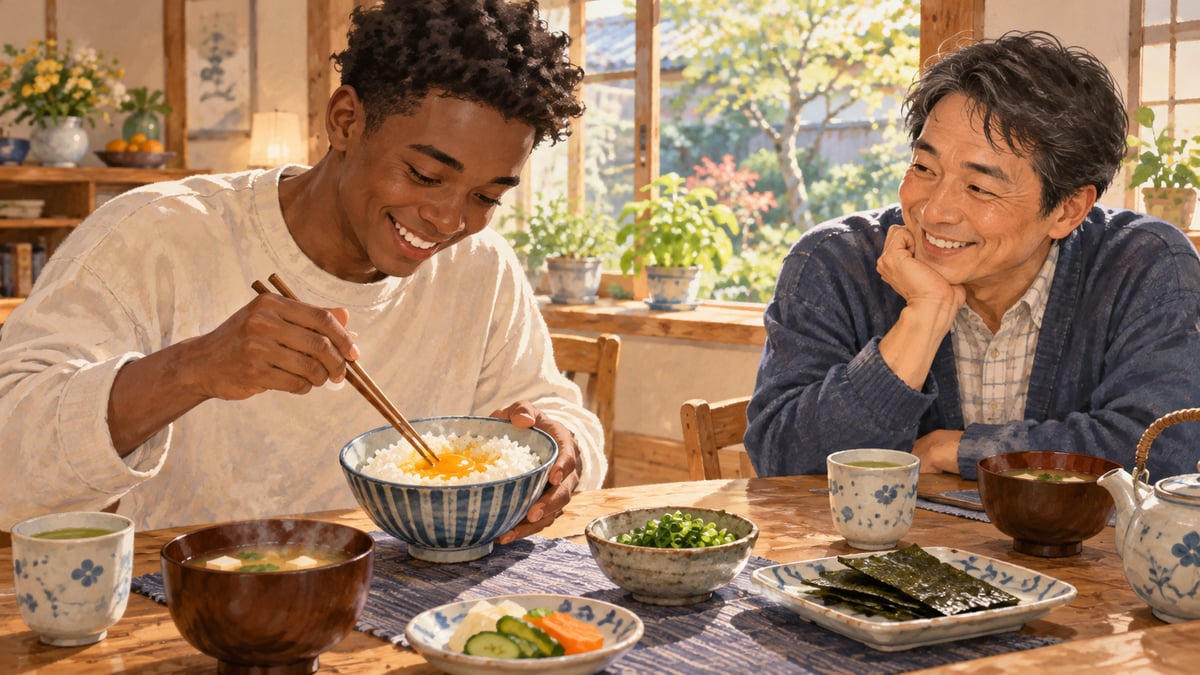
You are staying with a Japanese friend's family. Their father sets a bowl of rice and an egg in front of you and watches with interest.
| Japanese | Romaji | Meaning |
|---|---|---|
| 卵かけご飯、食べたことある? | Tamago kake gohan, tabeta koto aru? | Father: Have you ever had raw egg on rice? |
| 初めてです。どうやって食べるんですか。 | Hajimete desu. Dō yatte taberu n desu ka. | You: It's my first time. How do you eat it? |
| 卵を割って、醤油をかけて、よく混ぜるだけ。 | Tamago o watte, shōyu o kakete, yoku mazeru dake. | Father: Just crack the egg, add soy sauce and mix well. |
| わあ、ふわふわでおいしいです。 | Wā, fuwafuwa de oishii desu. | You: Wow, it's fluffy and delicious. |
| でしょう。うちはネギも入れるよ。 | Deshō. Uchi wa negi mo ireru yo. | Father: Isn't it? We add green onion too. |
| じゃあ、明日はネギ入りでお願いします。 | Jā, ashita wa negiiri de onegai shimasu. | You: Then tomorrow I'd like it with green onion, please. |
Common learner mistakes
- Saying tamago gohan or egg rice. Japanese people will understand, but the name is tamago kake gohan, or TKG in casual talk.
- Pouring in lots of soy sauce at the start. A few drops is normal; you can always add more.
- Using cold rice. The dish depends on hot rice gently warming the egg.
- Assuming eggs abroad are the same as eggs in Japan. Production and labels differ by country.
- Refusing with iranai (I don't want it). Among hosts, chotto nigate de... sounds far kinder.
- Mixing up kimi (yolk) and shiromi (white). Think of the colours: ki is yellow, as in kiiro, and shiro is white.
Make the egg words stick with Mocchi
Open Mocchi and type: /create-flashcards nama tamago, kimi, shiromi, tokitamago, kakeru, yosou, nigate. Mocchi builds the cards for your Flash Card list, lets you pick a photo for each one, and brings the words you hesitate on back sooner when you review with /review-flashcards. Because Mocchi remembers what you studied, you can ask later for a quiz on these same words mixed with older food vocabulary.
For a quick warm-up between reviews, load the same deck into Kotoba Tank: you hear a word and hit the right one, which trains your ear for the short, similar-sounding words of the kitchen.