
Before you dial
Decide three things before the phone rings: who you are calling, whether you are asking for a full day or a half day, and what is urgent in your work today. Most workplaces expect the call to go to your direct superior rather than a colleague, and to come early, before the shift or the working day begins. Beyond that, expectations vary widely by company and industry, so confirm your own workplace's rule in advance instead of improvising it while ill.
Have a note in front of you with your section name, the word for your symptom, and the name of the person who could cover anything urgent. Reading from a note is not cheating; Japanese business calls are formulaic precisely so that both sides can move quickly, and a caller who knows their lines sounds competent rather than rehearsed.
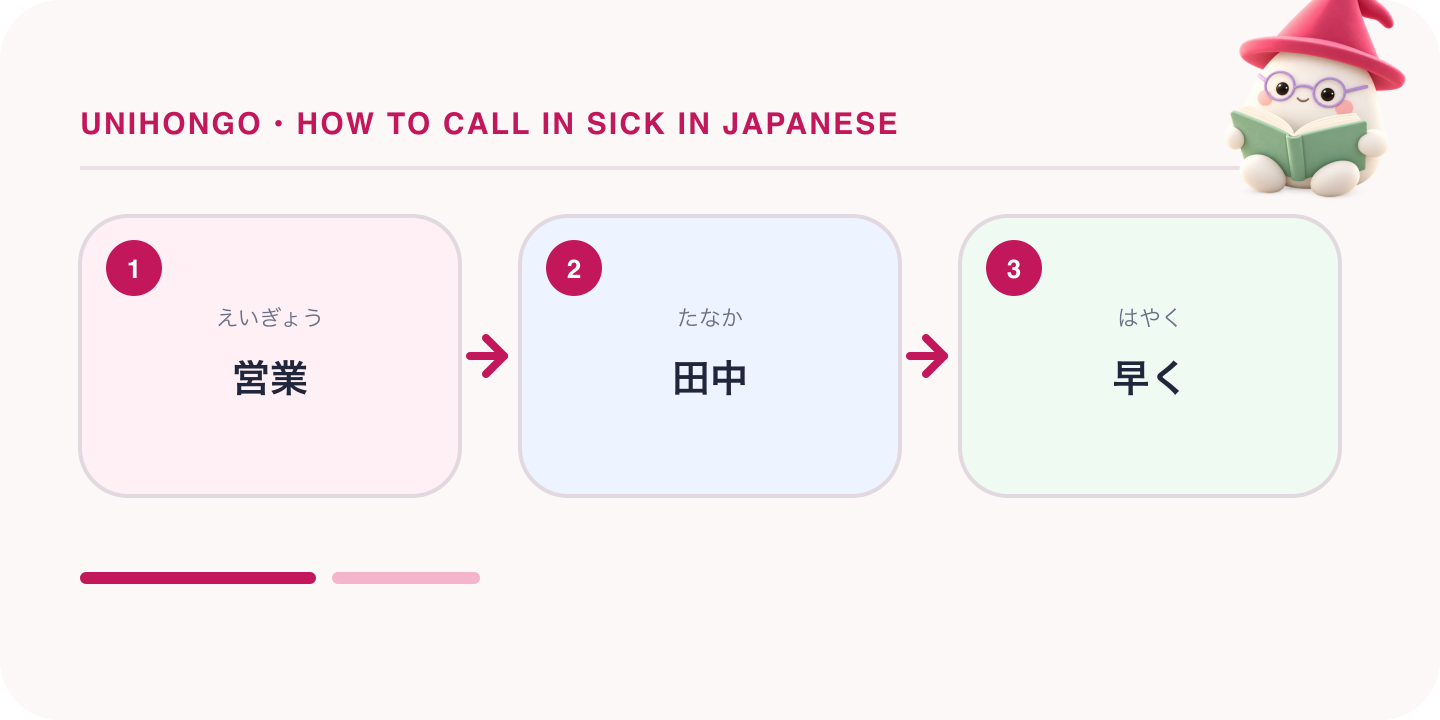
- Call your direct superior, unless your workplace names someone else.
- Call early, before work starts, and apologise for the hour if it is very early.
- Know whether you are asking for the day, the morning, or leaving early.
- Have one sentence ready about anything urgent and who could cover it.
- Check in advance how your employer records the absence and whether paid leave applies.
The six parts of the call
This is the skeleton. Each row is one move, and the model line is enough on its own; you can say the whole call in under a minute. Notice that the request itself is the only long sentence, and that everything else is a single short clause.
| Move | What it does | Model line |
|---|---|---|
| Opening | Greets and identifies you | Otsukaresama desu. Eigyō-bu no Tanaka desu. |
| Apology for the timing | Acknowledges the early call | Asa hayaku kara mōshiwake arimasen. |
| Symptom | One clause, no detail | Sakuya kara netsu ga arimashite. |
| Request | Humble ask for the day off | Honjitsu oyasumi o itadakitai no desu ga, yoroshii deshō ka. |
| Handover | Names what is urgent and who can cover | Kyō no kaigi wa Satō-san ni onegai dekimasu deshō ka. |
| Return and close | Expected return, final apology | Ashita wa shussha dekiru to omoimasu. Mōshiwake arimasen. |
The opening that identifies you
Japanese phone calls begin with identification, not with hello. Give your section and your surname, in that order, because your manager may be answering half awake. Otsukaresama desu is the standard internal greeting at any hour; osewa ni natte orimasu is for external callers, so do not use it on your own manager. Then acknowledge the hour before you say anything about yourself.
| Japanese | Romaji | Meaning |
|---|---|---|
| お疲れ様です。営業部の田中です。 | Otsukaresama desu. Eigyō-bu no Tanaka desu. | Hello, this is Tanaka from the sales department. |
| 朝早くから申し訳ありません。 | Asa hayaku kara mōshiwake arimasen. | I am sorry for calling so early. |
| 今、お時間よろしいでしょうか。 | Ima, o-jikan yoroshii deshō ka. | Do you have a moment now? |
| はい、大丈夫ですよ。どうしましたか。 | Hai, daijōbu desu yo. Dō shimashita ka. | Manager: Yes, that is fine. What is the matter? |
| お休みのご連絡でお電話しました。 | Oyasumi no go-renraku de o-denwa shimashita. | I am calling to let you know I need to take the day off. |
If the call goes to voicemail, leave the same information in the same order and say you will call again: rusuban denwa ni nokoshimasu ga, ato de mō ichido o-denwa itashimasu. Then send a message as well, so there is a written record.
Stating the symptom without over-explaining
One clause is the norm. The -mashite ending links your reason to the request that follows and sounds noticeably more formal than -mashita: netsu ga arimashite, mōshiwake arimasen ga. If you would rather not name anything specific, taichō ga suguremasen and taichō furyō no tame are both accepted and vague on purpose. Do not narrate your night.
| Japanese | Romaji | Meaning |
|---|---|---|
| 昨夜から熱がありまして。 | Sakuya kara netsu ga arimashite. | I have had a fever since last night. |
| 三十八度の熱があります。 | Sanjūhachi-do no netsu ga arimasu. | I have a temperature of thirty-eight degrees. |
| 体調が優れません。 | Taichō ga suguremasen. | I am not feeling well. |
| 喉が痛くて、咳が止まりません。 | Nodo ga itakute, seki ga tomarimasen. | My throat hurts and I cannot stop coughing. |
| お腹の調子が悪くて、何度もトイレに行っています。 | Onaka no chōshi ga warukute, nando mo toire ni itte imasu. | I have a stomach problem and keep having to go to the toilet. |
| 吐き気がして、食事が取れません。 | Hakike ga shite, shokuji ga toremasen. | I feel nauseous and cannot eat. |
| 頭痛がひどくて、起き上がれません。 | Zutsū ga hidokute, okiagaremasen. | I have a bad headache and cannot get up. |
| 昨日、インフルエンザと診断されました。 | Kinō, infuruenza to shindan saremashita. | I was diagnosed with influenza yesterday. |
Asking for the day off in humble language
The request is where the register does its work. Oyasumi o itadaku uses the humble verb itadaku, receive, so you are receiving the day off rather than taking it. Adding no desu ga and trailing off is deliberate: the unfinished sentence leaves the decision with your manager. Yasumasete itadakemasu deshō ka is one step more formal again, built on the causative, letting me be allowed to rest.
Whether the day counts as paid leave, unpaid absence, or something else is a matter for your employer's rules, and those differ. Ask for the absence first and sort out how it is recorded afterwards, unless your workplace has told you to specify.
| Japanese | Romaji | Meaning |
|---|---|---|
| 申し訳ありませんが、本日お休みをいただきたいのですが。 | Mōshiwake arimasen ga, honjitsu oyasumi o itadakitai no desu ga. | I am very sorry, but I would like to take today off. |
| 本日、お休みをいただけますでしょうか。 | Honjitsu, oyasumi o itadakemasu deshō ka. | Might I be able to take today off? |
| 本日、休ませていただけますでしょうか。 | Honjitsu, yasumasete itadakemasu deshō ka. | Would you allow me to take today off? |
| 午前中は休ませていただき、午後から出社したいと思います。 | Gozen-chū wa yasumasete itadaki, gogo kara shussha shitai to omoimasu. | I would like to rest this morning and come in from the afternoon. |
| 病院に行ってから、改めてご連絡いたします。 | Byōin ni itte kara, aratamete go-renraku itashimasu. | I will go to the clinic and contact you again afterwards. |
| 分かりました。ゆっくり休んでください。 | Wakarimashita. Yukkuri yasunde kudasai. | Manager: Understood. Take a good rest. |
| 病院には行きましたか。 | Byōin ni wa ikimashita ka. | Manager: Have you been to a doctor? |
| これから行く予定です。 | Kore kara iku yotei desu. | I am planning to go shortly. |
Offering the handover
This is the part that changes how the absence is received. Say in one sentence what is urgent, what is already finished, and who could cover, then offer whatever you realistically can do from home without promising to work while ill. If nothing is urgent, say so plainly; isogi no shigoto wa arimasen is genuinely useful information for a manager at seven in the morning.
| Japanese | Romaji | Meaning |
|---|---|---|
| 急ぎの仕事は特にありません。 | Isogi no shigoto wa toku ni arimasen. | There is nothing particularly urgent today. |
| 見積書は昨日提出済みです。 | Mitsumorisho wa kinō teishutsu-zumi desu. | The quotation was submitted yesterday. |
| 本日の会議は佐藤さんにお願いできますでしょうか。 | Honjitsu no kaigi wa Satō-san ni onegai dekimasu deshō ka. | Could I ask Sato to take today's meeting? |
| 十時のお客様に、私から連絡を入れておきます。 | Jū-ji no okyakusama ni, watashi kara renraku o irete okimasu. | I will contact the ten o'clock client myself. |
| メールは携帯で確認できますので、何かあればご連絡ください。 | Mēru wa keitai de kakunin dekimasu node, nanika areba go-renraku kudasai. | I can check email on my phone, so please contact me if anything comes up. |
| 資料は共有フォルダに入っています。 | Shiryō wa kyōyū forudā ni haitte imasu. | The documents are in the shared folder. |
| 引き継ぎの内容はチャットに書いておきます。 | Hikitsugi no naiyō wa chatto ni kaite okimasu. | I will write the handover details in the chat. |
The -te oku form in kaite okimasu and irete okimasu means doing something in advance for later benefit, which is exactly the idea of a handover. It is the single most useful verb form on this call.
A full model call
Here is the whole call in order, with the manager's likely lines marked so you know which ones you hear rather than say. Read it aloud twice, once as yourself and once as the manager, so that the replies stop surprising you. The two questions that catch learners out are the temperature question and the urgent-work question, and both come at the point where you are least prepared to improvise. Answer them in one short sentence each and return to the script.
| Japanese | Romaji | Meaning |
|---|---|---|
| もしもし、お疲れ様です。営業部の田中です。 | Moshi moshi, otsukaresama desu. Eigyō-bu no Tanaka desu. | Hello, this is Tanaka from sales. |
| お疲れ様です。どうしましたか。 | Otsukaresama desu. Dō shimashita ka. | Manager: Hello. What is the matter? |
| 朝早くから申し訳ありません。昨夜から熱がありまして。 | Asa hayaku kara mōshiwake arimasen. Sakuya kara netsu ga arimashite. | Sorry to call so early. I have had a fever since last night. |
| それは大変ですね。何度ぐらいありますか。 | Sore wa taihen desu ne. Nan-do gurai arimasu ka. | Manager: That sounds bad. What is your temperature? |
| 三十八度あります。申し訳ありませんが、本日お休みをいただきたいのですが。 | Sanjūhachi-do arimasu. Mōshiwake arimasen ga, honjitsu oyasumi o itadakitai no desu ga. | Thirty-eight degrees. I am sorry, but I would like to take today off. |
| 分かりました。急ぎの仕事はありますか。 | Wakarimashita. Isogi no shigoto wa arimasu ka. | Manager: Understood. Is there anything urgent? |
| 十時の会議だけです。佐藤さんにお願いできますでしょうか。 | Jū-ji no kaigi dake desu. Satō-san ni onegai dekimasu deshō ka. | Only the ten o'clock meeting. Could I ask Sato to cover it? |
| こちらで調整します。病院に行ってくださいね。 | Kochira de chōsei shimasu. Byōin ni itte kudasai ne. | Manager: We will sort it out here. Do go to a clinic. |
| ありがとうございます。明日は出社できると思います。 | Arigatō gozaimasu. Ashita wa shussha dekiru to omoimasu. | Thank you. I think I can come in tomorrow. |
| ご迷惑をおかけして申し訳ありません。失礼いたします。 | Go-meiwaku o okake shite mōshiwake arimasen. Shitsurei itashimasu. | I am sorry for the trouble. Goodbye. |
| お大事に。 | Odaiji ni. | Manager: Take care of yourself. |
The message version
Where a chat message or email is accepted, keep the same order but drop the small talk. A subject line, the absence, the reason in general terms, the handover, contact details, and an apology. Written absence notices are usually more formal than the spoken call, so gozaimasen replaces arimasen and itashimasu replaces shimasu.
| Japanese | Romaji | Meaning |
|---|---|---|
| 件名:本日の欠勤のご連絡 | Kenmei: Honjitsu no kekkin no go-renraku | Subject: Notice of absence today |
| おはようございます。営業部の田中です。 | Ohayō gozaimasu. Eigyō-bu no Tanaka desu. | Good morning. This is Tanaka from sales. |
| 体調不良のため、本日お休みをいただきます。 | Taichō furyō no tame, honjitsu oyasumi o itadakimasu. | Due to feeling unwell, I will be taking today off. |
| 急ぎの案件はございません。 | Isogi no anken wa gozaimasen. | There is nothing urgent outstanding. |
| 何かありましたら、携帯にご連絡ください。 | Nanika arimashitara, keitai ni go-renraku kudasai. | If anything comes up, please contact my mobile. |
| ご迷惑をおかけし、申し訳ございません。 | Go-meiwaku o okake shi, mōshiwake gozaimasen. | I apologise for the inconvenience. |
| 取り急ぎ、ご連絡まで。 | Toriisogi, go-renraku made. | This is just a quick notification for now. |
Even where a message is allowed, many managers appreciate a short call as well on the first morning. Ask which your team prefers before you are ill, and if in doubt, send the message and offer to call.
Other reasons and the second day
A child's illness, a planned hospital appointment and your own sudden fever are all handled with the same structure but different opening clauses. Appointments are usually mentioned in advance rather than on the morning, and half days are common for them. Whether these count as leave, and what they are called on your payslip, is your employer's business rule, so ask rather than guess.
If you are still ill the next morning, call again at the same time. Kinō ni hikitsuzuki, continuing from yesterday, is the phrase that acknowledges this is a second call, and giving a realistic expected return date matters more than optimism.
| Japanese | Romaji | Meaning |
|---|---|---|
| 子どもが熱を出しまして、保育園に迎えに行かなければなりません。 | Kodomo ga netsu o dashimashite, hoikuen ni mukae ni ikanakereba narimasen. | My child has a fever and I have to collect them from nursery. |
| 子どもの看病のため、本日お休みをいただきたいのですが。 | Kodomo no kanbyō no tame, honjitsu oyasumi o itadakitai no desu ga. | I would like to take today off to look after my child. |
| 通院のため、来週の火曜日、午前中お休みをいただけますでしょうか。 | Tsūin no tame, raishū no kayōbi, gozen-chū oyasumi o itadakemasu deshō ka. | Could I take next Tuesday morning off for a hospital appointment? |
| 定期検診の予約が入っています。 | Teiki kenshin no yoyaku ga haitte imasu. | I have a regular check-up booked. |
| 診断書は必要でしょうか。 | Shindansho wa hitsuyō deshō ka. | Would a doctor's note be required? |
| 会社の規則を確認して、あとでお伝えします。 | Kaisha no kisoku o kakunin shite, ato de o-tsutae shimasu. | Manager: I will check the company rules and tell you later. |
| 昨日に引き続き、本日もお休みをいただきたいのですが。 | Kinō ni hikitsuzuki, honjitsu mo oyasumi o itadakitai no desu ga. | Following on from yesterday, I would like to take today off as well. |
| 熱は下がりましたが、まだ咳が残っています。 | Netsu wa sagarimashita ga, mada seki ga nokotte imasu. | The fever has gone down, but the cough is still there. |
| 明後日には出社できる見込みです。 | Asatte ni wa shussha dekiru mikomi desu. | I expect to be back the day after tomorrow. |
Going back to work
The return is short and matters more than people expect. Thank the person who covered for you by name, apologise once for the disruption, say you are better, and state what you will catch up on today. Do not repeat the apology all morning; one clear thank you at the desk of the person affected is the local norm.
| Japanese | Romaji | Meaning |
|---|---|---|
| おはようございます。昨日はご迷惑をおかけしました。 | Ohayō gozaimasu. Sakujitsu wa go-meiwaku o okake shimashita. | Good morning. I am sorry for the trouble yesterday. |
| お休みをいただき、ありがとうございました。 | Oyasumi o itadaki, arigatō gozaimashita. | Thank you for letting me take the time off. |
| おかげさまで、よくなりました。 | Okagesama de, yoku narimashita. | Thanks to you, I am much better. |
| 会議に代わりに出てくださって、ありがとうございました。 | Kaigi ni kawari ni dete kudasatte, arigatō gozaimashita. | Thank you for attending the meeting in my place. |
| 遅れている分は、今日中に片付けます。 | Okurete iru bun wa, kyō-jū ni katazukemasu. | I will clear the backlog by the end of today. |
| もう大丈夫ですか。無理しないでくださいね。 | Mō daijōbu desu ka. Muri shinaide kudasai ne. | Colleague: Are you better now? Do not push yourself. |
| ありがとうございます。もう大丈夫です。 | Arigatō gozaimasu. Mō daijōbu desu. | Thank you. I am fine now. |
How to rehearse this before you need it
- Write your own version of the six moves with your real section, surname and manager's name.
- Say it standing up at normal speed, timed, until it takes under a minute.
- Practise being interrupted at the symptom line and answering nan-do gurai arimasu ka.
- Drill three symptom clauses only: fever, stomach, and the vague taichō ga suguremasen.
- Save the message version as a draft on your phone so you are not composing it at six in the morning.
- Ask a colleague, while healthy, who you should call and by what time.