
The parts of a futon set
Futon (布団) is written with the kanji for cloth and for a round group, and people often add the polite o: ofuton. A full set has a bottom layer you lie on, a top layer you sleep under and a pillow, plus covers and sheets. In winter, a blanket or an extra quilt is added.
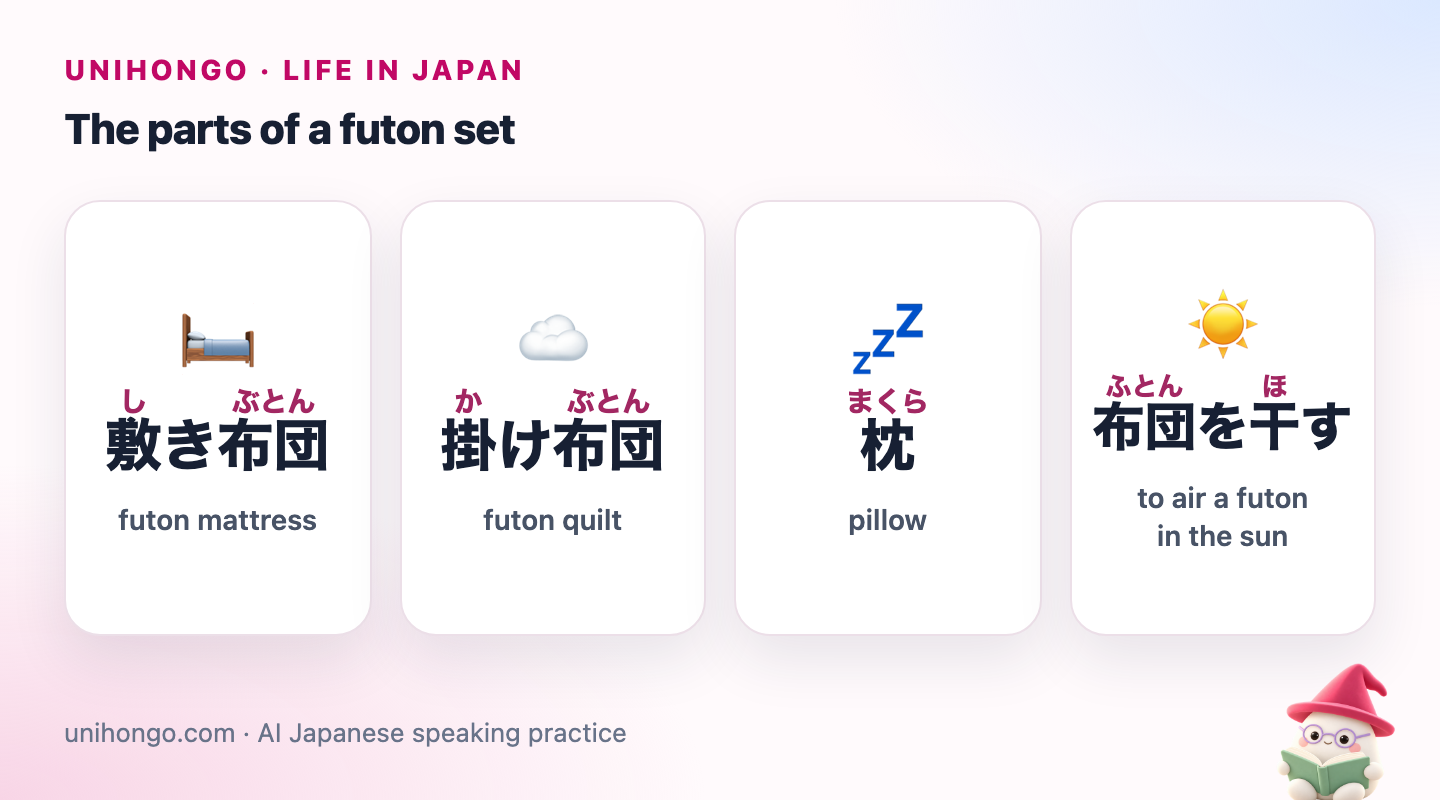
| Japanese | Romaji | Meaning |
|---|---|---|
| 敷き布団 | shikibuton | futon mattress |
| 掛け布団 | kakebuton | futon quilt |
| 枕 | makura | pillow |
| 布団を干す | futon o hosu | to air a futon in the sun |
| お布団 | ofuton | futon (polite, gentle) |
| 毛布 | mōfu | blanket |
| シーツ | shītsu | sheet |
| 布団カバー | futon kabā | duvet cover |
The verbs: lay out, fold, put away
The most useful futon words are verbs, because a futon moves every day. In the evening you lay it out, shiku, the same verb used for spreading a mat or a rug. In the morning you fold it, tatamu, the verb also used for folding clothes and umbrellas, and you put it away, shimau, usually into the oshiire, the deep cupboard with sliding doors found in Japanese-style rooms.
| Japanese | Romaji | Meaning |
|---|---|---|
| 押し入れ | oshiire | futon cupboard with sliding doors |
| 布団、敷いておいたよ。 | Futon, shiite oita yo. | I've laid out your futon. (casual) |
| 朝起きたら、布団をたたんでね。 | Asa okitara, futon o tatande ne. | Fold your futon when you get up. (casual) |
| 寒いから、もう一枚かけて寝よう。 | Samui kara, mō ichimai kakete neyō. | It's cold, let's sleep with one more layer. |
| Japanese | Reading | Meaning |
|---|---|---|
| 布団を敷く | futon o shiku | To lay out the futon |
| 布団をたたむ | futon o tatamu | To fold the futon |
| 押し入れにしまう | oshiire ni shimau | To put it away in the cupboard |
| 布団に入る | futon ni hairu | To get into bed |
| 布団をかける | futon o kakeru | To pull the quilt over someone |
Futon are counted with mai, the counter for flat things: ichimai, nimai. A futon set, mattress and quilt together, is often counted with kumi: hitokumi, one set. For a single quilt or mattress, ichimai is the natural count.
Caring for a futon in a humid country
A futon on the floor absorbs moisture from your body overnight, and Japan's humid summers and cold, condensation-prone winters make that a real issue. Leaving a futon out on the floor all the time, a habit jokingly called mannendoko, the ten-thousand-year bed, can lead to mould underneath. That is why people fold it away, raise it on a slatted base called a sunoko, or use a futon dryer.
On sunny days, many families hang futons over the balcony rail or on a stand for a few hours, and bring them in before the afternoon damp sets in. People used to beat them with a futon beater, futon tataki; today many people advise just brushing or vacuuming instead, saying hard beating damages the filling. Some apartment buildings ban hanging futons over rails because they can fall, so check your building's rules.
| Japanese | Romaji | Meaning |
|---|---|---|
| 万年床 | mannendoko | a futon that is never put away |
| すのこ | sunoko | slatted wooden base |
| カビが生える | kabi ga haeru | mould grows |
| 布団乾燥機 | futon kansōki | futon dryer |
| 干した布団はふかふかだね。 | Hoshita futon wa fukafuka da ne. | An aired futon is so fluffy. (casual) |
| 雨が降りそうだから、布団を取り込んで。 | Ame ga furisō da kara, futon o torikonde. | It looks like rain, bring the futon in. (casual) |
At a ryokan: what staff do and what you do
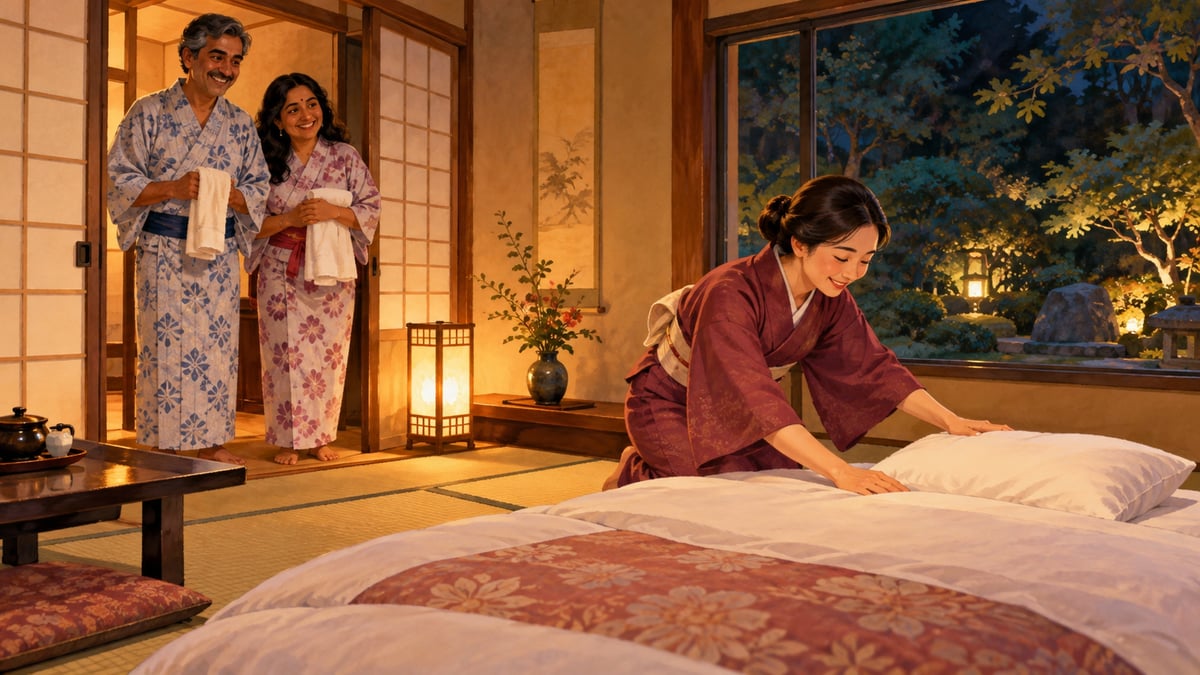
At many ryokan, the futon is part of the service. While you are at dinner or in the bath, staff come into your room, move the low table aside and lay out the futon, then put it away the next morning while you eat breakfast. Some ryokan now lay futons out before you arrive, and some guesthouses and temple lodgings ask you to lay them out and fold them yourself. Staff will tell you, and you can always ask.
If the futon is too thin, ask for an extra mattress; if you are cold, ask for another quilt; if the pillow is too high or too hard, many ryokan have alternatives. Traditional pillows are sometimes filled with buckwheat husks, sobagara, which feel firm and rustle when you move.
| Japanese | Romaji | Meaning |
|---|---|---|
| お布団は何時ごろ敷いていただけますか。 | Ofuton wa nanji goro shiite itadakemasu ka. | Around what time will the futon be laid out? |
| 掛け布団をもう一枚お願いできますか。 | Kakebuton o mō ichimai onegai dekimasu ka. | Could I have one more quilt? |
| もう少し低い枕はありますか。 | Mō sukoshi hikui makura wa arimasu ka. | Do you have a slightly lower pillow? |
| 布団は自分でたたんだほうがいいですか。 | Futon wa jibun de tatanda hō ga ii desu ka. | Should I fold the futon myself? |
| そのままで結構です。 | Sono mama de kekkō desu. | Staff: Please leave it as it is. |
| そば殻の枕 | sobagara no makura | buckwheat-husk pillow |
Etiquette at a homestay or a friend's home
| Japanese | Romaji | Meaning |
|---|---|---|
| 布団はどこにしまえばいいですか。 | Futon wa doko ni shimaeba ii desu ka. | Where should I put the futon away? |
| 枕を踏まないでね。 | Makura o fumanaide ne. | Don't step on the pillow. (casual) |
| 北枕 | kitamakura | sleeping with your head to the north |
- Fold the futon neatly in the morning, mattress first and the quilt on top, unless your host tells you to leave it. Ask where it goes before stuffing it into a cupboard.
- Avoid stepping on futons, and especially on pillows. Many people were taught as children that this is bad manners.
- Do not drag a futon across the floor; lift and carry it.
- If you sweat a lot or spill something, tell your host. Futons are washed and dried with effort, often at a coin laundry with large machines.
- Some people avoid sleeping with their head to the north, kitamakura, because the dead are traditionally laid that way. Many people do not mind, but if your host lays the pillow a certain way, keep it.
Buying and getting rid of a futon
If you move into an apartment with tatami, you may buy your own futon at a home centre or furniture shop, often as a set with a mattress, quilt and pillow. Words on labels include umō (down), yōmō (wool) and polyester, and in winter people add a thick mattress topper. Getting rid of an old futon usually means booking it as oversized rubbish, sodai gomi, with your local council, and many areas require a paid sticker; rules differ by town, so check yours.
| Japanese | Romaji | Meaning |
|---|---|---|
| 布団セット | futon setto | futon set |
| 羽毛布団 | umō buton | down quilt |
| 粗大ごみ | sodai gomi | oversized rubbish |
| 冬は布団から出られない。 | Fuyu wa futon kara derarenai. | In winter I can't get out of my futon. |
Mini dialogue: the first night at a homestay
| Japanese | Romaji | Meaning |
|---|---|---|
| 布団、ここに敷いておいたからね。 | Futon, koko ni shiite oita kara ne. | Host mother: I've laid your futon out here. |
| ありがとうございます。ふかふかですね。 | Arigatō gozaimasu. Fukafuka desu ne. | You: Thank you. It's so fluffy. |
| 今日干したの。寒かったら、押し入れに毛布があるよ。 | Kyō hoshita no. Samukattara, oshiire ni mōfu ga aru yo. | Host mother: I aired it today. If you're cold, there's a blanket in the cupboard. |
| 朝は布団をたたんだほうがいいですか。 | Asa wa futon o tatanda hō ga ii desu ka. | You: Should I fold the futon in the morning? |
| うん、たたんで端に置いておいてくれる? | Un, tatande hashi ni oite oite kureru? | Host mother: Yes, could you fold it and leave it at the side? |
| わかりました。おやすみなさい。 | Wakarimashita. Oyasuminasai. | You: Sure. Good night. |
Common learner mistakes
- Saying futon o oku (to put the futon) for laying it out. The natural verb is shiku: futon o shiku.
- Calling the quilt a shikibuton. Shiki is what you lie on; kake is what you pull over you.
- Using futon to mean a sofa bed. In Japan the word means floor bedding; a sofa bed is sofā beddo.
- Leaving the futon out all day at a homestay. Fold it unless your host says otherwise.
- Saying neru for getting into bed. Neru is to sleep or lie down; futon ni hairu is the moment you climb in.
Fold the futon verbs into your plan
Tell Mocchi you are staying at a ryokan or a homestay soon and ask it to fit a short futon and bedtime lesson into your plan with /adjust-plan. Mocchi adds small daily tasks, quizzes you on shiku, tatamu, shimau and hosu along the way, and remembers which verbs still trip you up.
The night before you travel, open AI Sensei and ask Ibuki-sensei to play the ryokan staff: ask when the futon will be laid out, ask for another quilt and a lower pillow, and check the session report for anything to polish.