

Shinpai: the everyday word for worry
心配 (shinpai) combines the kanji for heart and for distributing or attending to, and it is the standard word for worry. It works as a noun, a na-adjective and, with suru, a verb. Shinpai desu means I'm worried; shinpai shite imasu means I'm worrying, often about a person. The thing you worry about takes ga with shinpai desu and o with shinpai suru.
Shinpai is neutral and can be used almost anywhere, from chatting with friends to talking to a doctor. The difference lies in the ending: shinpai casually, shinpai desu politely, and go-shinpai when referring respectfully to someone else's concern.
| Japanese | Romaji | Meaning |
|---|---|---|
| 心配。 | Shinpai. | I'm worried. (casual) |
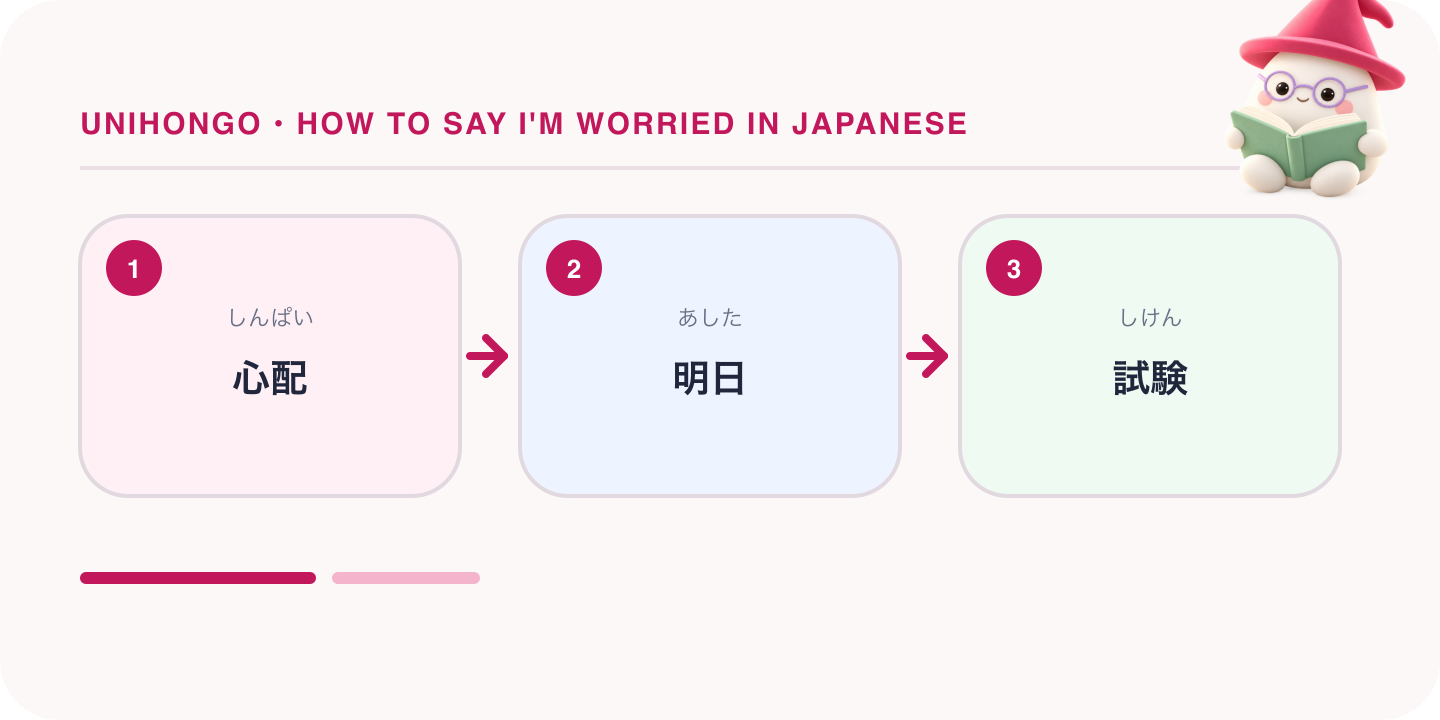
| 明日の試験が心配です。 | Ashita no shiken ga shinpai desu. | I'm worried about tomorrow's exam. |
| 母のことを心配しています。 | Haha no koto o shinpai shite imasu. | I'm worried about my mother. |
| ちょっと心配だな。 | Chotto shinpai da na. | I'm a little worried. |
| 天気が心配だね。 | Tenki ga shinpai da ne. | The weather is a worry, isn't it? |
| 心配で眠れなかった。 | Shinpai de nemurenakatta. | I was too worried to sleep. |
Ki ni naru: when something is on your mind
気になる (ki ni naru) means something catches your attention and stays on your mind. It covers light worries, like a message that has not been answered or a strange sound from the washing machine, and it also covers curiosity or interest, as in ki ni naru hito, someone you are interested in. Context tells you which.
Ki ni shinaide, don't let it bother you, is a common kind reply when someone apologises for something small. The related ki ni suru means to mind or to worry about something, often more than necessary.
| Japanese | Romaji | Meaning |
|---|---|---|
| 返事が来ないのが気になる。 | Henji ga konai no ga ki ni naru. | It bothers me that they haven't replied. |
| この音、ちょっと気になりますね。 | Kono oto, chotto ki ni narimasu ne. | This noise is a bit concerning, isn't it? |
| 何か気になることはありますか。 | Nanika ki ni naru koto wa arimasu ka. | Is anything on your mind? |
| 気にしないで。 | Ki ni shinaide. | Don't worry about it. |
| あまり気にしすぎないほうがいいよ。 | Amari ki ni shisuginai hō ga ii yo. | You shouldn't worry about it too much. |
Fuan and kokoro-bosoi: anxiety and feeling alone
不安 (fuan) literally means not at ease. It is a heavier, more general word than shinpai, describing anxiety or insecurity, especially when the future is uncertain: a new job, living alone abroad, money or health. Fuan desu and fuan ni naru, to start feeling anxious, are both common. Fuan na kimochi is an uneasy feeling.
心細い (kokoro-bosoi), literally thin-hearted, describes the helpless, lonely feeling of being without support: arriving in a new country, being home alone during a storm, or waiting for news in hospital. It is a softer, sadder word than fuan, and very natural when talking about the first weeks in Japan.
| Japanese | Romaji | Meaning |
|---|---|---|
| 将来が不安です。 | Shōrai ga fuan desu. | I'm anxious about the future. |
| 一人暮らしは少し不安です。 | Hitorigurashi wa sukoshi fuan desu. | Living alone makes me a little anxious. |
| 急に不安になった。 | Kyū ni fuan ni natta. | I suddenly felt anxious. |
| 知り合いがいなくて心細いです。 | Shiriai ga inakute kokoro-bosoi desu. | I don't know anyone here, so I feel lonely and helpless. |
| 一人だと心細い。 | Hitori da to kokoro-bosoi. | I feel uneasy on my own. |
Comparing the worry words
These words overlap, but each has a centre of gravity. Use the table to choose the one that matches what you actually feel.
| Word | Romaji | Feeling | Typical use |
|---|---|---|---|
| 心配 | shinpai | Worry about a specific thing or person | Exams, health, family, weather |
| 気になる | ki ni naru | On your mind, bothering you | Small concerns, curiosity |
| 不安 | fuan | Anxiety, insecurity | Future, new situations, uncertainty |
| 心細い | kokoro-bosoi | Lonely, without support | Being alone, far from home |
| 緊張する | kinchō suru | Nervous, tense | Interviews, speeches, tests |
| 悩む | nayamu | Troubled, agonising over | Decisions, personal problems |
Kinchō suru is worth knowing alongside these: before a presentation or interview, Japanese speakers usually say kinchō shite imasu, I'm nervous, rather than shinpai.
Reassuring someone: shinpai shinaide and daijōbu
The most common way to say don't worry is 心配しないで (shinpai shinaide). Shinpai nai yo, there's nothing to worry about, and daijōbu da yo, it'll be fine, are just as natural among friends. Politely, say shinpai shinaide kudasai or daijōbu desu yo.
In formal speech, especially in business or customer service, you will hear go-shinpai naku, please do not worry, often followed by an explanation of what will happen next. Reassurance in Japanese usually sounds best when it is short and practical rather than emotional.
| Japanese | Romaji | Meaning |
|---|---|---|
| 心配しないで。 | Shinpai shinaide. | Don't worry. |
| 大丈夫だよ。 | Daijōbu da yo. | It'll be fine. |
| 心配ないよ。 | Shinpai nai yo. | There's nothing to worry about. |
| きっとうまくいくよ。 | Kitto umaku iku yo. | I'm sure it'll go well. |
| 心配しないでください。 | Shinpai shinaide kudasai. | Please don't worry. (polite) |
| ご心配なく。 | Go-shinpai naku. | Please don't worry. (formal) |
| 何かあったら、いつでも言ってね。 | Nanika attara, itsu demo itte ne. | If anything happens, tell me any time. |
What people say back
When someone worries about you, the typical Japanese response is to apologise for causing the worry, then thank them. Go-shinpai o okake shimashita, I'm sorry to have worried you, is standard in polite speech; casually, shinpai kakete gomen ne. Then add arigatō or a quick update to show you are all right.
| Japanese | Romaji | Meaning |
|---|---|---|
| 心配かけてごめんね。 | Shinpai kakete gomen ne. | Sorry for making you worry. |
| 心配してくれてありがとう。 | Shinpai shite kurete arigatō. | Thanks for worrying about me. |
| ご心配をおかけしました。 | Go-shinpai o okake shimashita. | I'm sorry to have caused you concern. |
| もう大丈夫です。 | Mō daijōbu desu. | I'm fine now. |
| おかげさまで、元気になりました。 | Okagesama de, genki ni narimashita. | Thanks to you, I'm better now. |
Common mistakes with worry words
- Using the wrong particle. Say shiken ga shinpai desu with shinpai desu, but shiken o shinpai suru with the verb. Mixing them sounds off.
- Saying shinpai desu before a speech or interview. Kinchō shite imasu, I'm nervous, fits better when the feeling is nerves rather than worry.
- Treating ki ni naru as only negative. It often means curiosity or interest, so ki ni naru hito is someone you like, not someone who worries you.
- Replying to kindness with just arigatō. When someone was worried about you, go-shinpai o okake shimashita sounds more natural first.
- Over-reassuring. Repeating daijōbu many times can sound dismissive; listen first, then offer one short line of comfort.
- Using fuan for small things. Fuan desu about a late bus sounds dramatic; chotto shinpai or ki ni naru is lighter.