
The words of the event
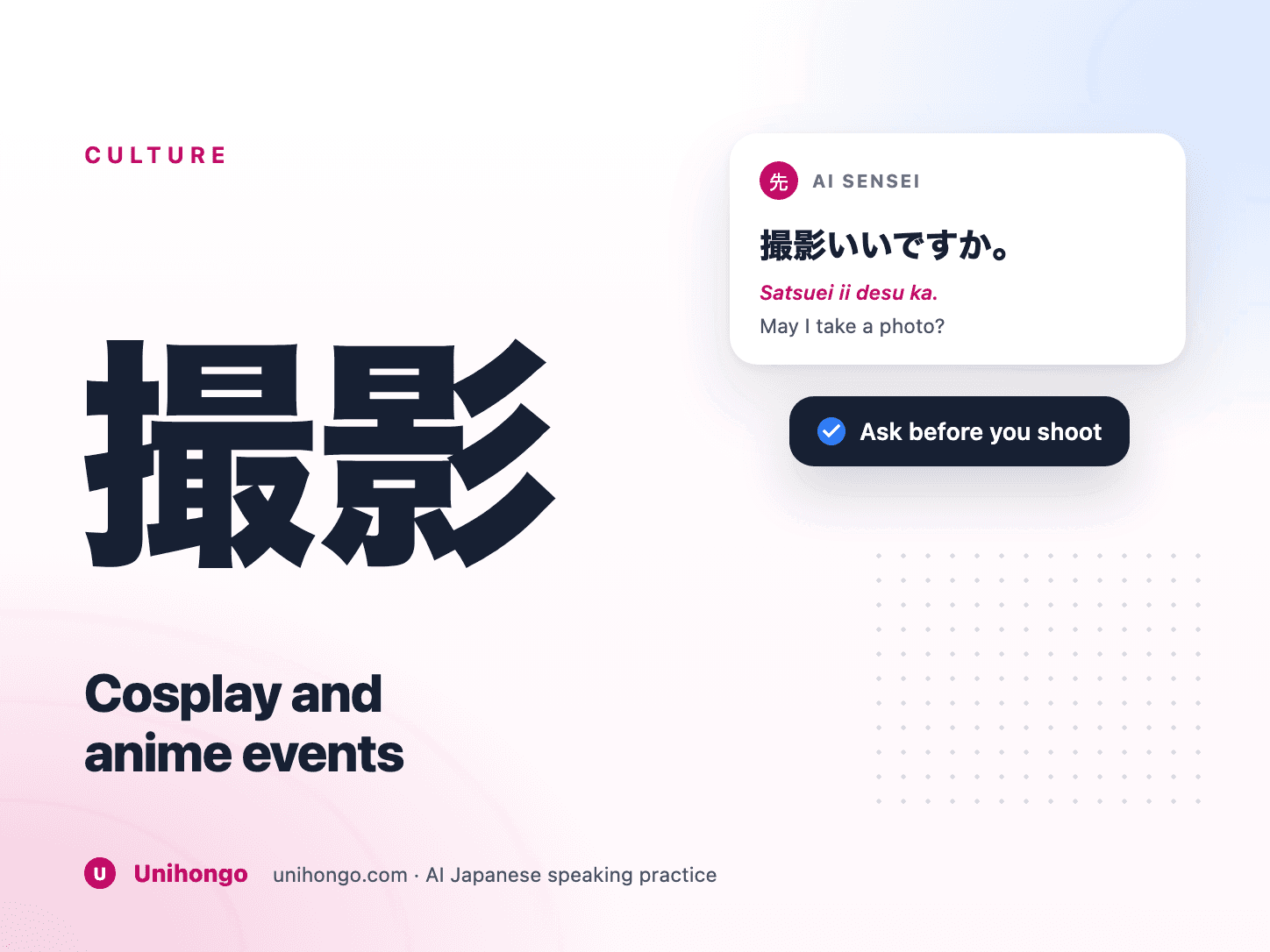
A few words come up constantly at events. Cosplay and cosplayer are loanwords, and people often shorten cosplayer to reiyā-san among fans. Photography is satsuei, and the people photographing are sometimes called kameko, a casual slang term.
Fan-made publications are dōjinshi, and the groups or individuals selling them are called circles, sākuru.
| Japanese | Romaji | Meaning |
|---|---|---|
| コスプレ | kosupure | Cosplay |
| コスプレイヤー | kosupureiyā | Cosplayer |
| レイヤーさん | reiyā-san | Cosplayer: casual fan shorthand |
| 撮影 | satsuei | Photography |
| カメコ | kameko | Event photographer: casual slang |
| 同人誌 | dōjinshi | Fan-made publication |
| サークル | sākuru | A creator group or seller at an event |
Asking for a photo
Asking first is the core rule. Approach when the cosplayer is not busy, use a short polite request, and accept a no with a thank-you. If you want to post the photo online, ask about that separately, because permission to take a photo is not permission to share it.
After the shoot, thanking them and, if appropriate, offering to send the photo is good manners.
| Japanese | Romaji | Meaning |
|---|---|---|
| すみません、撮影してもいいですか。 | Sumimasen, satsuei shite mo ii desu ka. | Excuse me, may I take a photo? |
| 一枚お願いできますか。 | Ichimai onegai dekimasu ka. | Could I take one photo? |
| SNSにアップしてもいいですか。 | SNS ni appu shite mo ii desu ka. | May I post it on social media? |
| ありがとうございました。 | Arigatō gozaimashita. | Thank you very much. |
| また今度お願いします。 | Mata kondo onegaishimasu. | Maybe another time, then. |
Reading the event rules
Events publish rules, and signs at the venue repeat the key points. The same words appear again and again, so recognising them saves time and embarrassment.
Rules differ by event, so always read the specific event's guidelines rather than assuming.
| Japanese | Romaji | Meaning |
|---|---|---|
| 撮影エリア | satsuei eria | Photography area |
| 撮影禁止 | satsuei kinshi | No photography |
| 更衣室 | kōishitsu | Changing room |
| コスプレ登録 | kosupure tōroku | Cosplay registration |
| ローアングル禁止 | rō anguru kinshi | No low-angle shots |
| 囲み | kakomi | A crowd of photographers around one cosplayer |
| スタッフの指示に従ってください。 | Sutaffu no shiji ni shitagatte kudasai. | Please follow staff instructions. |
Queues and where the line ends
Popular circles and entrances have long, strictly managed lines. Staff or volunteers often hold a sign showing the end of the line, and joining anywhere else is a serious breach of manners.
If you cannot tell which line is which, asking briefly is completely normal.
| Japanese | Romaji | Meaning |
|---|---|---|
| 最後尾 | saikōbi | The end of the line |
| 最後尾はこちらです。 | Saikōbi wa kochira desu. | The line ends here: a common sign and call |
| この列は何の列ですか。 | Kono retsu wa nan no retsu desu ka. | What is this line for? |
| ここが最後ですか。 | Koko ga saigo desu ka. | Is this the end of the line? |
| 待機列 | taikiretsu | Waiting line |
Buying fan works politely
At a creator's table, keep exchanges short and friendly. Say what you want and how many copies, pay with small change if possible, and thank them. Sample copies are sometimes displayed for browsing; ask before picking one up if you are unsure.
The words shinkan for a new release and kikan for earlier releases appear on table lists and signs.
| Japanese | Romaji | Meaning |
|---|---|---|
| 新刊を一部ください。 | Shinkan o ichibu kudasai. | One copy of the new release, please. |
| 両方ください。 | Ryōhō kudasai. | I'll take both, please. |
| 見本を見てもいいですか。 | Mihon o mite mo ii desu ka. | May I look at the sample? |
| ちょうどです。 | Chōdo desu. | That's the exact amount. |
| 応援しています。 | Ōen shite imasu. | I'm a fan of your work. |
| What you see | Meaning | What to do |
|---|---|---|
| New release sign | The latest work from this creator | Ask for it by name or as the new release |
| Earlier releases | Older works still available | Point and ask for the one you want |
| Sample copy | A copy for browsing | Ask first, handle it carefully |
| Price list | What is available and how much | Check it before you reach the front |
Talking with other fans
Queues and photo areas are full of easy conversation openers. Asking which character someone is dressed as, complimenting a costume, or asking about favourite characters are all friendly and common.
Oshi, the character or person you support most, is one of the most useful fan words, and saigendo, how faithfully a costume recreates a character, is a common compliment.
| Japanese | Romaji | Meaning |
|---|---|---|
| 何のキャラですか。 | Nan no kyara desu ka. | Which character are you? |
| 衣装、手作りですか。 | Ishō, tezukuri desu ka. | Did you make your costume? |
| 再現度が高いですね。 | Saigendo ga takai desu ne. | That's a really faithful recreation. |
| 推しは誰ですか。 | Oshi wa dare desu ka. | Who's your favourite? |
| 私も同じ作品が好きです。 | Watashi mo onaji sakuhin ga suki desu. | I love the same series. |