
The first sunrise in four lines
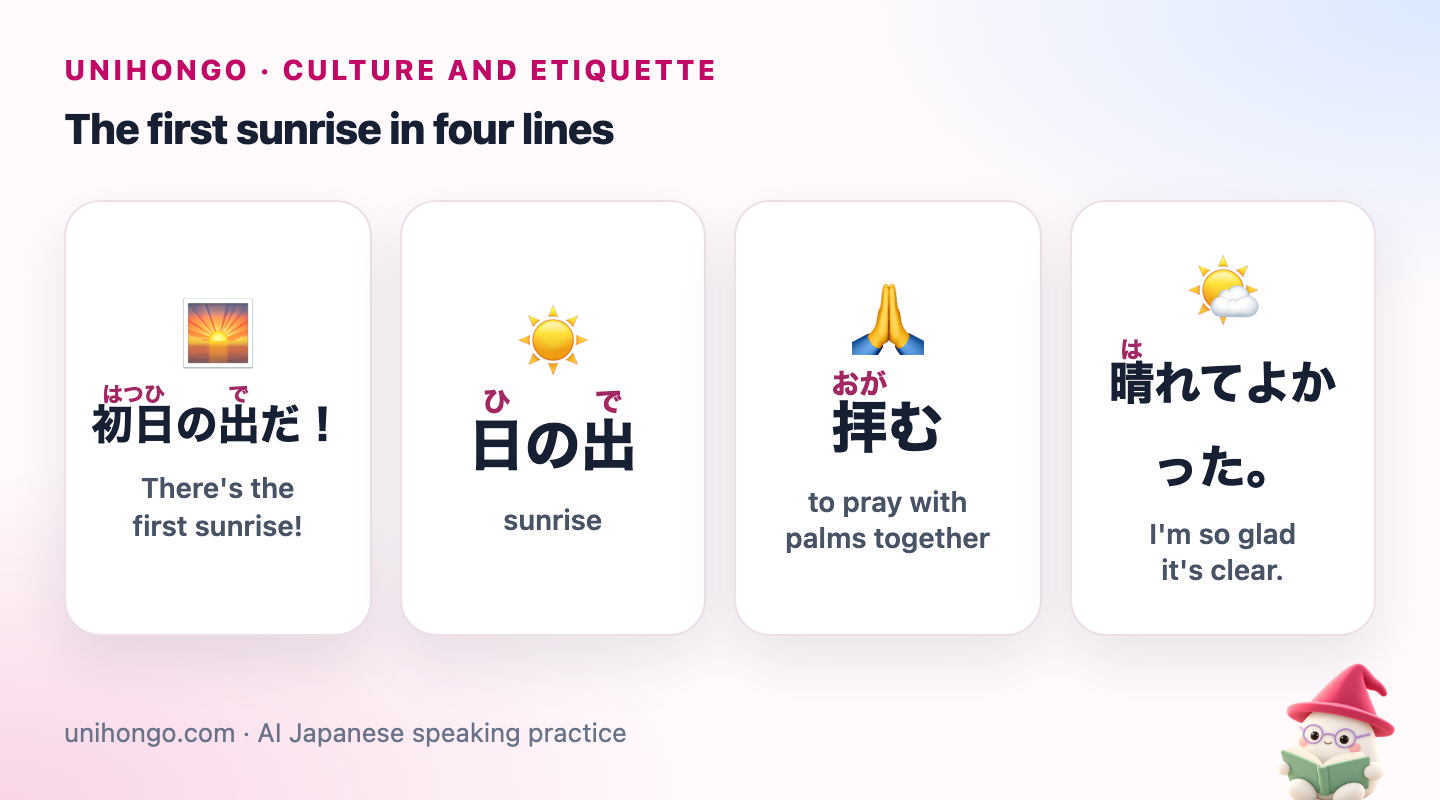
Hatsuhinode is read hatsu-hi-no-de: the first sun, coming out. The kanji 元旦, the morning of New Year's Day, is often explained as a picture of the sun, 日, rising above the horizon, the line underneath. The four lines below cover the whole experience, from the moment the sun appears to the relief that the sky stayed clear.
| Japanese | Romaji | Meaning |
|---|---|---|
| 初日の出だ! | Hatsuhinode da! | There's the first sunrise! |
| 日の出 | hinode | sunrise |
| 拝む | ogamu | to pray with palms together |
| 晴れてよかった。 | Harete yokatta. | I'm so glad it's clear. |
| 夜明け | yoake | dawn, daybreak |
What the first sunrise means
In many traditions in Japan, the New Year god was thought to arrive with the first light of the year, so watching the sunrise was a way to greet the god and pray for a good year. Going out to a high or open place to watch it is often said to have spread from the Meiji period onwards. Today the custom is more about the feeling than belief: seeing the year literally begin.
The verb that goes with it is ogamu, to pray with your palms together, often used for the sun, a shrine or a Buddha image. You hatsuhinode o ogamu, or more simply hatsuhinode o miru.
| Japanese | Romaji | Meaning |
|---|---|---|
| 元旦 | gantan | the morning of New Year's Day |
| 初日の出を拝みます。 | Hatsuhinode o ogamimasu. | We pray to the first sunrise. |
| 年神様は日の出とともに来ると言われています。 | Toshigamisama wa hinode to tomo ni kuru to iwarete imasu. | It's said the New Year god comes with the sunrise. |
| 一年の健康を祈ります。 | Ichinen no kenkō o inorimasu. | We pray for health all year. |
Where to watch it
You need a clear view to the east and, ideally, a low horizon: the sea, a wide plain or a valley. The best-known spots are crowded, so think about how much company you want and how you will get back.
| Japanese | Romaji | Meaning |
|---|---|---|
| どこで初日の出を見る? | Doko de hatsuhinode o miru? | Where shall we watch the first sunrise? |
| 海から昇るのが見たいな。 | Umi kara noboru no ga mitai na. | I'd love to see it rise from the sea. |
| 山の上から見るのもいいよ。 | Yama no ue kara miru no mo ii yo. | Watching from a mountain is nice too. |
| ベランダから見えるかな。 | Beranda kara mieru kana. | I wonder if we can see it from the balcony. |
| Place | What it is like | Watch out for |
|---|---|---|
| East-facing beach or cape | The classic view of the sun rising from the sea | Strong, icy wind; parking and crowds |
| Hill or mountain near a city | City lights below, sunrise above | Dark, steep paths; very cold at the top |
| Observation deck or tall building | Warm and easy, with a wide view | Tickets or early opening may need booking |
| Your balcony or a nearby park | Quiet, warm and close to bed | Buildings may block the low sun |
Planning: times, trains and early starts
Sunrise in Tokyo on 1 January is roughly 6:50, later in the west, and the sky starts glowing about half an hour before. In some big cities a few railway lines run extra late-night trains on New Year's Eve, called shūya unten, all-night service, but arrangements change from year to year; check each line's website. Otherwise plan around the first train, shihatsu, or stay nearby.
| Japanese | Romaji | Meaning |
|---|---|---|
| 日の出は何時ですか。 | Hinode wa nanji desu ka. | What time is sunrise? |
| 六時五十分ごろです。 | Rokuji gojippun goro desu. | Around ten to seven. |
| 大晦日は終夜運転がありますか。 | Ōmisoka wa shūya unten ga arimasu ka. | Are trains running all night on New Year's Eve? |
| 始発で行こう。 | Shihatsu de ikō. | Let's take the first train. |
| 早めに着いて、場所を取ろう。 | Hayame ni tsuite, basho o torō. | Let's get there early and grab a spot. |
Weather and cold
Winter on the Pacific side of Japan is often dry and clear, which is good news for sunrise watchers. On the Sea of Japan side the sky is often cloudy or snowy in January, so the sun may stay hidden. Wherever you are, dawn on 1 January is cold, and coasts and hilltops are colder still. Bring layers, gloves, a hat and kairo, disposable heat packs.
| Japanese | Romaji | Meaning |
|---|---|---|
| 晴れるといいね。 | Hareru to ii ne. | I hope it's clear. |
| 予報だと曇りみたい。 | Yohō da to kumori mitai. | The forecast says cloudy, apparently. |
| 雲で見えないね。 | Kumo de mienai ne. | We can't see it for the clouds. |
| すごく冷えるね。 | Sugoku hieru ne. | It's freezing, isn't it? |
| カイロ持ってきた? | Kairo motte kita? | Did you bring a heat pack? |
The moment the sun appears
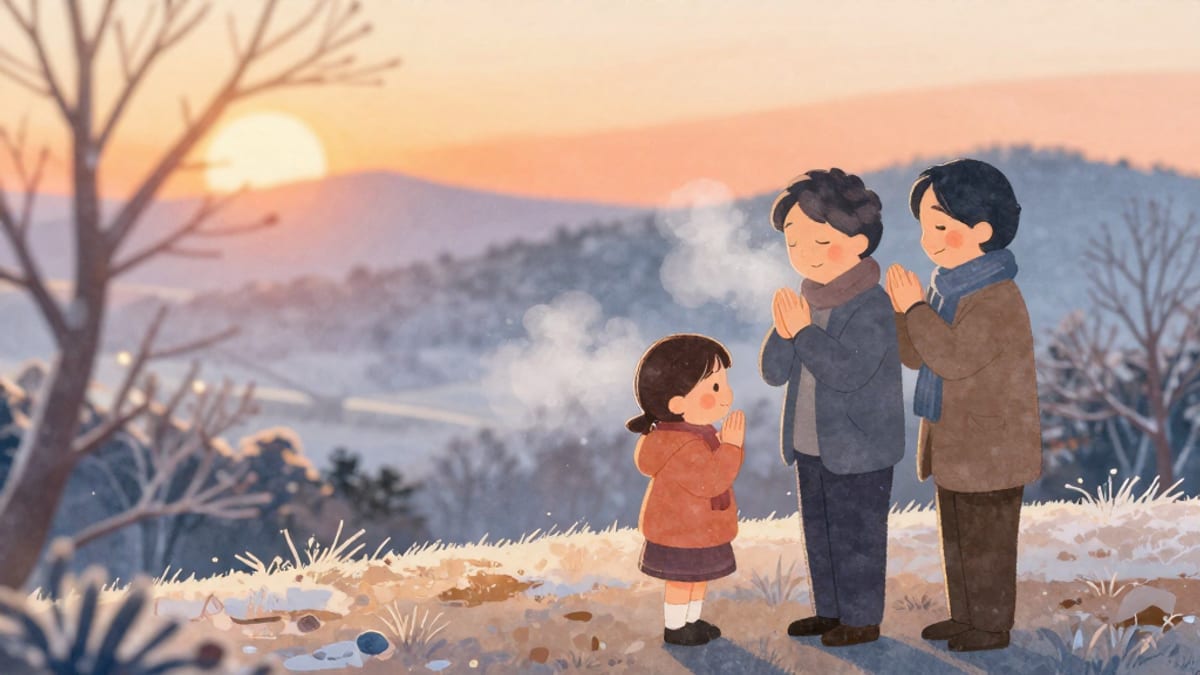
When the first edge of the sun shows, people point, go quiet and raise their phones. Some put their hands together and bow slightly. A minute later the mood relaxes: friends wish each other a happy new year, take group photos and head off for a hot drink or a shrine visit.
| Japanese | Romaji | Meaning |
|---|---|---|
| あ、出てきた! | A, dete kita! | Oh, here it comes! |
| きれい… | Kirei... | Beautiful... |
| 手を合わせよう。 | Te o awaseyō. | Let's put our hands together. |
| 今年もいい年になりますように。 | Kotoshi mo ii toshi ni narimasu yō ni. | May this be a good year too. |
| あけましておめでとう!写真撮ろう。 | Akemashite omedetō! Shashin torō. | Happy New Year! Let's take a photo. |
Mini dialogue: inviting a friend
| Japanese | Romaji | Meaning |
|---|---|---|
| 元旦、初日の出を見に行かない? | Gantan, hatsuhinode o mi ni ikanai? | You: Want to go and see the first sunrise on New Year's morning? |
| いいね。でも、朝早いよね。 | Ii ne. Demo, asa hayai yo ne. | Friend: Sounds good. But it's really early, right? |
| 六時に駅で待ち合わせはどう? | Rokuji ni eki de machiawase wa dō? | You: How about meeting at the station at six? |
| うーん、起きられるかな。 | Ūn, okirareru kana. | Friend: Hmm, I wonder if I can get up. |
| 電話で起こしてあげるよ。 | Denwa de okoshite ageru yo. | You: I'll wake you up with a call. |
| じゃあ、行く!暖かくして行こうね。 | Jā, iku! Atatakaku shite ikō ne. | Friend: Then I'm in! Let's dress warmly. |
Mi ni ikanai? Won't you come and see? is the friendliest way to invite in casual Japanese. The negative question makes it easy for the other person to say no, which is why it sounds gentle.
Plan the morning with Hana-sensei
- Start with Mocchi: ask /vocab sunrise, weather and early-morning time words. Mocchi gives you a short list, quizzes you, and remembers the readings you trip on, such as gojippun.
- Then open AI Sensei, choose Hana-sensei, and ask her to play a friend you are inviting to watch the first sunrise. Agree a place and a time, talk about the forecast and persuade her to get up early.
- Read the session report afterwards and add the corrections to your flashcards.
Common learner mistakes
- Reading 初日の出 as shonichi no de. It is hatsuhinode; shonichi means the first day of an event, such as a play.
- Saying gojūfun for fifty minutes. The usual readings are gojippun or gojuppun.
- Using inoru for the gesture. Hatsuhinode o ogamu is the natural phrase; you inoru for something.
- Climbing a mountain in the dark without a torch and proper shoes. Paths can be icy; choose a safe, familiar spot.
- Assuming the sun will appear. Clouds are common, especially on the Sea of Japan side; have a plan B, such as a shrine and a warm breakfast.