
The casual forms
Matte is the te form of matsu used as a request. On its own it is direct and often urgent, like wait! Chotto matte, wait a moment, is softer and the most common casual version.
Adding ne makes it gentler still, and mattete asks someone to keep waiting in a place until you arrive.
| Japanese | Romaji | Meaning |
|---|---|---|
| 待って! | Matte! | Wait! |
| ちょっと待って。 | Chotto matte. | Hang on a second. |
| ちょっと待ってね。 | Chotto matte ne. | Just a moment, okay? |
| ここで待っててね。 | Koko de mattete ne. | Wait for me here. |
| 待ってください。 | Matte kudasai. | Please wait. |
The polite and service forms
In business and service, the request uses the humble honorific form omachi. Shōshō, a little, is more formal than chotto, and kudasaimase adds the extra softness of shop and hotel staff.
Asking with itadakemasu ka, could I receive your waiting, is more deferential again and works well with superiors and clients.
| Japanese | Romaji | Meaning |
|---|---|---|
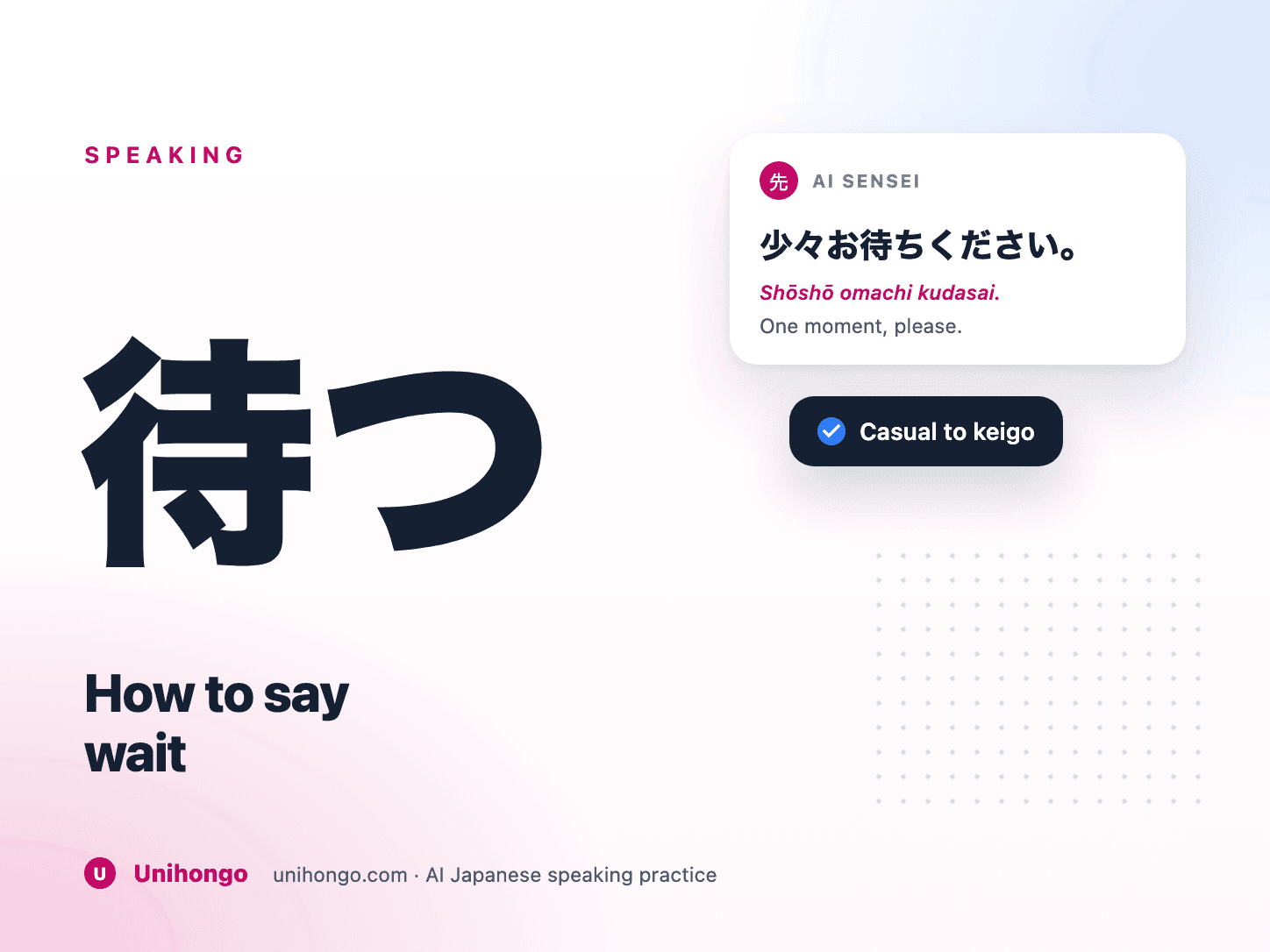
| 少々お待ちください。 | Shōshō omachi kudasai. | One moment, please. |
| 少々お待ちくださいませ。 | Shōshō omachi kudasaimase. | One moment, please. (service staff) |
| 少しお待ちいただけますか。 | Sukoshi omachi itadakemasu ka. | Would you mind waiting a moment? |
| 恐れ入りますが、少々お待ちください。 | Osoreirimasu ga, shōshō omachi kudasai. | I am sorry, but please wait a moment. |
When the wait is over
Returning to someone who waited is always acknowledged. Omatase shimashita is the standard polite line, used by shop staff, waiters, colleagues and anyone arriving slightly late.
Among friends the short omatase is enough, and adding an apology suits a longer wait.
| Japanese | Romaji | Meaning |
|---|---|---|
| お待たせしました。 | Omatase shimashita. | Sorry to keep you waiting. |
| 大変お待たせいたしました。 | Taihen omatase itashimashita. | I am very sorry for the long wait. |
| お待たせ! | Omatase! | Sorry, I am here! (casual) |
| 待たせてごめんね。 | Matasete gomen ne. | Sorry I made you wait. |
On the phone
Phone calls make waiting more awkward, because the caller cannot see what you are doing. Explain briefly why you need them to wait, and if the wait might be long, offer to call back instead.
| Japanese | Romaji | Meaning |
|---|---|---|
| 確認いたしますので、少々お待ちください。 | Kakunin itashimasu node, shōshō omachi kudasai. | I will check, so please hold for a moment. |
| 担当者に代わりますので、少々お待ちください。 | Tantōsha ni kawarimasu node, shōshō omachi kudasai. | I will put you through to the person in charge. |
| 折り返しお電話いたします。 | Orikaeshi o-denwa itashimasu. | I will call you back. |
| お待たせいたしました。 | Omatase itashimashita. | Thank you for holding. |
Waiting as a customer
When you are the one waiting, you need to ask how long, check whether people are in line, and tell staff you are happy to wait. The word machi after a time means a wait of that length.
| Japanese | Romaji | Meaning |
|---|---|---|
| 何分ぐらい待ちますか。 | Nanpun gurai machimasu ka. | About how long is the wait? |
| 三十分待ちです。 | Sanjuppun machi desu. | The wait is thirty minutes. |
| 待ちます。 | Machimasu. | I will wait. |
| 並んでいますか。 | Narande imasu ka. | Are you in line? |
| 列の最後はここですか。 | Retsu no saigo wa koko desu ka. | Is this the end of the queue? |
Wait, hold on: interrupting
Chotto matte also works like hold on in English: to stop a conversation because something is wrong, or to buy time before answering. In polite settings, asking for time to think is softer than stopping the other person.
| Japanese | Romaji | Meaning |
|---|---|---|
| ちょっと待って、それは違うと思う。 | Chotto matte, sore wa chigau to omou. | Hold on, I do not think that is right. |
| ちょっと考えさせてください。 | Chotto kangaesasete kudasai. | Let me think about it for a moment. |
| えっと、少しお時間をいただけますか。 | Etto, sukoshi o-jikan o itadakemasu ka. | Um, could you give me a moment? |
Choosing the level
Use this table to match the request to the listener.
| Situation | What to say | Note |
|---|---|---|
| A friend or family member | Chotto matte | Add ne to sound gentler |
| Someone leaving before you | Matte | Urgent and direct |
| A colleague at your desk | Sukoshi omachi itadakemasu ka | Respectful without being stiff |
| A customer or caller | Shōshō omachi kudasai | The standard service phrase |
| Returning to anyone who waited | Omatase shimashita | Always acknowledge the wait |
Unihongo's roleplay missions include phone calls and shop counters where the AI Sensei asks you to wait or waits for you, so both sides of the exchange get practised, and the corrections in the session report can show where a casual matte crept into a polite conversation.