
The four lines of moving out
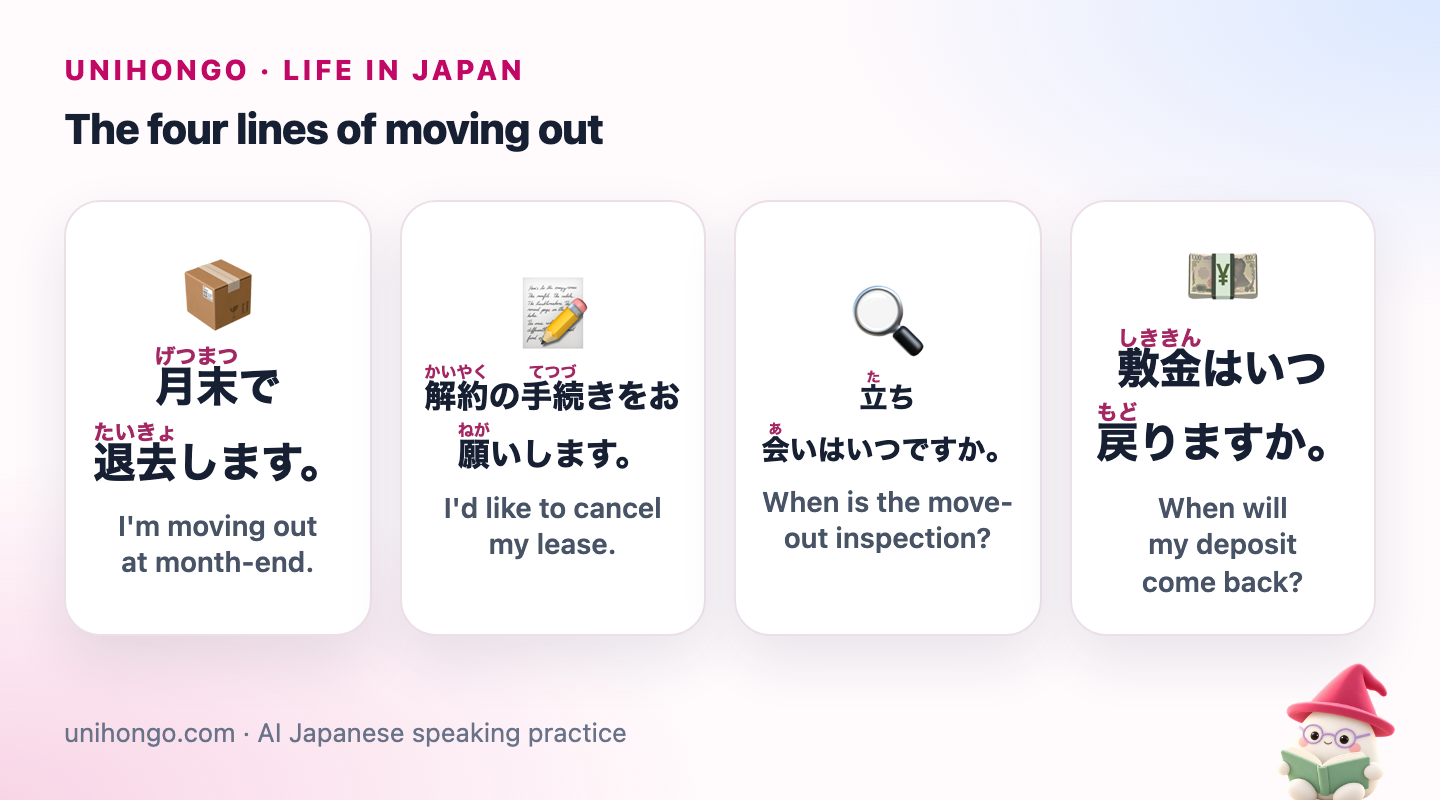
Every move-out in Japan has the same backbone: you announce the date, complete the cancellation of the contract, attend the inspection and wait for your deposit. Taikyo (退去) means leaving a rented home, kaiyaku (解約) means cancelling the contract, and these four lines carry you through the process.
| Japanese | Romaji | Meaning |
|---|---|---|
| 月末で退去します。 | Getsumatsu de taikyo shimasu. | I'm moving out at month-end. |
| 解約の手続きをお願いします。 | Kaiyaku no tetsuzuki o onegai shimasu. | I'd like to cancel my lease. |
| 立ち会いはいつですか。 | Tachiai wa itsu desu ka. | When is the move-out inspection? |
| 敷金はいつ戻りますか。 | Shikikin wa itsu modorimasu ka. | When will my deposit come back? |
Step 1: giving notice
Find the cancellation clause in your contract first. Residential contracts in Japan commonly ask for one month's notice, sometimes more, and rent may be calculated to the end of the month or by the day depending on the contract. Call the management company (kanri gaisha, 管理会社) or the agent who handles your flat, and ask how they want the notice: many send a cancellation form, a kaiyaku todoke (解約届), to fill in and return.
| Japanese | Romaji | Meaning |
|---|---|---|
| 来月末で退去したいんですが。 | Raigetsu-matsu de taikyo shitai n desu ga. | I'd like to move out at the end of next month. |
| 解約届はどうやって出せばいいですか。 | Kaiyaku todoke wa dō yatte daseba ii desu ka. | How do I submit the cancellation form? |
| 家賃は日割りになりますか。 | Yachin wa hiwari ni narimasu ka. | Is the rent calculated by the day? |
| 退去日は何日になりますか。 | Taikyo-bi wa nannichi ni narimasu ka. | What date will my move-out be? |
Step 2: bulky garbage, utilities and address
Furniture and large appliances cannot go out with the normal rubbish. Book a sodai gomi (粗大ごみ) collection with your city, buy the disposal ticket (shori-ken, 処理券) it tells you to, and put the items out on the morning of collection. Collection dates can be weeks away in busy periods such as March, so book as soon as you know your date. Some appliances, such as fridges, washing machines and air conditioners, follow separate recycling rules, so ask the city or the shop.
Call the electricity, gas and water companies with your move-out date so they stop the service and send a final bill. Then visit your city or ward office. If you are moving to another municipality or leaving Japan, you file a tenshutsu todoke (転出届); within the same city, a tenkyo todoke (転居届). Japan Post can forward your mail for one year if you submit a forwarding notice, a tensō todoke (転送届).
| Japanese | Romaji | Meaning |
|---|---|---|
| 粗大ごみの収集を申し込みたいです。 | Sodai gomi no shūshū o mōshikomitai desu. | I'd like to book a bulky garbage collection. |
| ベッドとソファを出したいです。 | Beddo to sofa o dashitai desu. | I want to get rid of a bed and a sofa. |
| 引っ越すので、電気を止めたいんですが。 | Hikkosu node, denki o tometai n desu ga. | I'm moving, so I'd like to stop the electricity. |
| 転出届を出しに来ました。 | Tenshutsu todoke o dashi ni kimashita. | I've come to file my moving-out notification. |
| 郵便の転送をお願いしたいです。 | Yūbin no tensō o onegai shitai desu. | I'd like my mail forwarded. |
Deposit and restoration: the words that cost money
Your shikikin (敷金) is a deposit held against unpaid rent and damage. When you leave, the landlord deducts the cost of restoring the flat, genjō kaifuku (原状回復), and returns the rest. Japan's Ministry of Land, Infrastructure, Transport and Tourism publishes guidelines on who pays for what, and they are widely used: in general, normal wear and ageing (tsūjō shōmō, keinen rekka) is the landlord's cost, and damage caused by the tenant beyond normal use is the tenant's. Contracts can include special clauses (tokuyaku, 特約), such as a fixed cleaning fee, so your own contract matters too.
Key money, reikin (礼金), is different: it is a non-refundable payment made when you moved in, so do not expect it back.
| Usually the landlord's cost | Often the tenant's cost |
|---|---|
| Wallpaper faded by sunlight | Holes from screws or nails beyond what is allowed |
| Marks on the floor where furniture stood | Stains or burns you caused |
| Tatami and fittings ageing over time | Damage from pets |
| Wear on the floor from normal use | Mould from neglecting to air or clean the room |
These are general examples, not rulings. If a deduction seems wrong, you can ask for a breakdown and discuss it; local consumer advice centres also handle questions about deposits.
Step 3: the move-out inspection
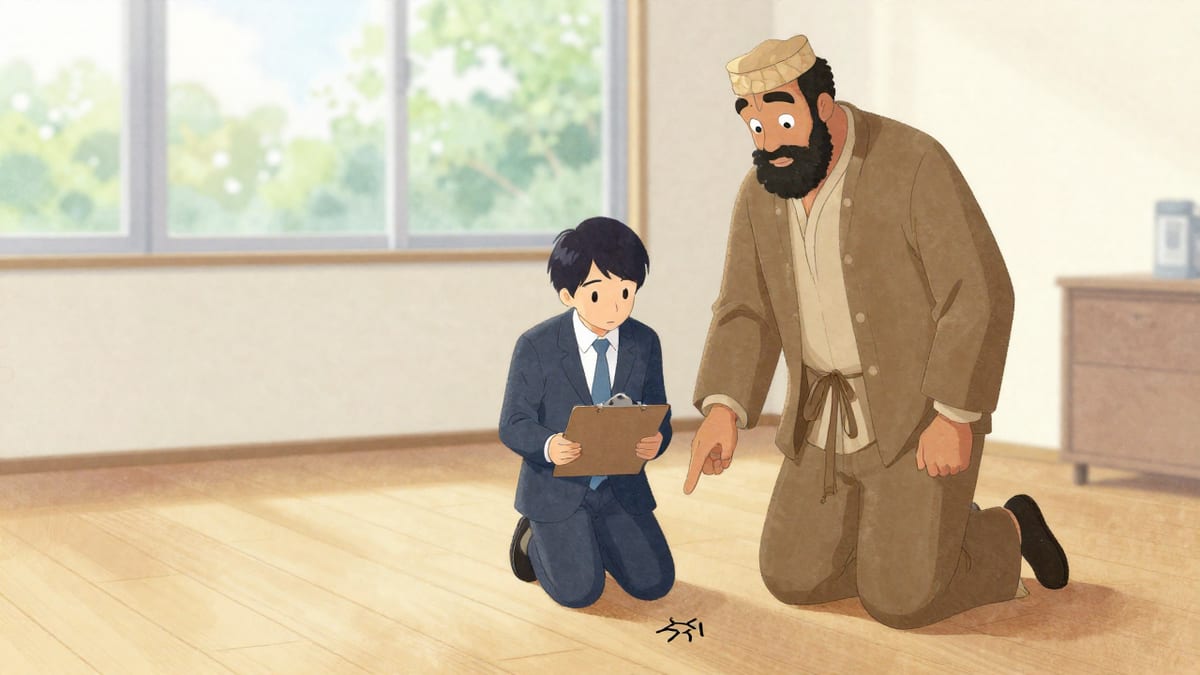
On the last day, someone from the management company meets you at the empty flat for the tachiai (立ち会い). They check each room, note damage, read the meters in some cases and take back the keys. You may be asked to sign a confirmation of what was found. This is the moment to speak up: if a mark was there when you moved in, say so, and show photos from your move-in day if you have them.
| Japanese | Romaji | Meaning |
|---|---|---|
| では、お部屋を確認させていただきます。 | Dewa, oheya o kakunin sasete itadakimasu. | Agent: Then I'll check the rooms now. |
| この傷は入居した時からありました。 | Kono kizu wa nyūkyo shita toki kara arimashita. | This mark was here when I moved in. |
| 入居時の写真があります。 | Nyūkyo-ji no shashin ga arimasu. | I have photos from when I moved in. |
| これは経年劣化ではないですか。 | Kore wa keinen rekka de wa nai desu ka. | Isn't this just ageing over time? |
| 鍵をお返しします。 | Kagi o okaeshi shimasu. | I'm returning the keys. |
| 明細をいただけますか。 | Meisai o itadakemasu ka. | Could I have an itemised breakdown? |
If you are leaving Japan
Leaving the country adds a few steps. File your tenshutsu todoke at the city office before you go; the counter will tell you what applies to your residence card and other records. Close or settle your phone contract, your utilities and any monthly payments, and decide how your deposit will reach you if it is returned after you leave: many people give the agent a Japanese bank account that they keep open for a while, or ask a trusted friend to help. Ask the management company early how they handle this, because procedures differ.
| Japanese | Romaji | Meaning |
|---|---|---|
| 来月、帰国します。 | Raigetsu, kikoku shimasu. | I'm going back to my country next month. |
| 敷金の返金は海外でも受け取れますか。 | Shikikin no henkin wa kaigai demo uketoremasu ka. | Can I receive the deposit refund abroad? |
| 帰国前に何をすればいいですか。 | Kikoku mae ni nani o sureba ii desu ka. | What do I need to do before I leave Japan? |
| 精算はいつ頃になりますか。 | Seisan wa itsu goro ni narimasu ka. | Around when will the settlement be done? |
Common mistakes to avoid
- Giving notice by phone only when the contract asks for a written form. Ask how to submit it and keep a copy.
- Leaving bulky garbage until the last week. Collections are often fully booked around March and April.
- Putting large items out with ordinary rubbish. Unticketed sodai gomi is not collected and can cause trouble with neighbours.
- Signing the inspection sheet without reading it. Ask kore wa nan no hiyō desu ka (what is this cost for?) before you sign.
- Expecting reikin back. Only the shikikin deposit is refundable, minus valid deductions.
- Forgetting the city office. Filing tenshutsu todoke when you move to another municipality or leave Japan keeps your records in order.