

Viewing a share house
A viewing is a naiken, and most operators arrange one by email or an online form, then send a staff member or the live-in manager to show you round. You will see a sample private room, the kitchen, the bathrooms and the living room, and you will be told the rent, yachin, plus any common fee, kyōekihi, that covers utilities, internet and cleaning. Whether utilities are included and how much notice you must give vary by operator, so ask directly and get the answers in writing.
The questions that matter most are about daily life rather than furniture: how many people live there, how the bathrooms are shared, whether there are quiet hours, what the guest rule is, and who cleans what. A viewing also tells you a lot without words: a tidy kitchen with a clear rota is worth more than a nice sofa.
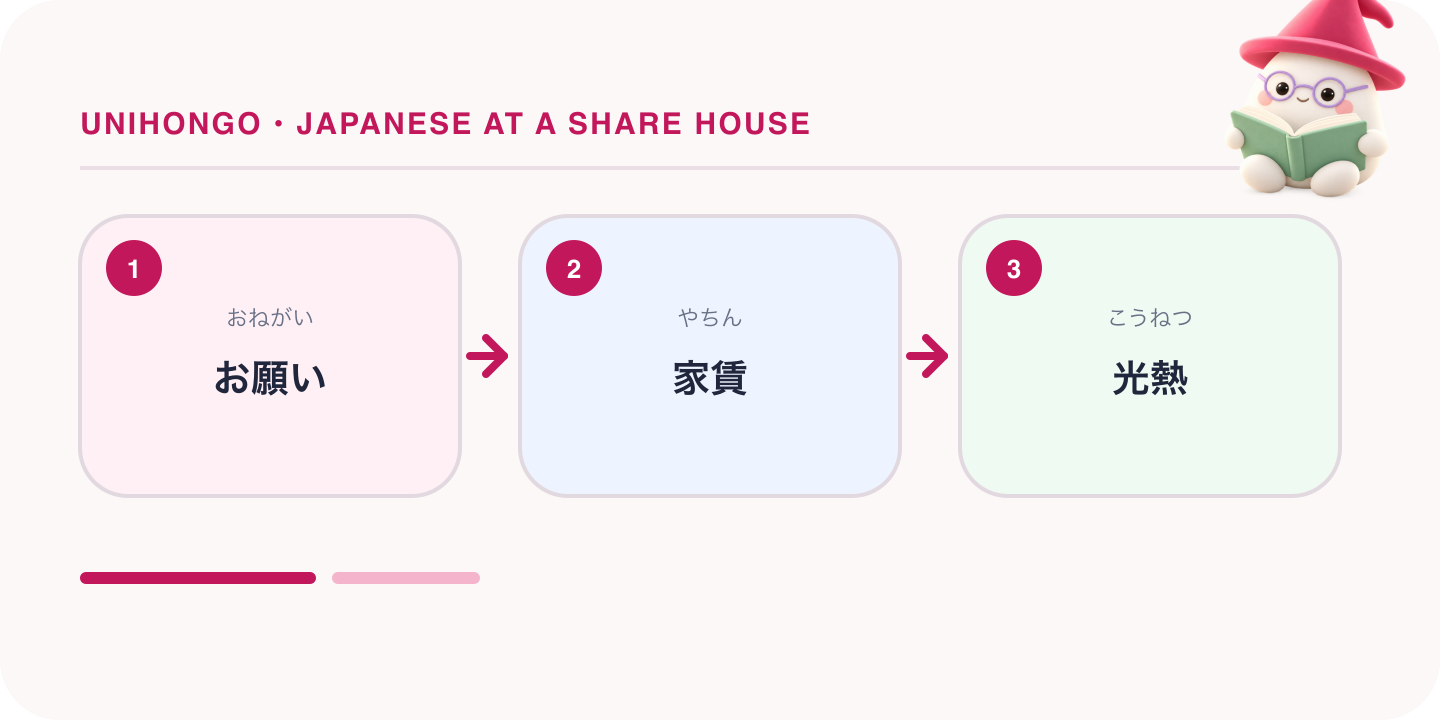
| Japanese | Romaji | Meaning |
|---|---|---|
| 内見をお願いしたいんですが。 | Naiken o onegai shitai n desu ga. | I'd like to arrange a viewing. |
| 家賃には光熱費が含まれていますか。 | Yachin ni wa kōnetsuhi ga fukumarete imasu ka. | Does the rent include utilities? |
| 今、何人住んでいますか。 | Ima, nannin sunde imasu ka. | How many people live here at the moment? |
| 最短の契約期間はどのくらいですか。 | Saitan no keiyaku kikan wa dono kurai desu ka. | How long is the minimum contract? |
| 退去する時は何か月前に連絡すればいいですか。 | Taikyo suru toki wa nankagetsu mae ni renraku sureba ii desu ka. | How many months' notice do I give when I move out? |
| 友達を呼ぶことはできますか。 | Tomodachi o yobu koto wa dekimasu ka. | Can I have friends over? |
| 共用部分の掃除は誰がしますか。 | Kyōyō bubun no sōji wa dare ga shimasu ka. | Who cleans the shared areas? |
Moving in and the house rules
On moving day, nyūkyo, you usually sign the contract, receive keys or a door code and get a printed or online copy of the house rules, hausu rūru. Read them the same day: rubbish days, quiet hours, laundry hours, the guest rule, and what happens with food left in the fridge.
Introduce yourself to whoever is in the common area that evening. A simple self-introduction is enough: your name, where you are from, and yoroshiku onegai shimasu. The first week is when housemates decide whether you are easy to live with, so greet people, keep the kitchen tidy and ask before you use anything that might belong to someone.
| Japanese | Romaji | Meaning |
|---|---|---|
| 今日から入居する田中です。よろしくお願いします。 | Kyō kara nyūkyo suru Tanaka desu. Yoroshiku onegai shimasu. | I'm Tanaka, moving in today. Nice to meet you all. |
| ハウスルールで特に気をつけることはありますか。 | Hausu rūru de toku ni ki o tsukeru koto wa arimasu ka. | Is there anything in the house rules I should be especially careful about? |
| ゴミの日はいつですか。 | Gomi no hi wa itsu desu ka. | When are the rubbish days? |
| この棚は誰のですか。 | Kono tana wa dare no desu ka. | Whose shelf is this? |
| 使っていいものはどれですか。 | Tsukatte ii mono wa dore desu ka. | Which things are okay for me to use? |
| 何かあったら誰に連絡すればいいですか。 | Nanika attara dare ni renraku sureba ii desu ka. | Who should I contact if something comes up? |
Shared kitchen and bath etiquette
The kitchen is where share houses succeed or fail. The unwritten rule everywhere is sugu ni arau, wash up straight away: cook, eat, wash, dry, put away, and leave the counter as you found it. Food in the fridge is labelled with a name and often a date, and many houses have a monthly clear-out where anything unlabelled is thrown away. Strong-smelling cooking is fine in most houses but open a window and run the fan.
Bathrooms are usually a separate toilet, a shower or a bath, and a washbasin, so three people can use them at once. Some houses set a bath schedule, others simply ask you to keep showers short in the morning rush. Leave the drain clear of hair and take your shampoo back to your room. Washing machines often have a rule that you must remove your load promptly; a wet load left in the drum is a classic source of irritation.
| Japanese | Romaji | Meaning |
|---|---|---|
| 使い終わったらすぐ洗ってください。 | Tsukai owattara sugu aratte kudasai. | Please wash up as soon as you have finished. |
| これ、ちょっと借りてもいい? | Kore, chotto karite mo ii? | Can I borrow this for a second? |
| 冷蔵庫の物には名前を書いてください。 | Reizōko no mono ni wa namae o kaite kudasai. | Please write your name on things in the fridge. |
| お風呂、先に入ってもいいですか。 | O-furo, saki ni haitte mo ii desu ka. | Is it okay if I use the bath first? |
| 洗濯機、あと何分くらいですか。 | Sentakuki, ato nanpun kurai desu ka. | How many more minutes on the washing machine? |
| 換気扇を回しておきますね。 | Kankisen o mawashite okimasu ne. | I'll leave the extractor fan on. |
Cleaning rotas and the house chat group
Who cleans what depends on the house. In many operator-run houses a cleaner comes weekly for the common areas and residents only handle their own room and the daily kitchen reset. In smaller houses there is a sōji tōban, a cleaning duty rota, pinned to the fridge or posted in the chat group, and each person takes the kitchen, the bathroom or the rubbish for a week. If you cannot do your turn, swap in advance.
Almost every share house has a LINE group or similar. It carries notices from the manager, questions about rubbish and reminders about the rota. Read it daily and acknowledge anything addressed to you with a short reply such as ryōkai desu or wakarimashita. If something is sensitive, message the person or the manager directly.
| Japanese | Romaji | Meaning |
|---|---|---|
| 今週の掃除当番は私ですね。 | Konshū no sōji tōban wa watashi desu ne. | I'm on cleaning duty this week, right? |
| 来週の当番、代わってもらえますか。 | Raishū no tōban, kawatte moraemasu ka. | Could you swap next week's duty with me? |
| 了解です。 | Ryōkai desu. | Got it. |
| ゴミ出しておきました。 | Gomi dashite okimashita. | I've put the rubbish out. |
| 共用のトイレットペーパーが切れそうです。 | Kyōyō no toiretto pēpā ga kiresō desu. | The shared toilet paper is nearly out. |
| 掃除機はどこに戻せばいいですか。 | Sōjiki wa doko ni modoseba ii desu ka. | Where should I put the vacuum cleaner back? |
Words on the notice board and in the rules
House rules, rota sheets and the chat group use a small set of vocabulary that repeats endlessly. Learn these and most notices become readable at a glance.
| Word | Reading | Meaning |
|---|---|---|
| 個室 | koshitsu | Private room |
| 共用部 | kyōyōbu | Shared areas |
| 共益費 | kyōekihi | Common fee for utilities and cleaning |
| 管理人 | kanrinin | Manager |
| 入居者 | nyūkyosha | Resident |
| 退去 | taikyo | Moving out |
| 掃除当番 | sōji tōban | Cleaning duty |
| ゴミ出し | gomi dashi | Putting out the rubbish |
| 分別 | bunbetsu | Sorting rubbish |
| 消灯 | shōtō | Lights out |
| 静かに | shizuka ni | Quietly |
| 来客 | raikyaku | Visitors |
Rubbish sorting rules, bunbetsu, come from the city rather than the house, so the house notice usually reprints the local schedule: moeru gomi, burnable, on certain days, plastics, cans and bottles on others. Get it wrong and the bag comes back with a sticker on it, so ask in the first week rather than guess.
Noise and living alongside people
Walls in share houses are thin, and the most common complaint is not parties but ordinary sounds late at night: phone calls, video sound, doors, the kitchen at one in the morning. Most houses set quiet hours, and the polite habit is to use headphones after that and keep calls to your room. If you will be loud for a good reason, say so in advance and people will forgive almost anything.
When someone else is noisy, start light. A friendly word the next day works better than a message in the group chat, and the phrasing matters: mention the sound and the time, not the person's character. If it goes on, the manager is the right route.
| Japanese | Romaji | Meaning |
|---|---|---|
| 夜遅くにすみません、少し静かにしてもらえますか。 | Yoru osoku ni sumimasen, sukoshi shizuka ni shite moraemasu ka. | Sorry, it's late, could you keep it down a little? |
| 昨日はうるさくしてすみませんでした。 | Kinō wa urusaku shite sumimasen deshita. | Sorry I was noisy yesterday. |
| 今夜、友達が来るので少し声がするかもしれません。 | Kon'ya, tomodachi ga kuru node sukoshi koe ga suru kamo shiremasen. | A friend is coming tonight, so there may be some noise. |
| 電話は部屋でしますね。 | Denwa wa heya de shimasu ne. | I'll take calls in my room. |
| 何時までなら大丈夫ですか。 | Nanji made nara daijōbu desu ka. | Until what time is it okay? |
Making friends with housemates
The living room is where friendships start, and the easiest way in is food. Offer to share something you cooked, ask what someone is making, or suggest a takoyaki or nabe evening; these are share house classics because they are cheap and everyone helps. Keep it low pressure: invite, accept a no gracefully, and try again another week.
Conversation at home is plain form territory. Start in the masu form when you meet someone, then follow their lead; most housemates drop to casual speech within days. Ask about work and hometowns, not about rent or salary.
- Say ohayō and tadaima when you come and go; the greetings are half of the relationship
- Offer food: kore, yokattara dōzo, help yourself if you like
- Suggest a shared meal: kondo nabe demo shimasen ka, shall we do a hotpot sometime
- Ask about plans: shūmatsu nanika suru? doing anything at the weekend
- Remember names and hometowns and ask about them again later
- Join house events even briefly; showing up matters more than staying long
It is fine to ask housemates to keep going in Japanese: Nihongo de daijōbu desu, ganbaritai node. Daily corrections from housemates are some of the best free lessons you will get.
When something goes wrong
Broken things go to the manager, not the group. Describe what is broken, when it happened and whether it is urgent, and ask what to do. For problems with a person, start with the person if it is small, and go to the manager as a sōdan, a consultation, if it is not. Give the facts, keep the tone calm and ask what the house usually does.
If you want to leave, check the notice period in your contract and tell the manager in writing as well as in person. Leave the room clean and return everything you borrowed.
| Japanese | Romaji | Meaning |
|---|---|---|
| 洗濯機が動かなくなりました。 | Sentakuki ga ugokanaku narimashita. | The washing machine has stopped working. |
| 鍵をなくしてしまいました。どうすればいいですか。 | Kagi o nakushite shimaimashita. Dō sureba ii desu ka. | I've lost my key. What should I do? |
| ちょっと相談したいことがあるんですが。 | Chotto sōdan shitai koto ga aru n desu ga. | There's something I'd like to talk over with you. |
| 最近、台所に食器が残っていることが多くて。 | Saikin, daidokoro ni shokki ga nokotte iru koto ga ōkute. | Lately there are often dishes left in the kitchen. |
| 来月末で退去したいと思っています。 | Raigetsu-matsu de taikyo shitai to omotte imasu. | I'm thinking of moving out at the end of next month. |
| お世話になりました。 | O-sewa ni narimashita. | Thank you for everything. |