
Totonou and the three steps behind it
Totonou is an everyday verb. Heya ga totonou means the room is in order; junbi ga totonou means preparations are complete. Sauna fans borrowed it for the feeling of the body and mind being put back in order: heavy limbs, a clear head and a pleasant floating calm. In this sense it is usually written in hiragana, and people say totonotta, I've reached it, or totonoimashita in polite speech.
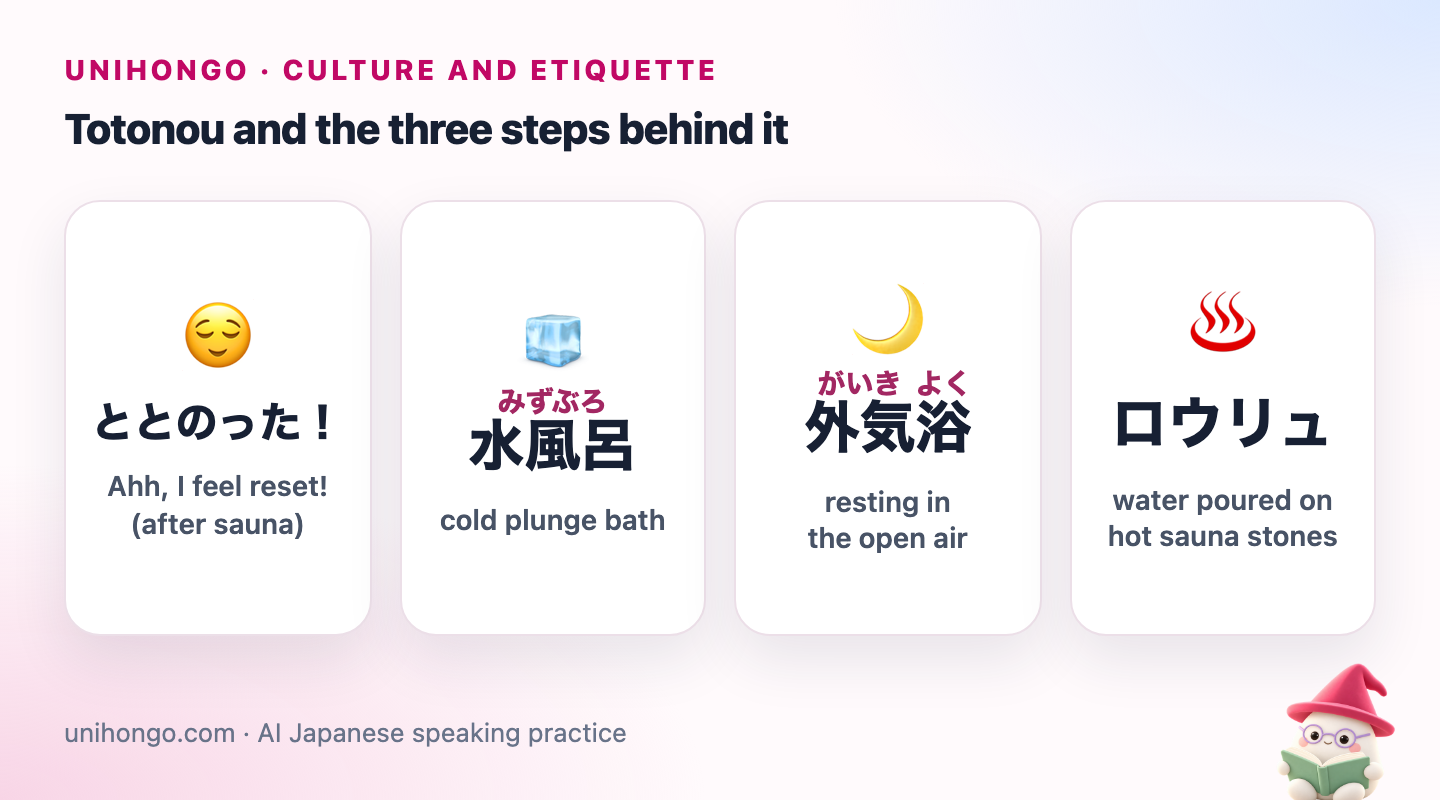
Fans describe a simple cycle that leads there: heat in the sauna, a cold plunge in the mizuburo, and a rest in the open air, gaikiyoku. Most people repeat it a few times. Experiences differ, and the word describes a feeling, not a medical effect.
| Japanese | Romaji | Meaning |
|---|---|---|
| ととのった! | Totonotta! | Ahh, I feel reset! (after sauna) |
| 水風呂 | mizuburo | cold plunge bath |
| 外気浴 | gaikiyoku | resting in the open air |
| ロウリュ | rōryu | water poured on hot sauna stones |
| サウナ、水風呂、外気浴を三セットやります。 | Sauna, mizuburo, gaikiyoku o san-setto yarimasu. | I do three rounds of sauna, cold plunge and rest. |
Where the word came from
Sauna has a long history in Japan; public baths and hot spring inns have offered it for decades. What changed in the 2010s was the culture around it. A manga and later a TV drama called Sadō (サ道), the way of sauna, celebrated the pleasure of the sauna cycle and helped bring totonou into everyday speech. Sauna fans began sharing their visits online, new facilities with outdoor rest areas opened, and the hobby attracted many younger people.
Today you will see totonou in product names, on facility websites and in casual talk. Some people find the word overused, and others joke about it, but it is still the most natural way to describe that feeling.
| Japanese | Romaji | Meaning |
|---|---|---|
| サウナにハマっています。 | Sauna ni hamatte imasu. | I'm hooked on saunas. |
| 週末はサ活です。 | Shūmatsu wa sakatsu desu. | Weekends are for sauna. |
| 私はサウナーです。 | Watashi wa saunā desu. | I'm a sauna fan. |
Sauna-fan vocabulary
Sauna fans love abbreviations, and many start with sa, short for sauna. The table explains the words you are most likely to hear from regulars and see on facility pages.
| Word in romaji | Meaning | Notes |
|---|---|---|
| sakatsu | Sauna as a hobby | Short for sauna activity |
| saunā | Sauna enthusiast | From sauna plus the English -er |
| sa-meshi | Food after sauna | Often a hearty meal at the facility |
| rōryu | Water on hot stones | From the Finnish löyly; raises humidity |
| serufu rōryu | Self-service rōryu | You pour the water yourself |
| aufugūsu | Towel-waving session | Staff fan hot air towards bathers |
| neppashi | Heat master | The staff member who leads aufugūsu |
| totonoi isu | Rest chair | Reclining chair for gaikiyoku |
Aufugūsu comes from the German Aufguss. At scheduled times, a neppashi pours water on the stones and waves a towel to send waves of hot air at the bathers. People often clap at the end.
Sauna etiquette that regulars notice
Most sauna etiquette comes from public bath etiquette, plus a few rules that matter more in a hot, shared room and a cold, shared pool. Facilities post their own rules, and these vary, but the list below is widely followed.
| Japanese | Romaji | Meaning |
|---|---|---|
| 汗を流してから入ってください。 | Ase o nagashite kara haitte kudasai. | Please rinse off your sweat before getting in. |
| ここに座ってもいいですか。 | Koko ni suwatte mo ii desu ka. | May I sit here? |
| ロウリュしてもいいですか。 | Rōryu shite mo ii desu ka. | Is it all right if I pour water on the stones? |
- Wash your body before entering the bath area, as in any sentō or onsen.
- Sit on a mat or towel in the sauna if the facility asks you to.
- Rinse off your sweat with kakeyu or the shower before the mizuburo.
- Enter the mizuburo slowly, do not dive, and keep your head and towel out of the water.
- Keep your voice low in the sauna; many facilities ask for quiet, sometimes called mokuyoku.
- Wipe yourself down before going back into the changing room.
- Take care with your health: stay hydrated, skip the cold plunge if it is not right for you, and leave if you feel unwell.
At a super sentō: buying the sauna option
Super sentō are large bath complexes with many pools, a sauna, a restaurant and a rest area. Some include sauna in the entry, while others sell it as an option with a wristband or a towel set. The front desk conversation is short.
| Japanese | Romaji | Meaning |
|---|---|---|
| サウナも利用したいです。 | Sauna mo riyō shitai desu. | I'd like to use the sauna too. |
| タオルセットをお願いします。 | Taoru setto o onegai shimasu. | A towel set, please. |
| アウフグースは何時からですか。 | Aufugūsu wa nanji kara desu ka. | What time is the towel-waving session? |
| 休憩所はどこですか。 | Kyūkeijo wa doko desu ka. | Where is the rest area? |
Scenario: your first totonou in the rest area
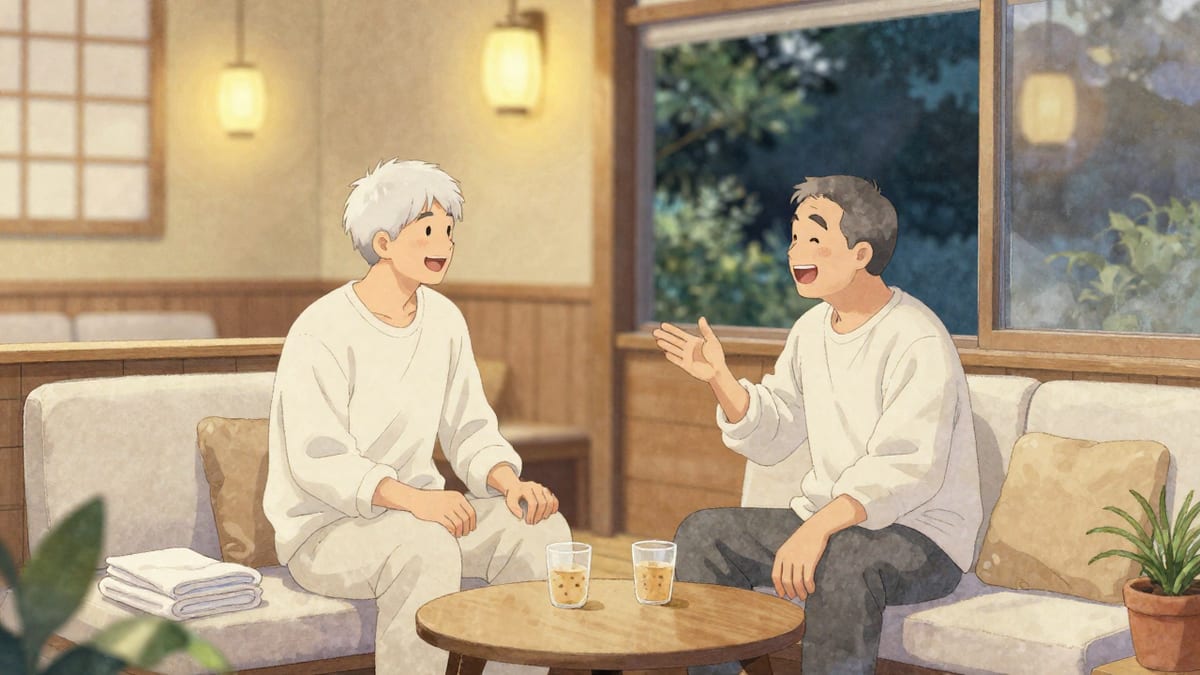
You have done three rounds. After the last mizuburo you sit in an outdoor chair under a cool evening sky, and something shifts: your body feels heavy and light at the same time. Later, in the rest area, wearing the facility's loose clothes, you sit near a regular who noticed you earlier. Rest areas are relaxed places, and regulars often enjoy talking to a newcomer about their hobby.
| Japanese | Romaji | Meaning |
|---|---|---|
| 常連:サウナ、初めてですか。 | Jōren: Sauna, hajimete desu ka. | Regular: Is this your first sauna? |
| あなた:はい。さっき、初めてととのいました! | Anata: Hai. Sakki, hajimete totonoimashita! | You: Yes. I just reached totonou for the first time! |
| 常連:いいですね。何セットやりましたか。 | Jōren: Ii desu ne. Nan-setto yarimashita ka. | Regular: Nice. How many rounds did you do? |
| あなた:三セットです。水風呂が冷たくて… | Anata: San-setto desu. Mizuburo ga tsumetakute... | You: Three. The cold plunge was freezing... |
| 常連:慣れると気持ちいいですよ。 | Jōren: Nareru to kimochi ii desu yo. | Regular: Once you get used to it, it feels great. |
| 常連:サ飯はカレーがおすすめです。 | Jōren: Sa-meshi wa karē ga osusume desu. | Regular: For your post-sauna meal, try the curry. |
Nareru to kimochi ii uses to for a natural result: once you get used to it, it feels good. It is a sentence you will hear about many things in Japan, from natto to cold plunges.
Talking about saunas with friends and coworkers
Sauna fans compare facilities the way others compare restaurants, and the details they care about are temperature, humidity and the cold plunge. Sauna temperatures are given in degrees Celsius, and fans often mention whether a sauna is dry or has rōryu. The temperature of the mizuburo matters just as much: some people love a very cold one, others prefer it milder. Outdoor rest areas, good chairs and the food all count too.
If a coworker mentions saunas, ask for a recommendation. Fans usually have a favourite, and asking is a quick way to make a connection with someone you do not know well.
| Japanese | Romaji | Meaning |
|---|---|---|
| おすすめのサウナはありますか。 | Osusume no sauna wa arimasu ka. | Do you have a favourite sauna? |
| サウナは何度くらいですか。 | Sauna wa nando kurai desu ka. | About how hot is the sauna? |
| 水風呂は何度ですか。 | Mizuburo wa nando desu ka. | How cold is the cold plunge? |
| 外気浴のスペースが広いんです。 | Gaikiyoku no supēsu ga hiroi n desu. | The outdoor rest area is spacious. |
| 週末、一緒にサ活しませんか。 | Shūmatsu, issho ni sakatsu shimasen ka. | Shall we go to a sauna together this weekend? |
Note that saunas in Japan are usually single-sex and used without swimwear, as in public baths, though some newer facilities have mixed areas with swimwear or private saunas you can book. Check before inviting someone.
Common mistakes
- Thinking totonou is a place or a product. It is a verb, and its sauna meaning is a feeling.
- Using totonoimashita for the sauna itself. You totonou; the sauna does not.
- Jumping straight from the sauna into the mizuburo without rinsing. Regulars will notice.
- Talking loudly in the sauna room. Save conversation for the rest area.