
Four ways to keep it quiet
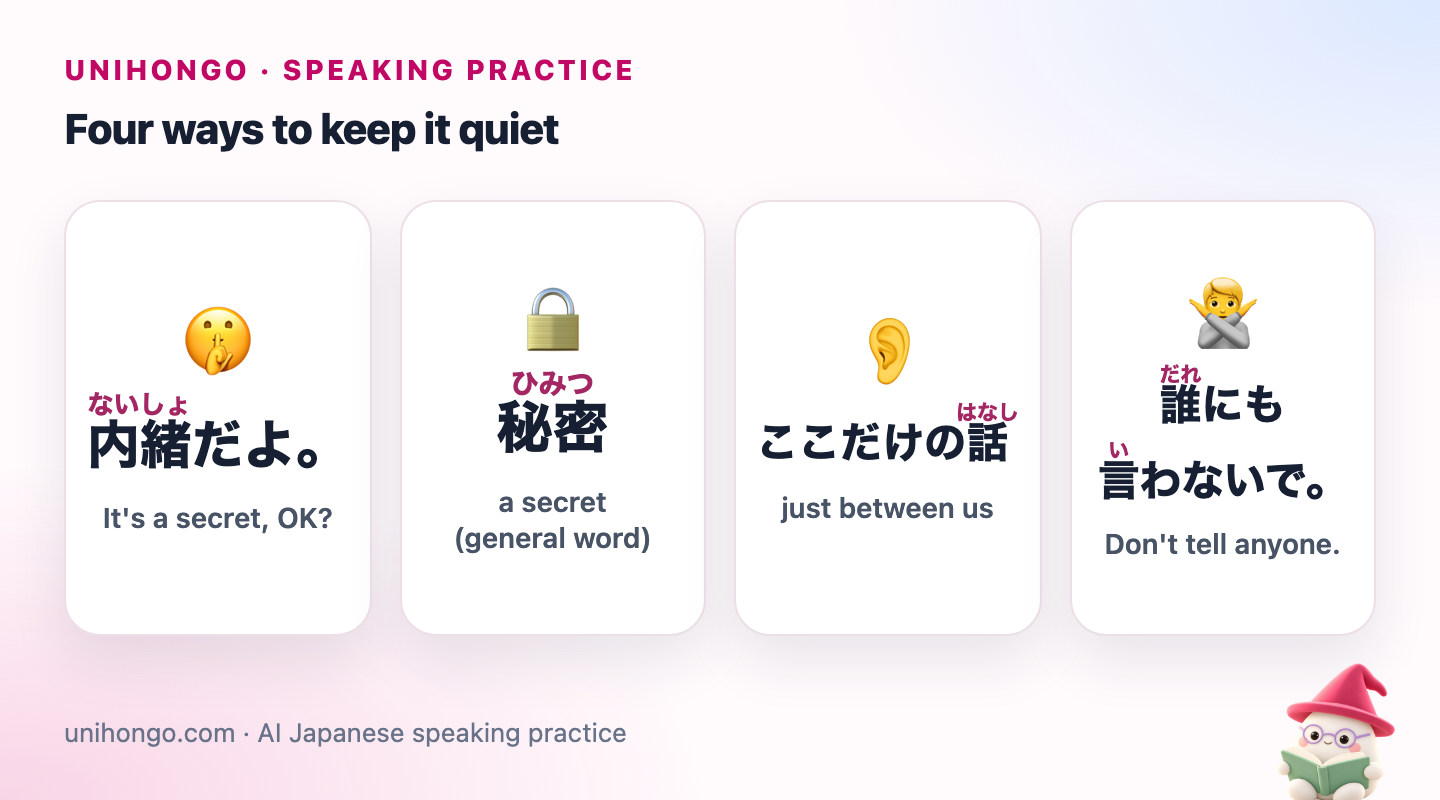
These four lines cover nearly every everyday secret. Naisho da yo marks something as secret in a friendly way. Himitsu is the general word. Koko dake no hanashi opens a confidence. Dare ni mo iwanaide asks the listener to keep it.
| Japanese | Romaji | Meaning |
|---|---|---|
| 内緒だよ。 | Naisho da yo. | It's a secret, OK? |
| 秘密 | himitsu | a secret (general word) |
| ここだけの話 | koko dake no hanashi | just between us |
| 誰にも言わないで。 | Dare ni mo iwanaide. | Don't tell anyone. |
Naisho is often said with a finger to the lips and a smile. Shī, the hushing sound, works in Japanese too, and children love naisho-banashi, whispered secrets.
Himitsu or naisho?
Both mean secret, but they live in different places. Himitsu is a noun with a wide range: a company secret, a secret recipe, the secret of success. Naisho is casual and personal; it is about not telling particular people. Mama ni wa naisho, don't tell Mum, is pure naisho. As a verb phrase, naisho ni suru means to keep something quiet.
| Japanese | Romaji | Meaning |
|---|---|---|
| 成功の秘密は何ですか。 | Seikō no himitsu wa nan desu ka. | What's the secret of your success? |
| ママには内緒ね。 | Mama ni wa naisho ne. | Don't tell Mum, OK? |
| このことは内緒にしてね。 | Kono koto wa naisho ni shite ne. | Keep this quiet, OK? |
| 秘密のレシピなんです。 | Himitsu no reshipi nan desu. | It's a secret recipe. |
| Aspect | Himitsu | Naisho |
|---|---|---|
| Range | Anything from trivial to serious | Personal, everyday matters |
| Tone | Neutral, can sound weighty | Warm, playful, casual |
| Typical uses | Secret recipe, secret of success | A surprise, a hidden snack |
| Formal writing | Yes | Rarely |
Himitsu also forms many compounds: himitsu kichi, a secret den that children build, and himitsu heiki, a secret weapon, used jokingly for a star player or a favourite ingredient.
Opening a confidence and asking for silence
Koko dake no hanashi da kedo, this is just between us, but, is the classic opener for a bit of gossip or news. Jitsu wa, actually, often follows. To ask for silence, dare ni mo iwanaide ne is friendly, zettai, absolutely, makes it firmer, and honnin, the person themselves, lets you name who must not hear.
| Japanese | Romaji | Meaning |
|---|---|---|
| ここだけの話なんだけど… | Koko dake no hanashi nan da kedo... | This is just between us, but... |
| 実はね、転職するんだ。 | Jitsu wa ne, tenshoku suru n da. | Actually, I'm changing jobs. |
| 絶対に誰にも言わないでね。 | Zettai ni dare ni mo iwanaide ne. | Don't tell a soul, OK? |
| 本人には言わないでください。 | Honnin ni wa iwanaide kudasai. | Please don't tell them. |
When someone tells you a secret, reassure them: wakatta, iwanai yo, got it, I won't tell. Then keep your word; trust built this way matters in any friendship.
Playful dodges: sore wa himitsu desu
When someone asks something you would rather not answer, such as your age, the price of a gift or who you are dating, sore wa himitsu desu with a smile is a charming way out. It is not rude; it signals a game, and most people laugh and move on. Naisho desu works the same way and sounds even lighter.
| Japanese | Romaji | Meaning |
|---|---|---|
| 年齢ですか?それは秘密です。 | Nenrei desu ka? Sore wa himitsu desu. | My age? That's a secret. |
| 内緒です。 | Naisho desu. | That's a secret. (playful) |
| 想像にお任せします。 | Sōzō ni omakase shimasu. | I'll leave that to your imagination. |
Age is a classic topic for this dodge, because people in Japan often ask it early to work out how to speak to each other. If you do not mind sharing, a number is fine; if you do, sore wa himitsu desu with a laugh keeps things friendly.
Kuchi ga katai: people who keep secrets
Japanese describes discretion with the mouth. Kuchi ga katai, a hard mouth, is someone who keeps secrets, and it is a real compliment. Kuchi ga karui, a light mouth, is someone who blabs. At work, confidential matters are naimitsu (内密) or, for internal documents, shagaihi (社外秘), not for outside the company; these are formal words you will see more than say.
| Japanese | Romaji | Meaning |
|---|---|---|
| 私、口が堅いから大丈夫。 | Watashi, kuchi ga katai kara daijōbu. | Don't worry, I can keep a secret. |
| 彼は口が軽いから気をつけて。 | Kare wa kuchi ga karui kara ki o tsukete. | Careful, he can't keep a secret. |
| まだ内密にお願いします。 | Mada naimitsu ni onegai shimasu. | Please keep this confidential for now. |
Keeping a confidence at work is a big part of trust, and kuchi ga katai hito is real praise from a manager.
A spoken exchange: planning a surprise
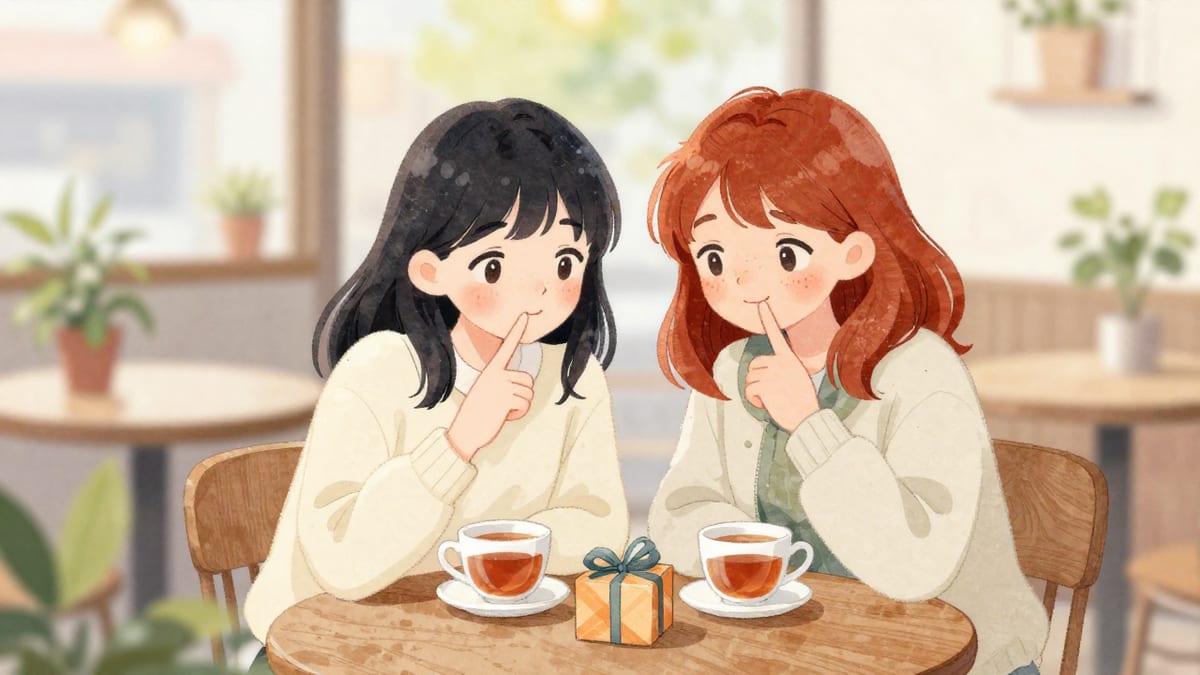
Maria's birthday is next week, and you are planning a surprise party. You tell a mutual friend after class and ask them to keep it quiet.
| Japanese | Romaji | Meaning |
|---|---|---|
| ねえ、来週マリアの誕生日でしょ? | Nē, raishū Maria no tanjōbi desho? | You: Hey, Maria's birthday is next week, right? |
| うん、そうだね。 | Un, sō da ne. | Friend: Yeah, that's right. |
| サプライズパーティーをするんだ。内緒だよ。 | Sapuraizu pātī o suru n da. Naisho da yo. | You: We're throwing a surprise party. It's a secret. |
| わかった。誰にも言わない! | Wakatta. Dare ni mo iwanai! | Friend: Got it. I won't tell anyone! |
| 本人には絶対言わないでね。 | Honnin ni wa zettai iwanaide ne. | You: Whatever you do, don't tell her. |
| 大丈夫、私、口が堅いから。 | Daijōbu, watashi, kuchi ga katai kara. | Friend: Don't worry, I can keep a secret. |
Honnin, the person themselves, is a handy word whenever you talk about someone who is not present: honnin ni kiite, ask them directly.
Surprises, slips and spoilers
Sapuraizu, surprise, is a popular word for birthday plans, and naisho is its natural partner. Bareru, to be found out, is the casual verb for a secret leaking: barechatta!, it's out!, is what you say when the surprise is ruined, and barenai yō ni, so that nobody finds out, is the planning phrase.
Spoilers have their own word: netabare, from neta, material, and bare, being found out. Netabare shinaide, no spoilers, is useful with friends who are ahead of you in a drama. And when a surprise works, the guest of honour usually cries zenzen kizukanakatta!, I had no idea!
| Japanese | Romaji | Meaning |
|---|---|---|
| バレないようにね。 | Barenai yō ni ne. | Make sure nobody finds out. |
| バレちゃった! | Barechatta! | The secret's out! |
| ネタバレしないで! | Netabare shinaide! | No spoilers! |
| 全然気づかなかった! | Zenzen kizukanakatta! | I had no idea! |
Common mistakes
- Using naisho in formal or business writing. Use himitsu, or naimitsu for confidential matters.
- Saying himitsu desu flatly to a serious question at work. The playful dodge only works in light conversation.
- Forgetting ni in naisho ni suru and dare ni mo iwanaide.
- Saying dare mo iwanaide. You need ni: dare ni mo, to anyone.
A good rule of thumb: naisho for friends and family, himitsu when in doubt, and naimitsu only in formal work settings.