
The four openers friends use most
Most casual conversations in Japanese start with a little signal that says I have something to tell you. The four lines below are the ones you will hear most among friends. They are all casual: perfect with classmates, friends, siblings and partners, and too familiar for strangers, staff or your manager.
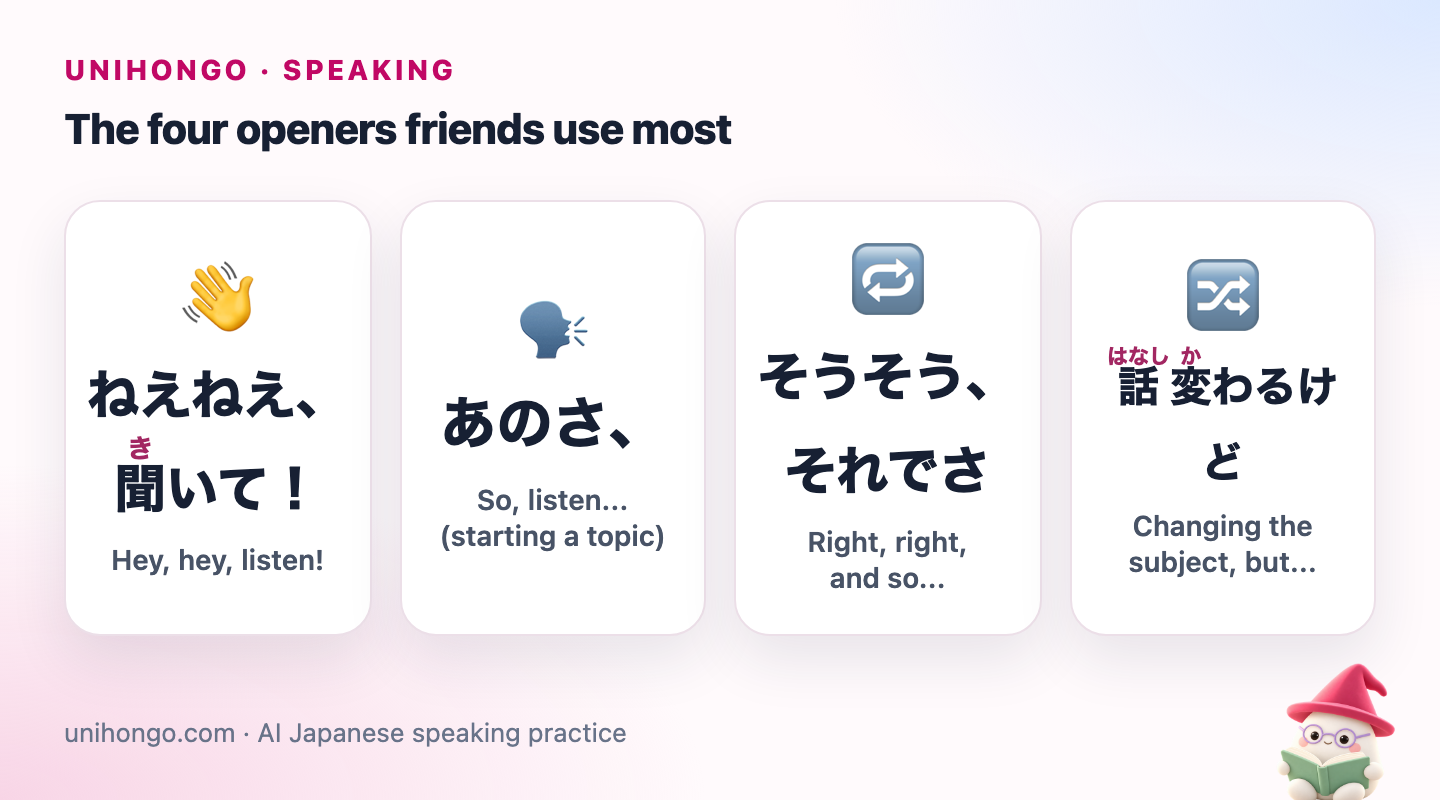
| Japanese | Romaji | Meaning |
|---|---|---|
| ねえねえ、聞いて! | Nē nē, kiite! | Hey, hey, listen! |
| あのさ、 | Ano sa, | So, listen... (starting a topic) |
| そうそう、それでさ | Sō sō, sore de sa | Right, right, and so... |
| 話変わるけど | Hanashi kawaru kedo | Changing the subject, but... |
Nē and nē nē: the eager hey
Nē (ねえ) on its own is the simplest way to call someone you know: hey. Doubled as nē nē, it becomes eager, almost tugging at a sleeve. Children use it constantly with their parents, and adults use it with friends and partners when they are excited or want something. The pitch usually rises and stays bright.
A long, falling nēē with a heavy voice is different: it can sound like a protest, as in come on! or seriously? The words are the same; the melody tells your friend whether you have good news or a grievance.
| Japanese | Romaji | Meaning |
|---|---|---|
| ねえ、これ見て。 | Nē, kore mite. | Hey, look at this. |
| ねえねえ、今ひま? | Nē nē, ima hima? | Hey, hey, are you free now? |
| なになに? | Nani nani? | Friend: What, what? |
| どうしたの? | Dō shita no? | Friend: What's up? |
Ano sa and ano ne: so, listen
Ano sa (あのさ) is built from the hesitation word ano and the casual particle sa. It means so, listen and is a little calmer than nē nē. People often use it before something that needs a bit of courage: a request, a confession, a plan they are not sure about. Ano ne (あのね) does the same job more softly and is typical when talking to children, and in gentle speech in general.
Be careful with a stretched, flat anō saā with a sigh. That melody announces irritation, roughly look, I have to say this. If you want to sound friendly, keep it short and light.
| Japanese | Romaji | Meaning |
|---|---|---|
| あのさ、ちょっとお願いがあるんだけど。 | Ano sa, chotto onegai ga aru n da kedo. | So, I have a small favour to ask. |
| あのね、今日学校でね… | Ano ne, kyō gakkō de ne... | Child: You know what, at school today... |
| あのさあ、いいかげんにして。 | Ano sā, ii kagen ni shite. | Look, that's enough. (irritated) |
The last line shows the irritated melody in action: the same opener, followed by a complaint. Learners sometimes use a drawn-out ano sā innocently and sound much crosser than they mean.
Chotto kiite and kiite yo: announcing news
When the news is too big to wait, friends say chotto kiite! (ちょっと聞いて!), listen to this!, or kiite kiite! Both promise a good story. Kiite yo (聞いてよ) adds a pleading edge and very often introduces a complaint: listen, you won't believe what happened to me.
Notice what chotto does here. It is the same chotto that means a little, softening the request into just listen for a moment. On its own, a sharp chotto! means hey! stop that!, so do not use it alone to call a friend over.
| Japanese | Romaji | Meaning |
|---|---|---|
| ちょっと聞いて!すごいことがあったの。 | Chotto kiite! Sugoi koto ga atta no. | Listen! Something amazing happened. |
| 聞いて聞いて! | Kiite kiite! | Listen, listen! |
| もう、聞いてよ。 | Mō, kiite yo. | Ugh, listen to this. (complaint coming) |
| ちょっといい? | Chotto ii? | Got a sec? |
The little sa, sō sō, and changing the subject
Once a story is under way, friends often drop a sa (さ) after a phrase, the way some English speakers say like or you know. It keeps the listener with you and gives you a breath. Ne (ね) in the same position sounds softer. A few per story sound relaxed; one after every word sounds rough or childish.
Sō sō (そうそう) means yes, yes or exactly, and it is also how you pick a story back up after an interruption: sō sō, sore de sa, right, so anyway. A sudden a, sō da! means oh, that reminds me. To move to a new topic, say hanashi kawaru kedo or sō ieba.
| Japanese | Romaji | Meaning |
|---|---|---|
| 昨日さ、駅でさ、 | Kinō sa, eki de sa, | Yesterday, like, at the station, |
| あ、そうだ! | A, sō da! | Oh, that reminds me! |
| そういえば、旅行どうだった? | Sō ieba, ryokō dō datta? | Speaking of which, how was the trip? |
| 話変わるけど、来週ひま? | Hanashi kawaru kedo, raishū hima? | Changing the subject, are you free next week? |
Scenario: bursting in with news
You ran into your old high school teacher at the station, and she remembered your name. You find your friend Kenta in the break room and you cannot wait. Here is the whole exchange, with the openers doing their job.
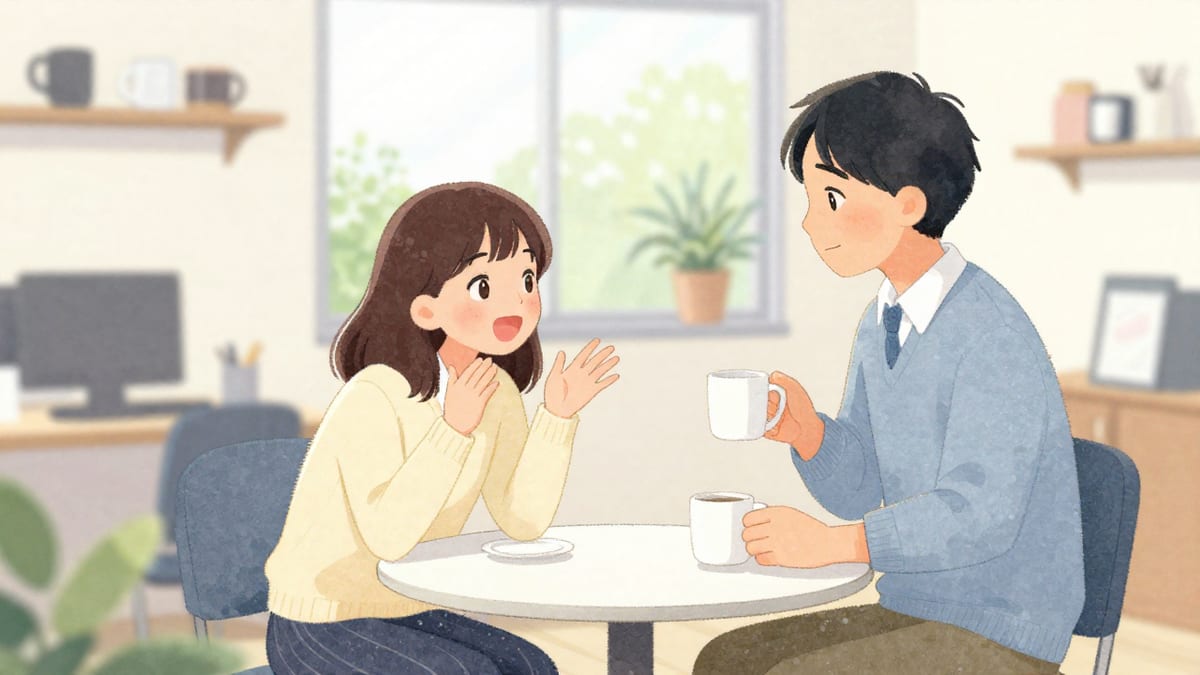
| Japanese | Romaji | Meaning |
|---|---|---|
| ねえねえ、ちょっと聞いて! | Nē nē, chotto kiite! | You: Hey, hey, listen to this! |
| なになに? | Nani nani? | Kenta: What, what? |
| 昨日さ、駅で高校の先生に会ったの! | Kinō sa, eki de kōkō no sensei ni atta no! | You: Yesterday I met my high school teacher at the station! |
| えー、ほんと? | Ē, honto? | Kenta: No way, really? |
| そうそう、それでさ、私の名前、覚えてたの! | Sō sō, sore de sa, watashi no namae, oboeteta no! | You: Yes, and she remembered my name! |
| すごいね! | Sugoi ne! | Kenta: That's amazing! |
The no at the end of atta no and oboeteta no is the casual explanatory ending, common in storytelling. Male speakers might say atta n da instead.
Openers in chat messages
The same openers move straight into messaging apps. A message that says only nē nē or chotto ii? is a common way to check that a friend is available before you launch into a long story or a request. It is the written version of tapping someone on the shoulder.
There is one difference from speech. Written down, ano sa with nothing after it can feel ominous, as if bad news or a serious talk is coming, especially between partners. If the topic is light, add the topic straight away or a friendly emoji, so your friend does not spend the next minute worrying.
| Japanese | Romaji | Meaning |
|---|---|---|
| ねえねえ、今電話できる? | Nē nē, ima denwa dekiru? | Hey, can you talk on the phone now? |
| ちょっといい?相談があって。 | Chotto ii? Sōdan ga atte. | Got a sec? I need some advice. |
| あのさ、明日のことなんだけど。 | Ano sa, ashita no koto na n da kedo. | So, it's about tomorrow. |
| 聞いて!今日ね、 | Kiite! Kyō ne, | Listen! So today, |
With strangers and at work: the polite versions
None of the friend openers work with people you do not know or people above you. A shop clerk greeted with nē nē would be startled, and a manager hearing ano sa would hear a lack of respect. The polite equivalents are easy, and they are what you would practise in a roleplay such as Ask the Way to the Station.
| Japanese | Romaji | Meaning |
|---|---|---|
| すみません、ちょっといいですか。 | Sumimasen, chotto ii desu ka. | Excuse me, do you have a moment? |
| ところで、来週の会議ですが… | Tokoro de, raishū no kaigi desu ga... | By the way, about next week's meeting... |
| Who you are talking to | Opener | Meaning |
|---|---|---|
| Stranger, staff | sumimasen | excuse me |
| Coworker, boss | chotto ii desu ka | do you have a moment? |
| Polite conversation | ano, sumimasen | um, excuse me |
| Changing topic politely | tokoro de | by the way |
| Close friend | nē nē, ano sa | hey, so listen |
- Do not say sumimasen to call a close friend: it sounds oddly distant.
- Do not use chotto! alone as hey: it sounds like a scolding.
- Do not overuse sa at work: even in relaxed offices it sounds sloppy.