
Four names from the sea
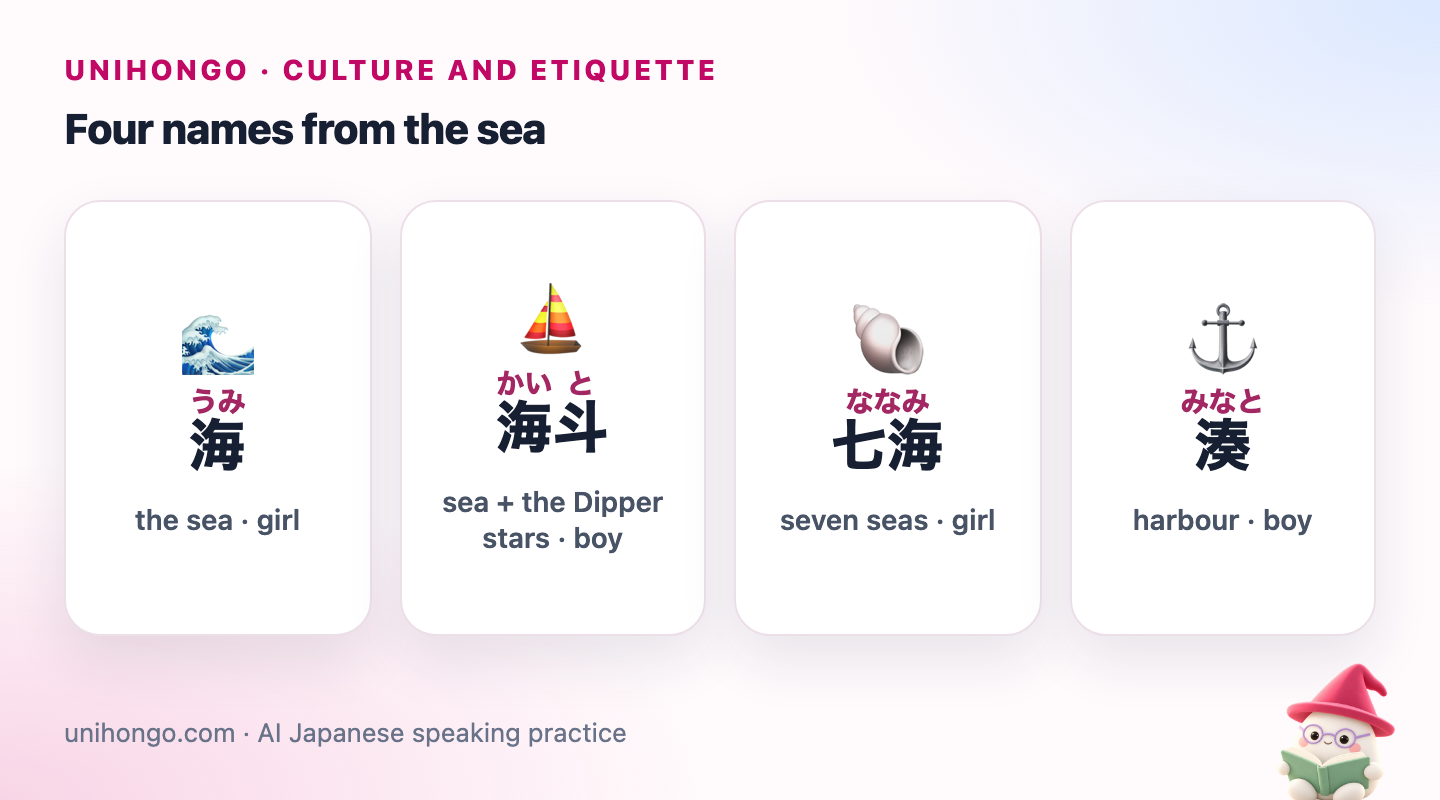
These four names come from the sea, and three of them use the same kanji, 海, read three different ways.
| Japanese | Romaji | Meaning |
|---|---|---|
| 海 | Umi | the sea · girl |
| 海斗 | Kaito | sea + the Dipper stars · boy |
| 七海 | Nanami | seven seas · girl |
| 湊 | Minato | harbour · boy |
In Umi, 海 has its everyday reading. In Kaito it is read kai, its on'yomi, as in 海外 (kaigai, abroad). In Nanami it is read mi, a name reading. Kaito combines the sea with 斗, the stars of the Dipper that sailors used to steer by, which gives the name a sense of adventure.
The water radical 氵
Many water kanji have three short strokes on the left: the water radical, called sanzui (さんずい), three waters. When you see it, the kanji usually has something to do with water, and Japanese people use the name of the radical to explain names: sanzui ni mono de nagisa, the water radical plus 者 makes 渚.
| Japanese | Romaji | Meaning |
|---|---|---|
| さんずい | sanzui | the water radical 氵 |
| 波 | nami | wave |
| 潮 | shio | tide |
| 凪 | nagi | a calm sea, no wind |
| Kanji | Everyday meaning | In names |
|---|---|---|
| 海 | Sea | Umi, Kaito, Nanami |
| 波 | Wave | Minami (美波) |
| 渚 | Water's edge, shore | Nagisa |
| 湊 | Harbour | Minato |
| 澪 | Channel of water, wake | Mio |
| 汐 | Evening tide | Shiori (汐里) |
凪, a calm sea, has no water radical but is one of the most poetic water words. It describes the stillness when the wind drops at the coast in the morning or evening, and Nagi is used as a name for girls and boys.
Water names for girls
| Japanese | Romaji | Meaning |
|---|---|---|
| 美波 | Minami | beauty + waves · girl |
| 澪 | Mio | a channel of water, a boat's wake · girl |
| 雫 | Shizuku | a drop of water · girl |
| 泉 | Izumi | a spring of water · mostly girl |
| 汐里 | Shiori | evening tide + village · girl |
| 渚 | Nagisa | the water's edge · unisex |
Mio, 澪, is a channel of deep water that boats follow, or the trail a boat leaves behind. Parents choose it for its clear, gentle sound and for the image of a path. Shiori is often written 栞, bookmark, too; 汐里 is the water spelling.
Many of these names are short, with two or three syllables and no special ending, which gives them a clean, modern sound. Some, such as Izumi and Nagisa, have been used for decades and are familiar across generations; others, such as Shizuku, feel more recent. All of them are easy for Japanese people to read, which is one reason parents like them.
Water names for boys and any gender
| Japanese | Romaji | Meaning |
|---|---|---|
| 拓海 | Takumi | open up + sea · boy |
| 航 | Wataru | to sail, voyage · boy |
| 洋 | Hiroshi | ocean, broad · boy (classic) |
| 涼 | Ryō | cool, refreshing · unisex |
| 大河 | Taiga | a great river · boy |
| 凪 | Nagi | a calm sea · unisex |
航 is the kanji of 航海 (kōkai, voyage) and 航空 (kōkū, aviation), and as Wataru it carries the image of crossing the sea. 洋 means a wide ocean, as in 太平洋 (Taiheiyō, the Pacific); as Hiroshi it is a classic name, and in longer names it is read yō, as in 洋平 (Yōhei).
Taiga, a great river, is a strong, modern-sounding boy's name; 大河 is also the everyday word for a big river and for a long historical TV drama series, taiga dorama, so it has a grand feel. Takumi with 拓海, opening up the sea, suggests a pioneer. Boys' sea names often carry this sense of adventure and travel, while girls' sea names lean towards calm, clear images.
Talking about a water name
People with sea names often have a family story: a grandparent who fished, a hometown by the coast, a summer birth. Asking where the name comes from is a good way to start a real conversation.
| Japanese | Romaji | Meaning |
|---|---|---|
| 海の近くで育ちました。 | Umi no chikaku de sodachimashita. | I grew up near the sea. |
| 祖父が漁師だったんです。 | Sofu ga ryōshi datta n desu. | My grandfather was a fisherman. |
| さんずいに「者」で、渚です。 | Sanzui ni "mono" de, Nagisa desu. | Water radical plus 者: it's Nagisa. |
| 海が好きなんですね。 | Umi ga suki na n desu ne. | You must love the sea. |
Mini dialogue: meeting Nanami
| Japanese | Romaji | Meaning |
|---|---|---|
| ななみさんは、どんな字ですか。 | Nanami san wa, donna ji desu ka. | You: Nanami, which kanji do you use? |
| 漢数字の七に、海です。 | Kansūji no nana ni, umi desu. | Nanami: The number seven, plus sea. |
| 七つの海ですね。 | Nanatsu no umi desu ne. | You: The seven seas, then. |
| はい、世界を見てほしいって。 | Hai, sekai o mite hoshii tte. | Nanami: Yes, they wanted me to see the world. |
Clear water, rivers and rapids
Water names are not only about the sea. Kanji for clear water, rivers and rapids give some of the most familiar names in Japan, and the idea behind them is purity: water that is clean, calm and refreshing. Several of these are classic names you will meet among older people, others feel fresh and modern.
| Japanese | Romaji | Meaning |
|---|---|---|
| 清 | Kiyoshi | pure, clear water · boy (classic) |
| 澄香 | Sumika | clear + fragrance · girl |
| 潤 | Jun | moist, enriching · unisex |
| 七瀬 | Nanase | seven rapids · girl |
| 川 | kawa | river |
| 瀬 | se | shallows, rapids |
清 and 澄 both mean clear, as in 清潔 (seiketsu, clean) and 澄んだ空気 (sunda kūki, clear air). 潤 means moist or enriched, and as Jun it suggests a life with plenty. Nanase written 七瀬 means seven rapids; 七星, seven stars, is also read Nanase. One sound, two images.
When you meet someone with a water name, a natural follow-up is to ask about their hometown. People named after the sea or a river often grew up near one, or have a parent who did.
Hear the long vowels, then lock in the kanji
- Ask Mocchi: Quiz me on water kanji in names, 海, 波, 渚, 湊, 澪, 汐 and 航, and tell me the radical each time. Mocchi keeps note of the kanji you miss and brings them back.
- Open the pronunciation coach and choose a long-vowel drill. Listen, slow it down, record yourself and check the scores, so names like Ryō and Yōhei come out right.
- Finish with /review in Mocchi a few days later: it picks up where you left off.
Mistakes to avoid with water names
- Assuming 海 is always umi. It is kai in Kaito and mi in Nanami.
- Calling Nanami seven oceans in every case. 菜々美 is also Nanami, with no sea at all.
- Missing the long vowel in Ryō, Yōhei or Kōta. The vowel is part of the name.
- Using 水 alone as a name for a character. It reads as plain water; Japanese names prefer specific images such as 雫 or 泉.
- Guessing a radical you have not seen. Ask Donna ji desu ka and let the person explain.