
The day in one minute
The name has three parts. Doyō (土用) is a period of roughly 18 days before each of the four traditional season starts: spring, summer, autumn and winter. Ushi (丑) is the ox, one of the twelve animals of the zodiac, which in the old calendar were also used to name days in a repeating cycle. Hi (日) is day. So Doyō no Ushi no Hi is any ox day that falls in a doyō period, and there are several every year.
In everyday talk, though, the phrase almost always means the summer one, before the start of autumn in early August. That is the day of eel, unagi, served as kabayaki: split, grilled and brushed with a sweet soy sauce.
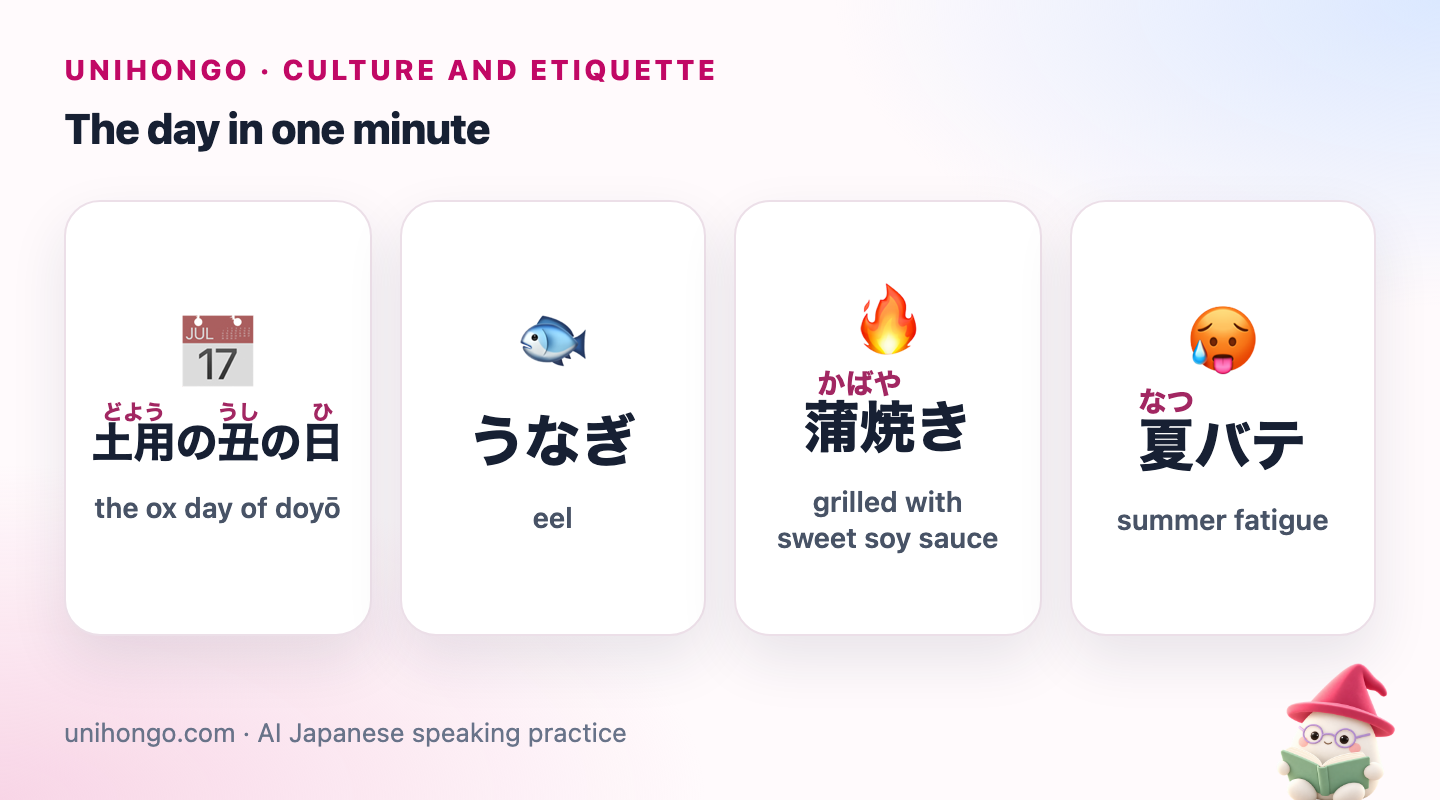
| Japanese | Romaji | Meaning |
|---|---|---|
| 土用の丑の日 | doyō no ushi no hi | the ox day of doyō |
| うなぎ | unagi | eel |
| 蒲焼き | kabayaki | grilled with sweet soy sauce |
| 夏バテ | natsubate | summer fatigue |
| 今年の土用の丑の日はいつ? | Kotoshi no doyō no ushi no hi wa itsu? | When is this year's eel day? (casual) |
Why the date moves every year
The summer doyō runs for about 18 days before risshū, the traditional start of autumn, which falls around 7 or 8 August. The zodiac days cycle every twelve days, so the ox day lands on a different calendar date each year. When the 18-day period happens to contain two ox days, the first is called ichi no ushi and the second ni no ushi, and eel shops get two busy days instead of one.
| Japanese | Romaji | Meaning |
|---|---|---|
| 今年は二の丑もあるよ。 | Kotoshi wa ni no ushi mo aru yo. | There's a second ox day this year too. (casual) |
| もうすぐ土用の丑の日ですね。 | Mō sugu doyō no ushi no hi desu ne. | Eel day is coming soon, isn't it? |
| Word | Reading | Meaning |
|---|---|---|
| 土用 | doyō | About 18 days before each season begins |
| 立秋 | risshū | The traditional start of autumn, early August |
| 十二支 | jūnishi | The twelve zodiac animals, also used for days |
| 一の丑・二の丑 | ichi no ushi, ni no ushi | The first and second ox day in one doyō |
How eel became the dish of the day
Eel has a long reputation as stamina food. A poem in the Man'yōshū, Japan's oldest collection of poetry, teases a thin friend and recommends eel to put on weight in summer. So the idea that eel helps you survive the heat is very old.
The link with the ox day is usually credited to a popular Edo-period story. An eel shop owner whose sales dropped every summer asked the inventor and writer Hiraga Gennai for advice. Gennai suggested a sign saying that today was the day of the ox, playing on a belief that foods starting with the sound u were good to eat on that day. The shop became busy, others copied it, and the custom spread. Nobody can prove the story, and other explanations exist, but it is the version most Japanese people know.
Other u foods are still eaten on the day in some homes: udon, umeboshi pickled plums and uri melons and gourds, which are refreshing in the heat.
| Japanese | Romaji | Meaning |
|---|---|---|
| スタミナをつける | sutamina o tsukeru | to build up stamina |
| 夏バテしないように、うなぎを食べます。 | Natsubate shinai yō ni, unagi o tabemasu. | I eat eel so I don't get worn out by summer. |
| 「う」のつく食べ物 | u no tsuku tabemono | foods that start with u |
| 梅干し | umeboshi | pickled plum |
| うどん | udon | thick wheat noodles |
Eel dishes on the menu
Most eel restaurants offer a short menu built around the same grilled eel. The main difference is how it is served and how much eel you get. Many shops list grades such as nami, jō and tokujō (regular, superior and special), which usually means more eel; others use matsu, take and ume (pine, bamboo and plum), and in that system the order varies by shop, so ask if you are unsure.
| Japanese | Romaji | Meaning |
|---|---|---|
| うな重 | unajū | eel on rice in a lacquered box |
| うな丼 | unadon | eel on rice in a bowl |
| ひつまぶし | hitsumabushi | Nagoya-style chopped eel, eaten three ways |
| 白焼き | shirayaki | eel grilled without sauce |
| 肝吸い | kimosui | clear soup with eel liver |
| 山椒 | sanshō | Japanese pepper |
| たれ | tare | sweet soy sauce glaze |
| 並・上・特上 | nami, jō, tokujō | regular, superior, special |
Sanshō, the tingling Japanese pepper, is sprinkled on top at the table. Try a little first; it numbs the lips slightly, which surprises many first-timers. Hitsumabushi comes with instructions, often on a card, and the staff will explain the three ways if you ask.
Kantō or Kansai: two ways to grill
Eel is prepared differently in eastern and western Japan, and eel lovers enjoy debating which is better. In the Kantō region around Tokyo, the eel is usually opened along the back, grilled, steamed and grilled again with sauce, which makes it soft and fluffy. In the Kansai region around Osaka, it is usually opened along the belly and grilled directly without steaming, which gives a crisper, more savoury texture. There are exceptions, and many shops in both regions have their own style.
A popular explanation for the Kantō back cut is that samurai-era Edo disliked a belly cut because it recalled ritual suicide, while merchant-city Osaka liked the idea of talking openly, hara o watte hanasu, literally opening your belly. Treat this as a fun story rather than history.
| Japanese | Romaji | Meaning |
|---|---|---|
| ふわふわ | fuwafuwa | soft and fluffy |
| 香ばしい | kōbashii | fragrant, nicely toasted |
| Point | Kantō style | Kansai style |
|---|---|---|
| How it is opened | Along the back, se biraki | Along the belly, hara biraki |
| Steaming | Usually steamed before the final grilling | Usually grilled directly |
| Texture | Soft and fluffy | Crisp outside, firm and savoury |
Ordering at an eel restaurant
Good eel shops grill to order, so on busy days you may wait a while; some shops take reservations or sell out early on the ox day. Sit down, order, and enjoy the smell of charcoal and sauce. If you want to share, ask; many shops are happy to bring an extra bowl.
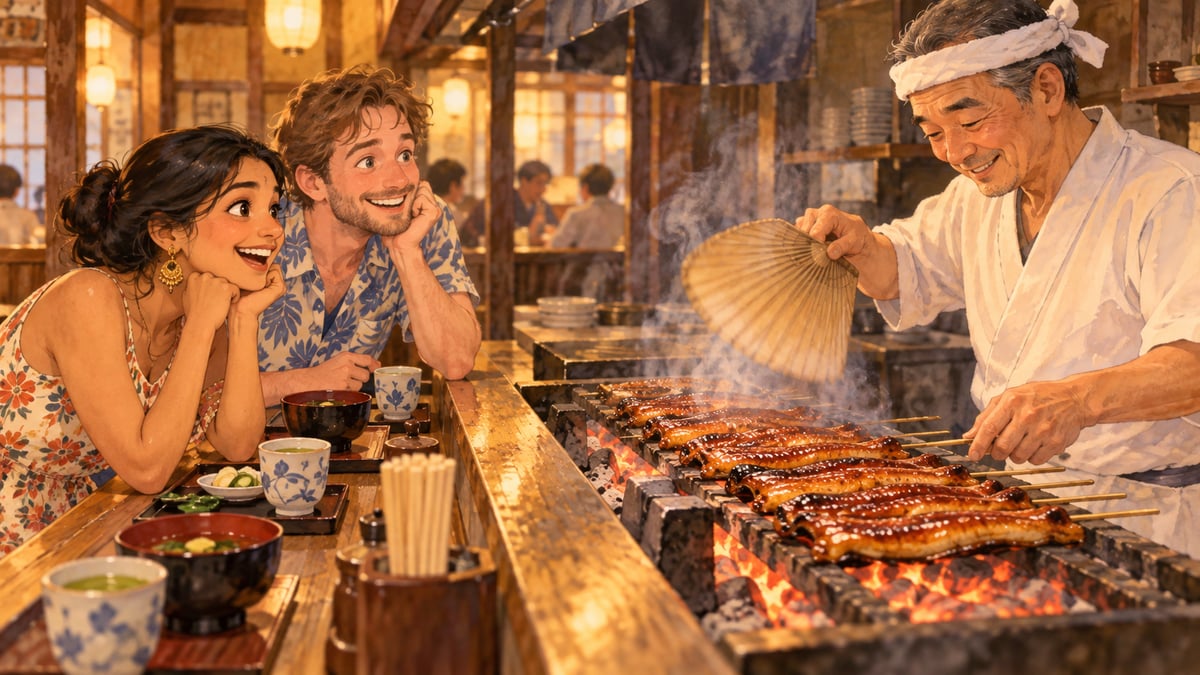
| Japanese | Romaji | Meaning |
|---|---|---|
| うな重の上を一つお願いします。 | Unajū no jō o hitotsu onegai shimasu. | One superior unajū, please. |
| 肝吸いもお願いします。 | Kimosui mo onegai shimasu. | The eel liver soup too, please. |
| どのくらい待ちますか。 | Dono kurai machimasu ka. | How long is the wait? |
| 焼き上がりまで二十分ほどお時間いただきます。 | Yakiagari made nijippun hodo ojikan itadakimasu. | Staff: It will take about twenty minutes to grill. |
| 取り皿をもらえますか。 | Torizara o moraemasu ka. | Could I have a small plate for sharing? |
| 山椒はお好みでどうぞ。 | Sanshō wa okonomi de dōzo. | Staff: Add sanshō pepper as you like. |
Eel and conservation: a gentle note
Eel has a complicated place in Japan today. The Japanese eel is listed as endangered on international conservation lists, almost all eel eaten is farmed from wild-caught young eels, and prices have risen over the years. Many people still treat themselves on the ox day, while others eat eel less often, choose other grilled fish, or try alternatives such as eel-style dishes made from fish, tofu or other ingredients. If the topic comes up with Japanese friends, listen and ask questions rather than lecture; views differ, and it is a sensitive subject for eel shops with long histories.
| Japanese | Romaji | Meaning |
|---|---|---|
| うなぎは高くなりましたね。 | Unagi wa takaku narimashita ne. | Eel has become expensive, hasn't it? |
| 今年はうなぎの代わりに、うどんにしました。 | Kotoshi wa unagi no kawari ni, udon ni shimashita. | This year I had udon instead of eel. |
Get the long vowels right with Mocchi
Eel-day words are full of long vowels: doyō, unajū, risshū, kōbashii. Type /pronounce in Mocchi for a short pronunciation practice in the chat, then ask: quiz me on the eel menu words, with the romaji hidden. Mocchi remembers the words you hesitate on and brings them back in a later /review, along with the zodiac vocabulary.
For a focused drill, open the pronunciation coach and pick the long-vowel practice: you hear the model, slowed down if you like, record yourself and get a score for accuracy, rhythm and pitch, with a tip on what to fix.