
The four phrases you need first
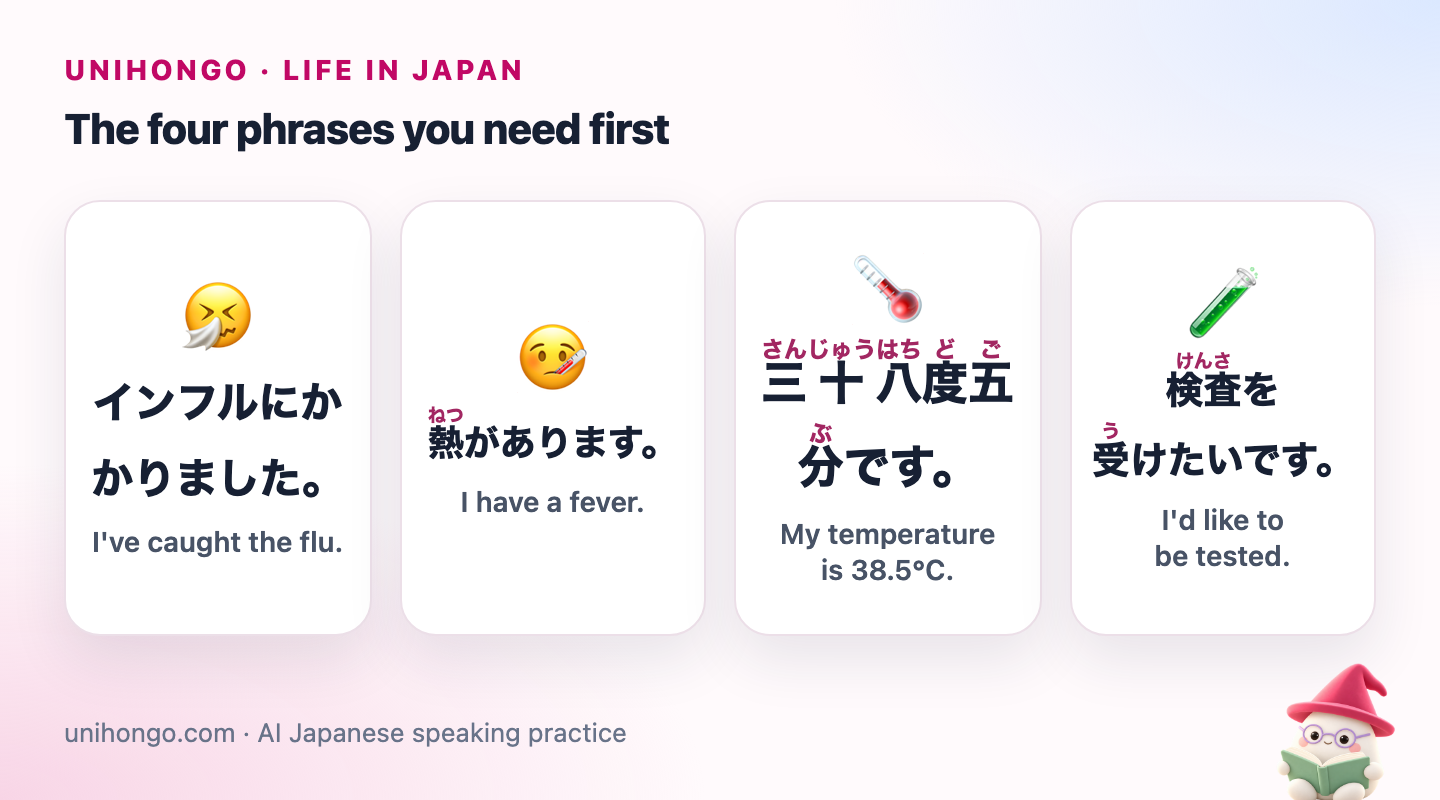
If you remember nothing else, remember these. The first is what you tell your boss or friends; the second opens a call to any clinic; the third is what the nurse will want to know; the fourth is what most patients with flu symptoms come to the clinic for.
| Japanese | Romaji | Meaning |
|---|---|---|
| インフルにかかりました。 | Infuru ni kakarimashita. | I've caught the flu. |
| 熱があります。 | Netsu ga arimasu. | I have a fever. |
| 三十八度五分です。 | Sanjūhachi do go bu desu. | My temperature is 38.5°C. |
| 検査を受けたいです。 | Kensa o uketai desu. | I'd like to be tested. |
Symptoms: how to describe how you feel
Japanese clinics measure temperature in Celsius, and people say the decimal with bu: 38.5 is sanjūhachi do go bu. Many people say the number with ten instead, sanjūhachi ten go do, and both are understood. Start with when it began, then list symptoms with the ~ te imasu or ~ ga arimasu pattern.
| Japanese | Romaji | Meaning |
|---|---|---|
| 昨日の夜から熱があります。 | Kinō no yoru kara netsu ga arimasu. | I've had a fever since last night. |
| 喉が痛いです。 | Nodo ga itai desu. | My throat hurts. |
| 咳が出ます。 | Seki ga demasu. | I have a cough. |
| 寒気がします。 | Samuke ga shimasu. | I feel chills. |
| 関節が痛いです。 | Kansetsu ga itai desu. | My joints ache. |
| 体がだるいです。 | Karada ga darui desu. | I feel heavy and exhausted. |
| 頭痛がひどいです。 | Zutsū ga hidoi desu. | I have a bad headache. |
Calling the clinic before you go
Many clinics, kurinikku or iin, ask patients with a fever to phone first. Some have a separate fever outpatient service, hatsunetsu gairai (発熱外来), with set hours or a separate entrance. When you call, give your name, say you have a fever, and ask whether you can come today. Have your insurance card ready: in Japan this is now usually the My Number card registered for health insurance, or the document your insurer gave you; the clinic will tell you what to bring.
| Japanese | Romaji | Meaning |
|---|---|---|
| もしもし、熱があるんですが、今日診てもらえますか。 | Moshimoshi, netsu ga aru n desu ga, kyō mite moraemasu ka. | Hello, I have a fever. Could I be seen today? |
| 何時ごろ行けばいいですか。 | Nanji goro ikeba ii desu ka. | Around what time should I come? |
| 発熱外来はありますか。 | Hatsunetsu gairai wa arimasu ka. | Do you have a fever clinic? |
| 車の中でお待ちください。 | Kuruma no naka de omachi kudasai. | Staff: Please wait in your car. |
| 保険証は何を持って行けばいいですか。 | Hokenshō wa nani o motte ikeba ii desu ka. | What should I bring as my insurance card? |
At the clinic: the test and the doctor's questions
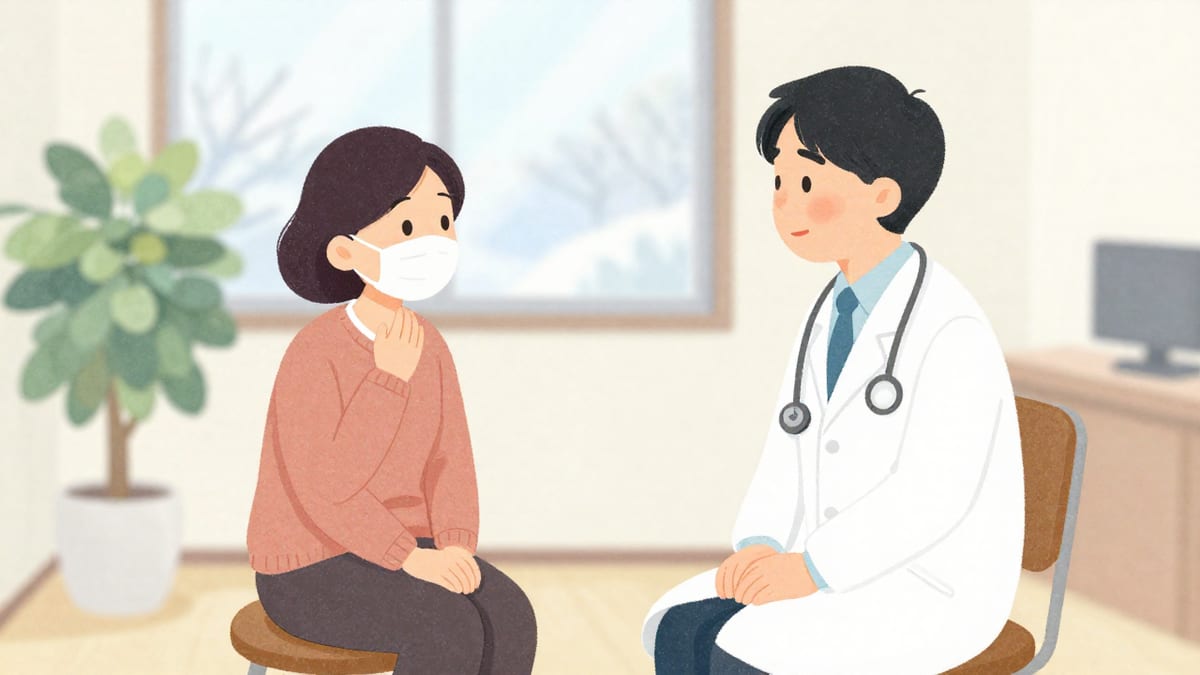
If the doctor decides to test you, the nurse usually takes a swab from your nose. The doctor will tell you the result and decide on treatment. Listen for these questions; most of them are yes-or-no and you can answer with hai or iie plus a short detail. This is a language guide only: follow your doctor's instructions about medicine and rest.
| Japanese | Romaji | Meaning |
|---|---|---|
| いつから熱がありますか。 | Itsu kara netsu ga arimasu ka. | Doctor: Since when have you had a fever? |
| 周りにインフルの人はいますか。 | Mawari ni infuru no hito wa imasu ka. | Doctor: Is anyone around you sick with flu? |
| アレルギーはありますか。 | Arerugī wa arimasu ka. | Doctor: Do you have any allergies? |
| インフルエンザA型ですね。 | Infuruenza ē gata desu ne. | Doctor: It's influenza type A. |
| 検査が陰性でした。 | Kensa ga insei deshita. | The test was negative. |
| もう一度説明していただけますか。 | Mō ichido setsumei shite itadakemasu ka. | Could you explain that once more? |
Telling school or work you are staying home
Schools in Japan follow national guidelines for infectious diseases such as influenza, which set a minimum number of days away from school counted from when symptoms start and when the fever goes down. Exactly how it is applied, and whether you need a form from the doctor, varies, so ask the school. Children kept home for this reason are usually marked shusseki teishi (出席停止), suspended attendance, which is not counted as an absence. Companies have their own rules: some require you to stay home for a set period, others leave it to the doctor.
| Japanese | Romaji | Meaning |
|---|---|---|
| インフルエンザのため、今日はお休みします。 | Infuruenza no tame, kyō wa oyasumi shimasu. | Because of the flu, I'll take today off. |
| 病院に行ってから、また連絡します。 | Byōin ni itte kara, mata renraku shimasu. | I'll contact you again after seeing the doctor. |
| いつから出勤できますか。 | Itsu kara shukkin dekimasu ka. | From when may I return to work? |
| 娘がインフルエンザと診断されました。 | Musume ga infuruenza to shindan saremashita. | My daughter was diagnosed with the flu. |
| 登校には何か書類が必要ですか。 | Tōkō ni wa nani ka shorui ga hitsuyō desu ka. | Is any document needed for her to return to school? |
If you send a message instead of calling, keep it short: what happened, what you will do, and when you will update them. Apologising once, gomeiwaku o okake shimasu, I am sorry for the trouble, is standard in a work message.
Masks, flu shots and the pharmacy
Many people in Japan wear masks in winter, both to avoid catching something and, when they have a cold, to avoid passing it on. Washing your hands, tearai, and gargling, ugai, are the classic advice you will hear from schools and on TV. Flu vaccinations are given at clinics from autumn, usually by appointment; some local governments subsidise them for certain age groups.
Prescriptions from the clinic are filled at a pharmacy, yakkyoku (薬局), often next door. Hand over the prescription, shohōsen (処方箋), and the pharmacist will explain how to take the medicine. The pharmacist may also ask about other medicines you take.
| Japanese | Romaji | Meaning |
|---|---|---|
| インフルの予防接種を予約したいんですが。 | Infuru no yobō sesshu o yoyaku shitai n desu ga. | I'd like to book a flu shot. |
| 処方箋をお願いします。 | Shohōsen o onegai shimasu. | Here's my prescription. |
| この薬は一日何回飲みますか。 | Kono kusuri wa ichinichi nankai nomimasu ka. | How many times a day do I take this? |
| ほかに飲んでいる薬はありますか。 | Hoka ni nonde iru kusuri wa arimasu ka. | Pharmacist: Are you taking any other medicine? |
| お大事に。 | Odaiji ni. | Take care of yourself. (said to someone ill) |
Common learner mistakes
- Saying kaze for the flu. Kaze is a cold; if the doctor says infuru, use infuru with your school or work, because the rules differ.
- Saying watashi wa netsu desu. Say netsu ga arimasu, I have a fever.
- Walking into a clinic with a fever without calling first. Many clinics prefer a call, and some have separate hours.
- Using byōki desu, I am ill, for everything. It sounds vague and serious; name the symptom instead.
- Forgetting odaiji ni. When a coworker is ill, it is the kind, expected thing to say.