
The four lines every angler uses
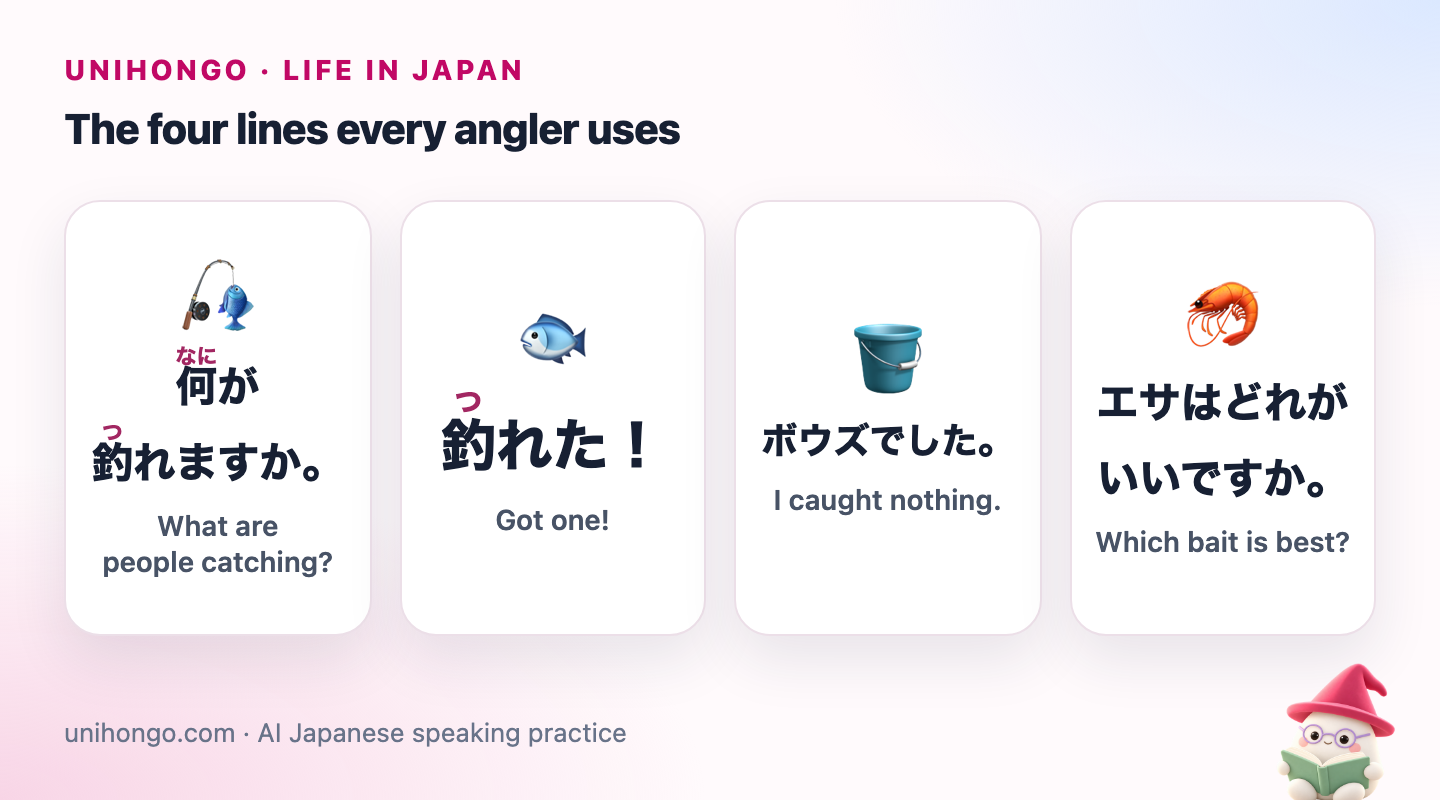
Fishing conversation in Japan revolves around a few questions and exclamations. Nani ga tsuremasu ka uses tsureru, the potential form of tsuru (to catch a fish), and means what can be caught, or what are people catching. It works at the tackle shop, on the pier and with anyone holding a rod.
Tsureta is the plain past of the same verb: it caught, I got one. People shout it without thinking. Bōzu is the opposite: a day with nothing, said with a shrug.
| Japanese | Romaji | Meaning |
|---|---|---|
| 何が釣れますか。 | Nani ga tsuremasu ka. | What are people catching? |
| 釣れた! | Tsureta! | Got one! |
| ボウズでした。 | Bōzu deshita. | I caught nothing. |
| エサはどれがいいですか。 | Esa wa dore ga ii desu ka. | Which bait is best? |
| 釣りが趣味です。 | Tsuri ga shumi desu. | Fishing is my hobby. |
At the tackle shop: bait, rigs and local information
The tsurigu-ya is your best source of information. Staff often keep track of what is being caught nearby, and they are used to beginners. Tell them where you plan to fish and they will suggest a rig, called shikake (仕掛け), and bait. For pier fishing, a common beginner set-up is a sabiki rig: a line of small decorated hooks with a basket of krill, okiami, that attracts schools of small fish such as aji (horse mackerel), iwashi (sardines) and saba (mackerel).
| Japanese | Romaji | Meaning |
|---|---|---|
| 初心者なんですが、何がいいですか。 | Shoshinsha na n desu ga, nani ga ii desu ka. | I'm a beginner. What would you recommend? |
| 明日、港で釣りをしたいんです。 | Ashita, minato de tsuri o shitai n desu. | I want to fish at the harbour tomorrow. |
| 最近、何が釣れていますか。 | Saikin, nani ga tsurete imasu ka. | What's been biting lately? |
| サビキの仕掛けをください。 | Sabiki no shikake o kudasai. | A sabiki rig, please. |
| 冷凍のオキアミはありますか。 | Reitō no okiami wa arimasu ka. | Do you have frozen krill? |
| 竿のレンタルはできますか。 | Sao no rentaru wa dekimasu ka. | Can I rent a rod? |
Shoshinsha (初心者), beginner, is a magic word in Japan. Saying it early makes staff slow down and explain the basics without you having to ask for each thing.
Core fishing vocabulary
These are the words you will hear most often on a pier or in a tackle shop. Many are katakana loanwords, which makes them easier, but a few native words such as sao and esa are used far more than their English equivalents.
| Japanese | Romaji | Meaning |
|---|---|---|
| 竿 | sao | fishing rod |
| リール | rīru | reel |
| エサ | esa | bait |
| 仕掛け | shikake | rig, terminal tackle |
| 防波堤 | bōhatei | breakwater |
| 当たり | atari | a bite, a nibble |
| 釣果 | chōka | the day's catch |
| クーラーボックス | kūrā bokkusu | cool box |
On the pier: asking for a spot and reading the mood
Popular breakwaters can be crowded at dawn and dusk, when fish are most active. Anglers call these times asamazume and yūmazume (朝マズメ, 夕マズメ). Before you set up beside someone, ask. Leave space for casting, and watch which way people are casting so your line does not cross theirs. If lines tangle, anglers jokingly call it omatsuri (お祭り), a festival, and the usual response is a quick apology and patient untangling together.
| Japanese | Romaji | Meaning |
|---|---|---|
| 隣、いいですか。 | Tonari, ii desu ka. | Mind if I fish next to you? |
| どっちに投げていますか。 | Dotchi ni nagete imasu ka. | Which way are you casting? |
| すみません、お祭りしちゃいました。 | Sumimasen, omatsuri shichaimashita. | Sorry, our lines got tangled. |
| 朝マズメは何時ごろですか。 | Asamazume wa nanji goro desu ka. | Around what time is the morning bite? |
| ここ、釣りをしてもいいですか。 | Koko, tsuri o shite mo ii desu ka. | Is fishing allowed here? |
Rules about where you may fish differ by harbour and change over time, and some piers are closed to anglers because of litter and safety problems. Take your rubbish home, including line and bait packets; it is the best way to keep spots open.
Talking about a bite and the catch
When something bites, the language turns short and excited. Hiite iru, it's pulling, and kita, here it comes, are typical. Afterwards, people compare size in centimetres and count fish with the counter hiki (匹), which changes sound with the number: ippiki, nihiki, sanbiki. Showing off a catch is normal and expected, and the person next to you will usually comment.
| Japanese | Romaji | Meaning |
|---|---|---|
| 来た!引いてる! | Kita! Hiiteru! | Here it comes! It's pulling! |
| でかい! | Dekai! | It's huge! (casual) |
| アジが十匹釣れました。 | Aji ga juppiki tsuremashita. | I caught ten horse mackerel. |
| これ、何という魚ですか。 | Kore, nan to iu sakana desu ka. | What is this fish called? |
| 何センチですか。 | Nan senchi desu ka. | How many centimetres is it? |
| 逃げられた… | Nigerareta... | It got away... |
Nigerareta uses the passive to show the loss happened to you: the fish escaped, and you suffered for it. It is the standard sigh of every angler. Ask what a fish is before you keep it; some species are poisonous to handle or eat, and experienced anglers will warn you.
Scenario: chatting with an older angler on a breakwater
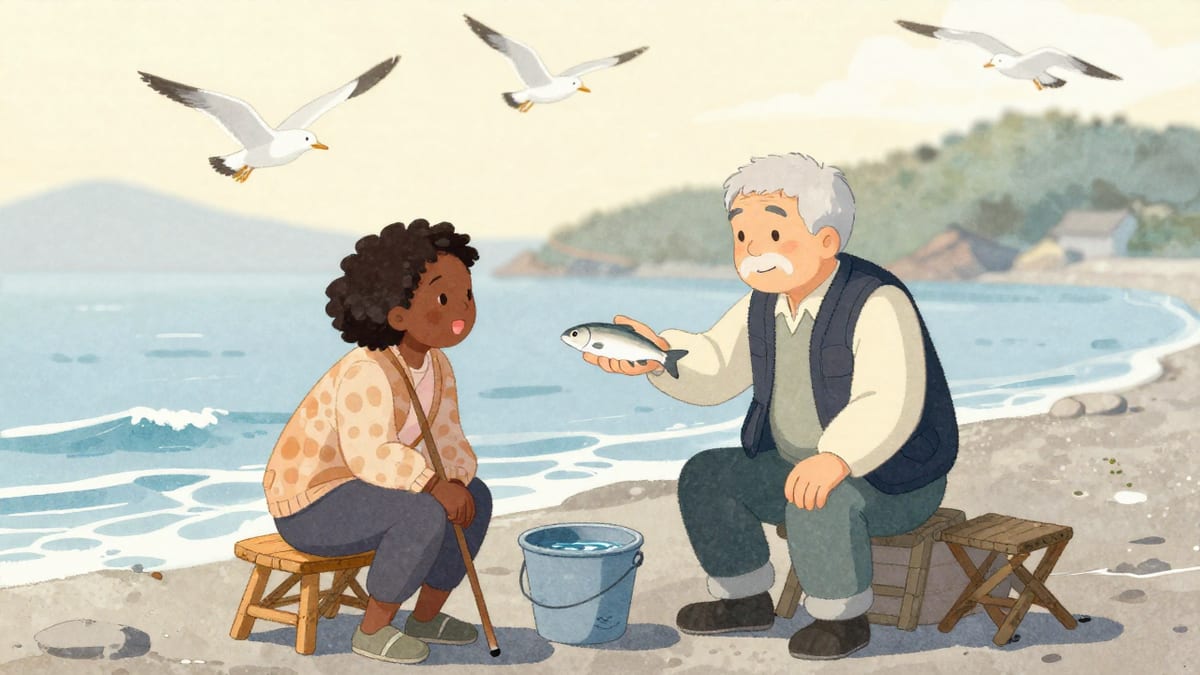
It is just after sunrise. You have set up a few metres from a man in his seventies who has clearly been coming here for decades. His bucket is already full of small fish. Yours is empty. Older anglers often speak casually and in regional dialect, but they are usually happy to share advice with a polite newcomer. Keep your side polite, and let him set the tone.
| Japanese | Romaji | Meaning |
|---|---|---|
| あなた:おはようございます。釣れていますか。 | Anata: Ohayō gozaimasu. Tsurete imasu ka. | You: Good morning. Are they biting? |
| 釣り人:アジがぼちぼちだね。 | Tsuribito: Aji ga bochibochi da ne. | Angler: The horse mackerel are so-so. |
| あなた:私はまだ一匹も釣れていないんです。 | Anata: Watashi wa mada ippiki mo tsurete inai n desu. | You: I haven't caught a single one yet. |
| 釣り人:もう少し底の方を狙ってごらん。 | Tsuribito: Mō sukoshi soko no hō o neratte goran. | Angler: Try aiming a bit closer to the bottom. |
| あなた:なるほど、やってみます。 | Anata: Naruhodo, yatte mimasu. | You: I see, I'll try that. |
| あなた:あ、釣れた!ありがとうございます! | Anata: A, tsureta! Arigatō gozaimasu! | You: Oh, got one! Thank you! |
Bochibochi means so-so, not bad, and it is a classic modest answer about how things are going. Neratte goran is a friendly, slightly fatherly way of saying try aiming for. You do not need to use either form yourself; just recognise them.
Seasons, boats and staying safe
What you can catch changes with the season and the place, and anglers talk about it constantly. In many coastal areas, small fish such as aji and saba are easy targets from summer into autumn, but the details vary by region and by year, so the tackle shop and the people on the pier are your best guides. Night fishing, yozuri (夜釣り), is popular in summer, and many harbours run fishing boats, tsuribune (釣り船), which take groups out for half a day with rods and bait provided.
Breakwaters can be slippery and waves can surprise you. Many anglers wear a life jacket, raifu jaketto, and some boats and fishing parks require one. If the wind is strong or the waves come over the concrete, people simply go home: kyō wa yamete okimasu, I'll give it a miss today.
| Japanese | Romaji | Meaning |
|---|---|---|
| 今の時期は何が釣れますか。 | Ima no jiki wa nani ga tsuremasu ka. | What can you catch at this time of year? |
| 夜釣りもできますか。 | Yozuri mo dekimasu ka. | Can you fish at night too? |
| 釣り船に乗ってみたいです。 | Tsuribune ni notte mitai desu. | I'd like to try a fishing boat. |
| ライフジャケットは借りられますか。 | Raifu jaketto wa kariraremasu ka. | Can I borrow a life jacket? |
| 今日は波が高いですね。 | Kyō wa nami ga takai desu ne. | The waves are high today. |
Talking about fishing as a hobby
Back at work or in class, someone will ask what you did at the weekend. Fishing is a great topic because many Japanese people have fished as children, and they will often share their own memories.
| Japanese | Romaji | Meaning |
|---|---|---|
| 週末はよく釣りに行きます。 | Shūmatsu wa yoku tsuri ni ikimasu. | I often go fishing at weekends. |
| 釣った魚を自分でさばきました。 | Tsutta sakana o jibun de sabakimashita. | I cleaned the fish I caught myself. |
| アジフライにして食べました。 | Aji furai ni shite tabemashita. | I made fried horse mackerel and ate it. |
| 釣りをしたことがありますか。 | Tsuri o shita koto ga arimasu ka. | Have you ever been fishing? |
- Common mistake: saying sakana o torimashita. Toru is understandable, but tsuru is the fishing verb.
- Common mistake: forgetting the counter. Say sanbiki, not san sakana.
- Do not boast too much. Modest answers like bochibochi desu go down well.