
Why this is the sentence you will repeat most
Most learners plan for the difficult conversations and never rehearse the one they will have five hundred times. A convenience store checkout is thirty seconds long, uses about fifteen words in total, and is close to identical in every shop in the country. That makes it the single best piece of Japanese to automate early, because success feels immediate and failure costs nothing.
It is also a listening exercise disguised as a speaking one. Staff speak quickly, in polite service language, with the verbs at the end, and they are not expecting a full sentence back. There is a separate guide on shopping in Japanese that covers browsing, sizes and general checkout, so this post stays inside the konbini and goes deeper on what is specific to it.
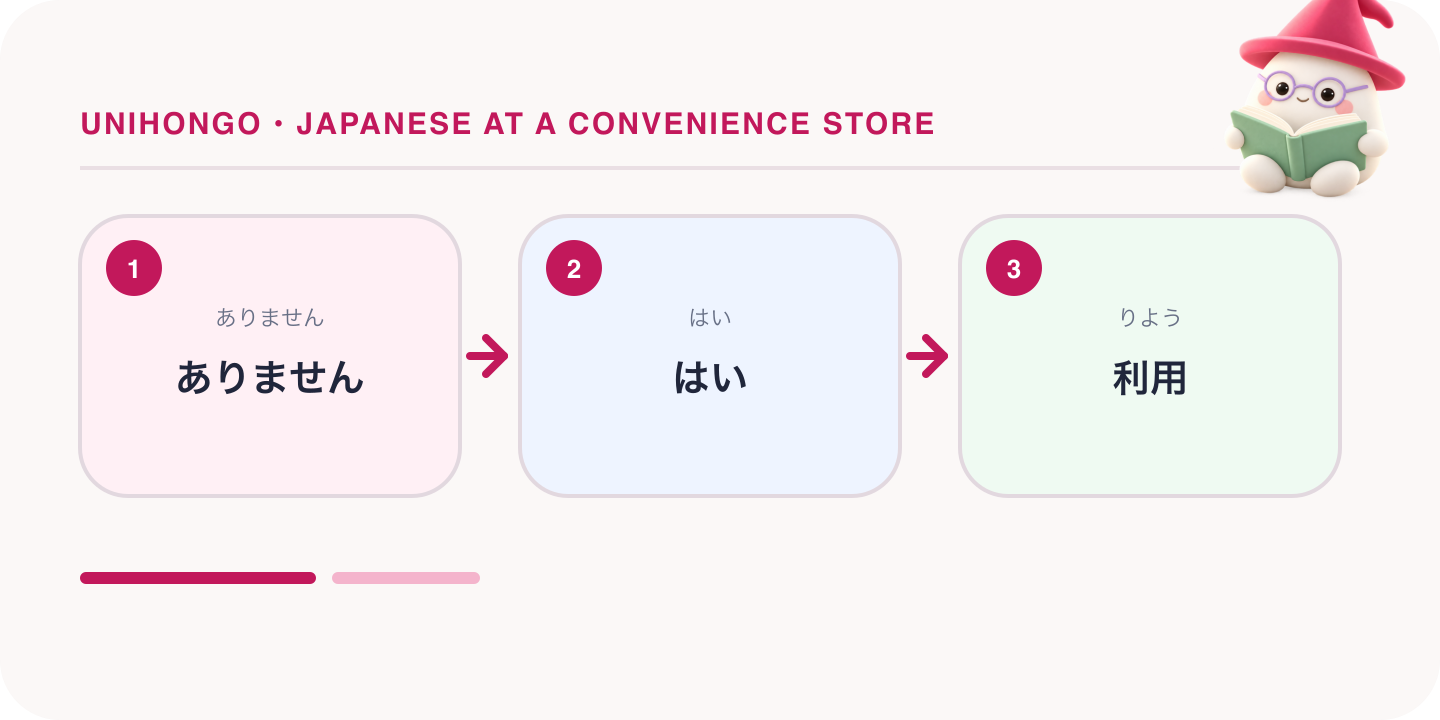
The checkout questions in the order they come
| Order | What staff say | Romaji | What it means | Your answer |
|---|---|---|---|---|
| 1 | 袋はご利用ですか。 | Fukuro wa goriyō desu ka. | Do you want a bag? | お願いします / 大丈夫です |
| 2 | お箸はお付けしますか。 | Ohashi wa otsuke shimasu ka. | Shall I add chopsticks? | はい / 要りません |
| 3 | お弁当は温めますか。 | Obentō wa atatamemasu ka. | Shall I heat the lunch box? | お願いします / そのままで |
| 4 | ポイントカードはお持ちですか。 | Pointo kādo wa omochi desu ka. | Do you have a point card? | ありません |
| 5 | お支払い方法はいかがなさいますか。 | Oshiharai hōhō wa ikaga nasaimasu ka. | How would you like to pay? | 現金で / カードで |
| 6 | 画面のボタンを押してください。 | Gamen no botan o oshite kudasai. | Please press the button on the screen. | はい |
| 7 | レシートはご利用ですか。 | Reshīto wa goriyō desu ka. | Do you want the receipt? | お願いします / 大丈夫です |
Four replies cover almost all of it. Hai is a plain yes. Onegai shimasu is yes please and is the safest positive answer. Daijōbu desu at a till means no thank you, not it is fine to go ahead, which is the opposite of what most learners assume. Irimasen is a clearer no when you want no ambiguity at all, and kekkō desu is the more formal version of it.
The order above is the common one, but it is not a law. A clerk with a hot lunch box in hand will ask about heating first, and a shop with a self-service payment terminal may skip the payment question entirely. Listen for the content word rather than the sentence: fukuro, hashi, atatame, pointo, shiharai. Catch that word and you already know the answer.
The bag question
This is question one because it is now asked in nearly every shop. Charging for bags is common and the amount varies by chain and region and changes over time, so staff always ask rather than assume. If you have your own bag, say daijōbu desu and start packing at the shelf beside the till, which is what the counter space is there for. If your items are few, staff will often offer to just tape a small sticker on instead.
There is a second bag question that catches people out: whether hot and cold items should be separated. Ice cream and a hot lunch box in one bag is a genuine problem, so a good clerk will ask, and wakete kudasai or issho de daijōbu desu answers it.
| Japanese | Romaji | Meaning |
|---|---|---|
| 袋はご利用ですか。 | Fukuro wa goriyō desu ka. | Staff: Would you like a bag? |
| レジ袋は有料になります。 | Rejibukuro wa yūryō ni narimasu. | Staff: Carrier bags are charged for. |
| 袋をお願いします。 | Fukuro o onegai shimasu. | A bag, please. |
| 大丈夫です。自分の袋があります。 | Daijōbu desu. Jibun no fukuro ga arimasu. | No thank you. I have my own bag. |
| 大きい袋にしてもらえますか。 | Ōkii fukuro ni shite moraemasu ka. | Could you make it a large bag? |
| 二枚お願いします。 | Ni-mai onegai shimasu. | Two bags, please. |
| 温かい物と冷たい物、袋を分けますか。 | Atatakai mono to tsumetai mono, fukuro o wakemasu ka. | Staff: Shall I separate the hot and cold items? |
| 分けてください。 | Wakete kudasai. | Please separate them. |
| 一緒で大丈夫です。 | Issho de daijōbu desu. | Together is fine. |
| シールでお願いします。 | Shīru de onegai shimasu. | Just a sticker, please. |
Chopsticks, spoons and heating
| Japanese | Romaji | Meaning |
|---|---|---|
| お箸はお付けしますか。 | Ohashi wa otsuke shimasu ka. | Staff: Shall I include chopsticks? |
| お箸をお願いします。 | Ohashi o onegai shimasu. | Chopsticks, please. |
| スプーンをもらえますか。 | Supūn o moraemasu ka. | Could I have a spoon? |
| フォークも一つお願いします。 | Fōku mo hitotsu onegai shimasu. | One fork as well, please. |
| お箸は要りません。 | Ohashi wa irimasen. | I do not need chopsticks. |
| 二膳お願いします。 | Ni-zen onegai shimasu. | Two pairs of chopsticks, please. |
| お弁当は温めますか。 | Obentō wa atatamemasu ka. | Staff: Shall I heat the lunch box? |
| 温めてください。 | Atatamete kudasai. | Please heat it up. |
| そのままで大丈夫です。 | Sono mama de daijōbu desu. | As it is, is fine. |
| 少し長めに温めてもらえますか。 | Sukoshi nagame ni atatamete moraemasu ka. | Could you heat it a little longer? |
| おしぼりをもらえますか。 | Oshibori o moraemasu ka. | Could I have a wet wipe? |
| ストローを一本ください。 | Sutorō o ippon kudasai. | One straw, please. |
Chopsticks are counted with zen, so one pair is ichi-zen and two pairs are ni-zen, though staff will understand hitotsu perfectly well. Spoons and forks use hon and hon-counters loosely in speech; ippon and nihon are safe. Heating takes about a minute, and staff will hand you a small tag or ask you to wait to one side while the microwave runs.
Point cards and paying
The point card question is asked of everyone and is easy to miss because it is spoken fast. Motte imasen or arimasen ends it. If you do use one, the card or app code is scanned before payment, so have it ready rather than producing it after the total appears, which forces the clerk to redo the transaction.
Payment methods vary by shop but the vocabulary is stable: cash, credit card, electronic money on an IC card, and code payment from a phone app. If you are paying by card with an overseas issuer, tell staff which method you are using before they start, because the terminal flow differs. Whether a particular card or app is accepted varies by chain and changes, so it is worth asking rather than assuming.
| Japanese | Romaji | Meaning |
|---|---|---|
| ポイントカードはお持ちですか。 | Pointo kādo wa omochi desu ka. | Staff: Do you have a point card? |
| 持っていません。 | Motte imasen. | I do not have one. |
| アプリでお願いします。 | Apuri de onegai shimasu. | With the app, please. |
| お支払い方法はいかがなさいますか。 | Oshiharai hōhō wa ikaga nasaimasu ka. | Staff: How would you like to pay? |
| 現金でお願いします。 | Genkin de onegai shimasu. | In cash, please. |
| クレジットカードでお願いします。 | Kurejitto kādo de onegai shimasu. | By credit card, please. |
| 電子マネーでお願いします。 | Denshi manē de onegai shimasu. | With electronic money, please. |
| コード決済でお願いします。 | Kōdo kessai de onegai shimasu. | By code payment, please. |
| 千円お預かりします。 | Sen-en oazukari shimasu. | Staff: Taking 1,000 yen from you. |
| 三百二十円のお返しです。 | Sanbyaku nijū en no okaeshi desu. | Staff: Here is 320 yen change. |
| チャージできますか。 | Chāji dekimasu ka. | Can I top up my card? |
| 千円チャージお願いします。 | Sen-en chāji onegai shimasu. | A 1,000 yen top-up, please. |
| 残高が足りないようです。 | Zandaka ga tarinai yō desu. | Staff: It looks like there is not enough balance. |
| では現金で払います。 | Dewa genkin de haraimasu. | In that case I will pay in cash. |
The screen and the age confirmation
For alcohol and tobacco, the till screen usually shows a confirmation the customer taps themselves rather than the clerk pressing it. Staff will point at the screen and use one of a few fixed lines. Nothing personal is being asked and no document is normally checked at the tap itself, though staff may ask for identification separately, and what they are required to check varies and changes over time.
The same screen sometimes carries the payment method choice, so you may be asked to press a button twice in one transaction. If you do not understand which button, pointing and saying kore desu ka is faster and more polite than guessing.
| Japanese | Romaji | Meaning |
|---|---|---|
| 年齢確認をお願いします。 | Nenrei kakunin o onegai shimasu. | Staff: Please confirm your age. |
| 画面のボタンを押してください。 | Gamen no botan o oshite kudasai. | Staff: Please press the button on the screen. |
| こちらにタッチしてください。 | Kochira ni tatchi shite kudasai. | Staff: Please touch here. |
| これですか。 | Kore desu ka. | This one? |
| はい、そちらです。 | Hai, sochira desu. | Staff: Yes, that one. |
| 身分証はお持ちですか。 | Mibunshō wa omochi desu ka. | Staff: Do you have identification? |
| パスポートでもいいですか。 | Pasupōto demo ii desu ka. | Is a passport all right? |
| すみません、よく分かりません。 | Sumimasen, yoku wakarimasen. | Sorry, I do not really understand. |
| もう一度お願いします。 | Mō ichido onegai shimasu. | Once more, please. |
The hot food counter
| Japanese | Romaji | Meaning |
|---|---|---|
| 肉まんを一つください。 | Nikuman o hitotsu kudasai. | One steamed pork bun, please. |
| からあげを二つお願いします。 | Karaage o futatsu onegai shimasu. | Two pieces of fried chicken, please. |
| おでんの卵と大根をください。 | Oden no tamago to daikon o kudasai. | The egg and the daikon from the oden, please. |
| 汁は少なめでお願いします。 | Shiru wa sukuname de onegai shimasu. | Less broth, please. |
| からしはお付けしますか。 | Karashi wa otsuke shimasu ka. | Staff: Shall I add mustard? |
| お願いします。 | Onegai shimasu. | Yes, please. |
| 別の袋に入れてください。 | Betsu no fukuro ni irete kudasai. | Please put it in a separate bag. |
| 揚げたてはありますか。 | Agetate wa arimasu ka. | Do you have any freshly fried? |
| 少しお待ちいただけますか。 | Sukoshi omachi itadakemasu ka. | Staff: Could you wait a little? |
| 待ちます。 | Machimasu. | I will wait. |
Hot food is behind the counter, so it is ordered by pointing and counting rather than picked up yourself. Use the general counter for pieces: hitotsu, futatsu, mittsu. Oden is usually chosen item by item from the pot, so naming two or three items and stopping is normal, and staff will ask if you want anything else.
Parcels, bills, tickets and printing
The counter does far more than sell food. Many stores accept courier parcels and hold incoming deliveries, take payment for utility and other bills against a printed slip, print tickets ordered from the in-store terminal, and run copiers that can print from a phone. Which services a given shop offers depends on the chain and changes over time, so ask rather than assume, and expect that some services are cash only.
Each of these is a one-sentence request followed by handing something over: a parcel, a slip, a reference number, or a piece of identification. The staff reply is usually a request for one more item, so the useful listening skill here is catching the noun in their question.
| Japanese | Romaji | Meaning |
|---|---|---|
| 宅配便をお願いします。 | Takuhaibin o onegai shimasu. | I would like to send a parcel, please. |
| 着払いでお願いします。 | Chakubarai de onegai shimasu. | Cash on delivery, please. |
| 伝票はこちらに書いてください。 | Denpyō wa kochira ni kaite kudasai. | Staff: Please fill in the form here. |
| 荷物の受け取りに来ました。 | Nimotsu no uketori ni kimashita. | I have come to collect a parcel. |
| 番号はこちらです。 | Bangō wa kochira desu. | Here is the reference number. |
| 身分証をお願いします。 | Mibunshō o onegai shimasu. | Staff: Identification, please. |
| 公共料金の支払いをお願いします。 | Kōkyō ryōkin no shiharai o onegai shimasu. | I would like to pay a utility bill. |
| この払込票でお願いします。 | Kono haraikomihyō de onegai shimasu. | With this payment slip, please. |
| こちらは現金のみとなります。 | Kochira wa genkin nomi to narimasu. | Staff: This one is cash only. |
| チケットの発券をお願いします。 | Chiketto no hakken o onegai shimasu. | I would like to collect a ticket, please. |
| 端末で申し込みました。 | Tanmatsu de mōshikomimashita. | I applied at the terminal. |
| コピー機はどこですか。 | Kopīki wa doko desu ka. | Where is the copier? |
| スマホから印刷したいのですが。 | Sumaho kara insatsu shitai no desu ga. | I would like to print from my phone. |
| 両面コピーはできますか。 | Ryōmen kopī wa dekimasu ka. | Can it do double-sided copies? |
| ATMはどこにありますか。 | Ētīemu wa doko ni arimasu ka. | Where is the cash machine? |
| 海外のカードは使えますか。 | Kaigai no kādo wa tsukaemasu ka. | Can I use an overseas card? |
Asking where something is
| Japanese | Romaji | Meaning |
|---|---|---|
| すみません、電池はどこにありますか。 | Sumimasen, denchi wa doko ni arimasu ka. | Excuse me, where are the batteries? |
| 切手は売っていますか。 | Kitte wa utte imasu ka. | Do you sell stamps? |
| 傘はありますか。 | Kasa wa arimasu ka. | Do you have umbrellas? |
| 一番奥の棚にございます。 | Ichiban oku no tana ni gozaimasu. | Staff: It is on the shelf right at the back. |
| 冷蔵のケースの中です。 | Reizō no kēsu no naka desu. | Staff: Inside the chilled case. |
| ご案内します。 | Goannai shimasu. | Staff: I will show you. |
| 申し訳ありません、切らしております。 | Mōshiwake arimasen, kirashite orimasu. | Staff: I am sorry, we are out of stock. |
| いつ入りますか。 | Itsu hairimasu ka. | When will you have it in? |
| 取り置きできますか。 | Torioki dekimasu ka. | Could you hold one for me? |
| これと同じものはありますか。 | Kore to onaji mono wa arimasu ka. | Do you have the same thing as this? |
When something goes wrong
| Japanese | Romaji | Meaning |
|---|---|---|
| すみません、値段が違うようです。 | Sumimasen, nedan ga chigau yō desu. | Excuse me, the price seems to be different. |
| レシートを確認してもらえますか。 | Reshīto o kakunin shite moraemasu ka. | Could you check the receipt for me? |
| お釣りが足りない気がします。 | Otsuri ga tarinai ki ga shimasu. | I think the change is short. |
| 賞味期限が切れていました。 | Shōmi kigen ga kirete imashita. | The best-before date had passed. |
| 交換してもらえますか。 | Kōkan shite moraemasu ka. | Could you exchange it? |
| 返品したいのですが。 | Henpin shitai no desu ga. | I would like to return this. |
| レシートはお持ちですか。 | Reshīto wa omochi desu ka. | Staff: Do you have the receipt? |
| カードが読み取れませんでした。もう一度お願いします。 | Kādo ga yomitoremasen deshita. Mō ichido onegai shimasu. | Staff: The card did not read. Once more, please. |
| ここに忘れ物をしました。 | Koko ni wasuremono o shimashita. | I left something behind here. |
| トイレを貸してもらえますか。 | Toire o kashite moraemasu ka. | Could I use the toilet? |
| ゴミを捨ててもいいですか。 | Gomi o sutete mo ii desu ka. | May I throw this rubbish away? |
| 店内のゴミ箱をご利用ください。 | Ten'nai no gomibako o goriyō kudasai. | Staff: Please use the bin inside the store. |
Start these with sumimasen and end them with a soft ending: no desu ga leaves the sentence open and invites help, which is why henpin shitai no desu ga sounds better than a flat henpin shimasu. Toilets and bins are often for customers only and policies vary by shop, so asking first is both polite and practical.
The full counter script
| Japanese | Romaji | Meaning |
|---|---|---|
| いらっしゃいませ。 | Irasshaimase. | Staff: Welcome in. |
| お願いします。 | Onegai shimasu. | Here you go. (placing the basket down) |
| 袋はご利用ですか。 | Fukuro wa goriyō desu ka. | Staff: Do you need a bag? |
| お願いします。一枚で大丈夫です。 | Onegai shimasu. Ichi-mai de daijōbu desu. | Yes please. One is enough. |
| お弁当は温めますか。 | Obentō wa atatamemasu ka. | Staff: Shall I heat the lunch box? |
| 温めてください。 | Atatamete kudasai. | Please heat it up. |
| お箸はお付けしますか。 | Ohashi wa otsuke shimasu ka. | Staff: Shall I add chopsticks? |
| はい、お願いします。 | Hai, onegai shimasu. | Yes, please. |
| ポイントカードはお持ちですか。 | Pointo kādo wa omochi desu ka. | Staff: Do you have a point card? |
| 持っていません。 | Motte imasen. | I do not have one. |
| 八百六十円になります。お支払い方法は。 | Happyaku rokujū en ni narimasu. Oshiharai hōhō wa. | Staff: That is 860 yen. How will you pay? |
| 電子マネーでお願いします。 | Denshi manē de onegai shimasu. | With electronic money, please. |
| こちらにタッチしてください。 | Kochira ni tatchi shite kudasai. | Staff: Please touch here. |
| 画面のボタンを押してください。 | Gamen no botan o oshite kudasai. | Staff: Please press the button on the screen. |
| はい、押しました。 | Hai, oshimashita. | Yes, I pressed it. |
| レシートはご利用ですか。 | Reshīto wa goriyō desu ka. | Staff: Do you want the receipt? |
| 大丈夫です。 | Daijōbu desu. | No thank you. |
| お待たせしました。ありがとうございました。 | Omatase shimashita. Arigatō gozaimashita. | Staff: Sorry to keep you. Thank you very much. |
| ありがとうございます。 | Arigatō gozaimasu. | Thank you. |
Say this script aloud in one continuous run, staff lines included, until the whole thing takes under thirty seconds. The point is not the words, which are few, but the speed: real clerks ask these questions while scanning, and the gap they leave for your answer is about one second long.