
The first dream in four lines
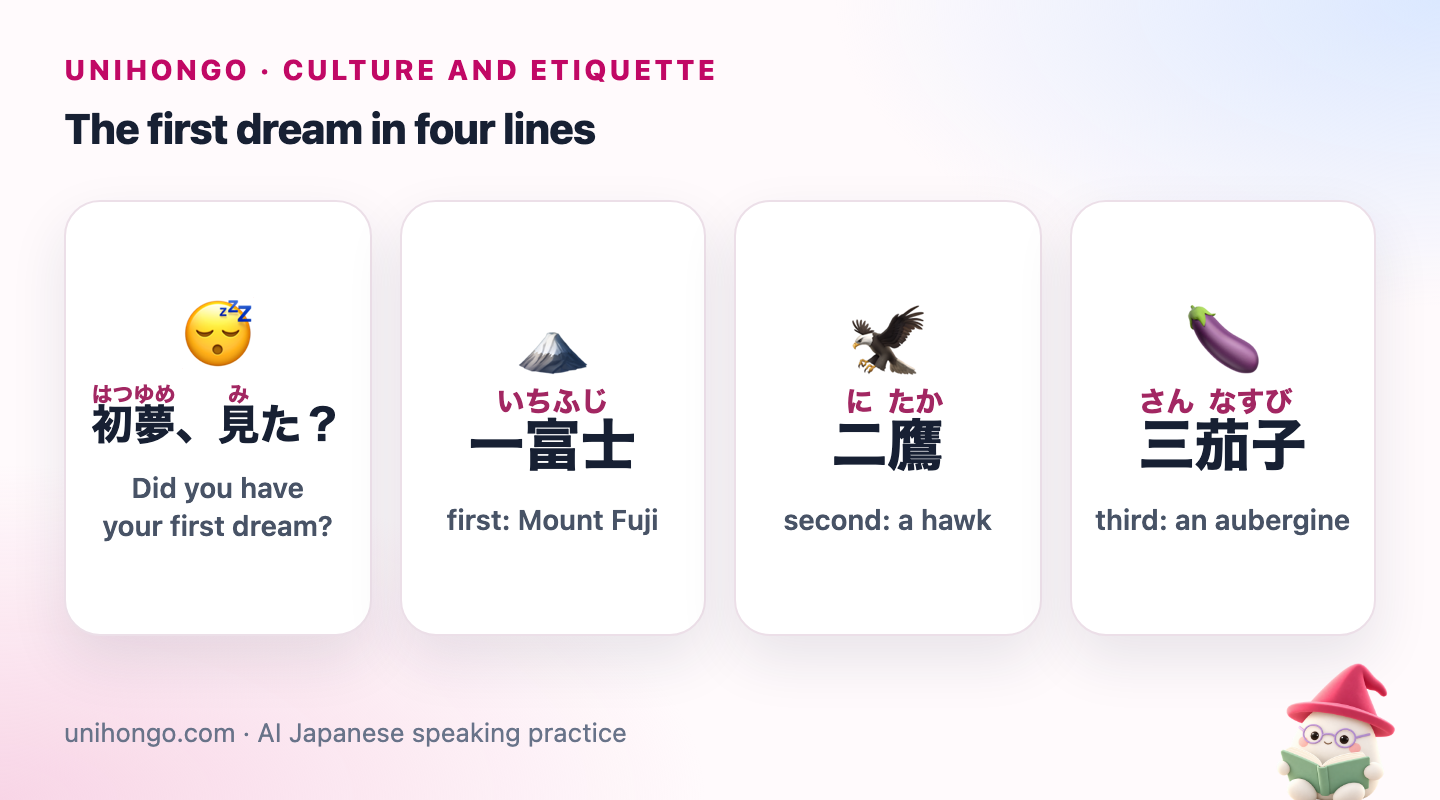
Hatsuyume is 初 (first) plus 夢 (dream). The question you will hear is short and casual, and the answer everyone hopes to give is one of the three images in the famous saying. Note that the numbers ichi, ni and san simply mean first, second and third here.
| Japanese | Romaji | Meaning |
|---|---|---|
| 初夢、見た? | Hatsuyume, mita? | Did you have your first dream? |
| 一富士 | ichi Fuji | first: Mount Fuji |
| 二鷹 | ni taka | second: a hawk |
| 三茄子 | san nasubi | third: an aubergine |
| 縁起がいい | engi ga ii | lucky, a good omen |
In the saying, 茄子 is read nasubi, the older word. In everyday Japanese the vegetable is usually called nasu, so you buy nasu at the supermarket but recite san nasubi.
Which night counts?
People do not fully agree, and that is part of the fun. The most common view today is the night of 1 January. Some count the night of New Year's Eve, but many people stay up late or do not sleep at all that night. In the Edo period, the night of 2 January was also widely used.
| Japanese | Romaji | Meaning |
|---|---|---|
| 初夢は元日の夜に見る夢です。 | Hatsuyume wa ganjitsu no yoru ni miru yume desu. | Hatsuyume is the dream on the night of 1 January. |
| 大晦日の夜だという人もいます。 | Ōmisoka no yoru da to iu hito mo imasu. | Some people say it's New Year's Eve. |
| 夢を見なかったかも。 | Yume o minakatta kamo. | I might not have dreamt at all. |
| Night | Who says so | Note |
|---|---|---|
| 31 December to 1 January | Some people | Many people are up late or at a shrine |
| 1 to 2 January | The most common view today | The usual answer if you ask |
| 2 to 3 January | An older custom | Widely used in the Edo period |
Why Fuji, a hawk and an aubergine?
There are several explanations, and none is certain. The most popular use wordplay: Fuji sounds like buji, safe and well, and also like fushi, immortal, and it is Japan's highest mountain. The hawk, taka, sounds like takai, high, so it suggests rising in the world. The aubergine, nasu, sounds like the verb nasu, to achieve something. Another story says these were three famous things of the Suruga area, today's Shizuoka.
Some versions of the saying continue with a fourth and fifth item, such as a folding fan, which opens out like a growing fortune. Most people only know the first three.
| Japanese | Romaji | Meaning |
|---|---|---|
| 富士山は日本一高い山です。 | Fujisan wa Nihon'ichi takai yama desu. | Fuji is Japan's highest mountain. |
| 鷹は高く飛びます。 | Taka wa takaku tobimasu. | Hawks fly high. |
| 茄子は「成す」に通じるそうです。 | Nasu wa "nasu" ni tsūjiru sō desu. | Nasu reportedly echoes nasu, to achieve. |
| 縁起物 | engimono | lucky charm, good-luck object |
Talking about dreams: the grammar
Japanese treats a dream as something you see. The verb is miru, and the dream is the object: yume o miru. To describe the content, put a plain-form clause before yume: sora o tobu yume, a dream of flying. To say that a person or thing appeared, use yume ni, in my dream, with deru or dete kuru, to come out.
| Japanese | Romaji | Meaning |
|---|---|---|
| 変な夢を見た。 | Hen na yume o mita. | I had a weird dream. (casual) |
| 空を飛ぶ夢を見ました。 | Sora o tobu yume o mimashita. | I dreamt I was flying. |
| 夢に富士山が出てきた! | Yume ni Fujisan ga dete kita! | Mount Fuji appeared in my dream! |
| 夢の中で、先生と話していました。 | Yume no naka de, sensei to hanashite imashita. | In the dream, I was talking with my teacher. |
| 全然覚えていない。 | Zenzen oboete inai. | I don't remember it at all. |
Notice the tense. The content clause stays in the plain present, tobu, even though the dream was last night; only the main verb, mita or mimashita, goes into the past.
Words for good, bad and true dreams
A few dream words come up whenever people talk about hatsuyume. Masayume is a dream that comes true, and sakayume is a dream whose meaning is the opposite of what happened in it, which is the standard comfort after a bad dream. Yume also means a dream for the future, as in English, so the same word covers sleeping and hoping.
| Japanese | Romaji | Meaning |
|---|---|---|
| 正夢になるといいね。 | Masayume ni naru to ii ne. | I hope it comes true. |
| それは逆夢だよ。 | Sore wa sakayume da yo. | That's a dream that means the opposite. |
| 悪夢を見ました。 | Akumu o mimashita. | I had a nightmare. |
| 夢占いで調べてみよう。 | Yume uranai de shirabete miyō. | Let's look it up in dream reading. |
| 今年の夢は日本に住むことです。 | Kotoshi no yume wa Nihon ni sumu koto desu. | My dream this year is to live in Japan. |
In the Edo period, people slept with a picture of a takarabune, a treasure ship carrying the Seven Lucky Gods, under their pillow to bring a good first dream. A few shrines still hand out such pictures at New Year, and you may see them on sale as decorations.
Mini dialogue: breakfast on 2 January
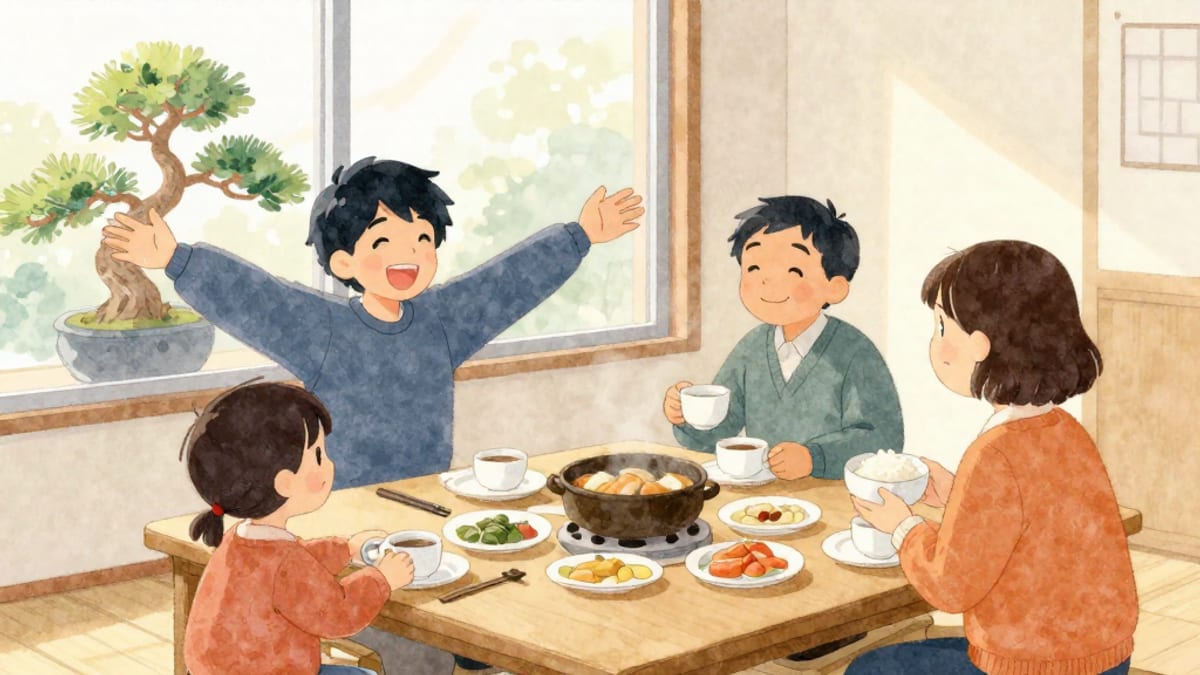
Hatsuyume talk usually happens at breakfast on the 2nd or in the first chats with friends. It is light and teasing, and a funny dream is as welcome as a lucky one.
| Japanese | Romaji | Meaning |
|---|---|---|
| ねえ、初夢見た? | Nē, hatsuyume mita? | Host sister: Hey, did you have your first dream? |
| 見たよ。夢に大きな鳥が出てきた。 | Mita yo. Yume ni ōkina tori ga dete kita. | You: I did. A big bird appeared in it. |
| えー、それ鷹じゃない? | Ē, sore taka ja nai? | Host sister: No way, wasn't it a hawk? |
| わからない。でも、高く飛んでいたよ。 | Wakaranai. Demo, takaku tonde ita yo. | You: Not sure. But it was flying high. |
| じゃあ、縁起がいいね! | Jā, engi ga ii ne! | Host sister: Then it's a lucky sign! |
| 正夢になるといいな。 | Masayume ni naru to ii na. | You: I hope it comes true. |
Tell Mocchi your dream
Ask Mocchi /grammar yume ni ~ ga dete kuru to see how the pattern works with people, animals and places, then write your own first dream in three sentences and send it with /correct. Mocchi explains every change, keeps track of whether you still slip into yume o shita, and brings that point back in a later review.
To make the word order automatic, play Sentence Builder and rebuild sentences such as sora o tobu yume o mimashita from shuffled chunks.
Common learner mistakes
- Saying yume o shita or yume ga atta. The natural verb is miru: yume o mita.
- Putting the content clause in the past: sora o tonda yume. Keep it in the present: sora o tobu yume.
- Saying yume de Fujisan ga dete kita. With dete kuru, the usual particle is ni: yume ni Fujisan ga dete kita. Use yume no naka de for actions inside the dream.
- Taking hatsuyume too seriously. It is a playful custom, and most people only half remember their dream.
- Reading 三茄子 as san nasu. In the saying, it is san nasubi.