
Choose hearing or production as the first weak step
Tell Mocchi whether the contrast is hard to hear, hard to say, or easy in isolation but lost in a sentence. These are different starting points. A listening comparison may help before another recording attempt, while a learner who hears the difference may need a controlled phrase and a clear timing goal. Keep the first session focused on that link.
Use a quiet environment and a consistent recording setup when the activity involves a microphone. Background noise or a changed device can affect the attempt and the feedback. Do not assume that every unexpected result is proof of a new language error.
Compare a clear pair without adding extra loudness
ビル refers to a building, while ビール means beer. The long-vowel mark in the second word signals a timing difference in its Japanese form. Read the spelling, listen to a model, and practice the intended word without turning the exercise into a contest to make one sound louder. Then use the word in a short meaningful phrase.
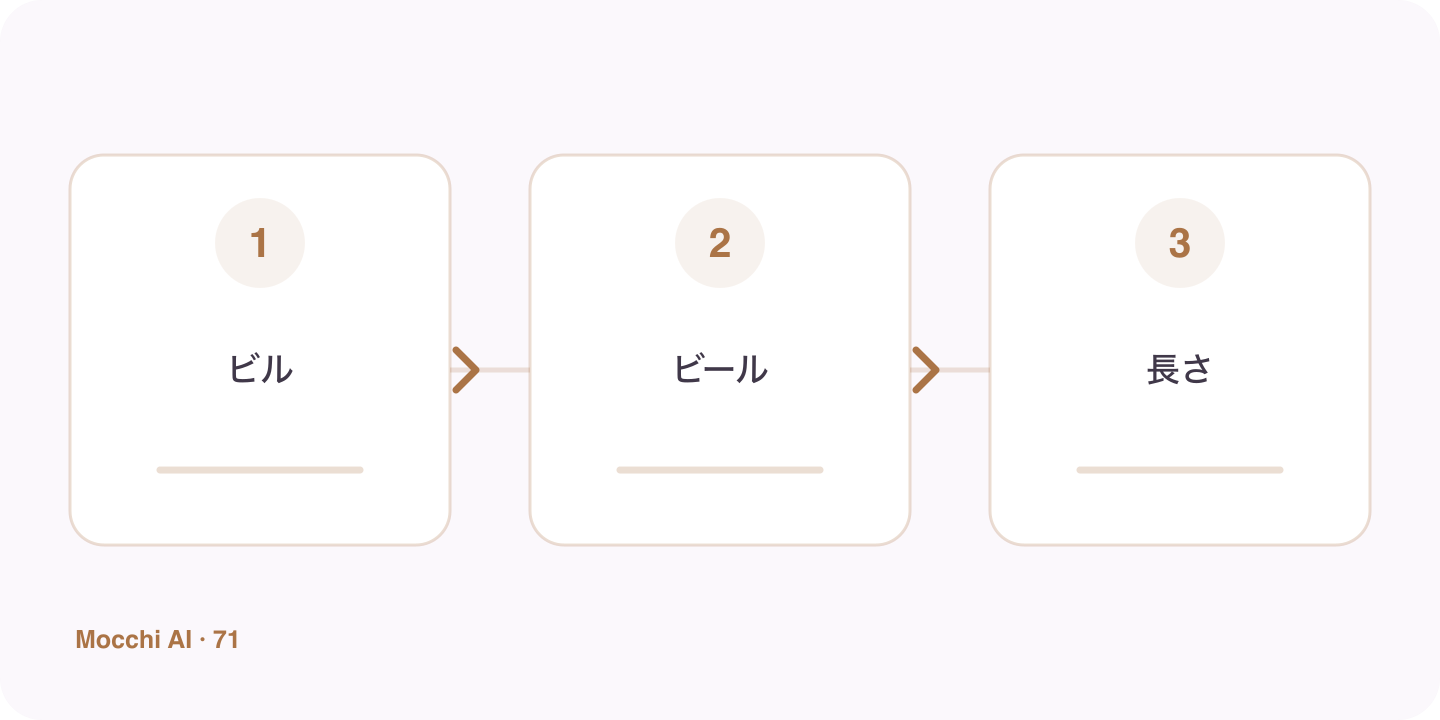
| Japanese | Romaji | Meaning |
|---|---|---|
| 高いビルです。 | Takai biru desu. | It is a tall building. |
| ビールをお願いします。 | Bīru o onegaishimasu. | Beer, please. |
Use the pronunciation activity's supplied lines
When Mocchi opens a coached pronunciation activity, work through the lines the interface supplies. Listen, attempt, and make one deliberate adjustment at a time. The examples in this article illustrate the contrast; they are not a claim about the exact lines or scores your session will produce. Read the actual feedback before deciding what to practice next.
Return the contrast to a phrase
A carefully isolated word can become shortened when attention moves to the rest of a sentence. Use a familiar short phrase so you can keep the target audible without also searching for unfamiliar grammar. If the contrast disappears, reduce the phrase briefly and rebuild it. This connects the focused drill to the speech you want to use.
Review the specific change rather than the number alone
After practice, describe what you adjusted and whether the contrast was clearer in another attempt. Use scores only when the activity actually reports them, and keep microphone conditions in mind. Ask Mocchi for the next useful sound or another short session if appropriate. A personal pronunciation routine develops through focused listening and new attempts, not through treating one automated number as a complete verdict.