
The solstice in four words
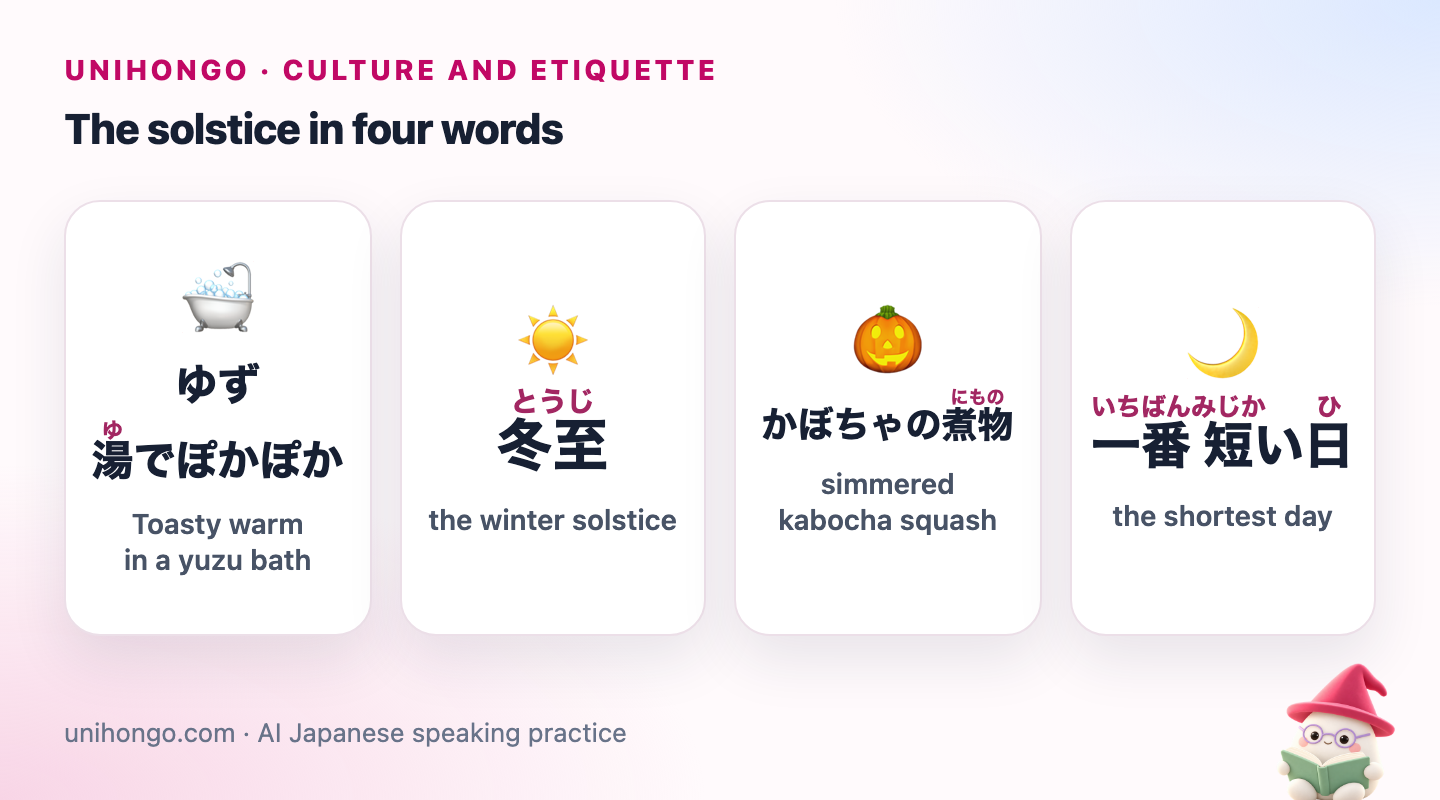
Four words cover the whole day: the toasty, warm feeling of a yuzu bath, the name of the day itself, the dish that appears at dinner, and the fact that makes it special, the shortest day of the year. Pokapoka, the first word on the cards, is a sound-symbolic word for being pleasantly warm, and it is almost always used about baths, sunshine and warm drinks in winter.
| Japanese | Romaji | Meaning |
|---|---|---|
| ゆず湯でぽかぽか | Yuzuyu de pokapoka | Toasty warm in a yuzu bath |
| 冬至 | tōji | the winter solstice |
| かぼちゃの煮物 | kabocha no nimono | simmered kabocha squash |
| 一番短い日 | ichiban mijikai hi | the shortest day |
When tōji is, and what it means
Tōji is one of the 24 seasonal divisions, nijūshi sekki, of the traditional East Asian calendar. It falls around 21 or 22 December, and its summer opposite is geshi, the summer solstice. Because the days begin to lengthen again after tōji, it has long been seen as a turning point, a moment when the light starts to come back.
One expression captures that feeling: ichiyō raifuku, literally one yang returns. It means that after a hard time things start to improve, and it is used both about the solstice and, more broadly, as a hopeful phrase around the New Year. You may also see it on charms sold at some shrines around this time.
| Japanese | Romaji | Meaning |
|---|---|---|
| 冬至は一年で一番昼が短い日です。 | Tōji wa ichinen de ichiban hiru ga mijikai hi desu. | Tōji is the day with the shortest daylight of the year. |
| 夏至 | geshi | the summer solstice |
| 日が短くなったね。 | Hi ga mijikaku natta ne. | The days have got short, haven't they? |
| これから日が長くなるね。 | Kore kara hi ga nagaku naru ne. | The days will get longer from now on. |
| 一陽来復 | ichiyō raifuku | the light returns; things turn for the better |
The yuzu bath at home
Yuzu is a small, bumpy yellow citrus with a strong scent and very little juice. For a yuzu bath, people float several whole fruits in the hot water. Some cut them in half or put slices in a mesh bag for a stronger scent, but cut fruit can make sensitive skin tingle, so whole fruit is the gentle option, especially for children.
The explanations people give are a mix of folk wisdom and wordplay. The scent and oils are said to warm the body and help you get through winter without a cold. The wordplay links tōji with 湯治 (tōji), a healing stay at a hot spring, and yuzu with 融通 (yūzū), being flexible in life. These are popular explanations rather than recorded history, and families vary.
| Japanese | Romaji | Meaning |
|---|---|---|
| ゆず湯に入る | yuzuyu ni hairu | to take a yuzu bath |
| ゆずを丸ごと浮かべる | yuzu o marugoto ukaberu | to float whole yuzu |
| いい香り! | Ii kaori! | What a lovely smell! |
| 体が温まるね。 | Karada ga atatamaru ne. | It really warms you up. |
| これで風邪をひかないね。 | Kore de kaze o hikanai ne. | Now we won't catch a cold. (said with a smile) |
| 肌がちょっとぴりぴりする。 | Hada ga chotto piripiri suru. | My skin is tingling a little. |
At the sentō on the shortest day
Many sentō, neighbourhood public bathhouses, float yuzu in the big tubs on tōji, and some run the yuzu bath for a few days around it. Even people who rarely visit a sentō sometimes go that evening. If you go, the usual manners apply: wash and rinse at the taps before getting into the bath, keep your towel out of the water, and leave the fruit floating. Some bathhouses ask people not to squeeze or break the yuzu, because broken fruit irritates other bathers' skin.
Bath time is also small-talk time. Regulars often chat with newcomers in the water, and the yuzu gives you an easy topic.
| Japanese | Romaji | Meaning |
|---|---|---|
| 今日はゆず湯ですか。 | Kyō wa yuzuyu desu ka. | Is it a yuzu bath today? |
| ゆずは潰さないでくださいね。 | Yuzu wa tsubusanaide kudasai ne. | Staff: Please don't squash the yuzu. |
| いい香りですね。 | Ii kaori desu ne. | It smells lovely, doesn't it? |
| 毎年来るんですか。 | Maitoshi kuru n desu ka. | Do you come every year? |
Kabocha, azuki and the lucky n foods
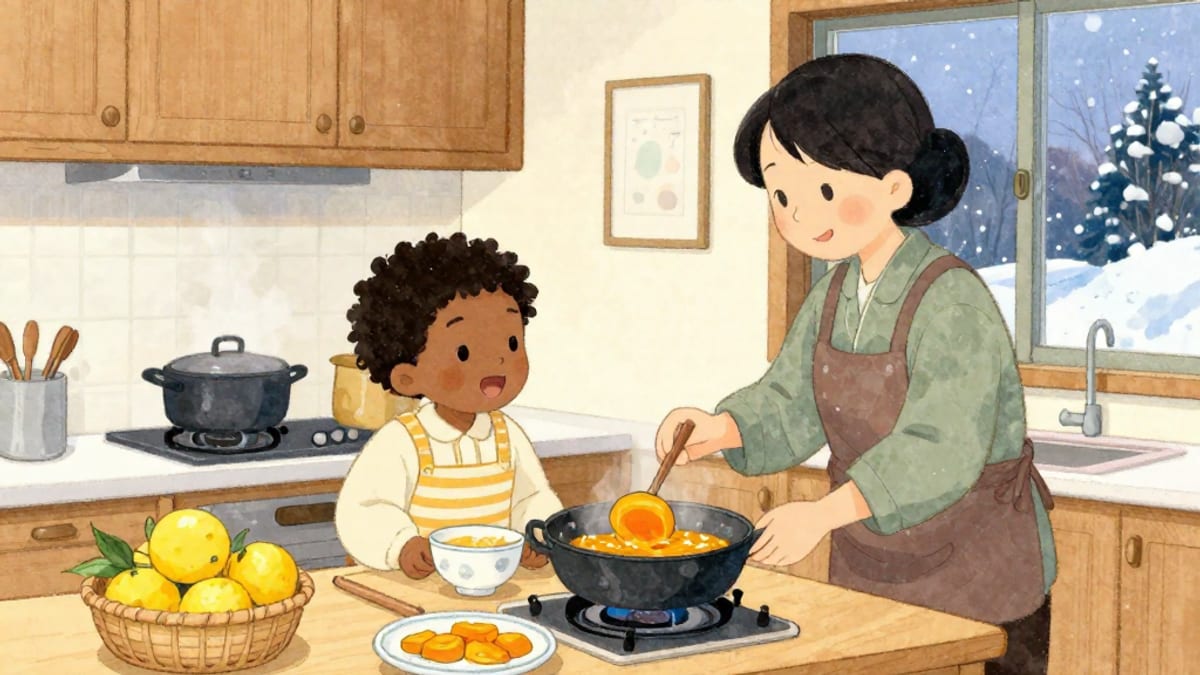
The food of tōji is kabocha, Japanese squash, usually simmered with soy sauce and sugar until soft. In some homes it is cooked with sweet azuki beans as itoko-ni, and in some regions people eat azuki porridge. Kabocha is a summer crop that keeps well, so it was valuable in midwinter, and eating it on tōji is said to keep you healthy.
Another custom is eating foods whose names contain the sound n, said to bring un, luck. A set often called the seven foods of tōji includes nankin (the western Japanese name for kabocha), renkon, ninjin, ginnan, kinkan, kanten and udon, which in older speech is undon. Few families eat all seven; it is a playful custom, and regional practice differs.
| Japanese | Romaji | Meaning |
|---|---|---|
| 冬至にはかぼちゃを食べます。 | Tōji ni wa kabocha o tabemasu. | On tōji, we eat kabocha. |
| なんきん | nankin | kabocha (a western Japan name) |
| れんこん | renkon | lotus root |
| にんじん | ninjin | carrot |
| ぎんなん | ginnan | ginkgo nuts |
| 「ん」がつく食べ物で運がつく | N ga tsuku tabemono de un ga tsuku | Foods with n bring luck |
Mini dialogue: tōji with a host family
If you stay with a Japanese family in December, the solstice may come up casually in the afternoon, often when someone brings home a bag of yuzu from the supermarket. Here a host mother tells a student about the evening plan. Notice how she explains the custom in plain, casual Japanese, and how the student answers politely but warmly.
| Japanese | Romaji | Meaning |
|---|---|---|
| 今日は冬至だから、ゆず湯にしようか。 | Kyō wa tōji da kara, yuzuyu ni shiyō ka. | Host mother: It's the solstice today, so shall we do a yuzu bath? |
| ゆず湯って何ですか。 | Yuzuyu tte nan desu ka. | You: What's a yuzu bath? |
| お風呂にゆずを浮かべるの。体が温まるよ。 | Ofuro ni yuzu o ukaberu no. Karada ga atatamaru yo. | Host mother: You float yuzu in the bath. It warms you up. |
| へえ、いい香りがしそうですね。 | Hē, ii kaori ga shisō desu ne. | You: Oh, that sounds like it would smell nice. |
| 晩ご飯はかぼちゃの煮物ね。 | Bangohan wa kabocha no nimono ne. | Host mother: And dinner is simmered kabocha. |
| 楽しみです。お先にお風呂、いただきます。 | Tanoshimi desu. Osaki ni ofuro, itadakimasu. | You: I can't wait. I'll take my bath first, then. |
Words to keep apart, and common mistakes
- 冬至 (tōji, the solstice), 湯治 (tōji, a healing hot-spring stay) and 当時 (tōji, at that time) are all read tōji. Context separates them; the long ō is the same in each.
- Toji with a short o is a different word, 閉じ, as in the verb tojiru, to close. Keep the ō long.
- Saying yuzuyu o nomu. Yuzuyu is a bath; you hairu it. The hot drink is yuzucha, yuzu tea.
- Calling yuzu a mikan. Mikan is the sweet mandarin you eat at the kotatsu; yuzu is too sour to eat on its own.
- Squeezing the fruit at a sentō. Leave it whole unless the staff say otherwise.
- Expecting the day off. Tōji is a custom, not a public holiday.
A solstice-week routine with Mocchi
Type /kanji 冬 to Mocchi and you get the kanji's meaning, readings and common words, including 冬至 and 冬休み. Then ask Mocchi to make flashcards for the yuzu bath and n-food words with /create-flashcards, choosing a photo for each, and review them with /review-flashcards over the week of the solstice. Mocchi brings the cards you find hard back sooner and remembers them for next winter.
Because the long vowel in tōji is the whole difference between the solstice and closing a book, spend a few minutes on long vowels in the pronunciation coach too. Listen slowly, record yourself, and check the rhythm score.