
Make Your First Small Spoken Japanese Answer With Mocchi

Your first spoken Japanese answer can be very small. Use Mocchi to choose a familiar meaning, prepare one short response, and practice it aloud before adding another detail or moving into a longer AI Sensei exchange.

Mocchi helps a learner move from a supported Japanese phrase to one short spoken answer and a later exchange
What you need to know

Make Your First Small Spoken Japanese Answer With Mocchi

Speaking can feel difficult even when you understand a sentence on the page. You are retrieving language, coordinating sound, and responding to a situation at the same time. Reduce the first task rather than waiting until every part feels perfect. Mocchi can help prepare the phrase and choose a useful pronunciation focus, while AI Sensei or Roleplay offers an extended spoken exchange. Keep the activity about a manageable language action instead of judging your whole ability from one hesitant moment.

Choose one response with familiar meaning.

Understand the phrase before saying it aloud.

Make a small changed answer after repetition.

Expand the exchange gradually rather than waiting for perfection.

Reduce the first task to one meaningful action

Choose a familiar question and a short answer you actually understand. Tell Mocchi what you want to say and ask for a version at your current level. You do not need a long introduction to begin. A small response makes it easier to notice whether the difficulty concerns recalling a word, forming the sentence, or producing a sound.

Use an ordinary or fictional detail if that feels easier. The learning value comes from choosing and saying a message, not from sharing personal information. A favorite activity, an invented weekend plan, or a simple preference can provide enough material.

Say a short preference and change one detail

音楽が好きです expresses a simple preference. Change the activity or item after the first attempt so the response is not only a memorized sound sequence. Ask Mocchi to check the meaning and a useful sound focus, then keep the next answer small enough that you can still understand every part.
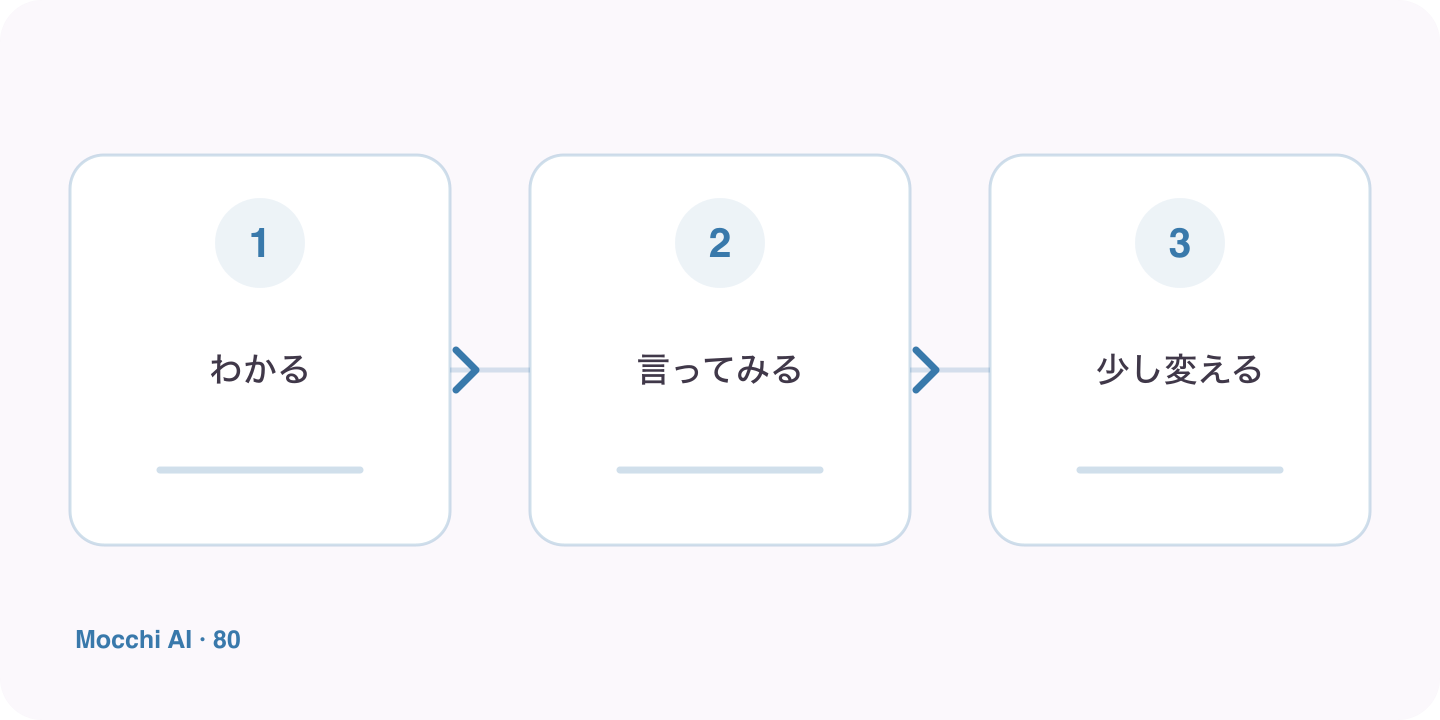
A familiar meaning becomes a prepared phrase, an aloud attempt, and a small changed response
A manageable first answer creates a starting point; you can expand the exchange after the small task is clear.
JapaneseRomajiMeaning
音楽が好きです。Ongaku ga suki desu.I like music.
料理が好きです。Ryōri ga suki desu.I like cooking.

Practice aloud without demanding a perfect first result

Listen to an appropriate model when available and make a comfortable attempt. Notice one feature rather than every possible imperfection. If a supported pronunciation activity helps, use the lines and feedback it provides. Keep the result specific: a word you could retrieve, a timing contrast you noticed, or a phrase that still needs support.

Move from the phrase to a small exchange

Use AI Sensei or a suitable Roleplay option to hear a question and choose a response aloud. The prepared phrase can support the start, but listen for the actual turn. If you do not understand, use a simple repair request rather than assuming you must deliver a flawless answer immediately. Choose the session options available to your account.

Give the next lesson a concrete observation

After the attempt, tell Mocchi what was easy and where you hesitated. A specific observation can lead to a useful follow-up: another word, a short grammar contrast, or focused pronunciation. This keeps the routine encouraging without replacing evidence with vague praise. The next step grows from language you actually attempted, making continued practice easier to understand and more rewarding.

Key points

A practical way to improve

Ask Mocchi for a simple response to a familiar question, such as naming an activity you enjoy. Read the meaning and say the short answer aloud. Repeat with one changed detail, then try the same kind of answer in an available AI Sensei or Roleplay scene. Afterward, report one retrieval or pronunciation difficulty and choose a focused follow-up instead of labeling the whole session a success or failure.

  1. 1

    Choose one clear goal

    Focus each session on a situation or skill you can actually use.

  2. 2

    Practice actively

    Say complete answers aloud instead of only reading or recognizing Japanese.

  3. 3

    Review and repeat

    Keep useful corrections and revisit the same skill until it feels natural.

FAQ

Frequently asked questions

Do I need to know many grammar patterns before speaking?

You can begin with a small supported answer using familiar language. Keep the task appropriate to what you understand and add complexity gradually instead of waiting for a feeling of complete readiness.

Should I restart whenever I hesitate?

Not necessarily. Pause, simplify, or use a repair phrase when needed. A hesitant but meaningful answer can provide useful practice and show the specific point to work on next.

Can repeating a phrase replace a conversation?

Repetition can prepare a sound sequence, but an exchange also requires listening and choosing a response. Move into a small interactive situation when the prepared phrase is understandable, and use the result to guide further practice.

Start with one answer you can attempt

Use Mocchi to make the first step clear, then build a little more speech from an actual attempt.